
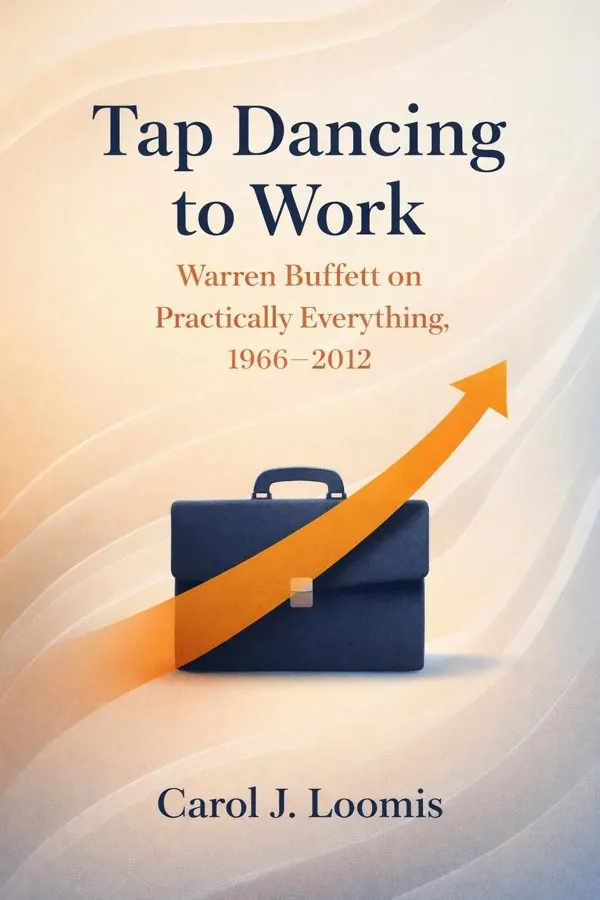
Tap Dancing to Work: Warren Buffett on Practically Everything, 1966–2012: Summary & Key Insights
 10 min4 chaptersAudio available
What Is Tap Dancing to Work: Warren Buffett on Practically Everything, 1966–2012 About?
Tap Dancing to Work: Warren Buffett on Practically Everything, 1966–2012 by Carol J. Loomis is a finance book spanning 4 pages. A collection of Fortune magazine articles written by or about Warren Buffett, compiled and edited by Carol J. Loomis. The book spans Buffett’s career from 1966 to 2012, offering insights into his investment philosophy, business decisions, and personal reflections. It provides a comprehensive look at Buffett’s evolution as an investor and thinker, as well as his influence on American business culture.
This FizzRead summary covers all 4 key chapters of Tap Dancing to Work: Warren Buffett on Practically Everything, 1966–2012 in approximately 10 minutes, distilling the most important ideas, arguments, and takeaways from Carol J. Loomis's work. Also available as an audio summary and Key Quotes Podcast.
Tap Dancing to Work: Warren Buffett on Practically Everything, 1966–2012
A collection of Fortune magazine articles written by or about Warren Buffett, compiled and edited by Carol J. Loomis. The book spans Buffett’s career from 1966 to 2012, offering insights into his investment philosophy, business decisions, and personal reflections. It provides a comprehensive look at Buffett’s evolution as an investor and thinker, as well as his influence on American business culture.
Who Should Read Tap Dancing to Work: Warren Buffett on Practically Everything, 1966–2012?
This book is perfect for anyone interested in finance and looking to gain actionable insights in a short read. Whether you're a student, professional, or lifelong learner, the key ideas from Tap Dancing to Work: Warren Buffett on Practically Everything, 1966–2012 by Carol J. Loomis will help you think differently.
- ✓Readers who enjoy finance and want practical takeaways
- ✓Professionals looking to apply new ideas to their work and life
- ✓Anyone who wants the core insights of Tap Dancing to Work: Warren Buffett on Practically Everything, 1966–2012 in just 10 minutes
Want the full summary?
Get instant access to this book summary and 100K+ more with Fizz Moment.
Get Free SummaryAvailable on App Store • Free to download
Key Chapters
My earliest memories of Warren Buffett place him not in the splendid office towers he would later command, but in a modest, paper-strewn space in Omaha filled with company reports, ledgers, and a quiet intensity. In the 1960s, when most investors were chasing glamour stocks, Buffett preached a gospel of value—rooted in hard numbers, intrinsic worth, and a refusal to surrender to market frenzy. He stood out precisely because he stayed in.
Much of what shaped his thinking came from Benjamin Graham, his teacher at Columbia and author of *The Intelligent Investor*. Buffett loved to say that Graham taught him the difference between price and value: price is what you pay; value is what you get. This principle was deceptively simple, yet profoundly subversive in a market perpetually tempted by its own excitement.
In those early Fortune profiles, you can hear Buffett’s voice resonating with a kind of Midwestern practicality. He was not seduced by Wall Street or its speed. Instead, he spoke about buying businesses, not just stocks. Each investment was a partnership of logic and trust, a long-term courtship with a company’s future. He combed through balance sheets, studied management, and asked whether he'd be happy owning the whole enterprise outright. That shift—from speculation to ownership thinking—distinguished him from others even then.
For Buffett, the key was temperament. He knew that success in investing had less to do with intelligence than with the ability to remain calm when others were greedy or fearful. That philosophy would later become the cornerstone of the “Buffett way.” But in the sixties, it was still taking root, quietly reflected in a man who seemed almost out of step with his times—and because of that, more prescient than anyone realized.
When Warren took control of Berkshire Hathaway, it was not the grand imperial move it seems in hindsight. The company was a struggling textile mill, a relic of a declining industry. But Buffett saw in it a platform, not a product—a corporate shell that could one day house a variety of businesses. He was candid in admitting that buying it was partly an emotional mistake; he disliked the management’s arrogance and ended up acquiring the whole company to prove a point. Yet from this imperfect beginning emerged the foundation of his long-term architectural vision.
Berkshire became a vehicle for disciplined evolution. Buffett slowly redirected its cash flows into insurance—particularly GEICO—and later into consumer brands and media companies like The Washington Post and Coca-Cola. Each acquisition followed his strict standards: understandable businesses run by talented, trustworthy people, purchased at fair prices. His partnership with insurance companies was key because their steady “float”—premiums collected long before claims are paid—provided a reservoir of low-cost capital that could be reinvested. Thus, Berkshire became a perpetual compounding machine.
Fortune’s chronicling of this transformation reveals Buffett not just as an investor but as a thinker of systems. He was building a financial ecosystem grounded in decentralization and responsibility. Berkshire subsidiaries operated with remarkable autonomy, reflecting his faith in good managers and his disdain for unnecessary bureaucracy. He abhorred corporate excess—those grandiose offices, golden parachutes, and CEO egos that often became cancers of capitalism.
It’s also here that the bond between Buffett and Charlie Munger deepened, elevating the company’s strategy from pure value investing to a philosophy of quality and endurance. Together they fused Graham’s discipline with a broader appreciation for outstanding businesses—even if that meant paying more upfront. The textile mills would close, but Berkshire would rise as a testament to a simple idea: invest in what endures.
+ 2 more chapters — available in the FizzRead app
All Chapters in Tap Dancing to Work: Warren Buffett on Practically Everything, 1966–2012
About the Author
Carol J. Loomis is an American financial journalist and longtime writer and editor for Fortune magazine. She is known for her close professional relationship with Warren Buffett and her incisive coverage of business and finance over several decades.
Get This Summary in Your Preferred Format
Read or listen to the Tap Dancing to Work: Warren Buffett on Practically Everything, 1966–2012 summary by Carol J. Loomis anytime, anywhere. FizzRead offers multiple formats so you can learn on your terms — all free.
Available formats: App · Audio · PDF · EPUB — All included free with FizzRead
Download Tap Dancing to Work: Warren Buffett on Practically Everything, 1966–2012 PDF and EPUB Summary
Key Quotes from Tap Dancing to Work: Warren Buffett on Practically Everything, 1966–2012
“In the 1960s, when most investors were chasing glamour stocks, Buffett preached a gospel of value—rooted in hard numbers, intrinsic worth, and a refusal to surrender to market frenzy.”
“When Warren took control of Berkshire Hathaway, it was not the grand imperial move it seems in hindsight.”
Frequently Asked Questions about Tap Dancing to Work: Warren Buffett on Practically Everything, 1966–2012
Tap Dancing to Work: Warren Buffett on Practically Everything, 1966–2012 by Carol J. Loomis is a finance book that explores key ideas across 4 chapters. A collection of Fortune magazine articles written by or about Warren Buffett, compiled and edited by Carol J. Loomis. The book spans Buffett’s career from 1966 to 2012, offering insights into his investment philosophy, business decisions, and personal reflections. It provides a comprehensive look at Buffett’s evolution as an investor and thinker, as well as his influence on American business culture.
You Might Also Like



Browse by Category
Ready to read Tap Dancing to Work: Warren Buffett on Practically Everything, 1966–2012?
Get the full summary and 100K+ more books with Fizz Moment.