
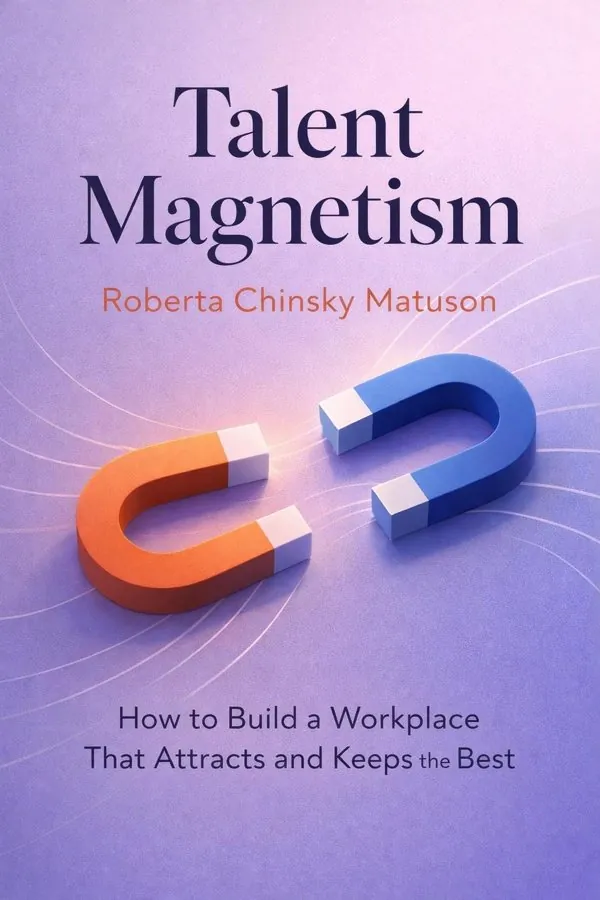
Talent Magnetism: How to Build a Workplace That Attracts and Keeps the Best: Summary & Key Insights
 10 min9 chaptersAudio available
Key Takeaways from Talent Magnetism: How to Build a Workplace That Attracts and Keeps the Best
One of the most dangerous assumptions a leader can make is that yesterday’s management habits will still work with today’s employees.
Before a candidate ever speaks to a recruiter, your organization is already telling a story about itself.
People rarely leave because of one isolated event; more often, they leave because the culture steadily teaches them they no longer belong.
People do not just join companies; they join leaders.
A workplace becomes magnetic when excellence is designed into every stage of the employee journey, not just the hiring process.
What Is Talent Magnetism: How to Build a Workplace That Attracts and Keeps the Best About?
Talent Magnetism: How to Build a Workplace That Attracts and Keeps the Best by Roberta Chinsky Matuson is a leadership book spanning 6 pages. In a labor market where talented people have more options, information, and bargaining power than ever before, employers can no longer rely on compensation alone to attract and keep great employees. In Talent Magnetism, leadership consultant Roberta Chinsky Matuson argues that organizations win the talent game by becoming places where people genuinely want to work, grow, and stay. This book is not just about recruiting better. It is about designing a workplace culture, leadership style, and employee experience that naturally pulls strong performers in and makes them reluctant to leave. Matuson brings credibility to this subject through decades of work advising leaders on hiring, retention, and organizational effectiveness. Known as “The Talent Maximizer®,” she translates big ideas into practical actions managers can use immediately, from shaping employer brand to improving trust, communication, and development opportunities. Her central message is simple but powerful: talent magnetism is built deliberately, not accidentally. For leaders facing high turnover, disengagement, or difficulty hiring top candidates, this book offers a clear roadmap for turning the workplace itself into a competitive advantage.
This FizzRead summary covers all 9 key chapters of Talent Magnetism: How to Build a Workplace That Attracts and Keeps the Best in approximately 10 minutes, distilling the most important ideas, arguments, and takeaways from Roberta Chinsky Matuson's work. Also available as an audio summary and Key Quotes Podcast.
Talent Magnetism: How to Build a Workplace That Attracts and Keeps the Best
In a labor market where talented people have more options, information, and bargaining power than ever before, employers can no longer rely on compensation alone to attract and keep great employees. In Talent Magnetism, leadership consultant Roberta Chinsky Matuson argues that organizations win the talent game by becoming places where people genuinely want to work, grow, and stay. This book is not just about recruiting better. It is about designing a workplace culture, leadership style, and employee experience that naturally pulls strong performers in and makes them reluctant to leave.
Matuson brings credibility to this subject through decades of work advising leaders on hiring, retention, and organizational effectiveness. Known as “The Talent Maximizer®,” she translates big ideas into practical actions managers can use immediately, from shaping employer brand to improving trust, communication, and development opportunities. Her central message is simple but powerful: talent magnetism is built deliberately, not accidentally. For leaders facing high turnover, disengagement, or difficulty hiring top candidates, this book offers a clear roadmap for turning the workplace itself into a competitive advantage.
Who Should Read Talent Magnetism: How to Build a Workplace That Attracts and Keeps the Best?
This book is perfect for anyone interested in leadership and looking to gain actionable insights in a short read. Whether you're a student, professional, or lifelong learner, the key ideas from Talent Magnetism: How to Build a Workplace That Attracts and Keeps the Best by Roberta Chinsky Matuson will help you think differently.
- ✓Readers who enjoy leadership and want practical takeaways
- ✓Professionals looking to apply new ideas to their work and life
- ✓Anyone who wants the core insights of Talent Magnetism: How to Build a Workplace That Attracts and Keeps the Best in just 10 minutes
Want the full summary?
Get instant access to this book summary and 100K+ more with Fizz Moment.
Get Free SummaryAvailable on App Store • Free to download
Key Chapters
One of the most dangerous assumptions a leader can make is that yesterday’s management habits will still work with today’s employees. Matuson begins with a hard truth: the workforce has evolved, and leaders who fail to adapt will struggle to attract and retain capable people. Employees today are not only looking for salary and job security. They also want purpose, flexibility, respect, development, inclusion, and work environments that support their well-being. They compare employers constantly, and digital platforms make it easy for them to learn what working at a company is really like.
This shift means loyalty can no longer be assumed. Workers are more willing to leave organizations where communication is poor, growth is limited, or leadership feels disconnected. At the same time, organizations that understand these new expectations can stand out quickly. For example, a company that offers meaningful feedback, transparent career paths, flexible work options, and managers who listen will often outperform a higher-paying competitor with a toxic culture.
Matuson’s point is not that leaders must satisfy every preference or create a perfect workplace. Rather, they must acknowledge that employees are evaluating the full employment experience. That experience starts before the first interview and continues long after onboarding. Leaders need to pay attention to what people value now, not what they valued a decade ago.
Actionable takeaway: conduct a candid review of what your employees currently expect from work, then identify the top three gaps between those expectations and your organization’s actual employee experience.
Before a candidate ever speaks to a recruiter, your organization is already telling a story about itself. Matuson emphasizes that employer brand is not a slogan, a careers page, or a polished social media campaign. It is the lived reputation of your workplace. It reflects what employees, applicants, alumni, and even customers believe about how people are treated inside your organization.
A strong employer brand acts like a magnet because it creates trust and anticipation. It tells potential hires, “This is a place where I can do meaningful work, be supported, and build a future.” A weak brand does the opposite. It repels talent, increases hiring costs, lengthens recruiting timelines, and makes retention harder because expectations are unclear or misleading.
Matuson urges leaders to build the brand from the inside out. If a company promises growth but offers no development, candidates will discover the mismatch quickly. If it promotes collaboration while rewarding politics, credibility disappears. The most magnetic brands are aligned with reality. For instance, a fast-paced startup might honestly position itself as a demanding but empowering place for ambitious builders, while a mission-driven nonprofit might emphasize purpose, community, and meaningful impact.
Leaders should also remember that every manager becomes a brand ambassador. Interview behavior, onboarding quality, internal communication, and exit conversations all shape how the brand is perceived. Reputation is cumulative, and it spreads through networks quickly.
Actionable takeaway: define the three core promises your workplace makes to employees, then audit whether those promises are consistently visible in recruiting, management behavior, and everyday employee experience.
People rarely leave because of one isolated event; more often, they leave because the culture steadily teaches them they no longer belong. Matuson presents culture as the invisible force that determines whether talent feels energized, safe, and committed or frustrated, unseen, and ready to exit. Culture is not what a company says in a handbook. It is how decisions are made, how conflict is handled, how performance is recognized, and how people treat one another under pressure.
A magnetic culture gives employees reasons to stay beyond compensation. It offers clarity, fairness, belonging, accountability, and a sense that their work matters. In practical terms, this may mean recognizing contributions consistently, encouraging healthy disagreement, celebrating collaboration instead of heroics, and ensuring that values are actually applied when difficult choices arise.
Matuson warns that even attractive perks cannot compensate for a poor culture. Free lunches, wellness apps, and casual Fridays mean little if leaders ignore burnout, tolerate disrespect, or fail to communicate honestly. By contrast, a culture of trust and dignity can create strong loyalty even in highly demanding environments. For example, employees are often willing to work hard during a challenging business period if they believe leadership is transparent, appreciative, and fair.
Culture also influences who joins the company. Strong performers want to work where excellence and respect coexist. When culture deteriorates, organizations often enter a downward spiral: the best people leave first, and weaker norms spread.
Actionable takeaway: identify one behavior your culture says it values but does not consistently reward, then change a meeting practice, recognition system, or leadership habit to close that gap immediately.
People do not just join companies; they join leaders. Matuson makes the case that leadership quality is one of the strongest predictors of whether talent will be attracted, engaged, and retained. Employees may be impressed by a company’s mission or reputation, but their daily experience is shaped most directly by their managers. A great leader creates talent gravity: people want to work with them, learn from them, and stay because of them.
What makes a leader magnetic? According to Matuson, it is not charisma alone. Magnetic leaders communicate clearly, set expectations, give useful feedback, show consistency, and demonstrate genuine concern for their teams. They are visible, approachable, and trustworthy. Most importantly, they make people feel that their work matters.
The reverse is equally true. Poor managers push out good employees faster than competitors can recruit them. A leader who micromanages, avoids difficult conversations, plays favorites, or withholds recognition weakens the organization’s talent appeal from the inside. Even an excellent employer brand cannot survive bad management for long.
Matuson encourages organizations to stop promoting people into leadership based only on technical performance. A brilliant individual contributor may fail as a manager if they cannot coach, communicate, or build trust. Leadership development should focus on human skills, not just operational execution. For example, teaching managers how to conduct stay interviews, deliver developmental feedback, and respond to employee concerns can significantly improve retention.
Actionable takeaway: ask employees what behaviors from their managers most help or hinder their success, then use that input to set concrete leadership expectations and coaching priorities.
A workplace becomes magnetic when excellence is designed into every stage of the employee journey, not just the hiring process. Matuson encourages leaders to think beyond recruitment and consider what people experience from first contact to long-term advocacy. Every step either strengthens trust or weakens it.
The journey begins with the candidate experience. Slow communication, confusing interviews, and impersonal treatment signal that people are not valued. By contrast, a respectful process with clear timelines and thoughtful interaction tells applicants they matter. Once hired, onboarding becomes the first major test of whether the organization delivers on its promises. New hires need context, connection, and support, not just paperwork and policies.
But the journey does not end there. Employees continue evaluating the organization during performance reviews, team changes, promotions, setbacks, and even exits. Matuson highlights the importance of key moments: a first week, a difficult project, a missed promotion, a return from leave, or a manager transition. These moments often determine whether people deepen commitment or quietly disengage.
Organizations that map the employee journey can spot friction points that hurt retention. For example, a company may recruit effectively but lose people at the one-year mark because career progression becomes unclear. Another may have strong onboarding but poor internal mobility, causing ambitious employees to leave for growth elsewhere.
Actionable takeaway: map the major stages of your employee journey, identify the moments where trust is most vulnerable, and improve one experience this quarter, such as onboarding, promotion communication, or offboarding.
One of the fastest ways to lose ambitious people is to make them feel professionally stuck. Matuson stresses that retention is closely tied to development. Talented employees want to know they are becoming more capable, more valuable, and more prepared for future opportunities. When organizations fail to invest in that growth, top performers often conclude that their next step must happen elsewhere.
Development does not always mean promotion. It can include skill-building, mentoring, stretch assignments, lateral moves, exposure to senior leaders, and opportunities to solve meaningful problems. In fact, one reason development is so powerful is that it signals belief. When a manager gives an employee a challenging assignment and support to succeed, the message is clear: you matter here, and we see a future for you.
Matuson also reminds leaders that development must be personalized. Not everyone wants the same path. One employee may crave leadership responsibility, while another may want deeper expertise, flexibility, or cross-functional experience. Managers who ask thoughtful career questions can build stronger loyalty than those who assume everyone is motivated by title changes.
Practical application can be simple. A manager might hold quarterly career conversations, pair high-potential employees with mentors, or create project rotations to broaden exposure. Even in resource-constrained organizations, transparent discussions about growth can improve retention because employees see effort and intention.
Actionable takeaway: schedule regular career development conversations with each team member and identify one concrete growth opportunity you can offer each person within the next 90 days.
Many organizations underestimate how deeply people want to feel seen. Matuson shows that recognition and respect are not soft extras; they are core retention drivers. Employees are more likely to stay where their efforts are acknowledged, their voices are heard, and their dignity is protected. In contrast, when hard work goes unnoticed or people feel dismissed, motivation erodes quickly.
Recognition does not have to be expensive or dramatic. Often the most meaningful forms are timely, specific, and personal. A manager who says, “Your preparation helped us win that client because you anticipated their concerns,” provides more value than a generic “great job.” Specific recognition reinforces desired behaviors and helps employees understand their impact.
Respect is equally crucial and broader in scope. It includes listening seriously, communicating honestly, honoring commitments, setting clear expectations, and treating people fairly in decisions about workload, opportunity, and accountability. Respect also appears in how leaders handle disagreement. Employees can tolerate tough feedback or difficult decisions if they are delivered with transparency and professionalism.
Matuson implies that disrespect often hides in everyday habits: interrupting people, ignoring input, failing to respond, overloading strong performers while tolerating weak performance elsewhere. These patterns create resentment, especially among top talent, who often carry more than their share.
Actionable takeaway: create a weekly habit of recognizing at least one employee with specific, meaningful feedback, and review your management routines for small signs of disrespect that may be weakening trust.
Hope is not a talent strategy. Matuson argues that organizations must measure whether their workplace is truly attracting and retaining the right people. Too many leaders rely on intuition, delayed turnover numbers, or isolated anecdotes. By the time a retention problem becomes obvious, the organization may already have lost key talent and damaged morale.
Measurement starts with asking better questions. Are high performers staying? Why do people join, and why do they leave? Which managers retain talent well, and which struggle? Where does engagement drop during the employee lifecycle? What themes appear in candidate feedback, stay interviews, exit interviews, and internal surveys? These data points help leaders move from assumptions to evidence.
Importantly, Matuson is not advocating measurement for its own sake. The goal is to identify what is strengthening or weakening the organization’s magnetism. For example, if candidates consistently praise the interview process but employees leave because of limited advancement, then hiring is not the core problem. If one department has unusually high turnover, leadership quality or workload design may need attention.
The most effective organizations combine hard and soft signals. Metrics such as retention rates, time to fill roles, promotion rates, internal mobility, and absenteeism are useful, but so are comments about trust, communication, and burnout. Together, they reveal patterns that leaders can act on.
Actionable takeaway: choose a small set of talent magnetism indicators, such as regrettable turnover, internal promotion rate, and stay interview themes, and review them regularly with the same seriousness you give financial performance.
Change exposes whether an organization is truly magnetic or only superficially attractive. Matuson emphasizes that during uncertainty, restructuring, growth, mergers, or market disruption, employees watch leadership closely. They ask: Can I trust what I’m hearing? Will I be supported? Does this organization still have a future for me? How leaders answer those questions through action often determines whether talent stays committed or starts leaving.
A common mistake is to focus only on operational transition while ignoring the human transition. Leaders may redesign structures, systems, or strategies without adequately addressing fear, confusion, workload strain, and identity loss. Matuson makes clear that retention during change depends on communication, empathy, consistency, and involvement. Employees do not expect leaders to have all the answers immediately, but they do expect honesty and direction.
Organizations that retain talent well through change usually explain the why behind decisions, share updates frequently, acknowledge uncertainty without becoming paralyzed by it, and equip managers to support their teams. They also pay attention to who may be at risk of disengagement, especially top performers who have options elsewhere.
Adaptability also matters at the cultural level. A magnetic workplace evolves with employee needs, business realities, and external conditions. What worked during one stage of growth may not work in the next. Leaders must revisit policies, assumptions, and management practices regularly rather than defending outdated norms.
Actionable takeaway: during periods of change, increase communication frequency, train managers to address employee concerns directly, and identify your most critical talent so you can proactively reinforce their connection to the organization.
All Chapters in Talent Magnetism: How to Build a Workplace That Attracts and Keeps the Best
About the Author
Roberta Chinsky Matuson is a leadership consultant, speaker, and author specializing in talent management, workplace culture, and organizational effectiveness. Widely known as “The Talent Maximizer®,” she has spent years helping companies strengthen their leadership practices and get better results from their people. Her work focuses on a central business challenge: how to attract strong employees, keep them engaged, and create conditions where they can thrive. Matuson has advised leaders across a range of industries, from growing businesses to established organizations navigating change. She is recognized for blending strategic insight with practical advice, making complex talent issues easier for managers to address. Through her books, consulting, and speaking, she has become a trusted voice on retention, leadership, and the human side of competitive advantage.
Get This Summary in Your Preferred Format
Read or listen to the Talent Magnetism: How to Build a Workplace That Attracts and Keeps the Best summary by Roberta Chinsky Matuson anytime, anywhere. FizzRead offers multiple formats so you can learn on your terms — all free.
Available formats: App · Audio · PDF · EPUB — All included free with FizzRead
Download Talent Magnetism: How to Build a Workplace That Attracts and Keeps the Best PDF and EPUB Summary
Key Quotes from Talent Magnetism: How to Build a Workplace That Attracts and Keeps the Best
“One of the most dangerous assumptions a leader can make is that yesterday’s management habits will still work with today’s employees.”
“Before a candidate ever speaks to a recruiter, your organization is already telling a story about itself.”
“People rarely leave because of one isolated event; more often, they leave because the culture steadily teaches them they no longer belong.”
“People do not just join companies; they join leaders.”
“A workplace becomes magnetic when excellence is designed into every stage of the employee journey, not just the hiring process.”
Frequently Asked Questions about Talent Magnetism: How to Build a Workplace That Attracts and Keeps the Best
Talent Magnetism: How to Build a Workplace That Attracts and Keeps the Best by Roberta Chinsky Matuson is a leadership book that explores key ideas across 9 chapters. In a labor market where talented people have more options, information, and bargaining power than ever before, employers can no longer rely on compensation alone to attract and keep great employees. In Talent Magnetism, leadership consultant Roberta Chinsky Matuson argues that organizations win the talent game by becoming places where people genuinely want to work, grow, and stay. This book is not just about recruiting better. It is about designing a workplace culture, leadership style, and employee experience that naturally pulls strong performers in and makes them reluctant to leave. Matuson brings credibility to this subject through decades of work advising leaders on hiring, retention, and organizational effectiveness. Known as “The Talent Maximizer®,” she translates big ideas into practical actions managers can use immediately, from shaping employer brand to improving trust, communication, and development opportunities. Her central message is simple but powerful: talent magnetism is built deliberately, not accidentally. For leaders facing high turnover, disengagement, or difficulty hiring top candidates, this book offers a clear roadmap for turning the workplace itself into a competitive advantage.
More by Roberta Chinsky Matuson

You Might Also Like

Extreme Ownership
Jocko Willink
10 min
Dare to Lead
Brene Brown
10 min
Leaders Eat Last
Simon Sinek
10 min
The 21 Irrefutable Laws of Leadership
John Maxwell
10 min
Start With Why
Simon Sinek
10 min
How to Lead When You're Not in Charge
Clay Scroggins
10 minBrowse by Category
Ready to read Talent Magnetism: How to Build a Workplace That Attracts and Keeps the Best?
Get the full summary and 100K+ more books with Fizz Moment.