
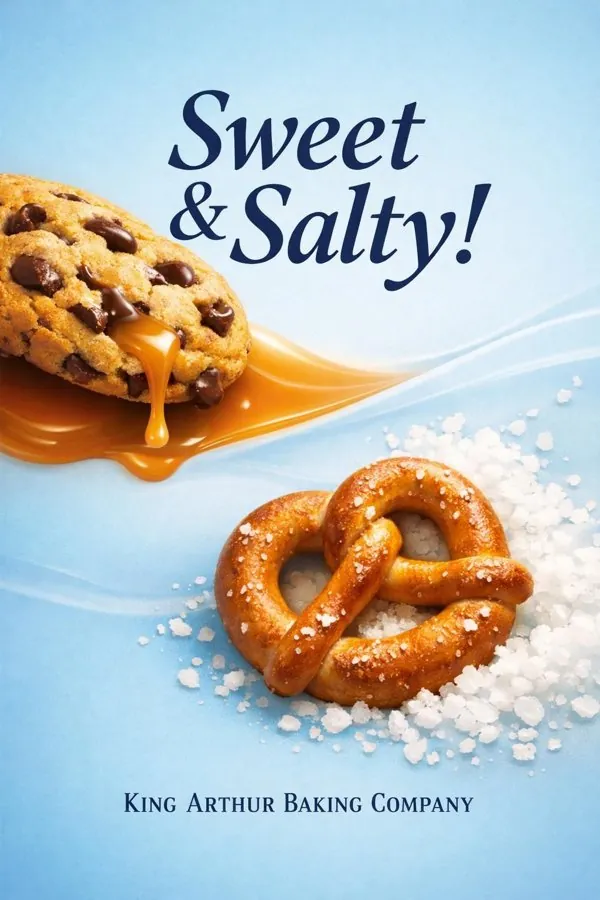
Sweet & Salty!: The Perfect Balance of Opposites in 75 Irresistible Recipes: Summary & Key Insights
 10 min9 chaptersAudio available
Key Takeaways from Sweet & Salty!: The Perfect Balance of Opposites in 75 Irresistible Recipes
The most memorable desserts rarely taste sweet alone; they taste vivid because another note pushes back.
A great recipe begins long before mixing bowls and ovens; it begins with understanding what ingredients are really doing.
Even the best ingredients cannot compensate for weak technique.
Few formats showcase sweet-salty contrast as immediately as cookies and bars.
Not every sweet-and-salty bake should shout.
What Is Sweet & Salty!: The Perfect Balance of Opposites in 75 Irresistible Recipes About?
Sweet & Salty!: The Perfect Balance of Opposites in 75 Irresistible Recipes by King Arthur Baking Company is a cooking book spanning 12 pages. Sweet & Salty!: The Perfect Balance of Opposites in 75 Irresistible Recipes is a baking book built around one of the most reliable truths in the kitchen: sweetness becomes more interesting when it meets salt. Rather than treating salt as a background ingredient, King Arthur Baking Company shows how it can sharpen chocolate, brighten caramel, deepen fruit, and make familiar baked goods taste more complete. Across 75 recipes, the book explores cookies, bars, cakes, breads, breakfast treats, pies, and finishing elements that use contrast to create memorable flavor. What makes this book matter is its blend of inspiration and practicality. It does not simply celebrate a trend; it teaches bakers how balance works. Readers learn how different salts behave, how sugars affect moisture and texture, and how toppings, fillings, and glazes can transform a dessert from merely sweet into layered and satisfying. That educational value is backed by unusual authority. King Arthur Baking Company, America’s oldest flour company, has spent generations teaching home bakers how ingredients and technique work together. The result is a book that offers both craveable recipes and a smarter way to think about flavor.
This FizzRead summary covers all 9 key chapters of Sweet & Salty!: The Perfect Balance of Opposites in 75 Irresistible Recipes in approximately 10 minutes, distilling the most important ideas, arguments, and takeaways from King Arthur Baking Company's work. Also available as an audio summary and Key Quotes Podcast.
Sweet & Salty!: The Perfect Balance of Opposites in 75 Irresistible Recipes
Sweet & Salty!: The Perfect Balance of Opposites in 75 Irresistible Recipes is a baking book built around one of the most reliable truths in the kitchen: sweetness becomes more interesting when it meets salt. Rather than treating salt as a background ingredient, King Arthur Baking Company shows how it can sharpen chocolate, brighten caramel, deepen fruit, and make familiar baked goods taste more complete. Across 75 recipes, the book explores cookies, bars, cakes, breads, breakfast treats, pies, and finishing elements that use contrast to create memorable flavor.
What makes this book matter is its blend of inspiration and practicality. It does not simply celebrate a trend; it teaches bakers how balance works. Readers learn how different salts behave, how sugars affect moisture and texture, and how toppings, fillings, and glazes can transform a dessert from merely sweet into layered and satisfying. That educational value is backed by unusual authority. King Arthur Baking Company, America’s oldest flour company, has spent generations teaching home bakers how ingredients and technique work together. The result is a book that offers both craveable recipes and a smarter way to think about flavor.
Who Should Read Sweet & Salty!: The Perfect Balance of Opposites in 75 Irresistible Recipes?
This book is perfect for anyone interested in cooking and looking to gain actionable insights in a short read. Whether you're a student, professional, or lifelong learner, the key ideas from Sweet & Salty!: The Perfect Balance of Opposites in 75 Irresistible Recipes by King Arthur Baking Company will help you think differently.
- ✓Readers who enjoy cooking and want practical takeaways
- ✓Professionals looking to apply new ideas to their work and life
- ✓Anyone who wants the core insights of Sweet & Salty!: The Perfect Balance of Opposites in 75 Irresistible Recipes in just 10 minutes
Want the full summary?
Get instant access to this book summary and 100K+ more with Fizz Moment.
Get Free SummaryAvailable on App Store • Free to download
Key Chapters
The most memorable desserts rarely taste sweet alone; they taste vivid because another note pushes back. That is the central insight behind Sweet & Salty!: when sugar and salt work together, each becomes clearer, richer, and more compelling. Salt does not simply make food salty. In baking, it amplifies aroma, deepens complexity, and keeps sweetness from turning flat or one-dimensional. A caramel with no salt can taste sugary and heavy, while a lightly salted caramel feels brighter, more nuanced, and oddly more caramel-like.
The book treats this principle as a foundation rather than a finishing trick. In cookies, a sprinkle of flaky salt can sharpen butter and brown sugar flavors. In chocolate desserts, salt makes cocoa taste darker and more intense. In fruit bakes, it heightens tartness and prevents the filling from reading as jammy or dull. Even breads and breakfast pastries benefit from this approach, because sweetness becomes more balanced when the dough itself has enough seasoning.
King Arthur Baking Company also makes an important distinction between internal and external salt. Salt mixed into batter or dough creates structural flavor balance, while salt added at the end creates contrast and texture. Think of a blondie topped with crunchy sea salt versus one seasoned only in the batter; both can work, but they create different experiences.
The practical lesson is simple but powerful: whenever a baked good tastes too sweet or strangely lifeless, the problem may not be excess sugar but insufficient contrast. Actionable takeaway: taste your bakes critically and experiment with small increases in salt, especially as a finishing element, to make sweetness feel deeper rather than louder.
A great recipe begins long before mixing bowls and ovens; it begins with understanding what ingredients are really doing. Sweet & Salty! emphasizes that flour, sugar, salt, dairy, and fat are not interchangeable background players. Each one changes flavor, moisture, structure, browning, and the overall impact of the sweet-salty balance.
Flour provides the framework. All-purpose flour creates versatility, bread flour adds chew and strength, and cake flour encourages tenderness. The choice matters because texture influences how sweetness is perceived. A soft cupcake delivers sugar differently than a chewy cookie or a crackly bar. Sugars matter just as much. Granulated sugar promotes crispness and clean sweetness, while brown sugar adds moisture, caramel notes, and depth from molasses. Confectioners’ sugar smooths frostings and glazes. Honey, maple syrup, and other liquid sweeteners contribute both flavor and altered hydration.
Salt is not one thing either. Fine table salt distributes quickly, kosher salt seasons more gently by volume, and flaky sea salt creates dramatic bursts of crunch and salinity on top. The same applies to butter, cream, chocolate, nut butters, and fruit. Higher-fat dairy can make baked goods feel rounder and richer; dark chocolate welcomes salt differently than milk chocolate; tart fruits often need less salt for contrast because they already bring brightness.
What the book does especially well is connect these choices to outcomes bakers can predict. If you want a bar cookie with deep, almost toffee-like flavor, brown sugar and browned butter may be smarter than simply increasing sweetness. If you want a topping that makes every bite pop, flaky salt is more effective than extra fine salt mixed in.
Actionable takeaway: before baking, identify which ingredients control structure, which drive sweetness, and which provide contrast, then choose versions that support the texture and flavor experience you want.
Even the best ingredients cannot compensate for weak technique. One of the quiet strengths of Sweet & Salty! is its reminder that balance is not just about what you use, but how you handle it. Mixing method, temperature, timing, and pan choice all influence how sweet and salty notes are perceived in the finished bake.
Consider creaming butter and sugar. Done properly, it traps air and creates lift, leading to cookies or cakes with a lighter texture. That lighter structure changes flavor delivery, making sweetness feel less dense. In contrast, melted-butter methods often create chewier, more concentrated textures that pair especially well with bold salty finishes. Folding, whisking, and kneading each affect crumb and chew, and therefore affect how contrast registers on the palate.
Temperature matters too. Cold dough spreads differently from room-temperature dough. A cookie baked from chilled dough may stay thicker, allowing pools of chocolate and pockets of salt to stand out more clearly. Oven accuracy is equally important. Underbaked centers can mute flavor and create greasy textures, while overbaking can flatten sweetness into bitterness. The book’s recipes depend on precision not because baking must be intimidating, but because small variations create large sensory changes.
Tools also play a role. A digital scale improves consistency. Light-colored pans bake differently from dark ones. Parchment controls sticking and browning. A thermometer can help with caramel, custards, and enriched doughs. These are not fussy extras; they are ways to make sure the intended contrast shows up in every batch.
The larger lesson is that flavor is engineered through process. Actionable takeaway: if a recipe underwhelms, do not adjust sweetness first; review your method, dough temperature, bake time, and equipment, because technical precision often restores the sweet-salty harmony you were aiming for.
Not every sweet-and-salty bake should shout. In cakes, enriched breads, breakfast pastries, and brunch treats, balance often works best when it feels integrated rather than dramatic. Sweet & Salty! shows that subtle seasoning can make soft, tender baked goods taste more complete without turning them into novelty desserts.
Cakes rely on tenderness and aroma. Too much finishing salt can distract from crumb and frosting, but too little seasoning leaves the cake bland beneath its sweetness. The book’s approach suggests using salt in layers: enough in the batter to support flavor, perhaps a salted filling or frosting for depth, and only a restrained garnish if the design calls for it. This creates a cake that tastes polished rather than aggressively contrasted.
Breads and rolls present another kind of balance. In enriched doughs such as cinnamon rolls or sweet buns, salt governs both flavor and fermentation. It strengthens dough, moderates yeast activity, and keeps buttery sweetness from becoming soft and shapeless on the palate. Breakfast bakes like muffins, scones, coffee cakes, and waffles especially benefit from this restraint because they are often eaten in the morning, when overly sugary flavors can feel heavy. A touch of salt, a savory nut topping, or a salted glaze can make them more craveable and easier to return to.
This section of the book highlights an important truth: contrast is not always dramatic crystal-on-top salinity. It can be the gentle savoriness of browned butter in a muffin, the salted edge in a cream cheese frosting, or the way a brioche dough carries sweetness without collapsing into dessert territory.
Actionable takeaway: in softer, more delicate bakes, build sweet-salty balance inside the recipe first, then add finishing salt sparingly so the structure and primary flavors remain the focus.
Some desserts are at their best when they hold opposing qualities in elegant tension. Pies, tarts, and snackable treats excel here because they naturally combine multiple layers: crust and filling, crispness and softness, fruit and fat, sweetness and savoriness. Sweet & Salty! uses these formats to show how contrast can be architectural, not just seasoning-based.
A pie crust needs salt not only for flavor but for definition. Without it, buttery dough tastes muted. With proper seasoning, the crust frames fruit or custard fillings more clearly. Fruit pies benefit from salt because it sharpens acidity and keeps natural sugars from tasting muddled. Salted caramel apple pie, for example, works because the salt connects butter, fruit, and sugar into one coherent flavor rather than three separate ones. Tarts offer similar opportunities, especially when chocolate ganache, nuts, citrus curd, or roasted fruit are involved.
Snackable treats broaden the idea of baking beyond classic dessert. Crackers with a touch of sugar, candied nuts with sea salt, granola clusters, popcorn-inspired sweets, and pretzel-studded confections all demonstrate that the sweet-salty idea can move from plated dessert to everyday nibbling. These recipes matter because they teach flexibility. Once bakers understand balance, they can improvise more confidently using pantry staples.
The broader contribution of this section is that it trains the palate to appreciate edges: flaky against smooth, tart against rich, lightly bitter against sweet. Those edges create satisfaction. They make a slice of tart or a handful of snack mix feel complete, not monotonous.
Actionable takeaway: when making layered or snack-style bakes, season each component thoughtfully so the final result delivers contrast in every bite rather than relying on one sweet layer carrying the whole recipe.
A finishing touch can change not only how a dessert looks, but how it tastes and is remembered. Sweet & Salty! gives special attention to frostings, glazes, sauces, and toppings because these elements often provide the last opportunity to create contrast. A plain cake becomes striking with salted chocolate frosting. A basic scone feels bakery-worthy with a salty glaze. A pan of brownies gains sophistication from a glossy ganache and a scattering of flaky salt.
What makes finishes so effective is timing. Because they are encountered first or last on the palate, they can reshape the entire eating experience. A salted caramel drizzle introduces salinity immediately, preparing the palate for sweetness underneath. A flaky topping, by contrast, appears in bursts, creating surprise and textural contrast. Even a savory crumble or streusel can serve this role, especially when paired with fruit or cream-based desserts.
The book also suggests that finishes are where customization becomes easiest. You may not want to alter the core formula of a trusted cake, but you can change its personality with frosting choice, glaze thickness, citrus zest, toasted nuts, sesame seeds, or finishing salt. This allows one base recipe to support many variations. It also helps bakers serve different audiences: one dessert can be decorated more boldly for adults who enjoy contrast, or more gently for children and traditionalists.
Importantly, the best finishes are proportionate. Too much salt on top can overwhelm; too much glaze can smother structure. The goal is enhancement, not takeover. When used thoughtfully, finishes tie together flavor, aroma, texture, and visual appeal.
Actionable takeaway: treat frostings, glazes, and toppings as strategic flavor tools, and test finishing elements in small quantities until they elevate the bake without overpowering its base.
Once bakers understand the logic of sweet and salty balance, recipes become a starting point rather than a boundary. One of the most useful ideas in Sweet & Salty! is the flavor-pairing mindset: certain ingredients naturally support each other because they combine sweetness, savoriness, bitterness, acidity, roast, or aroma in ways the palate finds satisfying. The book’s recipes illustrate this across categories, but the deeper lesson is how to build your own combinations.
Chocolate and salt is the classic example, but the range is far wider. Caramel loves sea salt because both depend on controlled bitterness and richness. Peanut butter works with salt because roasted nuts already sit near the savory side of dessert. Fruit pairs well with salt when acidity is part of the equation: berries, citrus, apples, and stone fruit all become brighter and more dimensional with careful seasoning. Maple and bacon, tahini and honey, miso and butterscotch, sesame and brown sugar, and pretzels with toffee all reflect the same principle.
The key is balance, not novelty. A pairing should produce clearer flavor, not confusion. If everything is rich and salty, the result can feel heavy. If everything is sweet and soft, it can feel dull. Strong pairings often include one anchor flavor, one contrast note, and one textural element. For example, dark chocolate as the anchor, flaky salt as contrast, and toasted almonds as texture.
This framework empowers improvisation. Leftover tart fruit can become muffins with salted streusel. A neutral sugar cookie can be upgraded with tahini glaze and sesame seeds. Banana bread can take on new depth with browned butter and a salted nut topping.
Actionable takeaway: when creating your own variations, combine one familiar sweet element with one savory or salty accent and one distinct texture to produce contrast that feels intentional rather than random.
Every baker eventually makes something that spreads too much, bakes unevenly, tastes flat, or turns out sweeter than expected. Sweet & Salty! helps normalize this reality by framing troubleshooting as part of the baking process, not evidence of failure. In fact, recipes centered on contrast teach bakers to diagnose more intelligently because flavor, texture, and structure are all linked.
If cookies spread too thin, the issue may be warm dough, low flour measurement accuracy, or overly soft butter rather than the amount of salt. If a cake tastes bland, the problem could be underseasoning, but it could also be insufficient vanilla, weak cocoa, stale nuts, or overbaking that dulled aroma. If caramel tastes harsh instead of balanced, the sugar may have cooked too dark, or the finishing salt may be too aggressive for the quantity used. Troubleshooting means asking what changed and why.
The book’s practical value lies in helping bakers think systematically. Measure by weight when possible. Check oven temperature independently. Use the type of salt specified, since substituting by volume can throw off seasoning dramatically. Let baked goods cool as directed because texture and sweetness settle over time. Record what you changed. These habits convert guesswork into learning.
There is also an emotional lesson here. Because sweet-salty baking depends on nuance, small imperfections become opportunities to refine your palate. Maybe the first batch of brownies needed more flaky salt. Maybe the second taught you that less topping and more salt in the batter works better. That is progress.
Actionable takeaway: when a bake misses the mark, change only one variable at a time and keep notes, so each batch teaches you exactly how flavor balance and technique affect the final result.
All Chapters in Sweet & Salty!: The Perfect Balance of Opposites in 75 Irresistible Recipes
About the Author
King Arthur Baking Company is America’s oldest flour company, founded in 1790, and has become one of the most respected names in home baking. Based in Norwich, Vermont, the company is known for producing premium flours, baking mixes, tools, and ingredients, but its influence extends far beyond products. King Arthur has built a strong reputation through recipe development, baking education, and a long-standing commitment to helping bakers of all skill levels succeed. Its books, website, classes, and test kitchens are trusted for their clarity, precision, and dependable results. That combination of technical expertise and approachable teaching makes the company a natural authority on a topic like flavor balance, where ingredient knowledge and practical technique matter equally.
Get This Summary in Your Preferred Format
Read or listen to the Sweet & Salty!: The Perfect Balance of Opposites in 75 Irresistible Recipes summary by King Arthur Baking Company anytime, anywhere. FizzRead offers multiple formats so you can learn on your terms — all free.
Available formats: App · Audio · PDF · EPUB — All included free with FizzRead
Download Sweet & Salty!: The Perfect Balance of Opposites in 75 Irresistible Recipes PDF and EPUB Summary
Key Quotes from Sweet & Salty!: The Perfect Balance of Opposites in 75 Irresistible Recipes
“The most memorable desserts rarely taste sweet alone; they taste vivid because another note pushes back.”
“A great recipe begins long before mixing bowls and ovens; it begins with understanding what ingredients are really doing.”
“Even the best ingredients cannot compensate for weak technique.”
“Few formats showcase sweet-salty contrast as immediately as cookies and bars.”
“Not every sweet-and-salty bake should shout.”
Frequently Asked Questions about Sweet & Salty!: The Perfect Balance of Opposites in 75 Irresistible Recipes
Sweet & Salty!: The Perfect Balance of Opposites in 75 Irresistible Recipes by King Arthur Baking Company is a cooking book that explores key ideas across 9 chapters. Sweet & Salty!: The Perfect Balance of Opposites in 75 Irresistible Recipes is a baking book built around one of the most reliable truths in the kitchen: sweetness becomes more interesting when it meets salt. Rather than treating salt as a background ingredient, King Arthur Baking Company shows how it can sharpen chocolate, brighten caramel, deepen fruit, and make familiar baked goods taste more complete. Across 75 recipes, the book explores cookies, bars, cakes, breads, breakfast treats, pies, and finishing elements that use contrast to create memorable flavor. What makes this book matter is its blend of inspiration and practicality. It does not simply celebrate a trend; it teaches bakers how balance works. Readers learn how different salts behave, how sugars affect moisture and texture, and how toppings, fillings, and glazes can transform a dessert from merely sweet into layered and satisfying. That educational value is backed by unusual authority. King Arthur Baking Company, America’s oldest flour company, has spent generations teaching home bakers how ingredients and technique work together. The result is a book that offers both craveable recipes and a smarter way to think about flavor.
You Might Also Like
The Bread Baker's Apprentice: Mastering the Art of Extraordinary Bread
Peter Reinhart
10 min
Flour Water Salt Yeast: The Fundamentals of Artisan Bread and Pizza
Ken Forkish
10 min
Go-To Dinners: A Barefoot Contessa Cookbook
Ina Garten
10 min
Martha: The Cookbook
Martha Stewart
10 min
Sally's Baking 101
Sally McKenney
10 min
Salt, Fat, Acid, Heat: Mastering the Elements of Good Cooking
Samin Nosrat
10 minBrowse by Category
Ready to read Sweet & Salty!: The Perfect Balance of Opposites in 75 Irresistible Recipes?
Get the full summary and 100K+ more books with Fizz Moment.