
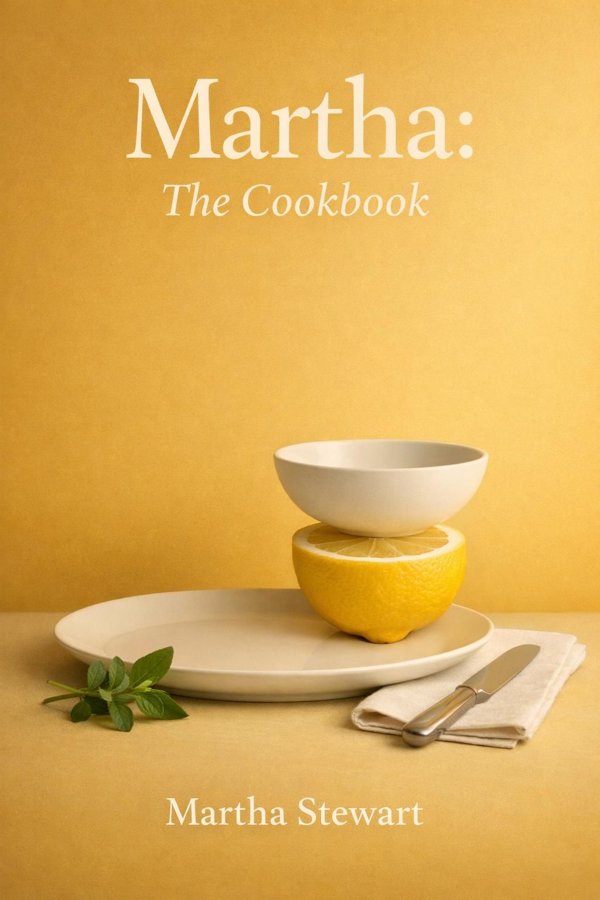
Martha: The Cookbook: Summary & Key Insights
 10 min9 chaptersAudio available
Key Takeaways from Martha: The Cookbook
One of the book’s deepest lessons is that good cooking starts long before heat touches a pan.
The first meal of the day can be routine, but Stewart treats it as an opportunity to create warmth, rhythm, and generosity.
Simple dishes reveal skill more clearly than elaborate ones.
A memorable main course does not need theatrical complexity; it needs confidence, balance, and proper execution.
Too often, side dishes are treated as afterthoughts.
What Is Martha: The Cookbook About?
Martha: The Cookbook by Martha Stewart is a cooking book spanning 9 pages. Martha: The Cookbook is a sweeping celebration of home cooking, thoughtful hospitality, and the disciplined creativity that has defined Martha Stewart’s career for decades. More than a collection of recipes, the book presents a complete culinary philosophy: cook with attention, organize with purpose, honor the seasons, and make everyday meals feel both nourishing and beautiful. Its pages move from foundational kitchen techniques to breakfasts, soups, main courses, side dishes, grains, desserts, and holiday menus, creating a practical guide for both ordinary weeknight dinners and memorable gatherings. What makes this cookbook matter is its blend of accessibility and aspiration. Stewart does not treat cooking as an elite art reserved for professionals; she frames it as a skill anyone can strengthen through preparation, repetition, and care. At the same time, she insists that presentation, timing, and atmosphere matter because food is also an expression of generosity. Her authority comes from decades as a bestselling author, television educator, and lifestyle expert who helped shape modern home entertaining. The result is a cookbook that teaches readers not just what to make, but how to think, plan, and cook with confidence.
This FizzRead summary covers all 9 key chapters of Martha: The Cookbook in approximately 10 minutes, distilling the most important ideas, arguments, and takeaways from Martha Stewart's work. Also available as an audio summary and Key Quotes Podcast.
Martha: The Cookbook
Martha: The Cookbook is a sweeping celebration of home cooking, thoughtful hospitality, and the disciplined creativity that has defined Martha Stewart’s career for decades. More than a collection of recipes, the book presents a complete culinary philosophy: cook with attention, organize with purpose, honor the seasons, and make everyday meals feel both nourishing and beautiful. Its pages move from foundational kitchen techniques to breakfasts, soups, main courses, side dishes, grains, desserts, and holiday menus, creating a practical guide for both ordinary weeknight dinners and memorable gatherings.
What makes this cookbook matter is its blend of accessibility and aspiration. Stewart does not treat cooking as an elite art reserved for professionals; she frames it as a skill anyone can strengthen through preparation, repetition, and care. At the same time, she insists that presentation, timing, and atmosphere matter because food is also an expression of generosity. Her authority comes from decades as a bestselling author, television educator, and lifestyle expert who helped shape modern home entertaining. The result is a cookbook that teaches readers not just what to make, but how to think, plan, and cook with confidence.
Who Should Read Martha: The Cookbook?
This book is perfect for anyone interested in cooking and looking to gain actionable insights in a short read. Whether you're a student, professional, or lifelong learner, the key ideas from Martha: The Cookbook by Martha Stewart will help you think differently.
- ✓Readers who enjoy cooking and want practical takeaways
- ✓Professionals looking to apply new ideas to their work and life
- ✓Anyone who wants the core insights of Martha: The Cookbook in just 10 minutes
Want the full summary?
Get instant access to this book summary and 100K+ more with Fizz Moment.
Get Free SummaryAvailable on App Store • Free to download
Key Chapters
Before flavor comes clarity. One of the book’s deepest lessons is that good cooking starts long before heat touches a pan. Stewart treats the kitchen as a workspace where organization creates freedom, speed, and confidence. When tools are sharp, ingredients are fresh, and preparation is thoughtful, the cook can focus on taste and timing instead of scrambling to recover from chaos.
This idea includes both physical setup and mental discipline. Essential tools matter: a sharp chef’s knife, sturdy cutting boards, reliable pots and pans, measuring tools, mixing bowls, and proper storage containers. But technique matters just as much. Readers are encouraged to understand knife skills, mise en place, seasoning, roasting, sautéing, baking, and proper food storage. These are not glamorous basics, yet they form the backbone of every successful meal.
Stewart’s approach is especially practical because it connects efficiency to pleasure. A well-arranged pantry makes weeknight cooking less stressful. A labeled freezer extends the life of homemade stock, sauces, and leftovers. Clean counters and planned prep allow the cook to move gracefully from one step to the next. Even entertaining becomes easier when serving platters, linens, and utensils are chosen in advance.
The larger message is that elegance is rarely accidental. It is usually the visible result of preparation. A simple roast chicken served calmly and on time often feels more impressive than a complicated dish produced in disorder.
Actionable takeaway: audit your kitchen this week. Sharpen your knives, discard expired pantry items, group similar tools together, and practice preparing all ingredients before you begin cooking a recipe.
The first meal of the day can be routine, but Stewart treats it as an opportunity to create warmth, rhythm, and generosity. In this book, breakfast and brunch are not merely about efficiency; they are about setting a mood. A good morning meal can be comforting and casual, or elegant enough for guests, but it should always feel intentional.
This chapter’s value lies in its range. Some dishes serve everyday needs: eggs, baked goods, fruit, granola, and simple breakfast staples that can fit into busy schedules. Others are more celebratory, such as brunch spreads with pastries, egg dishes, smoked fish, seasonal fruit, and make-ahead sides. Stewart shows how the same principles apply in both contexts: fresh ingredients, balanced textures, and clean presentation.
She also understands that breakfast rewards planning. Batter can be mixed ahead, fruit prepared in advance, tableware assembled the night before, and coffee or tea service streamlined so that the host can actually enjoy the meal. Brunch in particular becomes a lesson in hospitality. Instead of preparing every item at the last minute, readers are guided toward menus that combine one centerpiece dish with several easy accompaniments.
There is also an emotional dimension. Breakfast is often the meal most tied to intimacy: family weekends, holiday mornings, or quiet time before a busy day. Stewart honors that emotional weight by making the table feel cared for, not overcomplicated.
Actionable takeaway: choose one breakfast or brunch ritual to improve—such as setting the table, baking something simple in advance, or preparing a fruit platter—and make it part of your weekly routine.
Simple dishes reveal skill more clearly than elaborate ones. Stewart’s treatment of soups and salads shows that humble categories can become some of the most satisfying and expressive parts of a meal. Because these dishes rely on freshness, balance, and texture, they teach cooks how to season thoughtfully and compose food with care.
In soups, the foundation matters most. Stocks, aromatics, herbs, and simmering time determine depth. A vegetable soup should taste vibrant rather than muddy. A puréed soup should be smooth and structured, not heavy. A broth-based soup should feel layered despite its apparent simplicity. Stewart emphasizes the importance of extracting flavor carefully and finishing with precision, whether through cream, citrus, herbs, olive oil, or a garnish that adds contrast.
Salads receive equal seriousness. Lettuce alone is not enough; what matters is contrast between crisp, tender, acidic, sweet, rich, and crunchy elements. Greens must be washed and dried properly. Dressings should enhance rather than drown. Seasonal ingredients—tomatoes in summer, root vegetables in winter, herbs in spring—can transform a salad from obligation into highlight.
These dishes are also versatile tools for the home cook. A soup can become a make-ahead lunch, a light supper, or the opening course of a dinner party. A salad can frame a roast, balance a rich entrée, or stand alone when built with grains, cheese, legumes, or protein.
Actionable takeaway: practice building one soup and one salad from first principles—focus on stock, seasoning, texture, and garnish for soup, and on balance, freshness, and dressing restraint for salad.
A memorable main course does not need theatrical complexity; it needs confidence, balance, and proper execution. Stewart’s approach to entrées reflects her larger philosophy that home cooking should be both generous and composed. The main dish anchors the meal, but it should work in harmony with sides, timing, and the occasion.
The book presents a broad view of main courses, from family-style roasts and braises to fish, poultry, meat, and vegetarian-centered dishes. Across these categories, Stewart emphasizes method over showmanship. Roasting develops flavor through patient heat. Braising rewards planning and transforms tougher cuts into tender, deeply flavored meals. Pan-searing demands attention to temperature and timing. In each case, success comes from understanding the behavior of ingredients.
Another strength of this chapter is its practical adaptability. Many featured dishes can be scaled for weeknight dinners or expanded for guests. A roast bird, for example, can be simple enough for Sunday supper yet elegant enough for a holiday table when paired thoughtfully. A fish dish can feel refined when served with a bright sauce and seasonal vegetables. Stewart reminds readers that what elevates a main course is not excess, but restraint: a well-cooked protein, a sauce that supports rather than overwhelms, and sides chosen for contrast.
This section also reinforces the importance of resting, carving, plating, and serving temperature. These final steps often determine whether a well-cooked dish lands successfully.
Actionable takeaway: master three core entrée methods—roasting, braising, and pan-searing—and use them as flexible templates for meats, fish, and vegetables throughout the year.
Too often, side dishes are treated as afterthoughts. Stewart rejects that idea completely. In this cookbook, vegetables are not filler placed beside a protein out of duty; they are essential contributors to color, nutrition, texture, and seasonal identity. A meal becomes more complete when vegetables are cooked with as much care as the centerpiece.
This means understanding how different vegetables respond to heat. Some shine when roasted until caramelized, others need quick blanching to preserve color and freshness, and others benefit from braising, steaming, grilling, or sautéing. Seasoning must support the ingredient rather than bury it. Butter, olive oil, citrus, herbs, spices, cheese, and nuts can all enhance vegetables when used thoughtfully.
Stewart also emphasizes visual appeal. A platter of glazed carrots, a bowl of greens with garlic, or a gratin with a burnished crust contributes to the table’s beauty as much as the entrée does. Side dishes can also solve practical problems: they stretch a meal for more guests, provide balance against rich mains, and allow cooks to celebrate seasonal produce.
Importantly, this chapter encourages respect for vegetables as ingredients with distinct personalities. Potatoes can be creamy, crisp, mashed, roasted, or layered into casseroles. Greens can be bright and tender or long-cooked and savory. Squash can be pureed, stuffed, roasted, or turned into soup. Each treatment changes the role it plays.
Actionable takeaway: stop planning vegetables last. When creating a meal, choose one produce-driven dish first and build the rest of the menu around its color, texture, and seasonality.
The most useful meals are often the most adaptable. Stewart’s chapter on pasta, grains, and legumes shows how pantry staples can create dishes that are economical, nourishing, elegant, and satisfying. These ingredients provide structure to both simple suppers and more elaborate menus, making them indispensable to home cooks.
Pasta teaches timing and restraint. Sauce should coat, not drown. Shape matters because each pasta captures texture differently. Grains such as rice, farro, barley, and quinoa bring chew, nuttiness, and flexibility. Legumes like beans and lentils offer protein, earthiness, and staying power. Stewart presents these categories not as backup options, but as foundations for serious cooking.
What makes this chapter especially valuable is its emphasis on versatility. A grain salad can serve as lunch, side dish, or base for roasted vegetables. Risotto can be luxurious yet built from pantry ingredients. Beans can be folded into soups, purees, salads, or baked dishes. Pasta can move from quick weeknight comfort to polished entertaining fare depending on ingredient quality and presentation.
There is also a quiet lesson in economy here. Cooks do not need premium cuts or hard-to-find items to make deeply satisfying food. Good olive oil, fresh herbs, stock, cheese, seasonal vegetables, and careful seasoning can elevate modest staples into memorable meals.
The chapter ultimately teaches structure: how to combine starch, protein, acidity, aromatics, and texture into dishes that feel complete.
Actionable takeaway: keep three grains, two types of pasta, and two legumes stocked at all times, and learn one reliable formula for turning each into a balanced meal.
Cooking allows improvisation, but baking asks for respect. Stewart’s dessert and baking philosophy rests on a simple truth: reliable sweetness comes from precision, discipline, and an understanding of ingredients. Far from making baking intimidating, this approach makes it more approachable because it explains why exactness matters.
Flour, butter, eggs, sugar, leaveners, temperature, and timing all interact in predictable ways. A tart crust depends on cold fat and gentle handling. Cakes rise properly when ingredients are measured accurately and mixed correctly. Custards require controlled heat. Cookies reveal the effects of butter temperature, dough chilling, and oven calibration. Stewart helps readers see dessert not as kitchen magic, but as a series of understandable processes.
At the same time, the chapter preserves baking’s sense of pleasure and occasion. Pies, cakes, puddings, tarts, cookies, and fruit desserts carry emotional significance: birthdays, holidays, dinner parties, family traditions, and small daily comforts. Presentation matters here too. A clean slice, glossy glaze, dusting of sugar, or carefully arranged fruit can elevate the entire experience.
The recipes also encourage planning. Many desserts benefit from chilling, resting, or being made ahead, which makes them practical for entertaining. Stewart consistently connects beauty with preparation rather than last-minute stress.
For the home baker, this chapter offers empowerment. Once basic formulas are understood, confidence grows quickly.
Actionable takeaway: choose one classic baked good—such as pie crust, layer cake, or cookies—and practice it repeatedly until you understand the role of temperature, measurement, and timing in the final result.
The best hosts make difficulty disappear. Stewart’s approach to entertaining shows that effortless gatherings are usually the product of careful planning, sequencing, and attention to detail. Hospitality is not about extravagance for its own sake; it is about making guests feel welcomed, comfortable, and well fed without burdening the host with chaos.
Menus are central to this philosophy. Stewart encourages balance across courses, temperatures, colors, and preparation methods. A rich starter should not be followed by an equally heavy main and dense dessert. If one dish must be cooked at the last minute, others should be made ahead. Serving pieces, beverages, flowers, linens, and seating should be considered in advance, not improvised under pressure.
This chapter is especially useful because it reframes entertaining as design. Every decision influences flow: whether guests stand or sit, whether dishes are plated or served family-style, whether the meal is formal or relaxed, whether the season calls for hearty comfort or light freshness. Stewart’s menus demonstrate how thoughtfulness creates cohesion.
She also insists that atmosphere matters. Lighting, table setting, and pacing can shape the emotional memory of a meal just as much as the food. Yet none of this requires excess. A carefully folded napkin, polished glassware, and one beautiful centerpiece may do more than elaborate decoration.
Ultimately, hospitality is portrayed as a practical expression of generosity. Good hosting means preparing enough that you can be present.
Actionable takeaway: for your next gathering, write a complete hosting plan 48 hours ahead, including menu, prep schedule, serving dishes, beverages, and table setup.
Food tastes more alive when it follows the calendar. Stewart’s seasonal and holiday cooking principles remind readers that the best meals are often those shaped by time of year, local produce, and cultural ritual. Seasonality is not a trend here; it is a practical and aesthetic framework that improves flavor, simplifies menu planning, and deepens connection to tradition.
Cooking with the seasons means using ingredients when they are naturally at their best. Summer tomatoes need little more than salt and olive oil. Autumn invites squash, apples, mushrooms, and braises. Winter calls for roasts, roots, citrus, and baked desserts. Spring offers asparagus, peas, herbs, and tender greens. Stewart shows how menus become more coherent when they reflect what is available and appropriate.
Holiday cooking adds another layer: memory and ceremony. Special occasions deserve dishes that carry meaning, whether inherited family recipes or festive centerpieces created for gathering. But Stewart also warns against making holidays harder than they need to be. Advance preparation, menu restraint, and thoughtful delegation are essential if celebration is to remain joyful.
Seasonality also sharpens creativity. Instead of forcing the same meals year-round, cooks learn to adapt techniques to changing ingredients. Roasting, grilling, baking, and preserving all take on different roles depending on the season.
This chapter reinforces one of the book’s broadest insights: cooking is not separate from life’s rhythms. It is one of the ways we mark them.
Actionable takeaway: plan your meals around one seasonal ingredient each week and build a small holiday prep timeline whenever you host a special occasion.
All Chapters in Martha: The Cookbook
About the Author
Martha Stewart is an American businesswoman, bestselling author, television personality, and lifestyle expert whose name has become synonymous with cooking, entertaining, and refined domestic living. She began her career in catering before building an expansive media and merchandising empire through books, magazines, television programs, and branded products. As the founder of Martha Stewart Living Omnimedia, she helped define a modern approach to home life that combines craftsmanship, organization, seasonal awareness, and visual elegance. Stewart has published numerous cookbooks and household guides, influencing generations of home cooks and hosts with her emphasis on precision and preparation. Her enduring authority comes from her ability to make polished living feel teachable, practical, and deeply rooted in everyday rituals.
Get This Summary in Your Preferred Format
Read or listen to the Martha: The Cookbook summary by Martha Stewart anytime, anywhere. FizzRead offers multiple formats so you can learn on your terms — all free.
Available formats: App · Audio · PDF · EPUB — All included free with FizzRead
Download Martha: The Cookbook PDF and EPUB Summary
Key Quotes from Martha: The Cookbook
“One of the book’s deepest lessons is that good cooking starts long before heat touches a pan.”
“The first meal of the day can be routine, but Stewart treats it as an opportunity to create warmth, rhythm, and generosity.”
“Simple dishes reveal skill more clearly than elaborate ones.”
“A memorable main course does not need theatrical complexity; it needs confidence, balance, and proper execution.”
“Too often, side dishes are treated as afterthoughts.”
Frequently Asked Questions about Martha: The Cookbook
Martha: The Cookbook by Martha Stewart is a cooking book that explores key ideas across 9 chapters. Martha: The Cookbook is a sweeping celebration of home cooking, thoughtful hospitality, and the disciplined creativity that has defined Martha Stewart’s career for decades. More than a collection of recipes, the book presents a complete culinary philosophy: cook with attention, organize with purpose, honor the seasons, and make everyday meals feel both nourishing and beautiful. Its pages move from foundational kitchen techniques to breakfasts, soups, main courses, side dishes, grains, desserts, and holiday menus, creating a practical guide for both ordinary weeknight dinners and memorable gatherings. What makes this cookbook matter is its blend of accessibility and aspiration. Stewart does not treat cooking as an elite art reserved for professionals; she frames it as a skill anyone can strengthen through preparation, repetition, and care. At the same time, she insists that presentation, timing, and atmosphere matter because food is also an expression of generosity. Her authority comes from decades as a bestselling author, television educator, and lifestyle expert who helped shape modern home entertaining. The result is a cookbook that teaches readers not just what to make, but how to think, plan, and cook with confidence.
You Might Also Like
The Bread Baker's Apprentice: Mastering the Art of Extraordinary Bread
Peter Reinhart
10 min
Flour Water Salt Yeast: The Fundamentals of Artisan Bread and Pizza
Ken Forkish
10 min
Go-To Dinners: A Barefoot Contessa Cookbook
Ina Garten
10 min
Sally's Baking 101
Sally McKenney
10 min
Salt, Fat, Acid, Heat: Mastering the Elements of Good Cooking
Samin Nosrat
10 min
Sweet & Salty!: The Perfect Balance of Opposites in 75 Irresistible Recipes
King Arthur Baking Company
10 minBrowse by Category
Ready to read Martha: The Cookbook?
Get the full summary and 100K+ more books with Fizz Moment.