
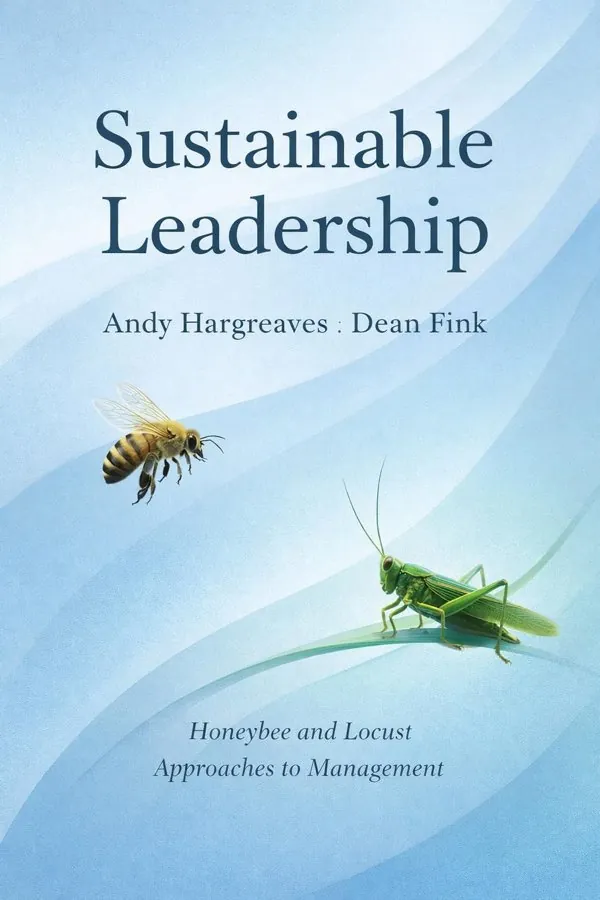
Sustainable Leadership: Honeybee and Locust Approaches to Management: Summary & Key Insights
 10 min7 chaptersAudio available
What Is Sustainable Leadership: Honeybee and Locust Approaches to Management About?
Sustainable Leadership: Honeybee and Locust Approaches to Management by Andy Hargreaves, Dean Fink is a leadership book spanning 7 pages. Sustainable Leadership explores how educational leaders can create lasting improvements in schools and organizations by focusing on long-term development, moral purpose, and systemic thinking. The authors contrast short-term, high-pressure management styles with sustainable approaches that nurture people, learning, and communities over time.
This FizzRead summary covers all 7 key chapters of Sustainable Leadership: Honeybee and Locust Approaches to Management in approximately 10 minutes, distilling the most important ideas, arguments, and takeaways from Andy Hargreaves, Dean Fink's work. Also available as an audio summary and Key Quotes Podcast.
Sustainable Leadership: Honeybee and Locust Approaches to Management
Sustainable Leadership explores how educational leaders can create lasting improvements in schools and organizations by focusing on long-term development, moral purpose, and systemic thinking. The authors contrast short-term, high-pressure management styles with sustainable approaches that nurture people, learning, and communities over time.
Who Should Read Sustainable Leadership: Honeybee and Locust Approaches to Management?
This book is perfect for anyone interested in leadership and looking to gain actionable insights in a short read. Whether you're a student, professional, or lifelong learner, the key ideas from Sustainable Leadership: Honeybee and Locust Approaches to Management by Andy Hargreaves, Dean Fink will help you think differently.
- ✓Readers who enjoy leadership and want practical takeaways
- ✓Professionals looking to apply new ideas to their work and life
- ✓Anyone who wants the core insights of Sustainable Leadership: Honeybee and Locust Approaches to Management in just 10 minutes
Want the full summary?
Get instant access to this book summary and 100K+ more with Fizz Moment.
Get Free SummaryAvailable on App Store • Free to download
Key Chapters
At the heart of *Sustainable Leadership* lies a vivid contrast: the honeybee and the locust. When Dean and I searched for a way to capture the difference between leaders who build and those who deplete, these creatures offered a perfect shorthand.
The honeybee symbolizes a sustainable leader. It gathers nectar and, in doing so, pollinates flowers—it contributes to the very ecosystem that supports its own survival. Honeybee leadership thrives on mutual benefit, collaboration, and stewardship. Such leaders develop their people; they invest in systems that endure. They understand that sustainable leadership is not self-sacrifice, but interdependence. Like bees in a hive, no single act or decision defines success; rather, success emerges from sustained collective effort grounded in moral purpose and shared learning.
The locust represents the opposite—a leader or organization that consumes intensely but leaves destruction behind. Locust leadership is seductive because it can seem effective in the short term: results improve, reforms accelerate, change looks decisive. Yet the aftermath is hollow. Teachers burn out, communities lose faith, and when the charismatic leader departs, nothing sturdy remains.
These metaphors are not intended as moral judgments but as diagnostic tools. They help us see how leadership practices resonate through time and community. A honeybee leader thinks beyond weekly performance reviews and standardized tests, asking: what kind of environment am I leaving? A locust leader thinks in quarters and cycles, asking only: what have I gained?
The difference between honeybee and locust leadership is the difference between lasting influence and temporary control. Honeybees care about the health of the hive; locusts care about the harvest of the moment. Our challenge, as educators and leaders, is to resist the pressures that push us toward locust-like consumption, and to learn the patient art of pollination—building systems that regenerate themselves long after we are gone.
Leadership without moral purpose is directionless energy—it moves and churns but never truly transforms. Sustainable leadership begins with the question of purpose: why do we educate, why do we lead, and for whom do we labor? For Dean and me, moral purpose is not a slogan on a school wall; it is the compass that keeps every action aligned with the reason we exist as educators—to enhance learning and life, not merely performance and profit.
In schools, moral purpose translates into a commitment to the growth of children as whole persons and as citizens of a larger community. It implores leaders to make decisions not just for policy compliance but for human flourishing. A sustainable leader measures success not only in data but also in dignity—in how people feel valued, empowered, and capable of contribution.
We often saw systems lose sight of this moral compass when reforms emphasized competition, measurement, and short-term accountability. The result was a widening gap between what schools were asked to do and what they existed to accomplish. Sustainable leadership restores meaning by linking achievement to care, excellence to equity, and performance to purpose.
Leaders who operate with moral clarity cultivate trust and resilience within their organizations. Their staff members know that decisions arise from values, not from expediency. This moral grounding is contagious—it strengthens professional learning communities and encourages courage in the face of change. When leadership is alive with moral purpose, every choice becomes more than administrative—it becomes ethical and educational.
+ 5 more chapters — available in the FizzRead app
All Chapters in Sustainable Leadership: Honeybee and Locust Approaches to Management
About the Authors
Andy Hargreaves is a British-Canadian education scholar known for his work on educational change and leadership. Dean Fink is an educational consultant and former superintendent with extensive experience in school improvement and leadership development.
Get This Summary in Your Preferred Format
Read or listen to the Sustainable Leadership: Honeybee and Locust Approaches to Management summary by Andy Hargreaves, Dean Fink anytime, anywhere. FizzRead offers multiple formats so you can learn on your terms — all free.
Available formats: App · Audio · PDF · EPUB — All included free with FizzRead
Download Sustainable Leadership: Honeybee and Locust Approaches to Management PDF and EPUB Summary
Key Quotes from Sustainable Leadership: Honeybee and Locust Approaches to Management
“At the heart of *Sustainable Leadership* lies a vivid contrast: the honeybee and the locust.”
“Leadership without moral purpose is directionless energy—it moves and churns but never truly transforms.”
Frequently Asked Questions about Sustainable Leadership: Honeybee and Locust Approaches to Management
Sustainable Leadership: Honeybee and Locust Approaches to Management by Andy Hargreaves, Dean Fink is a leadership book that explores key ideas across 7 chapters. Sustainable Leadership explores how educational leaders can create lasting improvements in schools and organizations by focusing on long-term development, moral purpose, and systemic thinking. The authors contrast short-term, high-pressure management styles with sustainable approaches that nurture people, learning, and communities over time.
You Might Also Like

Extreme Ownership
Jocko Willink
10 min
Dare to Lead
Brene Brown
10 min
Leaders Eat Last
Simon Sinek
10 min
The 21 Irrefutable Laws of Leadership
John Maxwell
10 min
Start With Why
Simon Sinek
10 min
How to Lead When You're Not in Charge
Clay Scroggins
10 minBrowse by Category
Ready to read Sustainable Leadership: Honeybee and Locust Approaches to Management?
Get the full summary and 100K+ more books with Fizz Moment.