
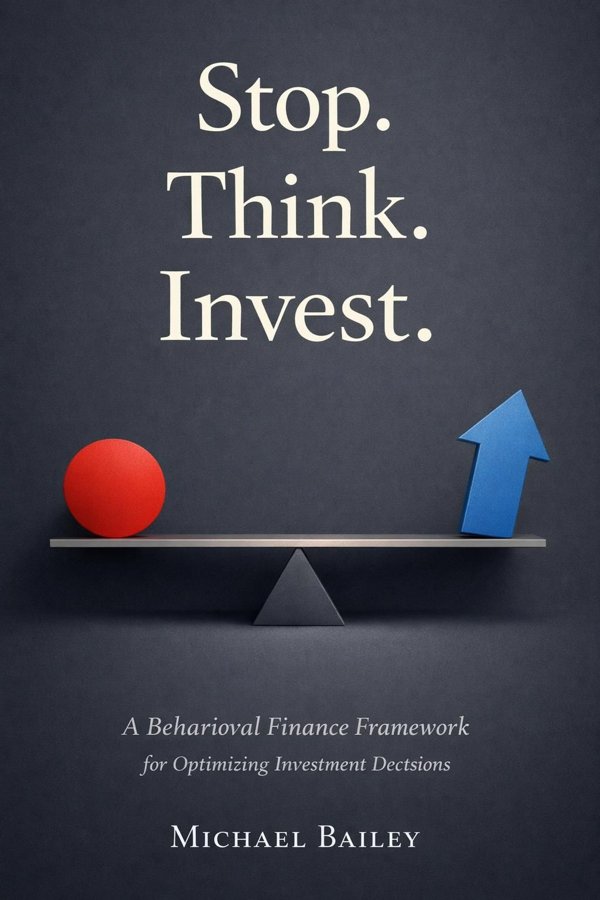
Stop. Think. Invest.: A Behavioral Finance Framework for Optimizing Investment Decisions: Summary & Key Insights
 10 min7 chaptersAudio available
What Is Stop. Think. Invest.: A Behavioral Finance Framework for Optimizing Investment Decisions About?
Stop. Think. Invest.: A Behavioral Finance Framework for Optimizing Investment Decisions by Michael Bailey is a finance book spanning 7 pages. Stop. Think. Invest. introduces a behavioral finance framework that helps investors make better decisions by understanding the psychological biases that influence financial choices. Michael Bailey combines insights from psychology, economics, and investing to guide readers toward more rational and disciplined investment strategies.
This FizzRead summary covers all 7 key chapters of Stop. Think. Invest.: A Behavioral Finance Framework for Optimizing Investment Decisions in approximately 10 minutes, distilling the most important ideas, arguments, and takeaways from Michael Bailey's work. Also available as an audio summary and Key Quotes Podcast.
Stop. Think. Invest.: A Behavioral Finance Framework for Optimizing Investment Decisions
Stop. Think. Invest. introduces a behavioral finance framework that helps investors make better decisions by understanding the psychological biases that influence financial choices. Michael Bailey combines insights from psychology, economics, and investing to guide readers toward more rational and disciplined investment strategies.
Who Should Read Stop. Think. Invest.: A Behavioral Finance Framework for Optimizing Investment Decisions?
This book is perfect for anyone interested in finance and looking to gain actionable insights in a short read. Whether you're a student, professional, or lifelong learner, the key ideas from Stop. Think. Invest.: A Behavioral Finance Framework for Optimizing Investment Decisions by Michael Bailey will help you think differently.
- ✓Readers who enjoy finance and want practical takeaways
- ✓Professionals looking to apply new ideas to their work and life
- ✓Anyone who wants the core insights of Stop. Think. Invest.: A Behavioral Finance Framework for Optimizing Investment Decisions in just 10 minutes
Want the full summary?
Get instant access to this book summary and 100K+ more with Fizz Moment.
Get Free SummaryAvailable on App Store • Free to download
Key Chapters
Markets are emotional ecosystems. Prices are not simply reflections of fundamentals—they are mirrors of collective psychology. Every surge of optimism and wave of panic is a manifestation of basic human emotion.
Fear and greed are the twin engines of market behavior. Greed fuels bubbles; fear fuels crashes. During bull markets, the euphoria of rising prices disguises risk. Investors begin to believe that ‘this time is different’ and extrapolate recent trends indefinitely. Conversely, during downturns, fear magnifies uncertainty. Investors who once celebrated long-term thinking suddenly scramble for safety.
I’ve always stressed that emotional control is not about being emotionless—it’s about awareness. Feelings can provide valuable insights, warning us of impulsive errors or confirming genuine conviction. The key is to observe them without letting them dictate your moves. When you sense excitement before a big purchase or panic during market turmoil, that’s your cue to step back and reassess, not react. Emotional discipline distinguishes investors who survive volatility from those who are consumed by it.
This recognition leads naturally to the ‘Stop. Think. Invest.’ approach—a deliberate pause between stimulus and response, replacing instinctive reactions with thoughtful evaluation.
+ 5 more chapters — available in the FizzRead app
All Chapters in Stop. Think. Invest.: A Behavioral Finance Framework for Optimizing Investment Decisions
About the Author
Michael Bailey is a behavioral finance expert and investment strategist with extensive experience in financial markets. He focuses on the intersection of psychology and investing, helping individuals and organizations improve decision-making and portfolio performance.
Get This Summary in Your Preferred Format
Read or listen to the Stop. Think. Invest.: A Behavioral Finance Framework for Optimizing Investment Decisions summary by Michael Bailey anytime, anywhere. FizzRead offers multiple formats so you can learn on your terms — all free.
Available formats: App · Audio · PDF · EPUB — All included free with FizzRead
Download Stop. Think. Invest.: A Behavioral Finance Framework for Optimizing Investment Decisions PDF and EPUB Summary
Key Quotes from Stop. Think. Invest.: A Behavioral Finance Framework for Optimizing Investment Decisions
“In traditional finance, humans are assumed to be rational agents, maximizing utility and responding logically to information.”
“Prices are not simply reflections of fundamentals—they are mirrors of collective psychology.”
Frequently Asked Questions about Stop. Think. Invest.: A Behavioral Finance Framework for Optimizing Investment Decisions
Stop. Think. Invest.: A Behavioral Finance Framework for Optimizing Investment Decisions by Michael Bailey is a finance book that explores key ideas across 7 chapters. Stop. Think. Invest. introduces a behavioral finance framework that helps investors make better decisions by understanding the psychological biases that influence financial choices. Michael Bailey combines insights from psychology, economics, and investing to guide readers toward more rational and disciplined investment strategies.
You Might Also Like





Browse by Category
Ready to read Stop. Think. Invest.: A Behavioral Finance Framework for Optimizing Investment Decisions?
Get the full summary and 100K+ more books with Fizz Moment.