
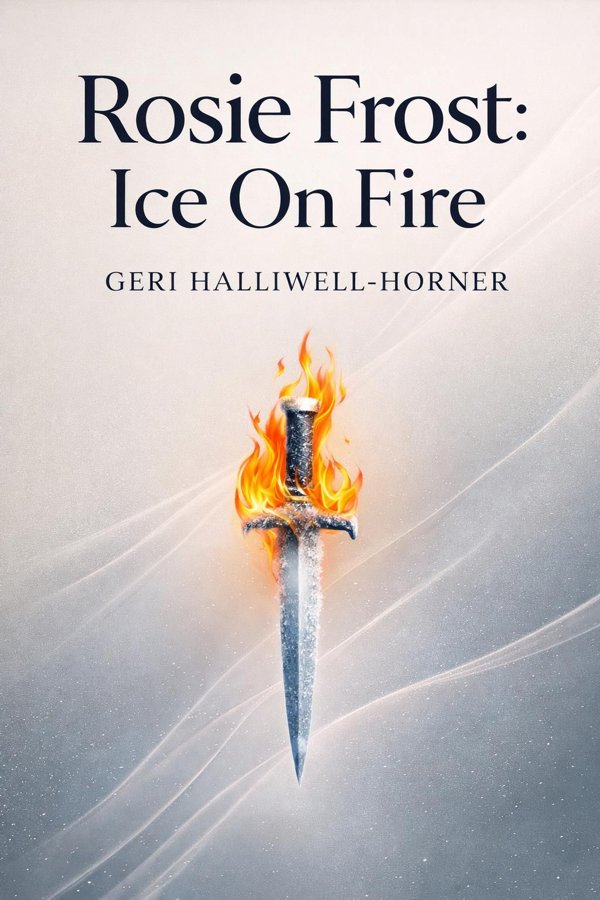
Rosie Frost: Ice On Fire: Summary & Key Insights
 10 min8 chaptersAudio available
Key Takeaways from Rosie Frost: Ice On Fire
The most powerful heroes are rarely fearless; they simply choose to move while fear is still present.
Who we are is revealed less by what we say and more by what we choose under pressure.
Adventure stories often celebrate individual heroes, but the deepest victories usually belong to teams that learn to trust one another.
When stories treat the natural world as alive with meaning, readers begin to see that landscapes, animals, and ecosystems are not scenery but relationships.
A good mystery does more than hide answers; it exposes the characters who are searching for them.
What Is Rosie Frost: Ice On Fire About?
Rosie Frost: Ice On Fire by Geri Halliwell-Horner is a bestsellers book. Rosie Frost: Ice On Fire continues Geri Halliwell-Horner’s imaginative middle-grade fantasy series with bigger stakes, deeper emotions, and a heroine who must learn that courage is not the absence of fear, but the decision to act despite it. Set in a vividly drawn world shaped by danger, mystery, friendship, and environmental tension, the novel follows Rosie as she faces new threats that test her loyalty, resilience, and sense of identity. What begins as a thrilling adventure quickly becomes a story about trust, responsibility, and the power young people have to challenge forces larger than themselves. The book matters because it blends page-turning excitement with themes that resonate far beyond fantasy: grief, belonging, bravery, care for animals and nature, and the importance of standing up for what is right. Halliwell-Horner brings star power and storytelling ambition to the series, crafting a fast-moving narrative that is accessible to younger readers while still offering emotional depth. Best known globally as a pop icon and performer, she has also established herself as a children’s author with a strong instinct for dramatic storytelling, memorable characters, and uplifting messages. This sequel expands Rosie’s world in satisfying ways while keeping its emotional heart intact.
This FizzRead summary covers all 8 key chapters of Rosie Frost: Ice On Fire in approximately 10 minutes, distilling the most important ideas, arguments, and takeaways from Geri Halliwell-Horner's work. Also available as an audio summary and Key Quotes Podcast.
Rosie Frost: Ice On Fire
Rosie Frost: Ice On Fire continues Geri Halliwell-Horner’s imaginative middle-grade fantasy series with bigger stakes, deeper emotions, and a heroine who must learn that courage is not the absence of fear, but the decision to act despite it. Set in a vividly drawn world shaped by danger, mystery, friendship, and environmental tension, the novel follows Rosie as she faces new threats that test her loyalty, resilience, and sense of identity. What begins as a thrilling adventure quickly becomes a story about trust, responsibility, and the power young people have to challenge forces larger than themselves.
The book matters because it blends page-turning excitement with themes that resonate far beyond fantasy: grief, belonging, bravery, care for animals and nature, and the importance of standing up for what is right. Halliwell-Horner brings star power and storytelling ambition to the series, crafting a fast-moving narrative that is accessible to younger readers while still offering emotional depth. Best known globally as a pop icon and performer, she has also established herself as a children’s author with a strong instinct for dramatic storytelling, memorable characters, and uplifting messages. This sequel expands Rosie’s world in satisfying ways while keeping its emotional heart intact.
Who Should Read Rosie Frost: Ice On Fire?
This book is perfect for anyone interested in bestsellers and looking to gain actionable insights in a short read. Whether you're a student, professional, or lifelong learner, the key ideas from Rosie Frost: Ice On Fire by Geri Halliwell-Horner will help you think differently.
- ✓Readers who enjoy bestsellers and want practical takeaways
- ✓Professionals looking to apply new ideas to their work and life
- ✓Anyone who wants the core insights of Rosie Frost: Ice On Fire in just 10 minutes
Want the full summary?
Get instant access to this book summary and 100K+ more with Fizz Moment.
Get Free SummaryAvailable on App Store • Free to download
Key Chapters
The most powerful heroes are rarely fearless; they simply choose to move while fear is still present. That idea runs strongly through Rosie Frost: Ice On Fire, where Rosie is pushed into situations that would overwhelm almost anyone. Rather than presenting courage as effortless, the story shows it as something built moment by moment through difficult choices, self-doubt, and perseverance.
Rosie’s journey highlights a truth many young readers need to hear: bravery often looks messy. It may involve hesitation, mistakes, second-guessing, or the feeling that you are unprepared. Yet action still matters. In the novel, danger is not just external. Rosie must also confront emotional uncertainty, the weight of expectation, and the pressure of making the right choice when the consequences are high. This makes her growth feel believable. She does not become strong because life gets easier. She becomes strong because she keeps responding to challenge.
This idea has practical value beyond fiction. A student speaking in class, a child joining a new school, or anyone facing a difficult conversation can learn from Rosie’s example. Confidence often comes after action, not before it. Waiting until fear disappears can mean never beginning at all.
The book also suggests that courage is contagious. When one person acts with integrity, others become more willing to do the same. Rosie’s decisions influence friends, allies, and the wider world around her. Her bravery becomes a spark.
Actionable takeaway: The next time you feel intimidated, do one small brave thing before you feel ready. Treat courage as a practice, not a personality trait.
Who we are is revealed less by what we say and more by what we choose under pressure. In Ice On Fire, Rosie’s identity is shaped not through labels or destiny alone, but through the decisions she makes when loyalty, truth, and survival pull her in different directions. The novel uses fantasy and adventure to explore a deeply human question: how do we become ourselves?
Rosie is not simply discovering facts about her world; she is discovering what kind of person she wants to be inside it. That distinction matters. Many stories focus on secrets, powers, or hidden histories, but this book keeps returning to moral choice. Rosie must weigh trust carefully, decide when to challenge authority, and figure out how to remain compassionate in a world that rewards control and manipulation. Her development suggests that identity is active, not passive. It is built through repeated decisions aligned with values.
This is especially meaningful for younger readers navigating peer pressure, family expectations, and changing social dynamics. It can be easy to think identity is something fixed or assigned. The novel argues the opposite: character is constructed through action, especially in moments of uncertainty.
In everyday life, this might look like telling the truth when lying would be easier, defending someone excluded by a group, or admitting a mistake rather than hiding it. These choices may seem small, but they gradually shape self-respect and reputation.
By showing Rosie’s internal struggle alongside the plot’s external conflict, the book makes growth feel earned. Readers are invited to see identity not as a finished answer, but as a living process.
Actionable takeaway: When faced with a tough decision, ask not just "What works?" but "What kind of person will this choice help me become?"
Adventure stories often celebrate individual heroes, but the deepest victories usually belong to teams that learn to trust one another. Rosie Frost: Ice On Fire reinforces this idea by showing that friendship is not decorative background to the plot; it is one of the forces that makes survival, growth, and meaningful change possible. Under pressure, relationships reveal both their fragility and their power.
Rosie’s world is filled with uncertainty, danger, and competing interests. In that kind of environment, friendship becomes more than companionship. It becomes a test of honesty, sacrifice, listening, and mutual belief. Characters must decide whether to guard themselves or open up, whether to act alone or depend on others. These tensions make the relationships feel dynamic rather than simplistic.
What the novel gets right is that trust does not appear instantly. It develops through shared risk, loyalty in hard moments, and the willingness to forgive misunderstanding. Rosie’s bonds matter because they are challenged. Her alliances are not perfect, and that imperfection makes them useful models for real life.
Readers can apply this lesson outside the story. In school, at work, or in families, pressure exposes whether relationships are based only on convenience or on genuine care. Strong friendships are built by consistency: showing up, telling the truth kindly, and helping without keeping score. They also require courage, because trust means allowing other people to matter.
The story suggests that no one wins alone for long. Even gifted individuals need perspective, support, and accountability. Friendship widens what a person can endure and what they can imagine.
Actionable takeaway: Strengthen one important relationship this week by being reliable in a specific way—check in, offer help, or say something honest that builds trust.
When stories treat the natural world as alive with meaning, readers begin to see that landscapes, animals, and ecosystems are not scenery but relationships. One of the compelling dimensions of Ice On Fire is the way it frames environmental awareness within an exciting fantasy adventure. The world around Rosie is not passive. It matters emotionally, morally, and narratively.
The novel connects danger to disruption, reminding readers that harm to the environment is often tied to greed, control, and short-term thinking. At the same time, it presents nature as a source of wonder, connection, and responsibility. This balance is important. Rather than preaching, the story encourages care through attachment. When readers feel the beauty and vulnerability of the world Rosie inhabits, protecting it becomes an instinctive moral response.
This theme is especially effective for younger audiences because stories often shape values before arguments do. A child who grows attached to animals, wild places, and fragile systems in fiction may become more attentive in real life. The lesson is not abstract. It can lead to practical behaviors: reducing waste, supporting conservation, respecting animals, or simply noticing the local environment with greater empathy.
The title itself suggests tension between opposing forces, and that tension can be read as symbolic of ecological imbalance. Fire and ice evoke conflict, change, and the consequences of extremes. In that sense, the novel mirrors current concerns about climate, environmental instability, and humanity’s role in either deepening or healing damage.
The story’s deeper point is clear: to care for the world, we must first stop seeing it as separate from us.
Actionable takeaway: Choose one small environmental habit you can sustain—use less plastic, spend time outdoors attentively, or support an animal or conservation cause you genuinely care about.
A good mystery does more than hide answers; it exposes the characters who are searching for them. In Rosie Frost: Ice On Fire, suspense is not only a mechanism for keeping pages turning. It is a way of deepening Rosie’s emotional development. Every unanswered question forces her to interpret motives, challenge assumptions, and decide what kind of truth she is prepared to face.
This matters because the book does not separate plot from character. The mysteries surrounding Rosie’s world, its dangers, and the people within it are tied to questions of belonging, trust, and self-understanding. As Rosie investigates external threats, she is also forced inward. What does she believe? Who can she rely on? What happens when the truth is more complicated than she hoped?
Readers often enjoy mystery for its puzzle-solving energy, but the novel shows that uncertainty can be transformative. Not knowing can sharpen attention. It can reveal hidden loyalties, expose fear, and encourage maturity. In real life, ambiguity works much the same way. People frequently want immediate clarity, yet growth often happens during periods when the full picture is unavailable.
Practical application can be found in decision-making. When information is incomplete, it helps to slow down, observe patterns, ask better questions, and avoid jumping to conclusions. Rosie’s experience illustrates the cost of assumptions and the value of discernment.
By making mystery emotionally consequential, the novel becomes more than an adventure. It becomes a story about how truth changes us, especially when it arrives gradually and demands a response.
Actionable takeaway: When facing uncertainty, resist the urge to react instantly. Gather more information, ask one deeper question, and notice what the unknown may be teaching you about yourself.
One of the most energizing ideas in children’s fantasy is that young people are not powerless observers of the adult world. Ice On Fire embraces this fully. Rosie’s journey suggests that age does not determine moral significance, and that courage, insight, and conviction can come from those whom others underestimate.
The story places Rosie in conflict with systems, secrets, and authority figures that seem larger than she is. That imbalance is precisely what gives the book its emotional charge. Readers see a young character confronting structures that appear fixed and intimidating, yet she continues to question, resist, and act. This sends an important message: power is not only about status. It is also about clarity, persistence, and the willingness to stand for truth when silence would be safer.
This theme matters in a time when many young readers are aware of global issues such as climate anxiety, social division, inequality, and institutional failure. Fiction like this can help them imagine agency. It does not suggest that change is easy or that good intentions are enough. Instead, it demonstrates that attention, collaboration, and principled action matter.
In practical terms, the lesson applies to everyday life. A young person may not control school rules, family circumstances, or broader politics, but they can ask questions, report harm, support others, and make ethical choices. Agency often begins locally.
The novel also shows that challenging power requires discernment. Not every rebel is wise, and not every authority figure is corrupt. Rosie must learn the difference. That nuance makes the message stronger, not weaker.
Actionable takeaway: Identify one place in your life where you feel overlooked, then take one constructive step—ask a question, speak up respectfully, or organize support around an issue that matters.
Many stories confuse resilience with emotional toughness alone, but true resilience is more flexible than rigid. In Rosie Frost: Ice On Fire, resilience is shown as the ability to endure challenge without losing empathy, curiosity, or moral direction. Rosie survives not because she becomes cold, but because she continues to care while adapting to difficult realities.
This distinction is important. Hard experiences can teach useful lessons, but they can also tempt people to shut down emotionally. The novel resists that trap. Rosie is tested repeatedly, yet her strength does not come from detachment. It comes from learning, adjusting, asking for help, and refusing to let fear define her future. That makes her resilience feel healthy rather than defensive.
The story also demonstrates that resilience is relational. Support from trusted allies, belief in a larger purpose, and connection to something worth protecting all help Rosie continue. This reflects real life. People rarely become resilient in isolation. They build resilience through routines, communities, perspective, and recovery after setbacks.
For readers, this theme offers a practical model. Failing at something, experiencing disappointment, or facing a painful transition does not require becoming cynical. It may instead require learning how to bend without breaking. That can mean resting when needed, revising a plan, or staying open-hearted even after betrayal or loss.
By framing resilience as adaptive rather than numb, the novel gives young readers a more useful understanding of strength. Endurance is not just about surviving events. It is about preserving the best of yourself while moving through them.
Actionable takeaway: The next time things go wrong, ask two questions: "What do I need to change?" and "What part of myself do I want to protect?"
Hope becomes most meaningful when circumstances offer the least reason for it. That is one of the underlying emotional truths in Ice On Fire. The novel does not present hope as naive optimism or magical wishfulness. Instead, it treats hope as an active discipline: the decision to keep acting toward good outcomes even when fear, confusion, or danger make despair seem easier.
Rosie’s world includes threats that are both immediate and larger than any one individual. In such a setting, hopelessness would be understandable. Yet the story suggests that surrendering inwardly can be as dangerous as any external enemy. Hope keeps attention alive. It allows characters to imagine alternatives, notice allies, and continue making meaningful choices.
This concept has practical relevance far beyond fiction. In everyday life, hope may look like studying after failure, rebuilding trust slowly, or continuing to care about a problem that cannot be solved overnight. It is less an emotion than a pattern of behavior. People do not always feel hopeful first; sometimes they act hopefully and the feeling follows.
The novel also implies that hope needs protection. It is strengthened by community, purpose, and memory of what is worth saving. When Rosie remains connected to those things, she can move forward without denying reality. That balance is key. Mature hope does not ignore darkness. It refuses to let darkness have the final word.
By embedding hope inside action, the book gives readers a durable message. Optimism may fluctuate, but commitment can continue.
Actionable takeaway: Build hope through one repeated behavior—work on the problem in front of you, encourage someone else, or keep a visible reminder of what you are trying to protect.
All Chapters in Rosie Frost: Ice On Fire
About the Author
Geri Halliwell-Horner is a British author, singer, and public figure best known worldwide as Ginger Spice from the Spice Girls. After achieving global success in music, she expanded her creative career into writing, television, and publishing. Her work as an author includes books for younger readers, where she brings an energetic storytelling style, a love of imagination, and a strong sense of empowerment. Through the Rosie Frost series, Halliwell-Horner has developed a fantasy world that combines adventure, emotion, and positive values such as courage, friendship, and resilience. Her background in performance gives her fiction a vivid, dramatic quality, while her interest in inspiring younger audiences helps shape stories that are exciting, accessible, and emotionally uplifting.
Get This Summary in Your Preferred Format
Read or listen to the Rosie Frost: Ice On Fire summary by Geri Halliwell-Horner anytime, anywhere. FizzRead offers multiple formats so you can learn on your terms — all free.
Available formats: App · Audio · PDF · EPUB — All included free with FizzRead
Download Rosie Frost: Ice On Fire PDF and EPUB Summary
Key Quotes from Rosie Frost: Ice On Fire
“The most powerful heroes are rarely fearless; they simply choose to move while fear is still present.”
“Who we are is revealed less by what we say and more by what we choose under pressure.”
“Adventure stories often celebrate individual heroes, but the deepest victories usually belong to teams that learn to trust one another.”
“When stories treat the natural world as alive with meaning, readers begin to see that landscapes, animals, and ecosystems are not scenery but relationships.”
“A good mystery does more than hide answers; it exposes the characters who are searching for them.”
Frequently Asked Questions about Rosie Frost: Ice On Fire
Rosie Frost: Ice On Fire by Geri Halliwell-Horner is a bestsellers book that explores key ideas across 8 chapters. Rosie Frost: Ice On Fire continues Geri Halliwell-Horner’s imaginative middle-grade fantasy series with bigger stakes, deeper emotions, and a heroine who must learn that courage is not the absence of fear, but the decision to act despite it. Set in a vividly drawn world shaped by danger, mystery, friendship, and environmental tension, the novel follows Rosie as she faces new threats that test her loyalty, resilience, and sense of identity. What begins as a thrilling adventure quickly becomes a story about trust, responsibility, and the power young people have to challenge forces larger than themselves. The book matters because it blends page-turning excitement with themes that resonate far beyond fantasy: grief, belonging, bravery, care for animals and nature, and the importance of standing up for what is right. Halliwell-Horner brings star power and storytelling ambition to the series, crafting a fast-moving narrative that is accessible to younger readers while still offering emotional depth. Best known globally as a pop icon and performer, she has also established herself as a children’s author with a strong instinct for dramatic storytelling, memorable characters, and uplifting messages. This sequel expands Rosie’s world in satisfying ways while keeping its emotional heart intact.
You Might Also Like

The Godfather
Mario Puzo
10 min
The Handmaid's Tale
Margaret Atwood
10 min
The Hunger Games
Suzanne Collins
10 min
The Nightingale
Kristin Hannah
10 min
The Seven Husbands of Evelyn Hugo
Taylor Jenkins Reid
10 min
Backwater Justice
Fern Michaels
10 minBrowse by Category
Ready to read Rosie Frost: Ice On Fire?
Get the full summary and 100K+ more books with Fizz Moment.