
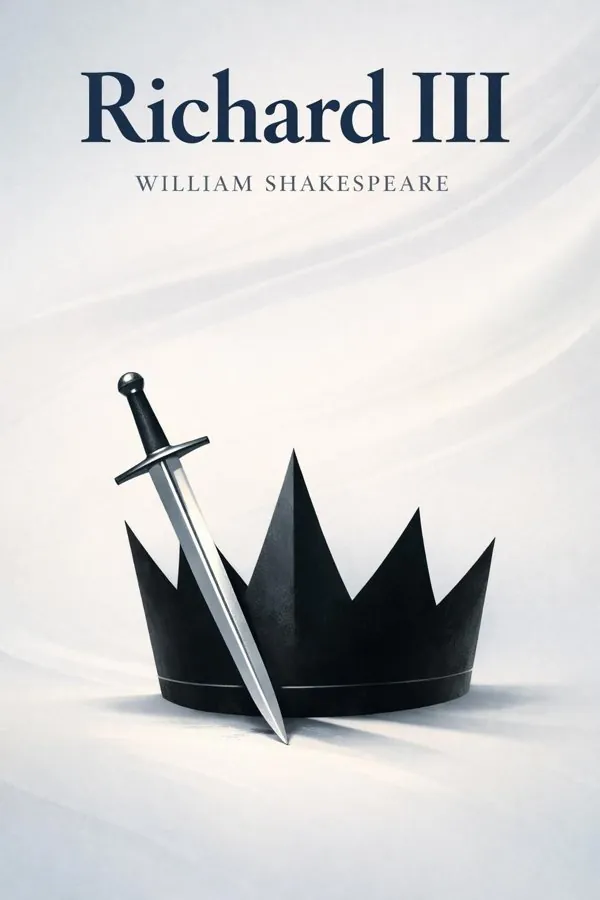
Richard III: Summary & Key Insights
 10 min4 chaptersAudio available
What Is Richard III About?
Richard III by William Shakespeare is a classics book spanning 4 pages. A historical tragedy by William Shakespeare, 'Richard III' dramatizes the Machiavellian rise to power and short reign of King Richard III of England. The play portrays Richard as a ruthless, manipulative, and charismatic villain who schemes his way to the throne through deceit and murder, only to face downfall and death at the Battle of Bosworth Field.
This FizzRead summary covers all 4 key chapters of Richard III in approximately 10 minutes, distilling the most important ideas, arguments, and takeaways from William Shakespeare's work. Also available as an audio summary and Key Quotes Podcast.
Richard III
A historical tragedy by William Shakespeare, 'Richard III' dramatizes the Machiavellian rise to power and short reign of King Richard III of England. The play portrays Richard as a ruthless, manipulative, and charismatic villain who schemes his way to the throne through deceit and murder, only to face downfall and death at the Battle of Bosworth Field.
Who Should Read Richard III?
This book is perfect for anyone interested in classics and looking to gain actionable insights in a short read. Whether you're a student, professional, or lifelong learner, the key ideas from Richard III by William Shakespeare will help you think differently.
- ✓Readers who enjoy classics and want practical takeaways
- ✓Professionals looking to apply new ideas to their work and life
- ✓Anyone who wants the core insights of Richard III in just 10 minutes
Want the full summary?
Get instant access to this book summary and 100K+ more with Fizz Moment.
Get Free SummaryAvailable on App Store • Free to download
Key Chapters
I begin the play with Richard—a man unnaturally shaped by both body and circumstance—declaring his war upon peace. The Wars of the Roses have ended, King Edward IV reigns, and England should rejoice. But Richard, Duke of Gloucester, cannot abide peace. He detests the slow rhythms of joy because he was not made for love or revelry. Instead, he thrives in chaos, where cunning and cruelty make the strongest currency. In his first soliloquy, he reveals his plan: to set brother against brother, to ascend through deceit, manipulation, and murder.
This confession is more than exposition—it is an invitation into his mind. Unlike many villains, Richard tells you exactly what he will do and how he will do it. His brilliance lies in turning the stage into a theatre of complicity: you understand his motives, even admire his intellect, knowing full well he will destroy anyone who blocks his path. His deformity becomes his justification; if nature has denied him beauty, he will command fear.
Richard’s role as narrator allows his charm to mask horror. Watching him manipulate others is like watching a craftsman at work—each lie precisely shaped, each gesture calculated. The court becomes his stage, the nobles his puppets. Yet behind every move is the unrelenting pulse of insecurity, a craving for control born from a life spent in the shadow of others. His ambition is not just for the crown, but for significance, for power to remake a world that mocked him.
This is the seed of his downfall as well. By declaring himself a villain, Richard sets the moral framework of the drama. His self-awareness, while seductive, isolates him completely from redemption. He becomes author of his own tragedy, both playwright and player, both devil and victim.
Ambition demands audacity, and Richard’s art lies in manipulating emotion as deftly as politics. Within the court of King Edward IV, Richard sows whispers that blossom into riddles of distrust. He convinces Edward that their brother Clarence plots against the crown—an idea born entirely of Richard’s invention. The tragedy begins to unfold quietly, in corridors of suspicion, as Richard’s smile becomes the mask of treachery.
But perhaps the most chilling demonstration of his prowess is the wooing of Lady Anne Neville. Here stands the widow of the man Richard himself helped to kill, yet before the scene ends, she agrees to marry him. How does he achieve this? Through a grotesque mixture of penitence and confidence. He names himself murderer, claims remorse, and bends her grief into pity. The power of language dominates this encounter; words invert morality, twist reason, and triumph over truth. It is as if Richard wishes not only to win Anne but to prove to himself that he can bend even the laws of human feeling.
Yet his victory here bears the mark of emptiness. Once Anne is conquered, she no longer interests him. His heart is unmoored; conquest for him is its own justification. The wooing scene reveals the hollowness of ambition pursued for ambition’s sake. Lady Anne’s submission mirrors the submission of the realm itself—a kingdom disarmed by charisma before it realizes the depth of its corruption.
Through this act, Richard proves his dominance over others’ minds. But Shakespeare lets a shadow fall even here: beneath every triumph lies the echo of future despair. Richard can persuade and conquer, but he cannot love nor receive love. His victories are all pyrrhic, hollowed out by the very isolation that fuels them.
+ 2 more chapters — available in the FizzRead app
All Chapters in Richard III
About the Author
William Shakespeare (1564–1616) was an English playwright, poet, and actor, widely regarded as the greatest writer in the English language and the world's pre-eminent dramatist. His works include 39 plays, 154 sonnets, and two long narrative poems, and have profoundly influenced English literature and theater.
Get This Summary in Your Preferred Format
Read or listen to the Richard III summary by William Shakespeare anytime, anywhere. FizzRead offers multiple formats so you can learn on your terms — all free.
Available formats: App · Audio · PDF · EPUB — All included free with FizzRead
Download Richard III PDF and EPUB Summary
Key Quotes from Richard III
“I begin the play with Richard—a man unnaturally shaped by both body and circumstance—declaring his war upon peace.”
“Ambition demands audacity, and Richard’s art lies in manipulating emotion as deftly as politics.”
Frequently Asked Questions about Richard III
Richard III by William Shakespeare is a classics book that explores key ideas across 4 chapters. A historical tragedy by William Shakespeare, 'Richard III' dramatizes the Machiavellian rise to power and short reign of King Richard III of England. The play portrays Richard as a ruthless, manipulative, and charismatic villain who schemes his way to the throne through deceit and murder, only to face downfall and death at the Battle of Bosworth Field.
More by William Shakespeare

You Might Also Like






Browse by Category
Ready to read Richard III?
Get the full summary and 100K+ more books with Fizz Moment.