
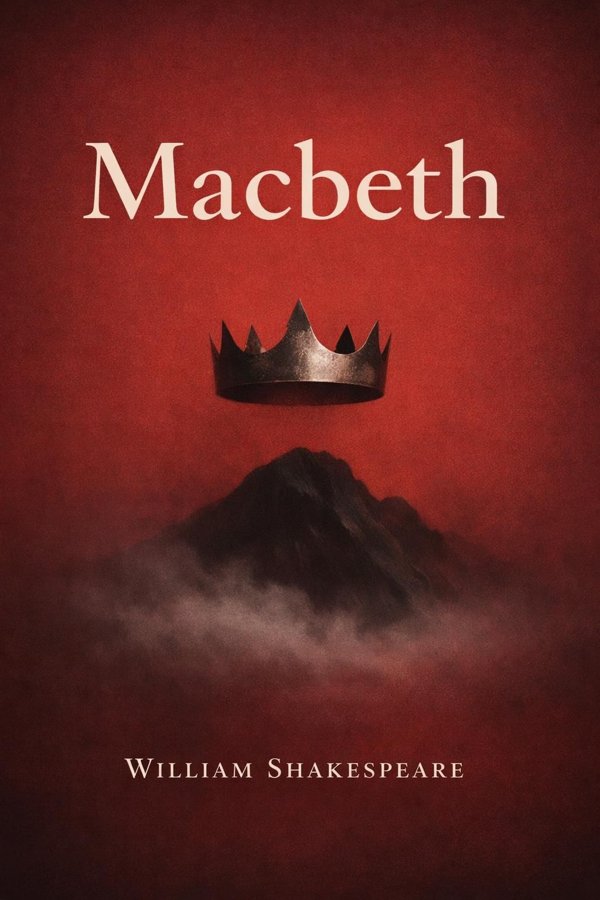
Macbeth: Summary & Key Insights
 10 min5 chaptersAudio available
What Is Macbeth About?
Macbeth by William Shakespeare is a classics book spanning 5 pages. Macbeth is a tragedy written by William Shakespeare around 1606. The play tells the story of Macbeth, a Scottish nobleman whose ambition drives him to commit murder to become king, unleashing a spiral of guilt, paranoia, and destruction. It is a profound exploration of ambition, power, and moral corruption.
This FizzRead summary covers all 5 key chapters of Macbeth in approximately 10 minutes, distilling the most important ideas, arguments, and takeaways from William Shakespeare's work. Also available as an audio summary and Key Quotes Podcast.
Macbeth
Macbeth is a tragedy written by William Shakespeare around 1606. The play tells the story of Macbeth, a Scottish nobleman whose ambition drives him to commit murder to become king, unleashing a spiral of guilt, paranoia, and destruction. It is a profound exploration of ambition, power, and moral corruption.
Who Should Read Macbeth?
This book is perfect for anyone interested in classics and looking to gain actionable insights in a short read. Whether you're a student, professional, or lifelong learner, the key ideas from Macbeth by William Shakespeare will help you think differently.
- ✓Readers who enjoy classics and want practical takeaways
- ✓Professionals looking to apply new ideas to their work and life
- ✓Anyone who wants the core insights of Macbeth in just 10 minutes
Want the full summary?
Get instant access to this book summary and 100K+ more with Fizz Moment.
Get Free SummaryAvailable on App Store • Free to download
Key Chapters
The storm is loud, but it is not the thunder that shakes Macbeth’s heart—it is the witches’ prophecy. When I first conceived this scene, I wanted the supernatural not to terrify by spectacle, but to disturb by suggestion. The witches are not mere conjurors; they are embodiments of moral temptation. They do not force Macbeth’s hand; they merely awaken a desire that already sleeps within him.
Macbeth and Banquo emerge from the field, having fought valiantly for Duncan. They are the picture of loyalty. Yet in a few moments, with a few cryptic words, that loyalty begins to crumble. 'Thane of Cawdor...and king hereafter.' What was once fantasy now seems feasible. When messengers arrive confirming the first part of the prophecy—that Macbeth has indeed been made Thane of Cawdor—the impossible becomes eerily plausible.
In that instant, I wished to reveal a truth of human psychology: ambition rarely begins with an act, but with an idea. The witches plant no evil; they only water what lies dormant. Macbeth’s astonishment, Banquo’s caution, their differing reactions—these are two roads diverging. Banquo’s restraint contrasts Macbeth’s swelling curiosity, and from that moment, destiny takes its course. The seed of ambition has found fertile soil.
When Lady Macbeth enters, the play’s heartbeat quickens. She reads her husband’s letter and instantly understands what he will not yet admit to himself: that fate may be tempted, that opportunity may be seized. Her summoning of dark spirits is not witchcraft—it is will incarnate. In creating her, I wanted to portray not evil in female form, but the terrifying clarity of determination unchecked by conscience.
She challenges her husband’s masculinity, questions his courage, and in so doing, she reshapes his moral equilibrium. Macbeth falters at first. He vacillates between loyalty and ambition. But Lady Macbeth’s words are like hammer blows forging a new resolve. By the time Duncan steps into Inverness, the deed is already determined in Macbeth’s mind, if not yet in his hand.
When Macbeth kills Duncan, the world changes. The act itself is swift; the consequence eternal. As I wrote it, I intended for every heartbeat, every sound, every drop of blood to echo not simply in the halls of the castle, but within Macbeth’s own mind. He hears voices saying he shall sleep no more; guilt begins its infection. Lady Macbeth, who once mocked his fear, takes charge to hide the evidence. Yet the irony is profound: she cleanses her hands of blood, but never her mind.
+ 3 more chapters — available in the FizzRead app
All Chapters in Macbeth
About the Author
William Shakespeare (1564–1616) was an English playwright, poet, and actor, widely regarded as the greatest writer in the English language and one of the most influential figures in world literature. His works include tragedies, comedies, and historical plays that explore the human condition with unmatched depth and insight.
Get This Summary in Your Preferred Format
Read or listen to the Macbeth summary by William Shakespeare anytime, anywhere. FizzRead offers multiple formats so you can learn on your terms — all free.
Available formats: App · Audio · PDF · EPUB — All included free with FizzRead
Download Macbeth PDF and EPUB Summary
Key Quotes from Macbeth
“The storm is loud, but it is not the thunder that shakes Macbeth’s heart—it is the witches’ prophecy.”
“When Lady Macbeth enters, the play’s heartbeat quickens.”
Frequently Asked Questions about Macbeth
Macbeth by William Shakespeare is a classics book that explores key ideas across 5 chapters. Macbeth is a tragedy written by William Shakespeare around 1606. The play tells the story of Macbeth, a Scottish nobleman whose ambition drives him to commit murder to become king, unleashing a spiral of guilt, paranoia, and destruction. It is a profound exploration of ambition, power, and moral corruption.
More by William Shakespeare
You Might Also Like

Browse by Category
Ready to read Macbeth?
Get the full summary and 100K+ more books with Fizz Moment.