
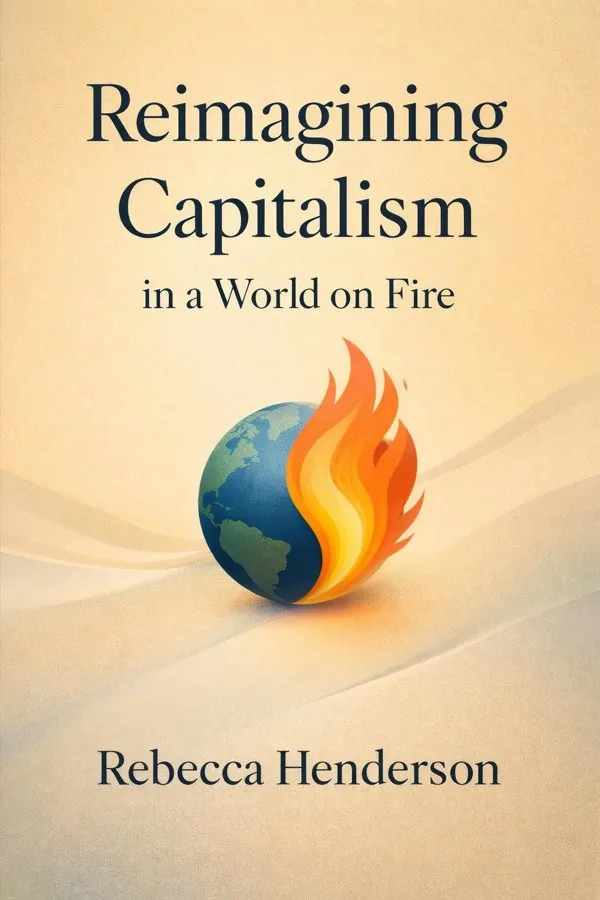
Reimagining Capitalism in a World on Fire: Summary & Key Insights
 10 min6 chaptersAudio available
What Is Reimagining Capitalism in a World on Fire About?
Reimagining Capitalism in a World on Fire by Rebecca Henderson is a economics book spanning 6 pages. Free market capitalism is one of humanity's greatest inventions and the greatest source of prosperity the world has ever seen. Yet it is on the verge of destroying the planet and destabilizing society as wealth rushes to the top. In this book, Harvard Business School professor Rebecca Henderson argues that capitalism, properly reimagined, can be a powerful force for good. She offers a new intellectual foundation and a practical pathway forward for building a sustainable and just economy that works for everyone.
This FizzRead summary covers all 6 key chapters of Reimagining Capitalism in a World on Fire in approximately 10 minutes, distilling the most important ideas, arguments, and takeaways from Rebecca Henderson's work. Also available as an audio summary and Key Quotes Podcast.
Reimagining Capitalism in a World on Fire
Free market capitalism is one of humanity's greatest inventions and the greatest source of prosperity the world has ever seen. Yet it is on the verge of destroying the planet and destabilizing society as wealth rushes to the top. In this book, Harvard Business School professor Rebecca Henderson argues that capitalism, properly reimagined, can be a powerful force for good. She offers a new intellectual foundation and a practical pathway forward for building a sustainable and just economy that works for everyone.
Who Should Read Reimagining Capitalism in a World on Fire?
This book is perfect for anyone interested in economics and looking to gain actionable insights in a short read. Whether you're a student, professional, or lifelong learner, the key ideas from Reimagining Capitalism in a World on Fire by Rebecca Henderson will help you think differently.
- ✓Readers who enjoy economics and want practical takeaways
- ✓Professionals looking to apply new ideas to their work and life
- ✓Anyone who wants the core insights of Reimagining Capitalism in a World on Fire in just 10 minutes
Want the full summary?
Get instant access to this book summary and 100K+ more with Fizz Moment.
Get Free SummaryAvailable on App Store • Free to download
Key Chapters
For decades, business schools and boardrooms alike have been guided by the doctrine of shareholder primacy—the belief that a firm’s sole purpose is to maximize shareholder value. This idea has shaped entire generations of leaders. Yet, I came to believe that this reductionist view strips business of its moral power and its social responsibility. Capitalism was not meant to serve profits alone; it was meant to serve people.
At its best, capitalism thrives when it is grounded in trust, purpose, and fairness. But when the moral dimension of business erodes, so does legitimacy. I argue that business leaders must reclaim the moral foundations of capitalism, recognizing that their organizations are deeply embedded in society and the natural environment. Companies depend on healthy ecosystems, stable governments, and functioning social institutions. Without these, markets cannot survive.
The moral case, therefore, is also a pragmatic one. A world on fire—whether literally through climate change or metaphorically through social unrest—cannot sustain profitable enterprise. To lead responsibly today means widening one’s perspective from the narrow logic of quarterly returns to the broader logic of shared prosperity. Companies like Unilever and Patagonia illustrate this shift: embracing purpose means committing to serve society while still delivering value for investors. That moral transformation within the corporate world may well be the key to restoring faith in capitalism itself.
+ 4 more chapters — available in the FizzRead app
All Chapters in Reimagining Capitalism in a World on Fire
About the Author
Rebecca Henderson is the John and Natty McArthur University Professor at Harvard University, teaching at the Harvard Business School. Her research focuses on innovation and organizational change, particularly in the context of sustainable business practices and the reimagining of capitalism for the 21st century.
Get This Summary in Your Preferred Format
Read or listen to the Reimagining Capitalism in a World on Fire summary by Rebecca Henderson anytime, anywhere. FizzRead offers multiple formats so you can learn on your terms — all free.
Available formats: App · Audio · PDF · EPUB — All included free with FizzRead
Download Reimagining Capitalism in a World on Fire PDF and EPUB Summary
Key Quotes from Reimagining Capitalism in a World on Fire
“For decades, business schools and boardrooms alike have been guided by the doctrine of shareholder primacy—the belief that a firm’s sole purpose is to maximize shareholder value.”
“The belief that maximizing shareholder value is the ultimate goal of business has become almost dogma since the late 20th century.”
Frequently Asked Questions about Reimagining Capitalism in a World on Fire
Reimagining Capitalism in a World on Fire by Rebecca Henderson is a economics book that explores key ideas across 6 chapters. Free market capitalism is one of humanity's greatest inventions and the greatest source of prosperity the world has ever seen. Yet it is on the verge of destroying the planet and destabilizing society as wealth rushes to the top. In this book, Harvard Business School professor Rebecca Henderson argues that capitalism, properly reimagined, can be a powerful force for good. She offers a new intellectual foundation and a practical pathway forward for building a sustainable and just economy that works for everyone.
You Might Also Like
Business Adventures
John Brooks
10 min
Nudge
Richard H. Thaler, Cass R. Sunstein
10 min
The Hitchhiker"s Guide to the Galaxy
Douglas Adams
10 minThe Muqaddimah
Ibn Khaldun
10 minThe Outsiders
William N. Thorndike
10 min
A Little History of Economics
Niall Kishtainy
10 minBrowse by Category
Ready to read Reimagining Capitalism in a World on Fire?
Get the full summary and 100K+ more books with Fizz Moment.