
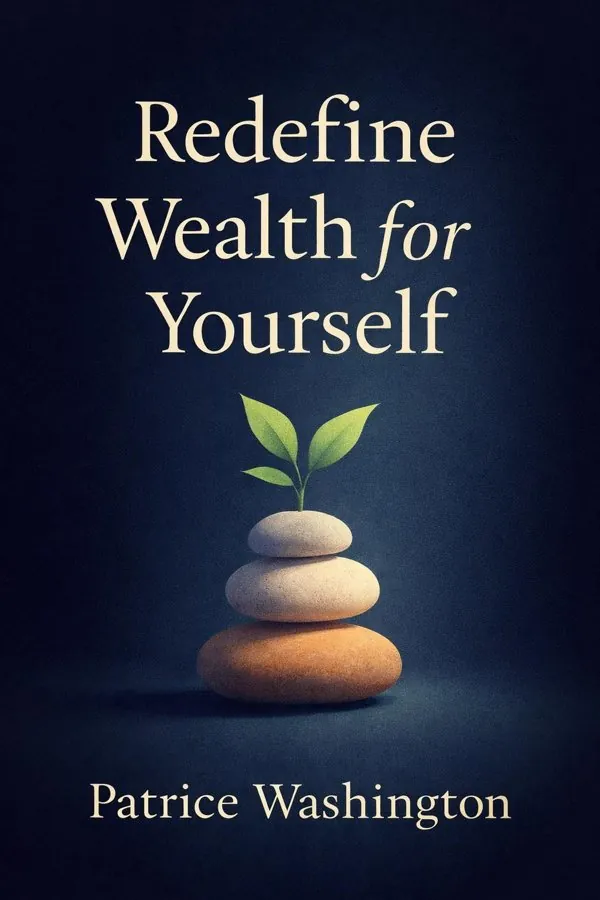
Redefine Wealth for Yourself: Summary & Key Insights
 10 min10 chaptersAudio available
Key Takeaways from Redefine Wealth for Yourself
A full bank account can hide an empty life.
Real wealth is structural, not accidental.
You cannot enjoy the life you are building if your body and mind are too depleted to live it.
No one becomes truly wealthy in isolation.
The environments around you are never neutral.
What Is Redefine Wealth for Yourself About?
Redefine Wealth for Yourself by Patrice Washington is a mindset book spanning 10 pages. What if the life you have been taught to chase is not actually making you wealthy? In Redefine Wealth for Yourself, Patrice Washington challenges one of modern culture’s biggest assumptions: that money is the ultimate measure of success. Drawing from her own rise, financial collapse, reinvention, and years of coaching others, she argues that true wealth is far broader and more meaningful than income, titles, or material possessions. Instead, she presents a holistic framework built on six pillars: Fit, People, Space, Faith, Work, and Money. When these pillars are aligned, wealth becomes a lived experience of peace, purpose, health, connection, and financial stability—not just a number in a bank account. This book matters because many high achievers look successful on the outside while feeling depleted, disconnected, or trapped on the inside. Washington’s message is both practical and deeply personal, blending mindset shifts with real-life application. Her authority comes not only from financial expertise, but from hard-earned wisdom about rebuilding a life that feels rich in every sense of the word.
This FizzRead summary covers all 10 key chapters of Redefine Wealth for Yourself in approximately 10 minutes, distilling the most important ideas, arguments, and takeaways from Patrice Washington's work. Also available as an audio summary and Key Quotes Podcast.
Redefine Wealth for Yourself
What if the life you have been taught to chase is not actually making you wealthy? In Redefine Wealth for Yourself, Patrice Washington challenges one of modern culture’s biggest assumptions: that money is the ultimate measure of success. Drawing from her own rise, financial collapse, reinvention, and years of coaching others, she argues that true wealth is far broader and more meaningful than income, titles, or material possessions. Instead, she presents a holistic framework built on six pillars: Fit, People, Space, Faith, Work, and Money. When these pillars are aligned, wealth becomes a lived experience of peace, purpose, health, connection, and financial stability—not just a number in a bank account. This book matters because many high achievers look successful on the outside while feeling depleted, disconnected, or trapped on the inside. Washington’s message is both practical and deeply personal, blending mindset shifts with real-life application. Her authority comes not only from financial expertise, but from hard-earned wisdom about rebuilding a life that feels rich in every sense of the word.
Who Should Read Redefine Wealth for Yourself?
This book is perfect for anyone interested in mindset and looking to gain actionable insights in a short read. Whether you're a student, professional, or lifelong learner, the key ideas from Redefine Wealth for Yourself by Patrice Washington will help you think differently.
- ✓Readers who enjoy mindset and want practical takeaways
- ✓Professionals looking to apply new ideas to their work and life
- ✓Anyone who wants the core insights of Redefine Wealth for Yourself in just 10 minutes
Want the full summary?
Get instant access to this book summary and 100K+ more with Fizz Moment.
Get Free SummaryAvailable on App Store • Free to download
Key Chapters
A full bank account can hide an empty life. That is the uncomfortable truth at the heart of Patrice Washington’s message. Many people are conditioned to believe that success is measured by salary, status, home size, or visible symbols of achievement. But Washington argues that money, while important, is only one dimension of a truly wealthy life. If someone earns well but is constantly stressed, disconnected from family, physically unwell, and spiritually lost, can that honestly be called wealth?
Washington’s own story gives weight to this claim. She experienced financial success, only to later face devastating setbacks that revealed how fragile a money-centered identity can be. Her point is not that money does not matter. Rather, it matters most when it supports a life rooted in purpose, health, peace, and meaningful relationships. Without those deeper foundations, financial gain can become a trap instead of a tool.
This idea also helps explain why many outwardly successful people still feel dissatisfied. They hit milestones they were told would bring fulfillment, yet they remain anxious or unfulfilled because they built their lives around external validation rather than internal alignment. In practical terms, this means reevaluating common goals. Instead of asking only, “How can I earn more?” Washington encourages questions like, “What kind of life am I building?” and “What is this money supposed to support?”
A useful application is to assess your current definition of wealth. Write down the first five things that come to mind when you hear the word “success.” If most of them relate to money or image, that may reveal an overly narrow standard.
Actionable takeaway: Redefine wealth as a whole-life experience, not a financial scorecard, and begin measuring success by how well your life actually feels, not just how it looks.
Real wealth is structural, not accidental. Washington introduces the Six Pillars of Wealth—Fit, People, Space, Faith, Work, and Money—as a practical framework for building a life that is both sustainable and fulfilling. Each pillar represents a key area of well-being, and together they form a system. If one is neglected, the others are affected. The goal is not perfection in every category, but awareness, alignment, and intentional growth.
The power of this framework lies in its balance. Fit refers to physical and mental well-being. People focuses on relationships and community. Space addresses the environments you live and work in. Faith is about spiritual grounding and trust. Work concerns purpose and contribution. Money covers financial stewardship and resources. Washington argues that most people overdevelop one or two pillars while ignoring the rest. A career-driven person may be strong in Work and Money but weak in People and Fit. Someone deeply spiritual may neglect Space or Money. The imbalance eventually creates strain.
This model is especially useful because it turns an abstract idea—holistic wealth—into something concrete. You can evaluate where you are thriving and where you are depleted. For example, if you are constantly exhausted, your Fit pillar may need attention. If your home feels chaotic and draining, your Space pillar may be compromised. If your job pays well but feels meaningless, the Work pillar is out of alignment.
One practical exercise is to rate yourself from 1 to 10 in each pillar, then identify the lowest two scores. Those are likely the areas where small changes can produce major improvements in overall well-being.
Actionable takeaway: Use the Six Pillars as a personal audit tool and strengthen the areas of life that money alone cannot fix.
You cannot enjoy the life you are building if your body and mind are too depleted to live it. In Washington’s framework, Fit is not about chasing unrealistic beauty standards or performing wellness for social approval. It is about having the physical energy, emotional stability, and mental clarity to show up fully for your life. A person may have career success, but if they are burned out, sleep-deprived, anxious, or constantly neglecting their health, their wealth is unstable.
Washington expands the idea of fitness beyond exercise. Fit includes rest, nourishment, stress management, emotional regulation, and self-respect. It asks whether your daily habits support the life you say you want. For example, if someone wants to be present for their family but is always exhausted, or wants to pursue purpose-driven work but lives in a constant state of fatigue, their health limitations quietly shrink their possibilities.
This pillar also challenges the common tendency to sacrifice well-being in the name of productivity. Many people wear overwork like a badge of honor, but Washington suggests that this is often a sign of disconnection rather than achievement. Sustainable success requires stewardship of the self. Practical changes might include setting a real bedtime, scheduling movement into the week, reducing digital overload, seeking therapy or coaching, or learning to say no to commitments that drain you.
A helpful example is the professional who constantly delays medical checkups while chasing career goals. In the short term, this may seem efficient. In the long term, it can become a costly form of self-neglect. Fit is preventive wealth.
Actionable takeaway: Choose one health habit this week—sleep, hydration, movement, or emotional support—and treat it as a non-negotiable investment in your future wealth.
No one becomes truly wealthy in isolation. Washington’s People pillar highlights a truth that achievement culture often overlooks: the quality of your relationships deeply affects the quality of your life. A person may have money, influence, and credentials, yet still feel poor if they lack trust, belonging, love, and supportive community. Human connection is not a bonus feature of success. It is part of success itself.
This pillar asks difficult but necessary questions. Who speaks into your life? Who drains your energy? Who celebrates your growth? Who tolerates you only when you remain small? Washington encourages readers to recognize that relationships can either reinforce purpose or sabotage it. This includes family, friendships, romantic relationships, business connections, and even the informal networks that shape your self-image.
A key insight is that healthy relationships require both discernment and contribution. Wealth is not just about surrounding yourself with impressive people; it is about cultivating mutual support, honesty, boundaries, and service. For instance, someone may need to step back from a consistently negative friendship, repair communication in a marriage, or intentionally seek mentors and peers who reflect the life they want to build.
This pillar also invites readers to become the kind of person who strengthens others. Are you dependable? Encouraging? Honest? Present? Relational wealth grows when people feel safe, seen, and valued in your presence. A practical application is to map your current relationship ecosystem and identify where more boundaries, gratitude, reconciliation, or intentional connection are needed.
Actionable takeaway: Strengthen one life-giving relationship and create one clear boundary with a draining one, because both actions increase your relational wealth.
The environments around you are never neutral. Washington’s Space pillar emphasizes that your physical, emotional, and digital surroundings either support your well-being or quietly erode it. Many people underestimate the effect of clutter, chaos, noise, disorganization, and misaligned environments. Yet where you live, work, and spend your time has a direct impact on your stress, clarity, creativity, and sense of control.
Space is about more than interior design. It includes the condition of your home, the atmosphere of your workplace, the boundaries in your schedule, and even the media you allow into your mind. A peaceful, functional environment can increase focus and reduce anxiety. A chaotic one can keep you reactive and drained. Washington invites readers to stop normalizing spaces that make them feel heavy, distracted, or stuck.
Consider the difference between starting your day in a clean, organized room versus a cluttered one filled with unfinished tasks and visual noise. Or think about how constant exposure to negative news and comparison-driven social media can crowd your mental space. Wealth requires room to think, breathe, and make intentional choices.
Practical applications include decluttering one area of your home, creating a dedicated workspace, simplifying your calendar, reducing digital distractions, or designing routines that make your environment more restorative. You do not need a luxurious space; you need a supportive one. Washington’s broader point is that when your space aligns with your values, it becomes easier to live with peace and purpose.
Actionable takeaway: Improve one environment you use every day—your bedroom, desk, phone, or calendar—so that it supports the person you are becoming.
Without an inner anchor, external success can become directionless. In Washington’s framework, Faith is the pillar that connects wealth to meaning, trust, and spiritual alignment. While readers may interpret faith through different traditions or personal beliefs, Washington’s core idea is that true wealth requires something deeper than ambition. It asks you to know what you stand on when circumstances change.
Faith helps people navigate fear, uncertainty, disappointment, and transition. It reminds them that their worth is not tied solely to performance and that setbacks do not erase purpose. For Washington, spiritual grounding creates resilience. When money fluctuates, work shifts, or relationships change, faith can provide steadiness. It also helps people resist the constant pressure to compare themselves to others, because their identity is rooted in calling rather than applause.
This pillar is not only about belief; it is also about practice. Faith may show up through prayer, reflection, journaling, worship, meditation, gratitude, or time in silence. It can shape how someone makes decisions, treats others, and interprets hardship. For example, rather than seeing every delay as failure, a grounded person may view it as redirection or preparation. That mindset reduces panic and strengthens patience.
In practical terms, this pillar encourages readers to create space for spiritual renewal and to ask deeper questions: What am I being called to do? What values guide my choices? What does enough look like for me? These questions prevent success from becoming hollow.
Actionable takeaway: Build a regular spiritual practice—even ten quiet minutes a day—that reconnects you with purpose, perspective, and peace.
A paycheck can sustain your life, but meaningful work helps explain why your life matters. Washington’s Work pillar challenges the idea that employment is only about earning money. She believes work should reflect gifts, values, contribution, and purpose. This does not mean everyone must love every task they do or immediately quit their job to follow a dream. It means work should, over time, move closer to alignment with who you are and how you are meant to serve.
Many people live in tension here. They may be competent and successful in their roles yet feel disconnected from the impact of what they do. Others have passion but no structure, causing frustration and instability. Washington’s insight is that wealth grows when work becomes an expression of calling rather than just obligation or image management.
This pillar asks readers to examine whether their current work drains them, develops them, or contributes to something meaningful. Sometimes the answer is not changing industries but changing posture: setting better boundaries, clarifying strengths, finding ways to serve more intentionally, or developing a side project that reflects deeper purpose. For others, the message may be more significant: it may be time to pivot, retrain, or stop clinging to a role that looks impressive but feels misaligned.
A practical example is the professional who excels in corporate leadership but feels most alive mentoring younger colleagues. That clue may point toward a future role in coaching, teaching, or team development. Work alignment often begins with paying attention to where energy and impact naturally meet.
Actionable takeaway: Identify one part of your work that feels purposeful and one part that feels draining, then make a plan to increase the first and reduce or rethink the second.
Money matters most when it is put in its proper place. Washington does not dismiss financial literacy, budgeting, saving, or wealth-building. In fact, she takes money seriously. But she insists that money should serve your values, not define your value. When people tie identity too closely to income or net worth, they become emotionally fragile: every gain inflates them, and every setback threatens their sense of self.
The Money pillar is about stewardship, not obsession. It includes earning wisely, spending intentionally, getting out of debt, saving consistently, and using financial resources in ways that support long-term peace. Washington’s perspective is especially helpful because it joins practical money management with deeper self-awareness. Bad financial habits are often connected to emotional patterns such as fear, comparison, avoidance, or the need to impress others.
For example, someone may overspend not because they lack knowledge, but because shopping helps them cope with stress or maintain an image. Another person may avoid looking at their bank account because numbers trigger shame. Redefining wealth requires addressing both behavior and belief. Money can create options, reduce pressure, and fund meaningful goals, but it cannot heal insecurity or replace purpose.
A useful application is to review your financial habits through the lens of intention. Does your spending reflect your priorities? Are you building emergency savings? Are you buying peace or buying appearances? Washington encourages readers to pursue financial strength, but without returning to the trap of money as the sole scorekeeper of success.
Actionable takeaway: Create one simple money habit—such as weekly budget reviews or automatic savings—that helps your finances support your values rather than compete with them.
A life of wealth is not built by fixing one category while neglecting the rest. Washington stresses that the Six Pillars are interconnected, and their power comes from integration. When one pillar is weak, it often affects the others. Poor health can damage work performance. Financial stress can strain relationships. A chaotic home can weaken spiritual practices and emotional stability. Likewise, improving one pillar can create positive momentum across the system.
This systems view is one of the book’s strongest contributions. It helps readers stop treating life problems as isolated issues. If someone is constantly overwhelmed, the answer may not be “work harder.” The root problem could involve cluttered space, poor boundaries with people, lack of rest, or disconnection from purpose. Washington encourages readers to look for patterns, not just symptoms.
Integration also prevents the pursuit of success from becoming self-defeating. A person might grow income while sacrificing health and family, only to discover that the gain was too costly. Another might focus on personal growth but ignore money management, creating unnecessary instability. Whole-life wealth asks a better question: Does this choice strengthen my life overall?
In practice, integration means making decisions that respect multiple pillars at once. A new job opportunity should be evaluated not only by salary, but by its impact on family, health, schedule, purpose, and peace. A move to a new city should include relational and spiritual considerations, not just career benefits. This broader lens leads to wiser choices.
Actionable takeaway: Before making a major decision, ask how it will affect all six pillars, and choose the option that supports the healthiest overall life.
Transformation begins when denial ends. Washington’s framework is inspiring, but it is also demanding because it requires honest self-assessment. Many people say they want a more fulfilling life, yet they continue patterns that keep them overworked, disconnected, cluttered, financially reactive, or spiritually numb. Redefining wealth means getting truthful about what is not working and taking responsibility for change.
This is where the book becomes especially practical. Washington does not present wealth as a vague feeling; she asks readers to examine habits, relationships, routines, environments, and beliefs. The process is personal. One reader may need to rebuild boundaries. Another may need to seek counseling, revise career goals, create a budget, or reconnect with faith. The point is not to do everything at once, but to stop outsourcing responsibility for your life.
An important part of this pillar in action is releasing performance. Self-assessment is not self-punishment. It is not about proving you are failing. It is about noticing where your current way of living is out of alignment with the life you want. For instance, if you keep saying family matters most but spend no meaningful time with loved ones, the issue is not lack of intention but lack of alignment. Awareness creates choice.
A simple method is to do a weekly review of the six pillars. Ask: What strengthened me this week? What depleted me? What one adjustment would improve next week? Small, repeated reflection helps convert big ideas into lived practice. Washington’s broader message is that wealth becomes real through consistent, intentional choices.
Actionable takeaway: Set aside 20 minutes each week to review the six pillars and choose one small adjustment that brings your daily life into closer alignment with your definition of wealth.
All Chapters in Redefine Wealth for Yourself
About the Author
Patrice Washington is an American author, speaker, podcast host, and thought leader known for challenging traditional ideas about success and prosperity. Although she first built her reputation in financial education, her work has expanded into a broader conversation about purpose, personal growth, faith, and whole-life well-being. Her perspective is rooted in lived experience: after achieving significant financial success and later enduring major setbacks, she rebuilt her life around a more holistic definition of wealth. That journey became the foundation for her teaching and her widely recognized Redefining Wealth platform and podcast. Washington is admired for combining practical guidance with personal honesty, helping audiences see that true wealth includes health, relationships, meaningful work, spiritual grounding, and wise financial stewardship.
Get This Summary in Your Preferred Format
Read or listen to the Redefine Wealth for Yourself summary by Patrice Washington anytime, anywhere. FizzRead offers multiple formats so you can learn on your terms — all free.
Available formats: App · Audio · PDF · EPUB — All included free with FizzRead
Download Redefine Wealth for Yourself PDF and EPUB Summary
Key Quotes from Redefine Wealth for Yourself
“A full bank account can hide an empty life.”
“Real wealth is structural, not accidental.”
“You cannot enjoy the life you are building if your body and mind are too depleted to live it.”
“No one becomes truly wealthy in isolation.”
“The environments around you are never neutral.”
Frequently Asked Questions about Redefine Wealth for Yourself
Redefine Wealth for Yourself by Patrice Washington is a mindset book that explores key ideas across 10 chapters. What if the life you have been taught to chase is not actually making you wealthy? In Redefine Wealth for Yourself, Patrice Washington challenges one of modern culture’s biggest assumptions: that money is the ultimate measure of success. Drawing from her own rise, financial collapse, reinvention, and years of coaching others, she argues that true wealth is far broader and more meaningful than income, titles, or material possessions. Instead, she presents a holistic framework built on six pillars: Fit, People, Space, Faith, Work, and Money. When these pillars are aligned, wealth becomes a lived experience of peace, purpose, health, connection, and financial stability—not just a number in a bank account. This book matters because many high achievers look successful on the outside while feeling depleted, disconnected, or trapped on the inside. Washington’s message is both practical and deeply personal, blending mindset shifts with real-life application. Her authority comes not only from financial expertise, but from hard-earned wisdom about rebuilding a life that feels rich in every sense of the word.
You Might Also Like



Browse by Category
Ready to read Redefine Wealth for Yourself?
Get the full summary and 100K+ more books with Fizz Moment.