
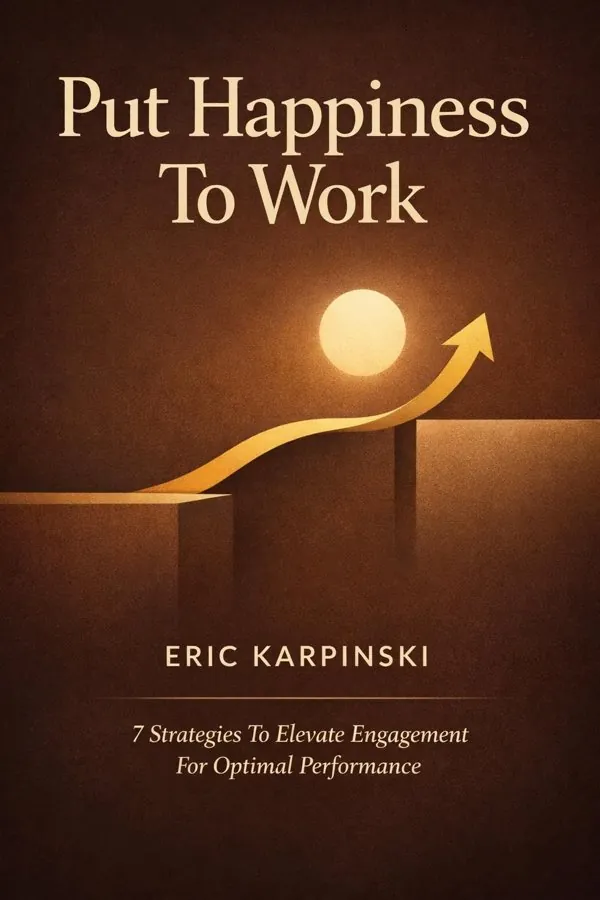
Put Happiness To Work: 7 Strategies To Elevate Engagement For Optimal Performance: Summary & Key Insights
 10 min10 chaptersAudio available
What Is Put Happiness To Work: 7 Strategies To Elevate Engagement For Optimal Performance About?
Put Happiness To Work: 7 Strategies To Elevate Engagement For Optimal Performance by Eric Karpinski is a leadership book spanning 10 pages. Put Happiness to Work es un libro de desarrollo profesional que enseña a líderes y gerentes cómo aumentar el compromiso y el rendimiento de sus equipos mediante la aplicación de estrategias basadas en la felicidad. Eric Karpinski ofrece siete estrategias prácticas para fomentar la motivación, la conexión y el bienestar en el entorno laboral, integrando hallazgos de la psicología positiva y la ciencia del comportamiento.
This FizzRead summary covers all 10 key chapters of Put Happiness To Work: 7 Strategies To Elevate Engagement For Optimal Performance in approximately 10 minutes, distilling the most important ideas, arguments, and takeaways from Eric Karpinski's work. Also available as an audio summary and Key Quotes Podcast.
Put Happiness To Work: 7 Strategies To Elevate Engagement For Optimal Performance
Put Happiness to Work es un libro de desarrollo profesional que enseña a líderes y gerentes cómo aumentar el compromiso y el rendimiento de sus equipos mediante la aplicación de estrategias basadas en la felicidad. Eric Karpinski ofrece siete estrategias prácticas para fomentar la motivación, la conexión y el bienestar en el entorno laboral, integrando hallazgos de la psicología positiva y la ciencia del comportamiento.
Who Should Read Put Happiness To Work: 7 Strategies To Elevate Engagement For Optimal Performance?
This book is perfect for anyone interested in leadership and looking to gain actionable insights in a short read. Whether you're a student, professional, or lifelong learner, the key ideas from Put Happiness To Work: 7 Strategies To Elevate Engagement For Optimal Performance by Eric Karpinski will help you think differently.
- ✓Readers who enjoy leadership and want practical takeaways
- ✓Professionals looking to apply new ideas to their work and life
- ✓Anyone who wants the core insights of Put Happiness To Work: 7 Strategies To Elevate Engagement For Optimal Performance in just 10 minutes
Want the full summary?
Get instant access to this book summary and 100K+ more with Fizz Moment.
Get Free SummaryAvailable on App Store • Free to download
Key Chapters
Before we dive into tactics, we must first understand the foundation: why happiness matters scientifically. Over the past two decades, research in positive psychology and neuroscience has uncovered how our emotional state influences our behavior, decision-making, and output. Studies show that positive emotions broaden our cognitive range — we literally see more solutions and alternatives when we feel good. This is known as the Broaden-and-Build Theory, pioneered by psychologist Barbara Fredrickson. In practice, it means that when we’re happy, we’re not merely feeling good; our brains are primed for innovation, collaboration, and problem-solving.
Happiness is not the same as constant pleasure. At work, it’s less about fleeting joy and more about sustained well-being — the sense that our work has meaning, our talents are valued, and our relationships are strong. Neurochemically, positive emotions trigger dopamine and serotonin releases that enhance focus, creativity, and resilience. Think of happiness as mental fitness: it enhances your capacity to handle challenges rather than removing them.
When organizations understand this, they stop viewing happiness programs as perks and start treating them as strategic performance levers. The happier employees feel, the more engaged they are; the more engaged they are, the more energy and commitment they bring to their tasks. This virtuous cycle is what turns happiness from a buzzword into a measurable advantage.
When people get to use their strengths regularly, something remarkable happens: their work no longer feels like effort; it feels like expression. I often tell leaders that the most effective way to boost performance is not to fix weaknesses but to amplify strengths. Strengths-based leadership is rooted in two insights. First, our greatest growth comes from refining what we already do well. Second, teams that know and value each other’s strengths develop trust and synergy much faster.
In practice, this means helping your team identify both their individual and collective strengths. Tools like CliftonStrengths or VIA Character Strengths provide language for what people naturally excel at. But the deeper work begins when you start designing tasks and roles that align with those strengths. A person who is analytical but introverted might not thrive in sales calls but could shine in client research or data storytelling. When people’s strengths fit their responsibilities, engagement spikes and burnout drops.
I’ve seen teams transform when they integrate strengths conversations into their daily rituals. Instead of performance reviews that focus on what’s missing, they explore how each member can contribute more of their best self. Over time, strengths awareness changes team dynamics — it replaces competition with appreciation, insecurity with confidence, and compliance with creativity. That’s how happiness begins to work for you, not against you.
+ 8 more chapters — available in the FizzRead app
All Chapters in Put Happiness To Work: 7 Strategies To Elevate Engagement For Optimal Performance
About the Author
Eric Karpinski es un experto en felicidad y rendimiento laboral, conferencista y coach que ha trabajado con empresas líderes para aplicar principios de la psicología positiva en el lugar de trabajo. Su enfoque combina investigación científica con herramientas prácticas para mejorar la cultura organizacional y el bienestar de los empleados.
Get This Summary in Your Preferred Format
Read or listen to the Put Happiness To Work: 7 Strategies To Elevate Engagement For Optimal Performance summary by Eric Karpinski anytime, anywhere. FizzRead offers multiple formats so you can learn on your terms — all free.
Available formats: App · Audio · PDF · EPUB — All included free with FizzRead
Download Put Happiness To Work: 7 Strategies To Elevate Engagement For Optimal Performance PDF and EPUB Summary
Key Quotes from Put Happiness To Work: 7 Strategies To Elevate Engagement For Optimal Performance
“Before we dive into tactics, we must first understand the foundation: why happiness matters scientifically.”
“When people get to use their strengths regularly, something remarkable happens: their work no longer feels like effort; it feels like expression.”
Frequently Asked Questions about Put Happiness To Work: 7 Strategies To Elevate Engagement For Optimal Performance
Put Happiness To Work: 7 Strategies To Elevate Engagement For Optimal Performance by Eric Karpinski is a leadership book that explores key ideas across 10 chapters. Put Happiness to Work es un libro de desarrollo profesional que enseña a líderes y gerentes cómo aumentar el compromiso y el rendimiento de sus equipos mediante la aplicación de estrategias basadas en la felicidad. Eric Karpinski ofrece siete estrategias prácticas para fomentar la motivación, la conexión y el bienestar en el entorno laboral, integrando hallazgos de la psicología positiva y la ciencia del comportamiento.
You Might Also Like

Extreme Ownership
Jocko Willink
10 min
Dare to Lead
Brene Brown
10 min
Leaders Eat Last
Simon Sinek
10 min
The 21 Irrefutable Laws of Leadership
John Maxwell
10 min
Start With Why
Simon Sinek
10 min
How to Lead When You're Not in Charge
Clay Scroggins
10 minBrowse by Category
Ready to read Put Happiness To Work: 7 Strategies To Elevate Engagement For Optimal Performance?
Get the full summary and 100K+ more books with Fizz Moment.