
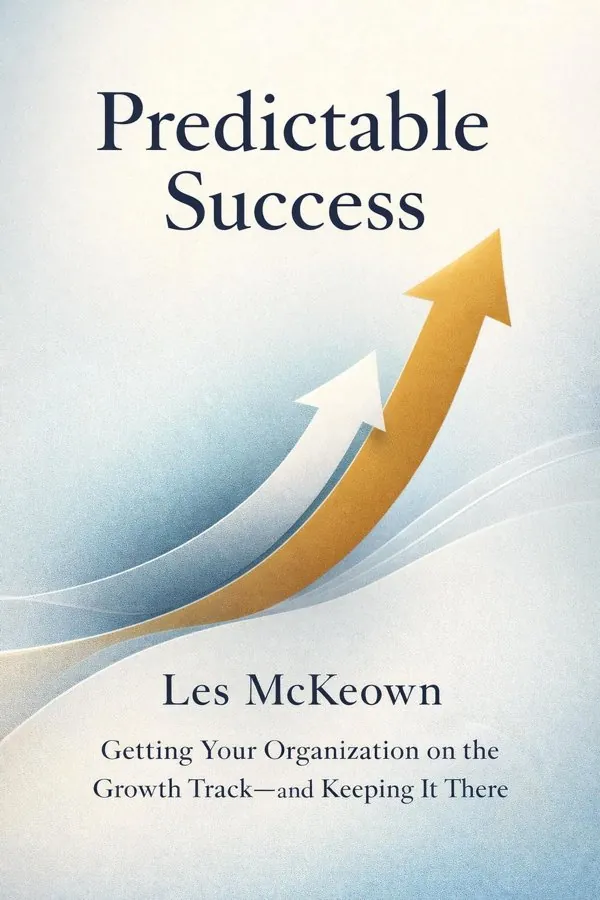
Predictable Success: Getting Your Organization on the Growth Track—and Keeping It There: Summary & Key Insights
by Les McKeown
 10 min11 chaptersAudio available
What Is Predictable Success: Getting Your Organization on the Growth Track—and Keeping It There About?
Predictable Success: Getting Your Organization on the Growth Track—and Keeping It There by Les McKeown is a leadership book spanning 11 pages. Predictable Success describes the seven stages of organizational growth and decline, offering a practical roadmap for leaders to guide their companies toward sustainable success. Les McKeown explains how businesses can move from early struggle to predictable success by mastering leadership, structure, and decision-making processes that balance innovation with control.
This FizzRead summary covers all 11 key chapters of Predictable Success: Getting Your Organization on the Growth Track—and Keeping It There in approximately 10 minutes, distilling the most important ideas, arguments, and takeaways from Les McKeown's work. Also available as an audio summary and Key Quotes Podcast.
Predictable Success: Getting Your Organization on the Growth Track—and Keeping It There
Predictable Success describes the seven stages of organizational growth and decline, offering a practical roadmap for leaders to guide their companies toward sustainable success. Les McKeown explains how businesses can move from early struggle to predictable success by mastering leadership, structure, and decision-making processes that balance innovation with control.
Who Should Read Predictable Success: Getting Your Organization on the Growth Track—and Keeping It There?
This book is perfect for anyone interested in leadership and looking to gain actionable insights in a short read. Whether you're a student, professional, or lifelong learner, the key ideas from Predictable Success: Getting Your Organization on the Growth Track—and Keeping It There by Les McKeown will help you think differently.
- ✓Readers who enjoy leadership and want practical takeaways
- ✓Professionals looking to apply new ideas to their work and life
- ✓Anyone who wants the core insights of Predictable Success: Getting Your Organization on the Growth Track—and Keeping It There in just 10 minutes
Want the full summary?
Get instant access to this book summary and 100K+ more with Fizz Moment.
Get Free SummaryAvailable on App Store • Free to download
Key Chapters
Every organization begins in what I call Early Struggle—the raw, uncertain fight for survival. The promise of your idea is still more dream than reality, and every day feels like a contest between exhaustion and hope. Resources are tight, customers are scarce, and systems barely exist. The entire focus of the founder and the small team is simple: stay alive long enough to gain traction.
Most businesses don’t make it through this phase. The reason isn’t that their ideas are bad—it’s that they underestimate how long the struggle lasts and how complex turning vision into reality can be. Early Struggle demands a relentless clarity about what works and what doesn’t. At this point, planning is less important than action. In my experience, those who escape this phase are the ones who quickly identify their profitable core—what it is they can repeatedly sell that truly solves a customer problem.
From the author’s chair, I can tell you Early Struggle is both exhilarating and punishing. Decisions happen fast, cash flow dictates survival, and the founder must be both salesperson, technician, manager, and janitor in the same day. You don’t build culture yet; you build stamina. The turning point comes when you can repeatedly deliver value in a way that begins generating consistent income. That’s when the clouds part and the next stage beckons: Fun.
If Early Struggle is all about survival, Fun is all about expansion. This is the phase most people romanticize when they think of entrepreneurship—the sense that everything is possible, opportunities abound, and momentum itself fuels growth. The founder’s instincts seem flawless, and the team feels like a tight family united by belief in the mission. Every day brings new creative sparks.
In Fun, you say yes to everything because it all seems to work. Systems remain loose, communication is informal, and customers love the energy you project. But success creates its own seeds of trouble. Growth multiplies complexity. Suddenly the founder can’t personally oversee every decision. Mistakes start slipping through cracks no one knew existed. At first, these are tolerated as signs of growing pains. In time, they signal entry into the next stage—Whitewater.
Still, Fun is vitally important. It’s where an organization’s culture is born, where passion and inventive problem-solving become identity. My advice to any leader here is: enjoy it, but also prepare. Hire people who can scale operations, document emerging processes before you think you need to, and recognize that today’s freedom will eventually need today’s discipline. Without this foresight, the joy of Fun turns to the chaos of Whitewater sooner than anyone expects.
+ 9 more chapters — available in the FizzRead app
All Chapters in Predictable Success: Getting Your Organization on the Growth Track—and Keeping It There
About the Author
Les McKeown is a business consultant, speaker, and author specializing in organizational growth and leadership. He is the founder and CEO of Predictable Success, a consultancy that helps organizations achieve scalable, sustainable growth. Before founding his firm, McKeown launched and managed multiple businesses in the United Kingdom and the United States.
Get This Summary in Your Preferred Format
Read or listen to the Predictable Success: Getting Your Organization on the Growth Track—and Keeping It There summary by Les McKeown anytime, anywhere. FizzRead offers multiple formats so you can learn on your terms — all free.
Available formats: App · Audio · PDF · EPUB — All included free with FizzRead
Download Predictable Success: Getting Your Organization on the Growth Track—and Keeping It There PDF and EPUB Summary
Key Quotes from Predictable Success: Getting Your Organization on the Growth Track—and Keeping It There
“Every organization begins in what I call Early Struggle—the raw, uncertain fight for survival.”
“If Early Struggle is all about survival, Fun is all about expansion.”
Frequently Asked Questions about Predictable Success: Getting Your Organization on the Growth Track—and Keeping It There
Predictable Success: Getting Your Organization on the Growth Track—and Keeping It There by Les McKeown is a leadership book that explores key ideas across 11 chapters. Predictable Success describes the seven stages of organizational growth and decline, offering a practical roadmap for leaders to guide their companies toward sustainable success. Les McKeown explains how businesses can move from early struggle to predictable success by mastering leadership, structure, and decision-making processes that balance innovation with control.
More by Les McKeown
You Might Also Like

Extreme Ownership
Jocko Willink
10 min
Dare to Lead
Brene Brown
10 min
Leaders Eat Last
Simon Sinek
10 min
The 21 Irrefutable Laws of Leadership
John Maxwell
10 min
Start With Why
Simon Sinek
10 min
How to Lead When You're Not in Charge
Clay Scroggins
10 minBrowse by Category
Ready to read Predictable Success: Getting Your Organization on the Growth Track—and Keeping It There?
Get the full summary and 100K+ more books with Fizz Moment.