
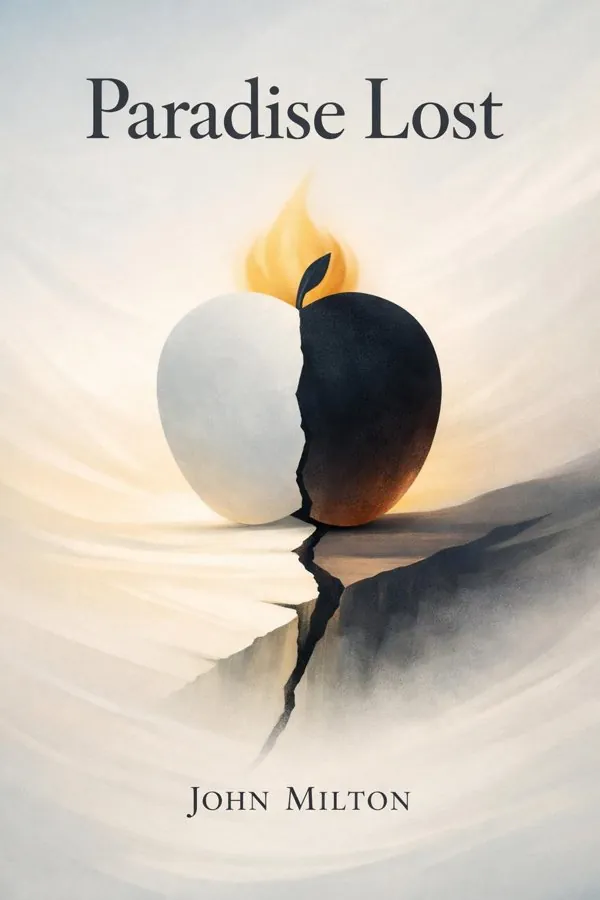
Paradise Lost: Summary & Key Insights
by John Milton
 10 min9 chaptersAudio available
What Is Paradise Lost About?
Paradise Lost by John Milton is a classics book spanning 9 pages. Paradise Lost is an epic poem in blank verse by the 17th-century English poet John Milton. It recounts the biblical story of the Fall of Man, depicting Satan’s rebellion against God and the subsequent expulsion of Adam and Eve from the Garden of Eden. The poem explores profound themes of free will, obedience, and redemption, and is considered one of the greatest works in English literature.
This FizzRead summary covers all 9 key chapters of Paradise Lost in approximately 10 minutes, distilling the most important ideas, arguments, and takeaways from John Milton's work. Also available as an audio summary and Key Quotes Podcast.
Paradise Lost
Paradise Lost is an epic poem in blank verse by the 17th-century English poet John Milton. It recounts the biblical story of the Fall of Man, depicting Satan’s rebellion against God and the subsequent expulsion of Adam and Eve from the Garden of Eden. The poem explores profound themes of free will, obedience, and redemption, and is considered one of the greatest works in English literature.
Who Should Read Paradise Lost?
This book is perfect for anyone interested in classics and looking to gain actionable insights in a short read. Whether you're a student, professional, or lifelong learner, the key ideas from Paradise Lost by John Milton will help you think differently.
- ✓Readers who enjoy classics and want practical takeaways
- ✓Professionals looking to apply new ideas to their work and life
- ✓Anyone who wants the core insights of Paradise Lost in just 10 minutes
Want the full summary?
Get instant access to this book summary and 100K+ more with Fizz Moment.
Get Free SummaryAvailable on App Store • Free to download
Key Chapters
In the opening, I raise my voice not to an earthly muse but to the celestial spirit who inspired man first to find truth through song. My invocation is both prayer and promise. I ask to recount the story from the beginning—how disobedience brought death into the world, yet through death came salvation. My intent is set forth plainly: to justify God’s ways to men.
Here, I remind you that understanding divine justice requires acknowledging human freedom. The fall of man was not mere misfortune; it was an act of free will exercised against divine command. To explore this complex freedom is to gaze upon the paradox that defines us. I begin by invoking light from darkness, symbolic of the poem’s trajectory—from the fires of Hell to the glories of Paradise regained in prophecy.
This purpose unites theological reasoning with poetic vision. Language becomes my form of worship; each verse a ladder upon which the human intellect may climb toward comprehension of divine providence. For every character, from Satan to Adam, serves as an embodiment of will—self-directed or obedient, proud or penitent. From the first moment, I set the grand scale: not just rebellion in Heaven, but the moral structure of all existence unveiled.
Imagine the vast abyss after divine judgment—a fiery lake where fallen spirits lay astonished by their own ruin. It is here that Satan, their leader, awakens, still majestic though deprived of light. His first speech defies despair; he calls upon his followers not to relent. Pride and resilience burn in him as fiercely as the flames around. He declares that the mind can make Heaven of Hell or Hell of Heaven—his rebellion becomes a philosophy.
This scene reveals the tragic grandeur of Satan’s character. His courage and eloquence almost seduce the reader into admiration, yet within these shining words lies corruption. He refuses submission, not out of ignorance, but out of deliberate will. In the ruined plains of Hell, he rallies his legions and builds Pandemonium, their palace of defiance. The forging of this vast infernal city mirrors the human urge to reclaim dignity even in loss, to construct meaning from ruins.
Revenge becomes his creed, his substitute for paradise. He vows to spoil God’s newest delight—humankind—whom he perceives as the cherished symbol of divine favor. Through Satan’s awakening, I sought to show that evil is born not from negation but from perverted glory, that pride is the shadow side of strength. His revolt stands as warning that intellect and will, divorced from humility, lead to catastrophic brilliance.
+ 7 more chapters — available in the FizzRead app
All Chapters in Paradise Lost
About the Author
John Milton (1608–1674) was an English poet, polemicist, and civil servant for the Commonwealth of England. He is best known for his epic poems Paradise Lost and Paradise Regained, as well as his prose works advocating for freedom of speech and religion. Milton’s mastery of language and his philosophical depth have made him a central figure in Western literary tradition.
Get This Summary in Your Preferred Format
Read or listen to the Paradise Lost summary by John Milton anytime, anywhere. FizzRead offers multiple formats so you can learn on your terms — all free.
Available formats: App · Audio · PDF · EPUB — All included free with FizzRead
Download Paradise Lost PDF and EPUB Summary
Key Quotes from Paradise Lost
“In the opening, I raise my voice not to an earthly muse but to the celestial spirit who inspired man first to find truth through song.”
“Imagine the vast abyss after divine judgment—a fiery lake where fallen spirits lay astonished by their own ruin.”
Frequently Asked Questions about Paradise Lost
Paradise Lost by John Milton is a classics book that explores key ideas across 9 chapters. Paradise Lost is an epic poem in blank verse by the 17th-century English poet John Milton. It recounts the biblical story of the Fall of Man, depicting Satan’s rebellion against God and the subsequent expulsion of Adam and Eve from the Garden of Eden. The poem explores profound themes of free will, obedience, and redemption, and is considered one of the greatest works in English literature.
More by John Milton
You Might Also Like

Browse by Category
Ready to read Paradise Lost?
Get the full summary and 100K+ more books with Fizz Moment.