
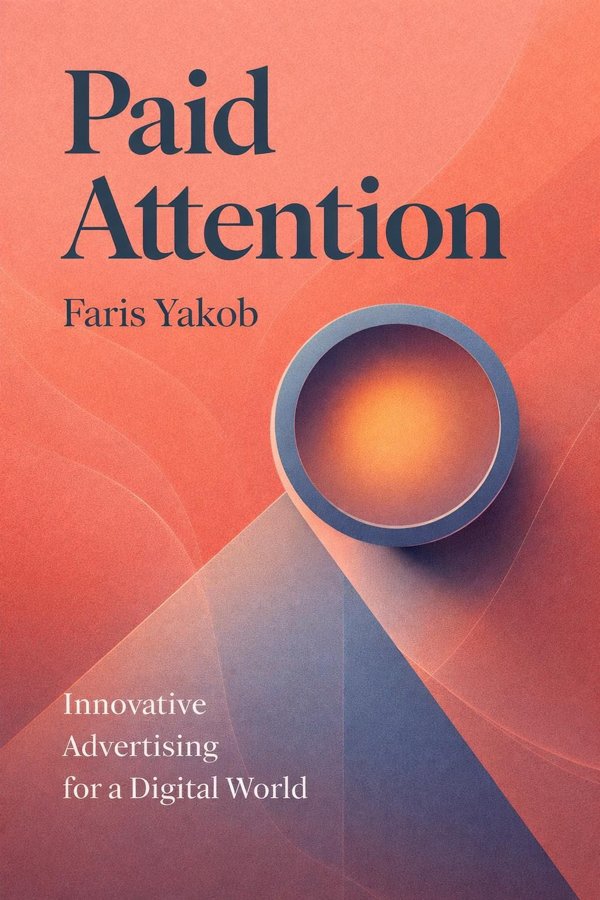
Paid Attention: Innovative Advertising for a Digital World: Summary & Key Insights
by Faris Yakob
 10 min5 chaptersAudio available
What Is Paid Attention: Innovative Advertising for a Digital World About?
Paid Attention: Innovative Advertising for a Digital World by Faris Yakob is a marketing book spanning 5 pages. Paid Attention explores how the attention economy has transformed advertising and marketing in the digital era. Faris Yakob examines how brands can capture and sustain consumer attention in an information-saturated environment, offering creative strategies and practical examples for innovation in communication and media.
This FizzRead summary covers all 5 key chapters of Paid Attention: Innovative Advertising for a Digital World in approximately 10 minutes, distilling the most important ideas, arguments, and takeaways from Faris Yakob's work. Also available as an audio summary and Key Quotes Podcast.
Paid Attention: Innovative Advertising for a Digital World
Paid Attention explores how the attention economy has transformed advertising and marketing in the digital era. Faris Yakob examines how brands can capture and sustain consumer attention in an information-saturated environment, offering creative strategies and practical examples for innovation in communication and media.
Who Should Read Paid Attention: Innovative Advertising for a Digital World?
This book is perfect for anyone interested in marketing and looking to gain actionable insights in a short read. Whether you're a student, professional, or lifelong learner, the key ideas from Paid Attention: Innovative Advertising for a Digital World by Faris Yakob will help you think differently.
- ✓Readers who enjoy marketing and want practical takeaways
- ✓Professionals looking to apply new ideas to their work and life
- ✓Anyone who wants the core insights of Paid Attention: Innovative Advertising for a Digital World in just 10 minutes
Want the full summary?
Get instant access to this book summary and 100K+ more with Fizz Moment.
Get Free SummaryAvailable on App Store • Free to download
Key Chapters
Let’s begin with history, because context gives us perspective. Advertising was born in the industrial era when products needed mass visibility. Newspapers and radio offered something miraculous: the ability to speak to many people at once. Then came television, the great symbolic stage of the consumer age—a world of jingles, thirty-second stories, and shared cultural touchstones. Back then, the relationship between advertiser and audience was simple: brands spoke, people listened.
But digital changed everything. With the advent of the internet, communication became interactive, dynamic, and personalized. What once was broadcast became a conversation. Social media accelerated this evolution, turning everyone into a potential creator and publisher. The consequence was fragmentation—attention splintered into countless micro-moments, each one competing with infinite others. The traditional advertising model, built around buying eyeballs, began to crumble. Media plans could no longer guarantee meaningful engagement.
This is where the attention economy was born: an economic framework built around the scarcity of human attention. When information becomes abundant, attention becomes rare, and scarcity drives value. In other words, every second of attention that your audience offers must be earned, not bought. Understanding this shift transforms how we approach creativity, storytelling, and data. It forces marketers to become anthropologists of perception, seeking to understand not just what people watch, but why they choose to watch.
Throughout the book, I advocate for an approach that values relevance, empathy, and novelty. Advertising must be interesting enough to be voluntarily consumed, and that means treating audiences not as targets but as collaborators in meaning-making. This reorientation—from buying impressions to earning interest—is the foundation of innovative advertising in the digital world.
Attention isn’t a mechanical act; it’s psychological, emotional, and contextual. We don’t attend to everything equally. Our minds filter, prioritize, and simplify because we’re bombarded with stimuli. Neuroscience tells us that attention is selective and guided by novelty, relevance, and emotional resonance. That’s why a great story or a surprising image can slice through noise—they trigger curiosity and emotional engagement, which our brains reward with focus.
In *Paid Attention*, I explore how understanding cognition helps designers of messages create more compelling experiences. People don’t remember ads; they remember feelings. Thus, creativity isn’t just decoration—it’s the mechanism that transforms ordinary communication into something worthy of mental investment. The most effective creativity today isn’t about clever slogans; it’s about empathy and understanding the lived experiences of your audience.
Digital platforms have made it easier to test and measure attention, but they’ve also made it easier to forget emotion. We often drown in data, optimizing for clicks while losing sight of what makes something genuinely meaningful. Creativity must resist that temptation. It’s not a function of metrics—it’s a human spark that draws attention because it feels authentic and imaginative.
Think of the most memorable campaigns of recent years: those that invite participation, that inspire sharing not through coercion but through delight or relevance. This is creativity in its purest form—a bridge between brand and culture built on the psychology of engagement. In the age of the attention economy, creativity isn’t optional; it’s survival.
+ 3 more chapters — available in the FizzRead app
All Chapters in Paid Attention: Innovative Advertising for a Digital World
About the Author
Faris Yakob is a creative strategist, consultant, and founder of Genius Steals. He has worked with global agencies and writes about innovation, creativity, and the intersection of technology and culture.
Get This Summary in Your Preferred Format
Read or listen to the Paid Attention: Innovative Advertising for a Digital World summary by Faris Yakob anytime, anywhere. FizzRead offers multiple formats so you can learn on your terms — all free.
Available formats: App · Audio · PDF · EPUB — All included free with FizzRead
Download Paid Attention: Innovative Advertising for a Digital World PDF and EPUB Summary
Key Quotes from Paid Attention: Innovative Advertising for a Digital World
“Let’s begin with history, because context gives us perspective.”
“Attention isn’t a mechanical act; it’s psychological, emotional, and contextual.”
Frequently Asked Questions about Paid Attention: Innovative Advertising for a Digital World
Paid Attention: Innovative Advertising for a Digital World by Faris Yakob is a marketing book that explores key ideas across 5 chapters. Paid Attention explores how the attention economy has transformed advertising and marketing in the digital era. Faris Yakob examines how brands can capture and sustain consumer attention in an information-saturated environment, offering creative strategies and practical examples for innovation in communication and media.
You Might Also Like
Captivology: The Science of Capturing People's Attention
Ben Parr
10 min
Marketing 5.0: Technology for Humanity
Philip Kotler, Hermawan Kartajaya, Iwan Setiawan
10 min
Marketing Strategy
Paul Fifield
10 min
UnMarketing: Stop Marketing. Start Engaging.
Scott Stratten
10 min
$100M Leads: How to Get Strangers to Want to Buy Your Stuff
Alex Hormozi
10 min
80/20 Sales and Marketing: The Definitive Guide to Working Less and Making More
Perry Marshall
10 minBrowse by Category
Ready to read Paid Attention: Innovative Advertising for a Digital World?
Get the full summary and 100K+ more books with Fizz Moment.