
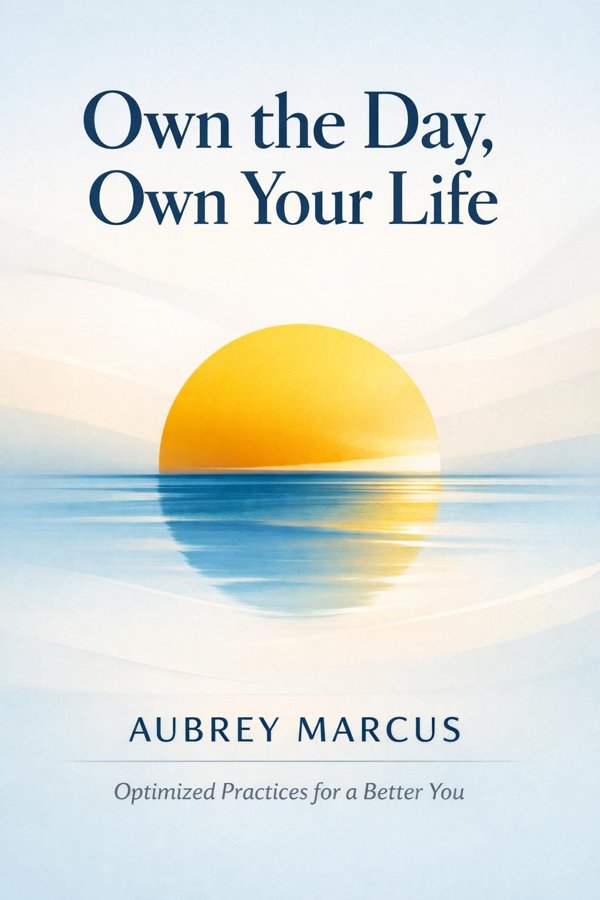
Own the Day, Own Your Life: Optimized Practices for a Better You: Summary & Key Insights
 10 min10 chaptersAudio available
Key Takeaways from Own the Day, Own Your Life: Optimized Practices for a Better You
The first moments after waking are not trivial—they are the opening command your body receives for the entire day.
Food is more than fuel—it is information that tells your body how to perform.
Productivity is not simply about working harder; it is about protecting the mental state in which your best work becomes possible.
Your mind is always being trained, whether by design or by default.
Exercise is often treated as punishment for overeating or as a cosmetic obligation, but Marcus presents movement as a fundamental expression of being fully alive.
What Is Own the Day, Own Your Life: Optimized Practices for a Better You About?
Own the Day, Own Your Life: Optimized Practices for a Better You by Aubrey Marcus is a wellness book spanning 10 pages. What if the quality of your life were determined less by grand ambitions and more by the way you move through an ordinary day? In Own the Day, Own Your Life, Aubrey Marcus argues exactly that. Rather than offering abstract self-help slogans, he lays out a practical system for optimizing the hours that shape our energy, mood, productivity, relationships, and health. The book follows the arc of a full day—from waking and eating to working, training, playing, connecting, and sleeping—showing how small, intentional choices can compound into lasting transformation. What makes the book especially compelling is its blend of modern performance science and time-tested wisdom. Marcus draws on research in nutrition, circadian rhythm, movement, recovery, and psychology, while also incorporating practices that emphasize presence, vitality, and balance. As the founder of Onnit and a well-known voice in the human optimization space, he writes from years of experience experimenting with health and performance strategies. The result is a highly actionable guide for readers who want more focus, resilience, and aliveness—not through perfection, but through daily practices that make life work better.
This FizzRead summary covers all 10 key chapters of Own the Day, Own Your Life: Optimized Practices for a Better You in approximately 10 minutes, distilling the most important ideas, arguments, and takeaways from Aubrey Marcus's work. Also available as an audio summary and Key Quotes Podcast.
Own the Day, Own Your Life: Optimized Practices for a Better You
What if the quality of your life were determined less by grand ambitions and more by the way you move through an ordinary day? In Own the Day, Own Your Life, Aubrey Marcus argues exactly that. Rather than offering abstract self-help slogans, he lays out a practical system for optimizing the hours that shape our energy, mood, productivity, relationships, and health. The book follows the arc of a full day—from waking and eating to working, training, playing, connecting, and sleeping—showing how small, intentional choices can compound into lasting transformation.
What makes the book especially compelling is its blend of modern performance science and time-tested wisdom. Marcus draws on research in nutrition, circadian rhythm, movement, recovery, and psychology, while also incorporating practices that emphasize presence, vitality, and balance. As the founder of Onnit and a well-known voice in the human optimization space, he writes from years of experience experimenting with health and performance strategies. The result is a highly actionable guide for readers who want more focus, resilience, and aliveness—not through perfection, but through daily practices that make life work better.
Who Should Read Own the Day, Own Your Life: Optimized Practices for a Better You?
This book is perfect for anyone interested in wellness and looking to gain actionable insights in a short read. Whether you're a student, professional, or lifelong learner, the key ideas from Own the Day, Own Your Life: Optimized Practices for a Better You by Aubrey Marcus will help you think differently.
- ✓Readers who enjoy wellness and want practical takeaways
- ✓Professionals looking to apply new ideas to their work and life
- ✓Anyone who wants the core insights of Own the Day, Own Your Life: Optimized Practices for a Better You in just 10 minutes
Want the full summary?
Get instant access to this book summary and 100K+ more with Fizz Moment.
Get Free SummaryAvailable on App Store • Free to download
Key Chapters
The first moments after waking are not trivial—they are the opening command your body receives for the entire day. Marcus emphasizes that many people begin their mornings in a state of confusion and depletion: they hit snooze, check notifications, and immediately hand their attention to the outside world. This creates a reactive state before the day has even begun. His alternative is to treat waking as a physiological and psychological reset point.
A strong morning routine starts by rehydrating after sleep, exposing yourself to natural light, and getting your body moving. These simple actions help regulate circadian rhythm, improve alertness, and shift the nervous system out of grogginess. Marcus also encourages practices like deep breathing, gratitude, and a few minutes of intentional stillness. The goal is not to create a complicated ritual that takes an hour, but to establish a sequence that tells your mind and body: we are awake, present, and prepared.
In practice, this could look like drinking a large glass of water with minerals or lemon, stepping outside for sunlight, doing a few stretches or bodyweight movements, and resisting the urge to check your phone for the first part of the morning. Even a busy professional can implement a shortened version. What matters is consistency.
Actionable takeaway: Build a 10-minute morning protocol you can repeat daily—hydrate, get light exposure, move, and choose your mental state before engaging with technology.
Food is more than fuel—it is information that tells your body how to perform. One of Marcus’s central ideas is that many people eat according to habit, emotion, convenience, or social conditioning rather than biological need. The result is unstable energy, brain fog, cravings, and a daily cycle of spikes and crashes. Instead of asking, “What do I feel like eating?” he encourages readers to ask, “What will help me feel, think, and function at my best?”
His approach favors nutrient-dense, whole foods and greater awareness of timing. Rather than assuming breakfast must be heavy or sugar-based, Marcus explores more flexible ways of eating that support sustained energy and metabolic health. He highlights protein, healthy fats, vegetables, quality carbohydrates, and hydration as the foundation of better performance. He also questions the role of processed foods and overeating, noting that many common eating patterns are designed around stimulation and comfort rather than vitality.
This does not mean following a rigid diet ideology. It means noticing how meals affect clarity, mood, physical performance, and satiety. For example, a breakfast of pastries and coffee may feel convenient but can lead to a mid-morning crash, while eggs, avocado, fruit, and water may provide steadier energy. Similarly, eating a large, heavy lunch may make afternoon work harder, while a balanced meal can support focus.
Actionable takeaway: For one week, track how your meals affect your energy two hours later and adjust toward whole, nutrient-dense foods that keep you steady rather than stimulated.
Productivity is not simply about working harder; it is about protecting the mental state in which your best work becomes possible. Marcus argues that most people sabotage focus by trying to do too many things at once, allowing distractions to fracture attention, and ignoring the body’s role in cognitive performance. In this view, focus is less a personality trait than an environment you intentionally create.
He encourages structuring work around periods of concentrated effort rather than constant interruption. That means reducing unnecessary notifications, defining clear priorities, and recognizing that your brain performs best when it can fully engage one meaningful task at a time. Physical factors also matter: posture, hydration, movement breaks, and even breath quality influence mental sharpness. If you are exhausted, undernourished, overstimulated, or sedentary, your attention will suffer no matter how motivated you are.
A practical application is to identify your most cognitively demanding task and do it during your highest-energy window, often earlier in the day. Set a block of uninterrupted time, put your phone away, close unused tabs, and work with full engagement. Then step away briefly to move, breathe, or reset before returning. This cycle supports sustainable output instead of burnout.
Marcus’s broader point is that work should not become a contest of frantic busyness. Real productivity combines intensity with presence. When attention is fragmented, even long hours produce mediocre results. When attention is focused, less time can generate better outcomes.
Actionable takeaway: Schedule one daily 60- to 90-minute distraction-free work block for your highest-value task and protect it as seriously as you would an important meeting.
Your mind is always being trained, whether by design or by default. Marcus highlights that mental growth does not come only from formal education; it comes from what you read, listen to, think about, and repeatedly expose yourself to each day. If your attention is constantly consumed by shallow entertainment, outrage, and distraction, your thinking becomes similarly scattered. If you feed your mind with challenge, reflection, and curiosity, it becomes sharper and more capable.
The book encourages readers to become intentional about learning. That means choosing information that expands understanding rather than merely filling time. It also means recognizing that mental performance depends on physical state. Sleep, movement, nutrition, and stress regulation all affect memory, focus, and creativity. A strong mind is not separate from the body; it is supported by it.
Practical examples include replacing some passive scrolling with reading, listening to educational podcasts during walks, journaling to process ideas, and exposing yourself to viewpoints that challenge your assumptions. Marcus also emphasizes the importance of stillness. Constant input can create the illusion of learning while preventing integration. Reflection is what turns information into wisdom.
This perspective reframes personal development. You do not need to overhaul your life overnight or enroll in a major program to become mentally stronger. Small, repeated acts of intentional learning compound over time. A few pages read daily, a few thoughtful notes, and a few minutes of silence can steadily sharpen the mind.
Actionable takeaway: Create a daily mental growth habit—20 minutes of reading, listening, or journaling—and pair it with five minutes of quiet reflection so knowledge has a chance to stick.
Exercise is often treated as punishment for overeating or as a cosmetic obligation, but Marcus presents movement as a fundamental expression of being fully alive. The human body is designed to move often, variably, and with purpose. When we spend most of the day sitting and then expect a single workout to compensate, we create a mismatch between modern life and biological reality.
Marcus advocates for a broader view of training—one that includes strength, mobility, endurance, and play. Physical development is not just about building muscle or burning calories; it is about preserving capability, confidence, and resilience over a lifetime. Movement improves mood, cognition, hormonal balance, and stress tolerance. It is one of the most reliable ways to upgrade both physical and mental health.
This does not require elite athleticism. A thoughtful training practice can include resistance exercises, walks, sprints, stretching, hiking, yoga, martial arts, or sports. The key is consistency and balance. Overtraining can be as harmful as inactivity, especially if recovery is ignored. Marcus encourages readers to train hard enough to stimulate growth, but wisely enough to support long-term health.
A practical day might include a morning mobility routine, a strength session a few times a week, and regular movement throughout the workday. For someone less experienced, starting with bodyweight exercises and brisk walking can be enough to build momentum. The goal is to make movement a normal part of life, not an occasional act of discipline.
Actionable takeaway: Build a weekly movement plan with at least three strength sessions, daily walking, and short mobility breaks so exercise supports life instead of competing with it.
Many adults know how to work, consume, and recover in passive ways, but they have forgotten how to play. Marcus argues that this is not a minor loss. Play is one of the most important yet neglected forms of restoration. It brings spontaneity, creativity, joy, and emotional flexibility back into life. Without it, even a productive life can become flat, mechanical, and quietly exhausting.
Play differs from distraction. Scrolling on a phone or binge-watching shows may occupy time, but these activities often leave people numb rather than renewed. True play is engaging. It involves participation, presence, and a sense of aliveness. That could mean dancing, surfing, pickup basketball, hiking with friends, exploring nature, creating art, wrestling with your kids, or trying something unfamiliar simply for the fun of it.
Marcus treats play as a performance enhancer, not an indulgence. It lowers stress, improves social bonding, refreshes attention, and reconnects people to curiosity. It also helps break perfectionism. In playful states, we learn to experiment rather than constantly evaluate ourselves. This matters because many people become so identified with efficiency that they lose access to wonder.
Integrating play can be surprisingly practical. Instead of defaulting to passive entertainment every evening, schedule one active, enjoyable activity each week. Bring music into mundane routines. Turn movement into games. Spend time with people who invite laughter and adventure. These are not frivolous add-ons; they are part of a well-lived day.
Actionable takeaway: Replace at least one hour of passive weekly entertainment with an activity that feels physically engaging, socially alive, or creatively playful.
You do not experience health only through food, exercise, and sleep; you experience it through the quality of your relationships. Marcus emphasizes that connection is a biological need as well as an emotional one. The people around you affect your stress levels, energy, self-image, and even your capacity for healing. A life optimized for performance but stripped of intimacy and belonging will eventually feel hollow.
The book explores relationships as energetic exchanges. This includes romantic intimacy, friendship, family connection, and the wider social environment. Conversations can nourish or drain. Touch can calm the nervous system. Honest communication can reduce hidden tension. Shared laughter and affection can create resilience that no supplement can replicate. In this sense, relational health is not separate from physical health—it is one of its foundations.
Marcus encourages greater intentionality in how we show up with others. Presence matters more than performative connection. Putting away devices during meals, asking real questions, expressing appreciation, and making time for physical affection can all transform everyday interactions. In romantic relationships, intimacy is framed not just as sexuality but as trust, openness, and mutual vitality.
This idea also extends to boundaries. Not every connection is healthy, and optimization sometimes means limiting relationships that chronically produce stress, resentment, or emotional depletion. Choosing your social environment wisely is part of choosing your life.
Actionable takeaway: Each day, create one moment of undistracted connection—listen deeply, express appreciation, or share affection—so your relationships become a source of energy rather than background maintenance.
Most people do not finish their days; they simply drift into exhaustion. Marcus argues that the evening deserves as much attention as the morning because it determines the quality of rest, reflection, and recovery. If the night is filled with bright screens, overstimulation, heavy eating, and unresolved mental noise, sleep becomes shallow and the next day begins with a deficit.
An intentional evening routine creates a buffer between the demands of the day and the restorative state the body needs. Marcus recommends dimming lights, reducing digital stimulation, and giving the nervous system clear signals that it is time to downshift. Gentle stretching, reading, conversation, breathwork, journaling, or simply sitting quietly can help the body move from activation to calm.
The evening is also a powerful time for mental closure. Rather than replaying worries in bed, it helps to review the day, acknowledge what went well, and identify priorities for tomorrow. This can reduce anxiety and prevent your mind from carrying unfinished loops into sleep. Food and drink matter too. Late-night overeating or excessive alcohol may feel relaxing in the moment but often disrupt recovery.
Marcus’s larger insight is that nighttime rituals are not about restriction; they are about protecting one of the most important transitions of the day. A better evening creates a better night, and a better night creates a better morning. Days are linked.
Actionable takeaway: Establish a 30-minute wind-down routine with dim lighting, no phone, and one calming habit such as reading, stretching, or journaling before bed.
Sleep is not dead time—it is where much of your repair, learning, hormonal regulation, and emotional recalibration actually happen. Marcus treats sleep as the master recovery system that makes every other self-improvement effort more effective. Without it, even the best training plan, diet, and productivity strategy will yield diminished results. Yet many people sacrifice sleep first, as though it were optional.
The book underscores that poor sleep affects nearly everything: reaction time, appetite regulation, impulse control, mood, immune function, and cognitive performance. In other words, if you sleep badly, you are more likely to eat poorly, think less clearly, perform worse, and feel more stressed. This is why Marcus frames sleep not as the end of the day, but as the beginning of tomorrow’s success.
Optimizing sleep involves both quantity and quality. Practical factors include a cool, dark room, consistent sleep and wake times, lower evening light exposure, and limiting substances that disrupt deep rest. Marcus also points readers back to daytime behaviors: sunlight in the morning, movement, and appropriate stress management all support stronger sleep at night.
For many readers, the biggest shift is simply treating sleep with respect. Instead of seeing bedtime as negotiable, it becomes a strategic priority. Going to sleep on time may be the most underrated life upgrade available because it compounds across every domain.
Actionable takeaway: Choose a consistent bedtime and protect your sleep environment—cool, dark, quiet, and screen-light free—for the next seven nights and notice the difference in mood and performance.
A better life is rarely built through one dramatic breakthrough; it is built through systems that make good choices easier to repeat. Marcus closes the loop by showing that no single habit works in isolation. Morning light supports sleep. Sleep improves food choices. Better nutrition improves training. Movement supports mood. Good relationships reduce stress. Each practice strengthens the others. True optimization comes from integration, not obsession.
This is an important corrective to extreme self-improvement culture. Marcus does not argue that readers need to become perfect biohackers or manage every variable with rigid intensity. In fact, all-or-nothing thinking often leads to collapse. A sustainable life requires adaptability. Some days will be ideal, others messy. The goal is not flawless execution but a reliable return to foundational habits.
One useful application is to identify the smallest set of practices that produce the greatest benefit: wake intentionally, hydrate, eat real food, focus deeply, move, connect, wind down, and sleep well. When life gets chaotic, return to these basics rather than abandoning the whole system. Progress is maintained through rhythm, not heroic effort.
Marcus’s deeper message is empowering: you do not need to control everything to improve everything. By designing your day more consciously, you gradually redesign your identity. Every repeated choice becomes evidence of the kind of person you are becoming.
Actionable takeaway: Choose three foundational habits to anchor your day this month and track consistency rather than perfection, letting small wins create momentum for broader change.
All Chapters in Own the Day, Own Your Life: Optimized Practices for a Better You
About the Author
Aubrey Marcus is an American entrepreneur, author, and podcast host best known for his work in health, human performance, and lifestyle optimization. He founded Onnit, a wellness brand that grew popular for its supplements, fitness equipment, and philosophy of total human optimization. Through his writing and long-form podcast conversations, Marcus has explored subjects ranging from nutrition and physical training to mindset, relationships, and personal growth. His approach often combines scientific research, practical experimentation, and broader philosophical ideas about vitality and purpose. In Own the Day, Own Your Life, he brings these interests together in a structured guide to improving everyday habits. Marcus has become a recognizable figure in modern wellness culture by encouraging people to take a more active, intentional role in shaping how they feel and live.
Get This Summary in Your Preferred Format
Read or listen to the Own the Day, Own Your Life: Optimized Practices for a Better You summary by Aubrey Marcus anytime, anywhere. FizzRead offers multiple formats so you can learn on your terms — all free.
Available formats: App · Audio · PDF · EPUB — All included free with FizzRead
Download Own the Day, Own Your Life: Optimized Practices for a Better You PDF and EPUB Summary
Key Quotes from Own the Day, Own Your Life: Optimized Practices for a Better You
“The first moments after waking are not trivial—they are the opening command your body receives for the entire day.”
“Food is more than fuel—it is information that tells your body how to perform.”
“Productivity is not simply about working harder; it is about protecting the mental state in which your best work becomes possible.”
“Your mind is always being trained, whether by design or by default.”
“Exercise is often treated as punishment for overeating or as a cosmetic obligation, but Marcus presents movement as a fundamental expression of being fully alive.”
Frequently Asked Questions about Own the Day, Own Your Life: Optimized Practices for a Better You
Own the Day, Own Your Life: Optimized Practices for a Better You by Aubrey Marcus is a wellness book that explores key ideas across 10 chapters. What if the quality of your life were determined less by grand ambitions and more by the way you move through an ordinary day? In Own the Day, Own Your Life, Aubrey Marcus argues exactly that. Rather than offering abstract self-help slogans, he lays out a practical system for optimizing the hours that shape our energy, mood, productivity, relationships, and health. The book follows the arc of a full day—from waking and eating to working, training, playing, connecting, and sleeping—showing how small, intentional choices can compound into lasting transformation. What makes the book especially compelling is its blend of modern performance science and time-tested wisdom. Marcus draws on research in nutrition, circadian rhythm, movement, recovery, and psychology, while also incorporating practices that emphasize presence, vitality, and balance. As the founder of Onnit and a well-known voice in the human optimization space, he writes from years of experience experimenting with health and performance strategies. The result is a highly actionable guide for readers who want more focus, resilience, and aliveness—not through perfection, but through daily practices that make life work better.
You Might Also Like
How We Heal: Uncover Your Power and Set Yourself Free
Alexandra Elle
10 min
A Year of Self-Care: Daily Practices and Inspiration for Caring for Yourself
Zoe Shaw
10 min
Biohacker’s Handbook: Upgrade Your Life
Olli Sovijärvi, Teemu Arina, Jaakko Halmetoja
10 min
Bliss More: How to Succeed in Meditation Without Really Trying
Light Watkins
10 min
Body Kindness: Transform Your Health from the Inside Out—and Never Say Diet Again
Rebecca Scritchfield
10 min
Cook, Eat, Run: Cook Fast, Boost Performance with 75 Ultimate Recipes for Runners
Charlie Watson
10 minBrowse by Category
Ready to read Own the Day, Own Your Life: Optimized Practices for a Better You?
Get the full summary and 100K+ more books with Fizz Moment.