
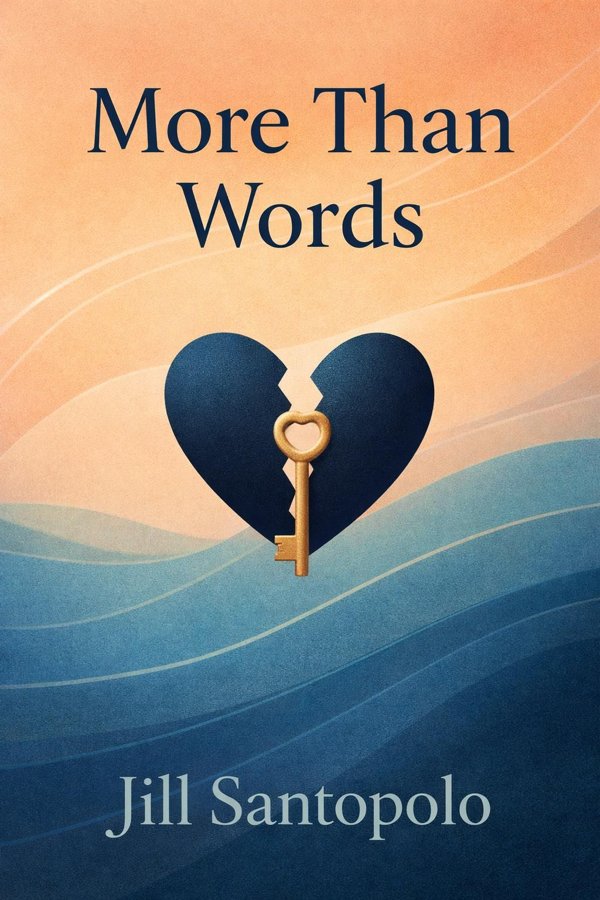
More Than Words: Summary & Key Insights
 10 min8 chaptersAudio available
Key Takeaways from More Than Words
Loss does not simply take something away; it often reveals what was already fragile beneath the surface.
Comfort can make injustice feel distant, even when you benefit from it directly.
Affection can bind people together, but shared values determine whether a relationship can survive pressure.
Families often teach us that loyalty is sacred, but the novel asks a harder question: what happens when loyalty protects wrongdoing?
Identity is not found in a moment of clarity; it is built through decisions that carry real cost.
What Is More Than Words About?
More Than Words by Jill Santopolo is a bestsellers book. What happens when the life you inherited no longer matches the life you want? In More Than Words, Jill Santopolo tells the story of Nina Gregory, a young woman whose future appears settled from the outside: she comes from wealth, is engaged to a politically connected man, and is expected to continue her family’s philanthropic legacy. But after the sudden death of her father, Nina discovers that the values shaping her world are not as clear or honorable as she believed. As grief opens old wounds and new questions, she is forced to confront love, privilege, family loyalty, moral responsibility, and the difficult task of becoming her own person. The novel matters because it blends emotional intimacy with larger questions about power, inequality, and what it means to live ethically. Santopolo is especially skilled at writing stories in which romance and self-discovery are inseparable, and here she expands that strength into a thoughtful, socially aware contemporary drama. More Than Words is not just about choosing between relationships; it is about choosing the kind of life that can be defended in good conscience.
This FizzRead summary covers all 8 key chapters of More Than Words in approximately 10 minutes, distilling the most important ideas, arguments, and takeaways from Jill Santopolo's work. Also available as an audio summary and Key Quotes Podcast.
More Than Words
What happens when the life you inherited no longer matches the life you want? In More Than Words, Jill Santopolo tells the story of Nina Gregory, a young woman whose future appears settled from the outside: she comes from wealth, is engaged to a politically connected man, and is expected to continue her family’s philanthropic legacy. But after the sudden death of her father, Nina discovers that the values shaping her world are not as clear or honorable as she believed. As grief opens old wounds and new questions, she is forced to confront love, privilege, family loyalty, moral responsibility, and the difficult task of becoming her own person. The novel matters because it blends emotional intimacy with larger questions about power, inequality, and what it means to live ethically. Santopolo is especially skilled at writing stories in which romance and self-discovery are inseparable, and here she expands that strength into a thoughtful, socially aware contemporary drama. More Than Words is not just about choosing between relationships; it is about choosing the kind of life that can be defended in good conscience.
Who Should Read More Than Words?
This book is perfect for anyone interested in bestsellers and looking to gain actionable insights in a short read. Whether you're a student, professional, or lifelong learner, the key ideas from More Than Words by Jill Santopolo will help you think differently.
- ✓Readers who enjoy bestsellers and want practical takeaways
- ✓Professionals looking to apply new ideas to their work and life
- ✓Anyone who wants the core insights of More Than Words in just 10 minutes
Want the full summary?
Get instant access to this book summary and 100K+ more with Fizz Moment.
Get Free SummaryAvailable on App Store • Free to download
Key Chapters
Comfort can make injustice feel distant, even when you benefit from it directly. Nina grows up inside extraordinary wealth, social access, and institutional influence. That privilege gives her security, education, and opportunity, but it also shields her from seeing how decisions made in elite circles affect ordinary lives. As she learns more about the structures tied to her family’s name, she realizes that privilege is not morally neutral. It is not just what one has; it is the system that allows some people to move freely while others bear the cost.
Jill Santopolo handles this theme with nuance. The novel does not reduce Nina to a villain because she was born into privilege, nor does it excuse her from responsibility because she did not create the system herself. Instead, it shows that ethical adulthood begins when a person stops confusing innocence with exemption. Nina must examine where money comes from, what philanthropy hides, and whether outward generosity can coexist with private harm. This tension gives the story much of its depth.
A practical implication of this idea is that self-awareness must extend beyond personal feelings. It is not enough to mean well. People with influence in any form, financial, social, professional, or cultural, need to ask who is excluded, who is harmed, and who gets heard. For example, a family foundation, a business practice, or even a workplace policy may look admirable until one investigates whose interests it actually serves.
The novel suggests that true integrity requires moving from passive comfort to active scrutiny. Privilege becomes dangerous when it remains unexamined, but it can become meaningful when used to confront rather than preserve inequality.
Actionable takeaway: Identify one area of your life where you benefit from unearned advantage, then ask how you can use that position to increase fairness instead of simply maintaining comfort.
Affection can bind people together, but shared values determine whether a relationship can survive pressure. One of the central tensions in More Than Words lies in Nina’s romantic life, especially in the gap between emotional attachment and moral compatibility. The novel explores what happens when a relationship looks ideal on paper, socially approved, stable, and advantageous, but begins to feel hollow as deeper questions emerge. Nina is forced to consider whether intimacy can endure when two people want fundamentally different things from life.
This is one of the book’s most mature themes. Rather than treating romance as a simple matter of chemistry or destiny, Santopolo presents love as something tested by ethics, ambition, and identity. A partner may be kind, attractive, and devoted, yet still represent a future that requires self-betrayal. Conversely, a connection may feel risky or imperfect but create room for honesty and growth. Nina’s struggle is not merely choosing between people; it is choosing between versions of herself.
Readers can apply this insight easily. Many people stay in relationships because nothing is obviously wrong. There may be no dramatic betrayal, no constant conflict, and no lack of affection. Yet beneath the surface, they may disagree on how to use money, what kind of community to build, how to handle power, or what compromises are acceptable. Those issues become defining over time.
The novel reminds us that compatibility is not just about lifestyle fit. It includes conscience. When your deepest convictions shift, your relationships must either evolve with them or reveal their limits. Love can inspire transformation, but it cannot erase fundamental misalignment.
Actionable takeaway: In any important relationship, ask not only “Do we love each other?” but also “Do our values support the same future?”
Families often teach us that loyalty is sacred, but the novel asks a harder question: what happens when loyalty protects wrongdoing? Nina’s journey is shaped by her attachment to her father, her family name, and the expectations that come with both. She wants to honor where she comes from. Yet as she uncovers uncomfortable truths, she realizes that loyalty can become a form of silence if it demands obedience over conscience.
More Than Words does not portray family bonds as trivial or disposable. On the contrary, the emotional power of the story comes from how much Nina loves her father and how difficult it is to question his legacy. This makes her moral awakening more painful. She is not rebelling for the sake of rebellion; she is trying to determine whether protecting family reputation is compatible with living truthfully. The novel shows that betrayal and integrity can sometimes look uncomfortably similar from the outside.
This idea resonates in many real-world situations. People may defend harmful business practices, ignore abusive behavior, or conceal unethical decisions because “family comes first.” In workplaces, politics, and communities, personal loyalty often overrides justice. Santopolo suggests that mature love does not mean refusing to see flaws. It means facing them honestly, even when doing so disrupts belonging.
Importantly, the novel distinguishes between rejecting people and rejecting harmful patterns. Nina’s task is not simply to sever ties, but to decide what she can continue, what she must challenge, and what she can no longer carry. That is a much more realistic and emotionally complex form of courage.
Actionable takeaway: When loyalty and integrity collide, define in writing the values you will not compromise, even for the people you love most.
Identity is not found in a moment of clarity; it is built through decisions that carry real cost. Nina’s evolution in More Than Words is compelling because it does not come through inspirational insight alone. She does not simply realize who she is and feel instantly free. Instead, she must make choices that affect relationships, status, public image, and financial security. The novel argues that self-discovery becomes meaningful only when it changes behavior.
This distinguishes the story from more superficial narratives of personal growth. Nina has long been surrounded by expectations about how she should dress, whom she should love, what causes she should support, and what role she should play in elite society. As she questions those expectations, she faces a common human fear: if I stop performing the version of me that others depend on, what remains? The answer emerges gradually through action. By choosing differently, she becomes different.
The lesson is practical. Many people say they want a more authentic life, but authenticity often demands sacrifice. It may mean leaving a prestigious career path, disappointing parents, ending a relationship, changing social circles, or speaking publicly about something others prefer to hide. Clarity usually follows commitment, not the other way around. We understand ourselves by seeing what we are willing to risk for our convictions.
The novel also shows that uncertainty is not failure. Nina does not possess complete confidence at every step. She moves forward while still afraid, and that makes her transformation believable. Courage here is not certainty; it is choosing despite uncertainty.
Actionable takeaway: If you are questioning your current path, identify one concrete decision that better reflects your values, then take it before waiting to feel completely ready.
Good works can do real good, but they can also distract from the systems that make them necessary. A major thread in More Than Words examines charitable giving, public service, and social prestige. Nina has been raised to admire philanthropy as evidence of generosity and civic duty. Yet as she looks more closely, she begins to see that charitable institutions may coexist with power structures that produce harm in the first place. The issue is not that helping others is meaningless; it is that helping can become morally complicated when it leaves deeper injustices untouched.
This theme gives the novel wider social relevance. Santopolo invites readers to question the comforting idea that wealth automatically becomes virtuous when a portion of it is donated. A foundation, gala, or scholarship may create visible benefit while still protecting reputations, preserving influence, or avoiding accountability. Nina’s growing discomfort reflects a broader cultural question: when does philanthropy represent real commitment, and when does it function as image management?
In everyday terms, the same principle applies at smaller scales. A company may sponsor community events while underpaying workers. A public figure may support a cause while benefiting from harmful systems. Even individuals may use selective generosity to avoid confronting larger responsibilities. Ethical action, the novel suggests, requires asking not only “What am I giving?” but “What am I refusing to examine?”
This does not mean rejecting charity. It means widening the lens. Real social responsibility includes transparency, structural awareness, and willingness to change the conditions that create need. Nina’s moral growth depends on seeing that compassion without accountability can leave injustice intact.
Actionable takeaway: The next time you admire a charitable effort, ask what underlying system created the problem and whether the response addresses root causes or only visible symptoms.
No relationship begins in the present alone; every bond is influenced by memory, family history, and old emotional patterns. In More Than Words, Nina’s romantic and personal choices are shaped by the stories she has inherited about love, loyalty, success, and security. Her grief over her father, her family expectations, and her earlier emotional experiences all influence how she interprets current relationships. Santopolo shows that people do not simply choose partners; they also choose familiar scripts, sometimes without realizing it.
This idea helps explain why Nina’s decisions carry so much emotional weight. A relationship is never just about attraction. It may represent safety, rebellion, approval, continuity, or freedom. What appears to be indecision can actually be the collision of past and present. Nina must learn to separate what she truly wants from what she has been trained to want. That is one of the novel’s most psychologically insightful dimensions.
Readers can recognize this pattern in their own lives. Someone raised to equate love with stability may ignore emotional disconnection as long as a relationship appears respectable. Another person may chase intensity because it feels more emotionally familiar than calm support. Family messages about money, ambition, and public image often shape romantic choices more than people admit.
The novel encourages reflection rather than blame. The past cannot be erased, but it can be understood. Once Nina begins to see how old patterns operate within her, she gains more freedom to choose differently. Emotional maturity comes from recognizing inherited scripts before they become destiny.
Actionable takeaway: Reflect on one belief about love or success that came from your family, and ask whether it still serves the person you are becoming.
Success loses its shine when it is disconnected from conscience. At the heart of More Than Words is Nina’s attempt to define a life that feels morally livable, not merely socially enviable. She has access to everything many people are taught to want: status, money, connections, and a polished future. Yet the more she sees how these advantages are entangled with compromise, the less satisfying they become. The novel’s deepest message is that meaning comes not from external validation but from internal coherence.
This is why the book resonates beyond its romantic plot. It asks readers to consider what kind of success they are pursuing and at what cost. A career, relationship, or family legacy may appear admirable from the outside while quietly demanding self-silencing on the inside. Nina’s struggle is universal in that sense. Many people reach moments when they realize they can either keep performing a life that wins approval or build one they can actually respect.
Integrity in the novel is not perfection. Nina does not emerge with complete answers or total moral purity. Instead, she develops a stronger willingness to live in alignment with what she knows to be true, even when that creates uncertainty. That distinction matters. Integrity is less about never making mistakes and more about refusing to organize your life around denial.
Practically, this insight can guide major decisions. When evaluating opportunities, ask not only whether they offer security or prestige, but whether they require you to ignore what you believe. The novel suggests that fulfillment depends on this kind of alignment.
Actionable takeaway: Before committing to any major life path, ask yourself a simple question: “Can I respect the person I become by choosing this?”
All Chapters in More Than Words
About the Author
Jill Santopolo is an American novelist and publishing professional known for emotionally rich fiction that explores love, loss, memory, and personal transformation. She became widely known for her international bestseller The Light We Lost, a contemporary novel praised for its emotional intensity and relationship-centered storytelling. Santopolo has also worked in children’s publishing and written books for younger audiences, giving her a broad perspective on narrative, character, and audience connection. Her novels often focus on characters at emotional crossroads, especially women forced to choose between the lives they expected and the lives they truly want. In More Than Words, she brings that signature emotional insight to a story that also examines privilege, family legacy, and moral responsibility.
Get This Summary in Your Preferred Format
Read or listen to the More Than Words summary by Jill Santopolo anytime, anywhere. FizzRead offers multiple formats so you can learn on your terms — all free.
Available formats: App · Audio · PDF · EPUB — All included free with FizzRead
Download More Than Words PDF and EPUB Summary
Key Quotes from More Than Words
“Loss does not simply take something away; it often reveals what was already fragile beneath the surface.”
“Comfort can make injustice feel distant, even when you benefit from it directly.”
“Affection can bind people together, but shared values determine whether a relationship can survive pressure.”
“Families often teach us that loyalty is sacred, but the novel asks a harder question: what happens when loyalty protects wrongdoing?”
“Identity is not found in a moment of clarity; it is built through decisions that carry real cost.”
Frequently Asked Questions about More Than Words
More Than Words by Jill Santopolo is a bestsellers book that explores key ideas across 8 chapters. What happens when the life you inherited no longer matches the life you want? In More Than Words, Jill Santopolo tells the story of Nina Gregory, a young woman whose future appears settled from the outside: she comes from wealth, is engaged to a politically connected man, and is expected to continue her family’s philanthropic legacy. But after the sudden death of her father, Nina discovers that the values shaping her world are not as clear or honorable as she believed. As grief opens old wounds and new questions, she is forced to confront love, privilege, family loyalty, moral responsibility, and the difficult task of becoming her own person. The novel matters because it blends emotional intimacy with larger questions about power, inequality, and what it means to live ethically. Santopolo is especially skilled at writing stories in which romance and self-discovery are inseparable, and here she expands that strength into a thoughtful, socially aware contemporary drama. More Than Words is not just about choosing between relationships; it is about choosing the kind of life that can be defended in good conscience.
You Might Also Like
The Godfather
Mario Puzo
10 min
The Handmaid's Tale
Margaret Atwood
10 min
The Hunger Games
Suzanne Collins
10 min
The Nightingale
Kristin Hannah
10 min
The Seven Husbands of Evelyn Hugo
Taylor Jenkins Reid
10 min
Backwater Justice
Fern Michaels
10 minBrowse by Category
Ready to read More Than Words?
Get the full summary and 100K+ more books with Fizz Moment.