
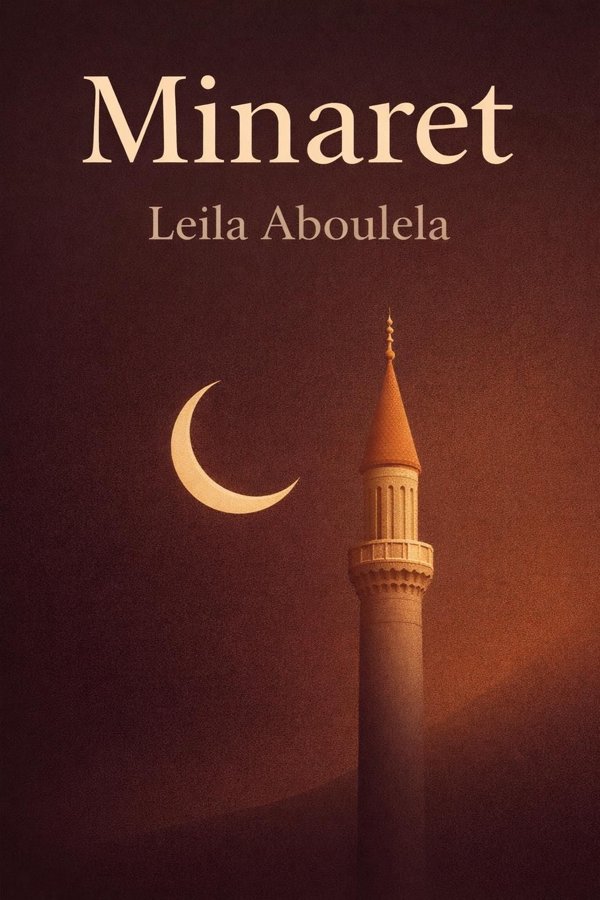
Minaret: Summary & Key Insights
 10 min9 chaptersAudio available
Key Takeaways from Minaret
A secure life can vanish faster than character can adjust to it.
Sometimes the roles we fear most teach us the truths we most need.
Spiritual renewal often begins not with certainty, but with emptiness.
Not every love that feels sincere is meant to be pursued.
Peace does not always come from getting life back; sometimes it comes from releasing the need to recover it.
What Is Minaret About?
Minaret by Leila Aboulela is a bestsellers book spanning 4 pages. Leila Aboulela’s Minaret is a quiet, powerful novel about what remains when a life built on privilege suddenly disappears. Set between Khartoum and London, it follows Najwa, a once-sheltered Sudanese woman whose family is destroyed by political upheaval, exile, and grief. In London, she moves from upper-class comfort to domestic work, from social visibility to anonymity, and from emotional drift to a profound religious awakening. What makes the novel so compelling is that it does not treat faith as a simple moral lesson or a dramatic conversion story. Instead, Aboulela portrays belief as something intimate, gradual, and deeply human—a way of rebuilding identity when nationality, class, and family ties have all been shaken. The book matters because it offers an uncommon perspective on migration, Muslim womanhood, and spiritual longing, refusing stereotypes in favor of complexity and tenderness. Aboulela, a Sudanese-born author celebrated for writing about faith, displacement, and cultural crossing, brings rare authority to this terrain. Minaret is both a story of loss and a meditation on dignity, showing how surrender, humility, and devotion can become unexpected forms of freedom.
This FizzRead summary covers all 9 key chapters of Minaret in approximately 10 minutes, distilling the most important ideas, arguments, and takeaways from Leila Aboulela's work. Also available as an audio summary and Key Quotes Podcast.
Minaret
Leila Aboulela’s Minaret is a quiet, powerful novel about what remains when a life built on privilege suddenly disappears. Set between Khartoum and London, it follows Najwa, a once-sheltered Sudanese woman whose family is destroyed by political upheaval, exile, and grief. In London, she moves from upper-class comfort to domestic work, from social visibility to anonymity, and from emotional drift to a profound religious awakening. What makes the novel so compelling is that it does not treat faith as a simple moral lesson or a dramatic conversion story. Instead, Aboulela portrays belief as something intimate, gradual, and deeply human—a way of rebuilding identity when nationality, class, and family ties have all been shaken. The book matters because it offers an uncommon perspective on migration, Muslim womanhood, and spiritual longing, refusing stereotypes in favor of complexity and tenderness. Aboulela, a Sudanese-born author celebrated for writing about faith, displacement, and cultural crossing, brings rare authority to this terrain. Minaret is both a story of loss and a meditation on dignity, showing how surrender, humility, and devotion can become unexpected forms of freedom.
Who Should Read Minaret?
This book is perfect for anyone interested in bestsellers and looking to gain actionable insights in a short read. Whether you're a student, professional, or lifelong learner, the key ideas from Minaret by Leila Aboulela will help you think differently.
- ✓Readers who enjoy bestsellers and want practical takeaways
- ✓Professionals looking to apply new ideas to their work and life
- ✓Anyone who wants the core insights of Minaret in just 10 minutes
Want the full summary?
Get instant access to this book summary and 100K+ more with Fizz Moment.
Get Free SummaryAvailable on App Store • Free to download
Key Chapters
A secure life can vanish faster than character can adjust to it. At the start of Minaret, Najwa lives in Khartoum surrounded by wealth, servants, family status, and the quiet assumptions of a protected upper-class life. Her father’s political influence gives the family comfort and social standing, and Najwa moves through university and society with the confidence of someone who has never needed to question where she belongs. But this stability is fragile. Political upheaval overturns the world she thought was permanent, her father is executed, and the family is pushed into exile in London. What once seemed like a strong identity turns out to be tied to circumstances she did not control.
Aboulela uses this reversal to show how class can shape personality without ever truly preparing a person for hardship. Najwa’s losses are not only financial. She loses language confidence, cultural ease, family structure, and the social visibility she once took for granted. Exile exposes the difference between having status and having inner resilience. Many readers can connect this to moments when career, family, nationality, or health suddenly shifts and reveals how much of the self was built on external stability.
In practical terms, this idea invites reflection on what anchors identity when familiar structures disappear. A job title, family role, or social network may feel permanent, but they are often more vulnerable than we think. Building inner resources—faith, humility, emotional maturity, and moral clarity—matters because these are harder to strip away.
Actionable takeaway: Ask yourself what parts of your identity would survive a major life upheaval, and begin strengthening those deeper foundations now.
Sometimes the roles we fear most teach us the truths we most need. In London, Najwa’s fall from privilege becomes starkly visible when she takes work as a domestic servant. For someone raised in a household where others performed labor for her, this change is more than economic necessity—it is a radical reversal of status. She cooks, cleans, and serves in private homes, performing tasks once invisible to her. Aboulela does not romanticize this humiliation. The work is tiring, socially diminishing, and emotionally isolating. Yet it slowly becomes the setting in which Najwa sheds illusion and begins to see herself more honestly.
This shift matters because Minaret suggests that humility is not merely a moral virtue but a form of transformation. Servitude strips away Najwa’s former pride and her dependence on admiration, class identity, and romantic fantasy. In the routines of ordinary work, she encounters discipline, patience, and a different relationship to dignity. Her value can no longer rest on family name or social appearance. Instead, she starts rebuilding herself through small acts of endurance and responsibility.
Readers may recognize a version of this in their own lives: taking a job beneath expectations, caring for others without recognition, or starting over in unfamiliar circumstances. Such experiences can feel like personal failure, but they may also expose hidden strengths. Aboulela’s insight is that meaningful change often happens not in grand success but in unglamorous repetition.
Actionable takeaway: Reframe one humbling responsibility in your life—not as proof of decline, but as training in patience, perspective, and self-knowledge.
Spiritual renewal often begins not with certainty, but with emptiness. After the death of her mother and the collapse of the family structure that once sustained her, Najwa enters a period of emotional drift. She has lost social status, home, and direction, and the people around her cannot provide the kind of meaning she needs. In this vacuum, Islam returns to her life not as inherited culture alone, but as a lived source of order, comfort, and belonging. Aboulela presents faith as gradual rather than dramatic. Najwa begins to pray, attends religious gatherings, adopts modest dress, and discovers that ritual can hold together a fragmented self.
This is one of the novel’s most original strengths. Faith is not portrayed as repression or escape, but as attention—a way of orienting the heart amid instability. Prayer structures time. Modesty clarifies intention. Religious community offers companionship without demanding performance. For Najwa, Islam becomes a place where she is not measured by class, beauty, or past mistakes. It gives her language for repentance, discipline for daily life, and hope that suffering can be meaningful.
In practical terms, the novel speaks to anyone who has ever searched for grounding after grief, burnout, or displacement. Whether one is religious or not, the larger lesson is that healing often requires practices that repeat, steady, and humble us. Meaning rarely returns through intensity alone; it often returns through routine, submission, and care.
Actionable takeaway: When life feels fragmented, commit to one daily grounding practice—spiritual, reflective, or disciplined—and let steadiness do its quiet work.
Not every love that feels sincere is meant to be pursued. One of Minaret’s most subtle tensions lies in Najwa’s emotional attachment to Tamer, a younger man from a religiously observant family. Their connection is tender, intellectually alive, and emotionally significant. Yet it is also fraught with social complications—age difference, family expectations, class history, and Najwa’s own growing religious conscience. Aboulela treats this not as melodrama, but as a serious moral struggle. Najwa must ask whether desire should govern her decisions, or whether devotion demands restraint.
This idea is central to the novel because it challenges the modern assumption that authenticity means following one’s feelings to their conclusion. For Najwa, spiritual growth includes learning that not every possibility should become a reality. Love can be real and still be inappropriate. Longing can be intense and still require surrender. Her restraint is painful, but it reflects a transformed sense of self: she no longer sees fulfillment only through romance or emotional possession.
Readers can apply this idea beyond romantic relationships. In everyday life, many desires feel justified—recognition, intimacy, revenge, comfort, attention—but wisdom often lies in asking whether acting on them aligns with one’s values. Aboulela does not condemn desire; she shows that devotion sometimes means placing ethical or spiritual clarity above personal gratification.
Actionable takeaway: When a strong desire arises, pause and ask not only “What do I want?” but also “Who will I become if I choose this?”
Peace does not always come from getting life back; sometimes it comes from releasing the need to recover it. By the later stages of Minaret, Najwa has endured enough loss to understand that her former life in Sudan is not waiting to be restored. The comfort, glamour, and certainty of her youth are gone. Yet rather than remain trapped in nostalgia, she moves toward acceptance. This is not passive defeat. It is an active recognition that worth can exist outside status, and that redemption may look very different from worldly success.
Aboulela’s treatment of acceptance is especially moving because it avoids both bitterness and triumphalism. Najwa does not become powerful in conventional terms. She does not regain prestige, wealth, or romantic victory. Instead, she gains something quieter: a self no longer wholly dependent on comparison. Her faith allows her to reinterpret loss not as total annihilation, but as a pathway toward a more honest life. In a culture obsessed with comeback stories, Minaret offers a more contemplative version of redemption.
This insight is deeply practical. Many people spend years mentally bargaining with the past—imagining the relationship, country, career, or version of themselves they wish they could reclaim. But healing often begins when energy shifts from restoration to reorientation. Acceptance creates room for service, gratitude, and presence.
Actionable takeaway: Identify one part of your past you are still trying to relive, and ask how your life might change if you focused instead on building meaning with what remains.
Migration changes more than geography; it rearranges the soul. In Minaret, London is not merely a backdrop for Najwa’s exile but a space where old identities stop functioning. In Sudan, she knew how to speak, dress, behave, and belong. In Britain, she becomes socially diminished, culturally displaced, and often invisible. The move exposes the instability of identity when it is rooted in place, family, and class recognition. Najwa’s transformation is therefore not only personal or spiritual—it is diasporic. She must learn who she is when her old world no longer reflects her back to herself.
Aboulela captures the subtle humiliations of migrant life: dependence on others, changes in accent and confidence, work below one’s education, and the loneliness of existing between cultures. Yet the novel also shows that exile can loosen inherited assumptions. Removed from elite Sudanese society, Najwa sees aspects of herself and her past more clearly. She can no longer rely on performance. Displacement becomes painful, but also revelatory.
This has broad relevance for readers navigating immigration, relocation, social mobility, or any transition that makes the familiar self feel unusable. Identity often seems solid until context shifts. What follows can be disorienting, but it can also create the possibility of a more chosen, reflective self.
Actionable takeaway: If you are in a period of transition, write down which parts of your identity come from habit and which come from conviction—then invest more deeply in the latter.
One of the most radical things about sincere community is that it can ignore the hierarchies the world treats as absolute. As Najwa becomes more committed to Islam, she finds connection among women whose value is not determined by wealth, family pedigree, or social polish. In this religious space, she is no longer primarily the fallen daughter of privilege or the servant in someone else’s home. She becomes part of a community organized around prayer, moral effort, and shared devotion.
Aboulela’s portrayal is especially important because it shows religion as social belonging, not just private belief. The mosque, religious lessons, and friendship circles provide emotional care, ethical guidance, and mutual recognition. For a woman isolated by migration and class decline, this form of community is transformative. It restores dignity without requiring performance. It also challenges secular assumptions that faith always narrows life. In Najwa’s case, religion expands her world by giving her access to a new moral and emotional home.
This insight applies far beyond the novel. People often seek belonging through status-based spaces—professional circles, curated social media identities, or exclusive communities that reward image. But these forms of belonging can be fragile and conditional. Communities grounded in shared values, service, and humility may offer deeper support.
Actionable takeaway: Look for one community in your life where you are valued for sincerity rather than status, and invest more time in that kind of belonging.
The most powerful resistance to stereotype is careful attention to a person’s inner life. Minaret stands out because it presents a Muslim woman not as a symbol, political argument, or cultural cliché, but as a fully complicated human being. Najwa is vain, vulnerable, lonely, desirous, ashamed, observant, and searching. Her turn toward religious practice is not depicted as brainwashing, backwardness, or simplistic virtue. It emerges from grief, reflection, moral struggle, and the need for meaning. Aboulela insists that spiritual seriousness and female complexity can coexist without contradiction.
This matters in literary and cultural terms because public representations of Muslim women are often flattened into binaries: oppressed or liberated, secular or devout, victim or rebel. Najwa does not fit these templates. Her choices are shaped by history, migration, desire, and belief all at once. By centering her interiority, the novel invites readers to approach unfamiliar experiences with greater patience and less ideological certainty.
In everyday life, this idea encourages a better way of seeing others. We often reduce people to visible categories—religion, class, nationality, gender expression—and assume we understand their motives. Minaret reminds us that every visible choice has an unseen emotional and moral context.
Actionable takeaway: The next time you are tempted to judge someone’s life choices quickly, pause and ask what inner story you might be missing.
Redemption is rarely a single dramatic turning point; more often, it is the accumulation of quiet choices. Throughout Minaret, Najwa’s transformation does not happen through one grand revelation. It unfolds through repeated actions: praying, dressing modestly, showing up for work, caring for others, restraining desire, remembering God, and accepting limitation. These practices may appear small from the outside, but together they form a new life. Aboulela’s vision of change is therefore deeply disciplined. The soul is shaped by what it does every day.
This is one of the novel’s most practical insights. Modern culture often imagines personal change as sudden reinvention—an epiphany, a bold decision, a public declaration. Minaret offers something more durable. Najwa becomes different because she keeps choosing differently in ordinary moments. Her spiritual life is not abstract. It lives in habits, relationships, and acts of self-control.
Readers can apply this lesson in any area of life: recovery after loss, rebuilding confidence, repairing character, or reconnecting with values. Lasting change usually does not begin with dramatic emotion. It begins when routine starts supporting the person one hopes to become. A life can be redirected by small acts repeated with sincerity.
Actionable takeaway: Choose one modest habit that reflects your deepest values, and practice it consistently for the next month as a form of self-renewal.
All Chapters in Minaret
About the Author
Leila Aboulela is a Sudanese-born author celebrated for her fiction on faith, migration, and cultural identity. Born in Cairo and raised in Khartoum, she later moved to the United Kingdom, an experience that strongly shaped her literary voice. Her novels and short stories often focus on Muslim characters living between worlds, negotiating exile, memory, language, and spiritual commitment. Aboulela is especially known for bringing religious interiority into contemporary English-language fiction with unusual nuance and compassion. Her major works include The Translator, Minaret, Lyrics Alley, and Bird Summons. She has received international recognition and literary awards for her contribution to global literature. Her writing stands out for its emotional subtlety, moral seriousness, and refusal of easy stereotypes about Islam, women, and belonging.
Get This Summary in Your Preferred Format
Read or listen to the Minaret summary by Leila Aboulela anytime, anywhere. FizzRead offers multiple formats so you can learn on your terms — all free.
Available formats: App · Audio · PDF · EPUB — All included free with FizzRead
Download Minaret PDF and EPUB Summary
Key Quotes from Minaret
“A secure life can vanish faster than character can adjust to it.”
“Sometimes the roles we fear most teach us the truths we most need.”
“Spiritual renewal often begins not with certainty, but with emptiness.”
“Not every love that feels sincere is meant to be pursued.”
“Peace does not always come from getting life back; sometimes it comes from releasing the need to recover it.”
Frequently Asked Questions about Minaret
Minaret by Leila Aboulela is a bestsellers book that explores key ideas across 9 chapters. Leila Aboulela’s Minaret is a quiet, powerful novel about what remains when a life built on privilege suddenly disappears. Set between Khartoum and London, it follows Najwa, a once-sheltered Sudanese woman whose family is destroyed by political upheaval, exile, and grief. In London, she moves from upper-class comfort to domestic work, from social visibility to anonymity, and from emotional drift to a profound religious awakening. What makes the novel so compelling is that it does not treat faith as a simple moral lesson or a dramatic conversion story. Instead, Aboulela portrays belief as something intimate, gradual, and deeply human—a way of rebuilding identity when nationality, class, and family ties have all been shaken. The book matters because it offers an uncommon perspective on migration, Muslim womanhood, and spiritual longing, refusing stereotypes in favor of complexity and tenderness. Aboulela, a Sudanese-born author celebrated for writing about faith, displacement, and cultural crossing, brings rare authority to this terrain. Minaret is both a story of loss and a meditation on dignity, showing how surrender, humility, and devotion can become unexpected forms of freedom.
More by Leila Aboulela

You Might Also Like

The Godfather
Mario Puzo
10 min
The Handmaid's Tale
Margaret Atwood
10 min
The Hunger Games
Suzanne Collins
10 min
The Nightingale
Kristin Hannah
10 min
The Seven Husbands of Evelyn Hugo
Taylor Jenkins Reid
10 min
Backwater Justice
Fern Michaels
10 minBrowse by Category
Ready to read Minaret?
Get the full summary and 100K+ more books with Fizz Moment.