
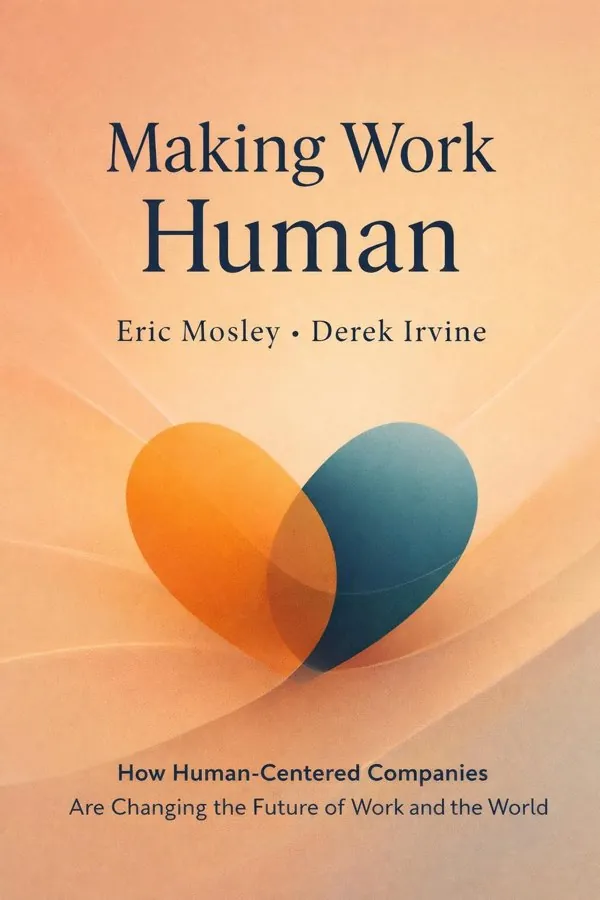
Making Work Human: How Human-Centered Companies Are Changing the Future of Work and the World: Summary & Key Insights
 10 min8 chaptersAudio available
What Is Making Work Human: How Human-Centered Companies Are Changing the Future of Work and the World About?
Making Work Human: How Human-Centered Companies Are Changing the Future of Work and the World by Eric Mosley; Derek Irvine is a leadership book spanning 8 pages. This book presents a practical framework for transforming workplace culture through human-centered leadership. It explores how gratitude, recognition, and purpose can drive engagement, innovation, and productivity, offering actionable strategies for leaders to create organizations that value people as their greatest asset.
This FizzRead summary covers all 8 key chapters of Making Work Human: How Human-Centered Companies Are Changing the Future of Work and the World in approximately 10 minutes, distilling the most important ideas, arguments, and takeaways from Eric Mosley; Derek Irvine's work. Also available as an audio summary and Key Quotes Podcast.
Making Work Human: How Human-Centered Companies Are Changing the Future of Work and the World
This book presents a practical framework for transforming workplace culture through human-centered leadership. It explores how gratitude, recognition, and purpose can drive engagement, innovation, and productivity, offering actionable strategies for leaders to create organizations that value people as their greatest asset.
Who Should Read Making Work Human: How Human-Centered Companies Are Changing the Future of Work and the World?
This book is perfect for anyone interested in leadership and looking to gain actionable insights in a short read. Whether you're a student, professional, or lifelong learner, the key ideas from Making Work Human: How Human-Centered Companies Are Changing the Future of Work and the World by Eric Mosley; Derek Irvine will help you think differently.
- ✓Readers who enjoy leadership and want practical takeaways
- ✓Professionals looking to apply new ideas to their work and life
- ✓Anyone who wants the core insights of Making Work Human: How Human-Centered Companies Are Changing the Future of Work and the World in just 10 minutes
Want the full summary?
Get instant access to this book summary and 100K+ more with Fizz Moment.
Get Free SummaryAvailable on App Store • Free to download
Key Chapters
We are living at the cusp of a transformation greater than anything seen since the industrial revolution. The forces driving this change are global, digital, and social. Automation is reshaping industries, millennials and Generation Z are demanding purpose and transparency, and movements for equality are redefining the moral fabric of business. The traditional model of work—driven by command-and-control management and transactional engagement—is collapsing under the weight of new expectations.
In this revolution, humanity becomes the differentiator. Our argument for a human workplace begins with one truth: technology can either isolate or connect us, depending on how we use it. Companies that continue to treat people as data points, efficiency metrics, or replaceable parts will struggle to attract and retain talent. In contrast, those that recognize emotion and meaning as the heart of engagement will flourish. Studies show that human-centered organizations achieve significantly higher levels of innovation and employee commitment.
We’ve seen this firsthand. Clients who have embraced recognition platforms and gratitude cultures experience measurable cultural lift—turnover drops, collaboration rises, and performance grows organically. The revolution isn’t about disengaging from technology; it’s about reimagining it as a means to amplify empathy and connection. As leaders, we must not fear this shift but welcome it, for the workplace that prioritizes people is not just moral—it’s competitive.
This chapter establishes why the Human Workplace Revolution is inevitable, and why every organization must adapt if it wishes to survive the next decade of change.
Purpose is not a slogan—it’s an anchor. We’ve found that when people understand *why* their work matters, they bring not only skill but soul to their roles. In our research across hundreds of organizations, purpose consistently emerges as the strongest predictor of engagement and creativity. It’s the thread that connects individual effort to collective mission. Without it, work becomes mechanical; with it, work becomes meaningful.
But purpose must be authentic. It can’t be a corporate statement drafted for branding. True purpose is lived in everyday actions—leaders must demonstrate, through decisions and behavior, that the organization’s goals serve people and communities, not just shareholders. When employees see purpose reflected in recognition experiences—in gratitude expressed for acts that embody company values—they understand that what they do contributes directly to something larger.
In a technology company we advised, linking peer recognition to stated values like innovation and integrity created an explosion of cultural energy. Employees began nominating each other for moments of creativity and collaboration that supported the organization’s social mission. Engagement scores rose, and even their external brand reputation improved.
In a human-centered organization, purpose is not imposed; it’s co-created. It thrives when people share stories that illuminate why their work matters. Those stories become the living language of culture, making work feel human in every sense.
+ 6 more chapters — available in the FizzRead app
All Chapters in Making Work Human: How Human-Centered Companies Are Changing the Future of Work and the World
About the Author
Eric Mosley is the CEO and co-founder of Workhuman, a company focused on social recognition and performance management. Derek Irvine is Senior Vice President of Client Strategy and Consulting at Workhuman and an expert in employee engagement and recognition.
Get This Summary in Your Preferred Format
Read or listen to the Making Work Human: How Human-Centered Companies Are Changing the Future of Work and the World summary by Eric Mosley; Derek Irvine anytime, anywhere. FizzRead offers multiple formats so you can learn on your terms — all free.
Available formats: App · Audio · PDF · EPUB — All included free with FizzRead
Download Making Work Human: How Human-Centered Companies Are Changing the Future of Work and the World PDF and EPUB Summary
Key Quotes from Making Work Human: How Human-Centered Companies Are Changing the Future of Work and the World
“We are living at the cusp of a transformation greater than anything seen since the industrial revolution.”
“We’ve found that when people understand *why* their work matters, they bring not only skill but soul to their roles.”
Frequently Asked Questions about Making Work Human: How Human-Centered Companies Are Changing the Future of Work and the World
Making Work Human: How Human-Centered Companies Are Changing the Future of Work and the World by Eric Mosley; Derek Irvine is a leadership book that explores key ideas across 8 chapters. This book presents a practical framework for transforming workplace culture through human-centered leadership. It explores how gratitude, recognition, and purpose can drive engagement, innovation, and productivity, offering actionable strategies for leaders to create organizations that value people as their greatest asset.
You Might Also Like

Extreme Ownership
Jocko Willink
10 min
Dare to Lead
Brene Brown
10 min
Leaders Eat Last
Simon Sinek
10 min
The 21 Irrefutable Laws of Leadership
John Maxwell
10 min
Start With Why
Simon Sinek
10 min
How to Lead When You're Not in Charge
Clay Scroggins
10 minBrowse by Category
Ready to read Making Work Human: How Human-Centered Companies Are Changing the Future of Work and the World?
Get the full summary and 100K+ more books with Fizz Moment.