
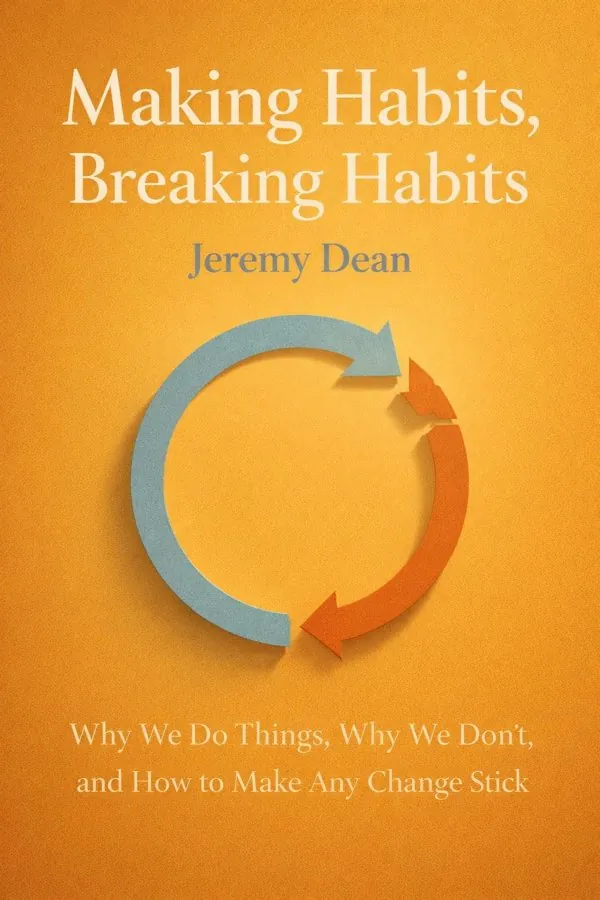
Making Habits, Breaking Habits: Why We Do Things, Why We Don't, and How to Make Any Change Stick: Summary & Key Insights
by Jeremy Dean
 10 min5 chaptersAudio available
What Is Making Habits, Breaking Habits: Why We Do Things, Why We Don't, and How to Make Any Change Stick About?
Making Habits, Breaking Habits: Why We Do Things, Why We Don't, and How to Make Any Change Stick by Jeremy Dean is a habits book spanning 5 pages. This book explores the psychology of habit formation and change, explaining how habits shape our daily lives and how we can effectively modify them. Drawing on scientific research in psychology and neuroscience, Jeremy Dean provides practical strategies for understanding and transforming behavior patterns to achieve lasting personal change.
This FizzRead summary covers all 5 key chapters of Making Habits, Breaking Habits: Why We Do Things, Why We Don't, and How to Make Any Change Stick in approximately 10 minutes, distilling the most important ideas, arguments, and takeaways from Jeremy Dean's work. Also available as an audio summary and Key Quotes Podcast.
Making Habits, Breaking Habits: Why We Do Things, Why We Don't, and How to Make Any Change Stick
This book explores the psychology of habit formation and change, explaining how habits shape our daily lives and how we can effectively modify them. Drawing on scientific research in psychology and neuroscience, Jeremy Dean provides practical strategies for understanding and transforming behavior patterns to achieve lasting personal change.
Who Should Read Making Habits, Breaking Habits: Why We Do Things, Why We Don't, and How to Make Any Change Stick?
This book is perfect for anyone interested in habits and looking to gain actionable insights in a short read. Whether you're a student, professional, or lifelong learner, the key ideas from Making Habits, Breaking Habits: Why We Do Things, Why We Don't, and How to Make Any Change Stick by Jeremy Dean will help you think differently.
- ✓Readers who enjoy habits and want practical takeaways
- ✓Professionals looking to apply new ideas to their work and life
- ✓Anyone who wants the core insights of Making Habits, Breaking Habits: Why We Do Things, Why We Don't, and How to Make Any Change Stick in just 10 minutes
Want the full summary?
Get instant access to this book summary and 100K+ more with Fizz Moment.
Get Free SummaryAvailable on App Store • Free to download
Key Chapters
Every habit begins as a choice—a decision that once required attention. But when that action is repeated in the same context, under similar emotional conditions, the brain gradually treats it as a pattern worthy of automation. This process, called chunking, is central to habit formation. The cue triggers the routine, and the outcome provides a satisfying reward. Over time, the brain notes that this sequence achieves some desired result and starts running it automatically.
From brushing your teeth to typing a password, habits start as deliberate actions and shrink into automatic ones. Behavioral psychologist B.F. Skinner’s work on reinforcement demonstrated that behaviors followed by positive reinforcement—whether a pleasant sensation or emotional relief—tend to recur. Neuroscience later added clarity: the basal ganglia stores these loops so that higher cognitive areas can focus elsewhere. The brain economizes.
But there’s a quiet irony here. While we believe we are making daily choices, studies from Wendy Wood and colleagues show that nearly half of what we do each day is habitual, not deliberative. This isn’t laziness—it’s efficiency. The brain is wired to outsource recurring decisions to minimize energy expenditure.
Therefore, the question isn’t whether we have habits, but whether we allow them to run unchecked. Understanding the structure—cue, routine, reward—is the first step in decoding how these invisible scripts shape behavior. Once you see the loop, you can begin to manipulate it: adjust the cue, replace the routine, or rewire the reward.
+ 3 more chapters — available in the FizzRead app
All Chapters in Making Habits, Breaking Habits: Why We Do Things, Why We Don't, and How to Make Any Change Stick
About the Author
Jeremy Dean is a British psychologist and writer, known for his work on behavioral science and the psychology of everyday life. He is the founder of PsyBlog, a popular website that translates academic research into accessible insights about human behavior.
Get This Summary in Your Preferred Format
Read or listen to the Making Habits, Breaking Habits: Why We Do Things, Why We Don't, and How to Make Any Change Stick summary by Jeremy Dean anytime, anywhere. FizzRead offers multiple formats so you can learn on your terms — all free.
Available formats: App · Audio · PDF · EPUB — All included free with FizzRead
Download Making Habits, Breaking Habits: Why We Do Things, Why We Don't, and How to Make Any Change Stick PDF and EPUB Summary
Key Quotes from Making Habits, Breaking Habits: Why We Do Things, Why We Don't, and How to Make Any Change Stick
“Every habit begins as a choice—a decision that once required attention.”
“We often congratulate ourselves on being rational creatures, yet science paints a humbler picture.”
Frequently Asked Questions about Making Habits, Breaking Habits: Why We Do Things, Why We Don't, and How to Make Any Change Stick
Making Habits, Breaking Habits: Why We Do Things, Why We Don't, and How to Make Any Change Stick by Jeremy Dean is a habits book that explores key ideas across 5 chapters. This book explores the psychology of habit formation and change, explaining how habits shape our daily lives and how we can effectively modify them. Drawing on scientific research in psychology and neuroscience, Jeremy Dean provides practical strategies for understanding and transforming behavior patterns to achieve lasting personal change.
You Might Also Like

Atomic Habits: An Easy & Proven Way to Build Good Habits and Break Bad Ones
James Clear
10 min
A Complaint Free World: How to Stop Complaining and Start Enjoying the Life You Always Wanted
Will Bowen
10 minBadass Habits: Cultivate the Awareness, Boundaries, and Daily Upgrades You Need to Make Them Stick
Jen Sincero
10 min
Better Than Before: Mastering The Habits Of Our Everyday Lives
Gretchen Rubin
10 min
Change Anything: The New Science of Personal Success
Kerry Patterson
10 min
Discipline Equals Freedom: Field Manual
Jocko Willink
10 minBrowse by Category
Ready to read Making Habits, Breaking Habits: Why We Do Things, Why We Don't, and How to Make Any Change Stick?
Get the full summary and 100K+ more books with Fizz Moment.