

Make Your Bed: Little Things That Can Change Your Life...And Maybe the World: Summary & Key Insights
 10 min10 chaptersAudio available
Key Takeaways from Make Your Bed: Little Things That Can Change Your Life...And Maybe the World
A meaningful life often begins with a deceptively small act.
No one succeeds alone, especially when the waters are rough.
The people most likely to change your life are not always the ones who look impressive on paper.
Life will not always reward you fairly, and waiting for fairness can trap you in bitterness.
Your worst moments can become your greatest training ground if you refuse to let humiliation define you.
What Is Make Your Bed: Little Things That Can Change Your Life...And Maybe the World About?
Make Your Bed: Little Things That Can Change Your Life...And Maybe the World by William H. McRaven is a leadership book spanning 10 pages. Make Your Bed is a compact leadership classic built on a simple but powerful idea: small daily disciplines shape character, and character shapes destiny. Drawing from the brutal lessons of Navy SEAL training, Admiral William H. McRaven turns ten memorable principles into a guide for resilience, service, courage, and personal responsibility. What makes the book compelling is not just its military backdrop, but its universal relevance. McRaven argues that life is often unfair, setbacks are inevitable, and success rarely comes from talent alone. Instead, it comes from the habits that steady us when conditions get hard. The book grew out of McRaven’s widely shared 2014 commencement speech at the University of Texas, but the expanded version gives each lesson greater emotional depth through stories of training, combat, teamwork, and loss. McRaven writes with the authority of a retired four-star admiral and former commander of U.S. Special Operations Command, yet his message remains accessible to students, professionals, parents, and leaders at every level. This is a short book with an outsized impact: a reminder that changing your life does not begin with grand gestures, but with doing the next right thing well.
This FizzRead summary covers all 10 key chapters of Make Your Bed: Little Things That Can Change Your Life...And Maybe the World in approximately 10 minutes, distilling the most important ideas, arguments, and takeaways from William H. McRaven's work. Also available as an audio summary and Key Quotes Podcast.
Make Your Bed: Little Things That Can Change Your Life...And Maybe the World
Make Your Bed is a compact leadership classic built on a simple but powerful idea: small daily disciplines shape character, and character shapes destiny. Drawing from the brutal lessons of Navy SEAL training, Admiral William H. McRaven turns ten memorable principles into a guide for resilience, service, courage, and personal responsibility. What makes the book compelling is not just its military backdrop, but its universal relevance. McRaven argues that life is often unfair, setbacks are inevitable, and success rarely comes from talent alone. Instead, it comes from the habits that steady us when conditions get hard.
The book grew out of McRaven’s widely shared 2014 commencement speech at the University of Texas, but the expanded version gives each lesson greater emotional depth through stories of training, combat, teamwork, and loss. McRaven writes with the authority of a retired four-star admiral and former commander of U.S. Special Operations Command, yet his message remains accessible to students, professionals, parents, and leaders at every level. This is a short book with an outsized impact: a reminder that changing your life does not begin with grand gestures, but with doing the next right thing well.
Who Should Read Make Your Bed: Little Things That Can Change Your Life...And Maybe the World?
This book is perfect for anyone interested in leadership and looking to gain actionable insights in a short read. Whether you're a student, professional, or lifelong learner, the key ideas from Make Your Bed: Little Things That Can Change Your Life...And Maybe the World by William H. McRaven will help you think differently.
- ✓Readers who enjoy leadership and want practical takeaways
- ✓Professionals looking to apply new ideas to their work and life
- ✓Anyone who wants the core insights of Make Your Bed: Little Things That Can Change Your Life...And Maybe the World in just 10 minutes
Want the full summary?
Get instant access to this book summary and 100K+ more with Fizz Moment.
Get Free SummaryAvailable on App Store • Free to download
Key Chapters
A meaningful life often begins with a deceptively small act. McRaven’s most famous lesson comes from a routine many people dismiss as trivial: making your bed every morning. In Navy SEAL training, recruits were expected to complete this task with precision. Sheets had to be tight, corners exact, and the pillow placed perfectly. The point was not housekeeping. It was discipline.
McRaven argues that when you begin the day by completing one task well, you create momentum. You prove to yourself that details matter, standards matter, and effort matters even when no applause follows. That small success becomes a psychological anchor. If the day goes badly, you return home to a made bed, a reminder that you accomplished at least one thing right. If the day goes well, the act helped set that tone.
This lesson also reflects a broader truth about leadership: excellence is rarely built through dramatic moments alone. It grows through repeated habits that train the mind to respect order, accountability, and follow-through. People who consistently honor small commitments are more likely to honor larger ones when pressure rises.
In everyday life, this principle applies far beyond a bedroom. It may mean answering the first important email before checking social media, reviewing your priorities before reacting to demands, or tidying your workspace before beginning deep work. The specific action matters less than the pattern: begin with intention, complete something tangible, and signal to yourself that the day will not control you.
Actionable takeaway: Choose one simple morning ritual you can complete every day without fail, and treat it as your first daily victory.
No one succeeds alone, especially when the waters are rough. In SEAL training, McRaven spent long hours in small boats where progress depended on synchronized effort. A single person paddling harder than everyone else could not carry the crew. Success came from rhythm, trust, and shared strain. The lesson is clear: life’s hardest journeys require help.
McRaven rejects the myth of the self-made individual. Even elite performers rely on teammates, mentors, family, and friends. Leadership, in this sense, is not about proving independence; it is about building reliable interdependence. Strong people ask for support, offer it freely, and recognize that collaboration is not weakness but force multiplication.
This lesson matters because modern culture often glorifies individual achievement while underestimating the role of community. Yet careers are built through networks, families survive hardship through mutual care, and organizations thrive when teams work in coordinated ways. A supportive colleague can keep a project from collapsing. A spouse or friend can provide emotional stability during a crisis. A mentor can save years of avoidable mistakes.
Practical application begins with identifying who is in your boat. Are you surrounded by people who encourage discipline, honesty, and resilience? Do you communicate clearly with those you depend on? Are you willing to carry others when they are exhausted, knowing they may do the same for you later?
McRaven’s point is not merely to seek comfort. It is to cultivate trustworthy alliances. The best teams are not made of identical people, but of committed people moving in the same direction.
Actionable takeaway: Strengthen one important relationship this week by asking how you can better support the other person and by clearly expressing where you need help yourself.
The people most likely to change your life are not always the ones who look impressive on paper. In one of McRaven’s best-known lessons, he recalls a small trainee nicknamed the "Munchkin" who seemed physically mismatched for the punishing world of SEAL training. Yet the man consistently outperformed expectations through tenacity, courage, and inner resolve. McRaven’s conclusion is simple: do not measure people by outward size, status, or appearance. Measure them by the size of their heart.
This idea cuts against a deeply ingrained habit in leadership and society. We often assume the tallest, loudest, best-credentialed, or most polished person is the strongest candidate. But real strength is revealed under pressure. Character, persistence, and loyalty matter more than image. Organizations that overlook quiet determination in favor of flash often miss their best talent.
On a personal level, this lesson reminds us not to underestimate ourselves either. You may feel smaller than the challenge, less experienced than the competition, or less naturally gifted than others around you. None of that is final. Grit, consistency, and moral courage can outperform natural advantage.
In practical terms, leaders should hire and promote for character, not just charisma. Teachers and managers should look beyond first impressions. Parents should praise effort and resilience, not only visible achievement. Individuals should stop disqualifying themselves based on appearance, pedigree, or comparison.
McRaven’s insight is especially relevant in adversity. When difficulty strips away image, what remains is heart. That is what carries people across the finish line.
Actionable takeaway: The next time you evaluate yourself or someone else, ask not “Who looks strongest?” but “Who keeps showing up with courage and commitment?”
Your worst moments can become your greatest training ground if you refuse to let humiliation define you. In SEAL training, the “circus” was extra punishment at the end of an already exhausting day. Anyone who failed an obstacle or underperformed during the day was sent there for even more physical exertion. It was dreaded, painful, and demoralizing. Yet McRaven discovered something surprising: the men who spent the most time in the circus often became stronger and more capable.
The lesson is powerful for leadership and life. Failure is not always a detour from growth; often it is the path. People who avoid embarrassment at all costs tend to play small, protect their ego, and miss the repetition that mastery requires. Those willing to fail publicly, learn quickly, and return to the challenge gain resilience others never build.
In practical life, the circus may look like a rejected proposal, a failed exam, a poor presentation, a business setback, or a difficult review. The instinct is to hide, rationalize, or quit. McRaven’s advice is to treat those moments as additional training. Extra pain can produce extra strength if you use it well.
Leaders can apply this by creating cultures where mistakes are examined honestly without destroying dignity. Parents and teachers can help children see setbacks as information, not identity. Individuals can reframe embarrassment from “I am not good enough” to “I am being sharpened.”
The key is not to seek failure recklessly, but not to fear it either. Temporary defeat can become durable confidence when it teaches you how to recover.
Actionable takeaway: Identify one recent failure and write down the specific strength, skill, or insight it can still give you if you engage it instead of avoiding it.
Courage is often less about eliminating fear than about moving decisively while fear is still present. McRaven illustrates this through the SEAL obstacle course, where one challenge required sliding down a rope from a high tower. The conventional method was cautious and slow. But the fastest and most successful approach was to slide headfirst, trusting the technique and committing fully. Hesitation increased danger; bold commitment reduced it.
This lesson speaks to moments in life when overthinking becomes its own risk. Some opportunities demand action before total certainty arrives. Starting a business, changing careers, having a hard conversation, applying for a role beyond your credentials, or speaking up in a room where you feel outmatched all require a leap of conviction. Waiting until you feel perfectly ready often means waiting forever.
McRaven does not celebrate recklessness. The point is preparation plus commitment. Train, learn, assess the challenge, then go all in. Half-hearted effort usually produces mediocre results and prolonged anxiety. Once you know the direction is right, full engagement is often safer than timid delay.
For leaders, this means making decisions with imperfect information while staying grounded in values. For individuals, it means understanding that fear is not always a stop sign. Sometimes it is simply the sensation of growth. The people who advance are often not the least afraid, but the most willing to act despite fear.
Actionable takeaway: Choose one decision you have been postponing out of hesitation, define the reasonable preparation it requires, and commit to taking the first concrete step within 24 hours.
There will always be forces in life that test your nerve, exploit your weakness, or try to intimidate you into retreat. McRaven uses the image of sharks, drawn from training in waters where danger was real, to make a broader point: when confronted by fear or aggression, sometimes the only way through is to stand your ground and fight back.
This lesson is not about hostility. It is about moral courage. Sharks appear in many forms: a bully at work, a manipulative superior, a corrosive inner voice, an addiction, a crisis, or a public challenge that threatens your confidence. When people sense fear, they may press harder. When problems are ignored, they often grow. McRaven’s message is that avoidance can invite more damage than confrontation.
In organizations, this may mean addressing unethical behavior early rather than hoping it disappears. In personal life, it may mean setting boundaries with someone who repeatedly disrespects you. In inner life, it may mean facing the truth about your habits instead of hiding behind excuses. The goal is not reckless combat but clear, steady resistance.
Leadership requires this kind of backbone. Teams look to leaders not only for empathy and vision but also for protection and resolve. If a leader folds at the first sign of pressure, trust erodes. If a leader responds with calm firmness, people feel safer and more capable.
McRaven teaches that courage can be contagious. One person willing to confront a shark often gives others permission to stop shrinking too.
Actionable takeaway: Name one “shark” in your life that you have been avoiding, and take one direct boundary-setting or problem-solving action instead of postponing it again.
Character is easiest to admire in daylight and hardest to practice in darkness. McRaven emphasizes that everyone eventually faces moments of exhaustion, grief, uncertainty, or danger. In those moments, your usual energy and confidence may be gone. What remains is training, values, and the decision to perform well anyway.
This lesson is central to leadership because hard times reveal what ordinary days conceal. Anyone can be optimistic when conditions are easy. The true test comes when plans collapse, morale falls, or life delivers devastating news. Can you still act with clarity? Can you still serve others? Can you still do your duty when applause is absent and fear is present?
McRaven’s military experience gives this principle weight, but it applies universally. Healthcare workers in long shifts, parents caring for sick children, entrepreneurs facing financial stress, students navigating failure, and leaders managing layoffs all meet their own darkest moments. In such times, excellence may not look glamorous. It may simply mean staying calm, making the next right decision, and refusing to let panic spread.
Preparation matters here. The habits you build in ordinary life become the reserves you draw on in crisis. Discipline, emotional steadiness, and commitment to service are not improvised under pressure; they are rehearsed over time.
The lesson also carries hope. You do not need to feel heroic to act honorably. Sometimes your best in a dark moment is quiet endurance, clear thinking, or compassionate presence.
Actionable takeaway: Build a personal crisis routine now—three behaviors you can rely on when stress peaks, such as pausing to breathe, listing immediate priorities, and contacting one trusted supporter.
Hope is not denial; it is a choice to create light when circumstances feel unbearable. McRaven recounts one of the most punishing training exercises, in which recruits were forced to stand in cold mud for hours, exhausted and demoralized. Quitting seemed tempting and relief felt far away. Then one man began to sing. Others joined in. The situation did not change immediately, but morale did. That shift in spirit helped them endure.
This story captures a vital leadership truth: in moments of shared suffering, one voice can change the emotional climate. People do not always need a perfect solution first. Sometimes they need courage, humor, perspective, or a reminder that they are not alone. A small act of optimism can restore collective strength.
In practical terms, “singing” may mean encouraging a team during a difficult quarter, introducing humor into a tense family moment, expressing gratitude in the middle of uncertainty, or reminding yourself of purpose when motivation drops. It is not fake positivity. McRaven is not telling us to ignore pain. He is showing that spirit can coexist with hardship and sometimes make hardship survivable.
This lesson is especially useful for leaders. Emotional states are contagious. A panicked leader amplifies fear. A grounded, hopeful leader creates room for perseverance. Even if you cannot remove the mud, you can influence how people move through it.
Actionable takeaway: In your next difficult moment, be the person who raises the emotional level—offer one encouraging word, one calm perspective, or one bit of humor that helps others keep going.
Quitting is often most tempting just before a breakthrough. In SEAL training, any recruit who wanted to give up could ring a brass bell three times. The act was simple. The consequences were permanent. Once you rang it, the pain ended, but so did the dream. McRaven uses this vivid image to underline the most direct lesson in the book: persistence matters.
Life presents many bells. They appear when progress is slow, when criticism stings, when relationships become complicated, when a goal takes longer than expected, or when repeated effort seems to produce little return. In those moments, quitting can feel rational, even dignified. Sometimes withdrawal is wise, but often the bell represents surrender to discomfort rather than a thoughtful change in direction.
McRaven’s message is not blind stubbornness. It is the conviction that endurance separates those who realize meaningful goals from those who abandon them too early. Most important achievements require surviving long stretches without immediate reward. Discipline carries you when inspiration fades.
This applies in education, career building, parenting, fitness, recovery, creative work, and leadership. The people who eventually succeed are not always the most gifted. They are often the ones who absorb setbacks, adapt, and continue.
The lesson also encourages commitment to a cause larger than comfort. If your mission matters, temporary pain should not make final decisions for you.
Actionable takeaway: Before giving up on an important goal, create a “don’t ring the bell” rule—pause, reassess, seek advice, and make any decision only after emotion has cooled and purpose has been revisited.
All Chapters in Make Your Bed: Little Things That Can Change Your Life...And Maybe the World
About the Author
Admiral William H. McRaven is a retired U.S. Navy four-star admiral, leadership author, and former commander of U.S. Special Operations Command. Over a military career spanning nearly four decades, he served as a Navy SEAL and led high-level special operations missions around the world. McRaven became known for his calm leadership, strategic discipline, and ability to operate effectively in extreme environments. After retiring from the Navy, he served as chancellor of the University of Texas System, where he continued to speak about education, service, and leadership. He gained broad public recognition after his 2014 University of Texas commencement address went viral, inspiring the book Make Your Bed. His writing focuses on resilience, duty, courage, and the power of small actions to create lasting change.
Get This Summary in Your Preferred Format
Read or listen to the Make Your Bed: Little Things That Can Change Your Life...And Maybe the World summary by William H. McRaven anytime, anywhere. FizzRead offers multiple formats so you can learn on your terms — all free.
Available formats: App · Audio · PDF · EPUB — All included free with FizzRead
Download Make Your Bed: Little Things That Can Change Your Life...And Maybe the World PDF and EPUB Summary
Key Quotes from Make Your Bed: Little Things That Can Change Your Life...And Maybe the World
“A meaningful life often begins with a deceptively small act.”
“No one succeeds alone, especially when the waters are rough.”
“The people most likely to change your life are not always the ones who look impressive on paper.”
“Life will not always reward you fairly, and waiting for fairness can trap you in bitterness.”
“Your worst moments can become your greatest training ground if you refuse to let humiliation define you.”
Frequently Asked Questions about Make Your Bed: Little Things That Can Change Your Life...And Maybe the World
Make Your Bed: Little Things That Can Change Your Life...And Maybe the World by William H. McRaven is a leadership book that explores key ideas across 10 chapters. Make Your Bed is a compact leadership classic built on a simple but powerful idea: small daily disciplines shape character, and character shapes destiny. Drawing from the brutal lessons of Navy SEAL training, Admiral William H. McRaven turns ten memorable principles into a guide for resilience, service, courage, and personal responsibility. What makes the book compelling is not just its military backdrop, but its universal relevance. McRaven argues that life is often unfair, setbacks are inevitable, and success rarely comes from talent alone. Instead, it comes from the habits that steady us when conditions get hard. The book grew out of McRaven’s widely shared 2014 commencement speech at the University of Texas, but the expanded version gives each lesson greater emotional depth through stories of training, combat, teamwork, and loss. McRaven writes with the authority of a retired four-star admiral and former commander of U.S. Special Operations Command, yet his message remains accessible to students, professionals, parents, and leaders at every level. This is a short book with an outsized impact: a reminder that changing your life does not begin with grand gestures, but with doing the next right thing well.
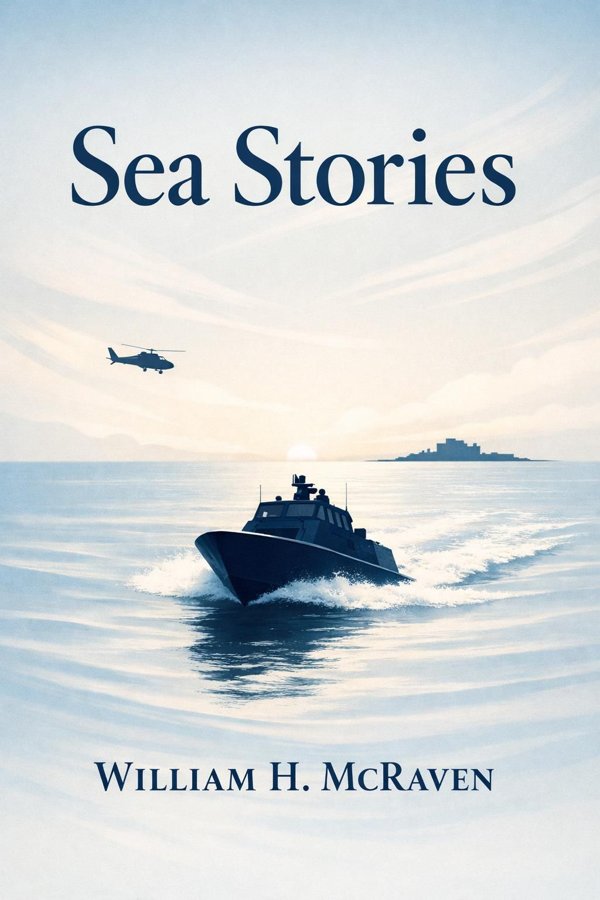
More by William H. McRaven

You Might Also Like

Extreme Ownership
Jocko Willink
10 min
Dare to Lead
Brene Brown
10 min
Leaders Eat Last
Simon Sinek
10 min
The 21 Irrefutable Laws of Leadership
John Maxwell
10 min
Start With Why
Simon Sinek
10 min
How to Lead When You're Not in Charge
Clay Scroggins
10 minBrowse by Category
Ready to read Make Your Bed: Little Things That Can Change Your Life...And Maybe the World?
Get the full summary and 100K+ more books with Fizz Moment.