
Sam Altman's Reading List: Books Behind the AI Revolution
Sam Altman, CEO of OpenAI, draws inspiration from books on technology, philosophy, and entrepreneurship. His reading list reveals the intellectual foundations behind the AI revolution.
 10 min read
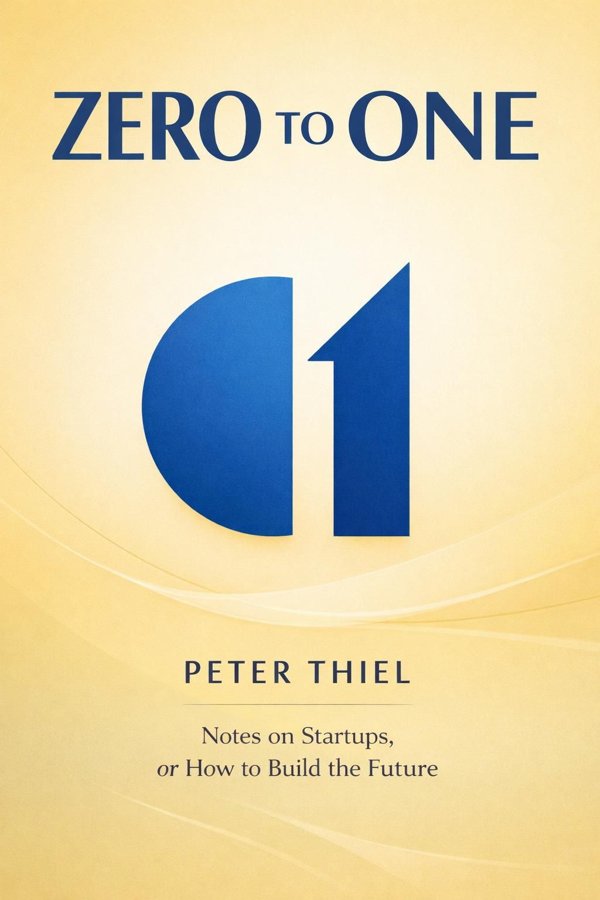
Zero to One
by Peter Thiel
Zero to One by Peter Thiel, based on notes by Blake Masters, is one of the most provocative books ever written about startups, innovation, and building companies that matter. Rather than offering generic business advice, Thiel asks a deeper question: how do you create something truly new? His answer is the idea of going from “zero to one” — producing a breakthrough that did not exist before — instead of going from “one to many,” which simply means copying or scaling what is already known. That distinction sits at the heart of the book. Drawing on his experience as a co-founder of PayPal, an early investor in Facebook, and a leading Silicon Valley thinker, Thiel challenges many popular assumptions about competition, risk, technology, and success. He argues that the best businesses are not those that fight hardest in crowded markets, but those that build unique products so valuable they effectively become monopolies. Along the way, he explores founding teams, sales, culture, long-term planning, and the role of secrets in entrepreneurship. For founders, investors, students, and ambitious professionals, Zero to One is a sharp, contrarian guide to creating the future instead of merely reacting to it.
Key Takeaways
- 1The Future Depends on New Creation — Most people talk about the future as if it will simply arrive on schedule. Thiel’s central insight is that the future is…
- 2Learn from Bubbles Without Becoming Cynical — A failed boom can teach more than a smooth success. Thiel uses the dot-com bubble of the late 1990s to show how mass ent…
- 3Happy Companies Escape Destructive Competition — Thiel’s famous claim that competition is for losers sounds extreme, but it highlights an important truth: the best busin…
 10 min read
The Beginning of Infinity
by David Deutsch
The Beginning of Infinity is David Deutsch’s ambitious argument that human progress has no fixed ceiling. Rather than treating science as a collection of facts, Deutsch presents it as a method for creating good explanations—accounts of reality that are hard to vary without losing their power. From that starting point, he explores why knowledge grows, why problems are solvable, and why pessimism so often mistakes temporary limits for permanent ones. The book ranges across physics, evolution, political philosophy, art, morality, and the future of civilization, yet it remains centered on one radical claim: all evils are caused by insufficient knowledge, and knowledge can, in principle, continue to expand without end. That makes this more than a science book. It is a philosophy of progress and a defense of optimism grounded in reason rather than wishful thinking. Deutsch writes with unusual authority. A pioneering physicist at Oxford and one of the founders of quantum computation, he combines technical insight with sweeping philosophical ambition. The result is a challenging but rewarding work that asks readers to rethink what human beings are capable of achieving.
Key Takeaways
- 1The Reach of Good Explanations — The difference between knowledge and mere assertion begins with explanation. Deutsch argues that a good explanation is n…
- 2Optimism and Unlimited Human Progress — Optimism, in Deutsch’s sense, is not positive thinking. It is the belief that problems are inevitable but solvable. That…
- 3The Jump to Universality — Some ideas do more than solve a local problem; they become universal. Deutsch is fascinated by moments when systems cros…
 10 min read
The Hard Thing About Hard Things
by Ben Horowitz
Building a company is often romanticized as a thrilling journey powered by vision, talent, and hustle. Ben Horowitz shatters that illusion. In The Hard Thing About Hard Things, he focuses on the brutal realities of leadership: running out of cash, firing friends, laying off loyal employees, managing executives who disappoint, and making high-stakes decisions when no option feels right. This is not a book of tidy frameworks or motivational slogans. It is a survival guide for leaders facing ambiguity, pressure, and fear. Horowitz writes from hard-earned experience. As cofounder and CEO of Loudcloud, later transformed into Opsware, he led a company through the dot-com crash, near-collapse, painful restructuring, and ultimately a successful sale to Hewlett-Packard. He later became a cofounder of Andreessen Horowitz, one of Silicon Valley’s most influential venture capital firms, giving him a front-row seat to the struggles of countless founders. What makes this book matter is its honesty. Horowitz argues that the toughest moments in business rarely come with clear answers. Leadership is not about avoiding pain; it is about carrying responsibility through it. For founders, executives, and anyone managing under pressure, this book offers unusually practical wisdom for doing the job when it is hardest.
Key Takeaways
- 1Entrepreneurship Means Entering Organized Chaos — The biggest shock of entrepreneurship is not the workload; it is the absence of certainty. People often imagine startups…
- 2Crisis Leadership Requires Choosing Under Pressure — A crisis does not test your intelligence nearly as much as it tests your nerve. Horowitz shows that when companies appro…
- 3The CEO Job Is Inherently Lonely — The hardest part of being a CEO is not the title, the schedule, or even the responsibility. It is the isolation. Horowit…
 10 min read
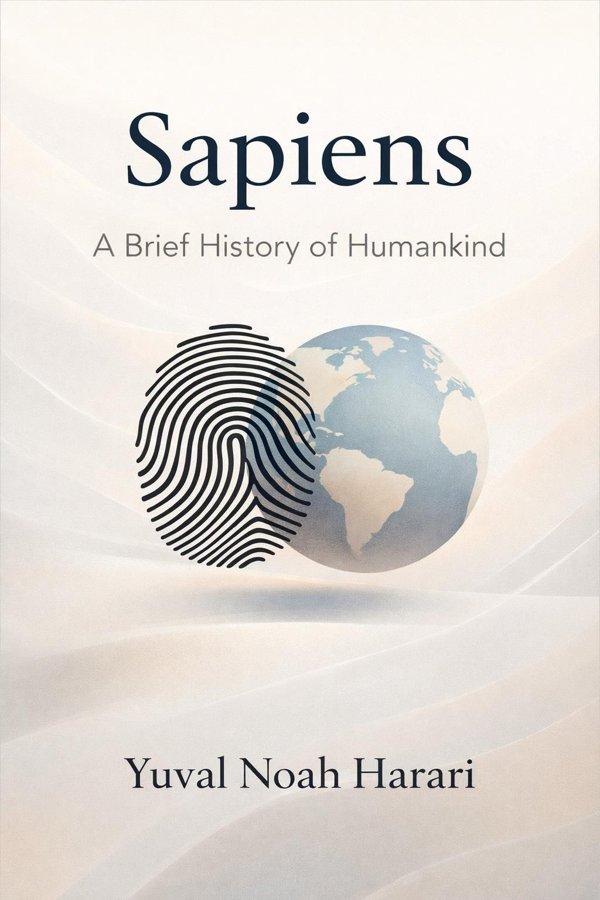
Sapiens
by Yuval Noah Harari
Sapiens: A Brief History of Humankind is an ambitious, big-picture history of our species, tracing how Homo sapiens rose from an unremarkable African ape to the dominant force on Earth. Yuval Noah Harari combines history, biology, anthropology, economics, and philosophy to explain the turning points that transformed human life: the Cognitive Revolution, the Agricultural Revolution, and the Scientific Revolution. Rather than offering a narrow chronological account, he asks a deeper question: what made humans uniquely capable of building empires, religions, markets, and nations? Harari’s answer is both provocative and memorable: our greatest power lies in our ability to create and believe shared stories. These collective fictions—such as money, laws, gods, and states—allow strangers to cooperate on a massive scale. The book matters because it challenges comforting assumptions about progress, happiness, and civilization. It invites readers to see modern society not as inevitable, but as the result of historical choices, accidents, and myths. As a historian and public intellectual, Harari brings scholarly range and narrative clarity to one of the most compelling questions in human history: how did we become who we are?
Key Takeaways
- 1The Cognitive Revolution and Shared Imagination — Human dominance did not begin with stronger bodies, sharper teeth, or faster legs; it began with a new kind of mind. Aro…
- 2The Agricultural Revolution: Progress or Trap? — What if one of history’s greatest achievements was also one of its greatest mistakes? Harari provocatively argues that t…
- 3Myths Make Large Societies Possible — Civilization runs not only on roads, crops, and armies, but on ideas that exist because people collectively agree they d…
 10 min read
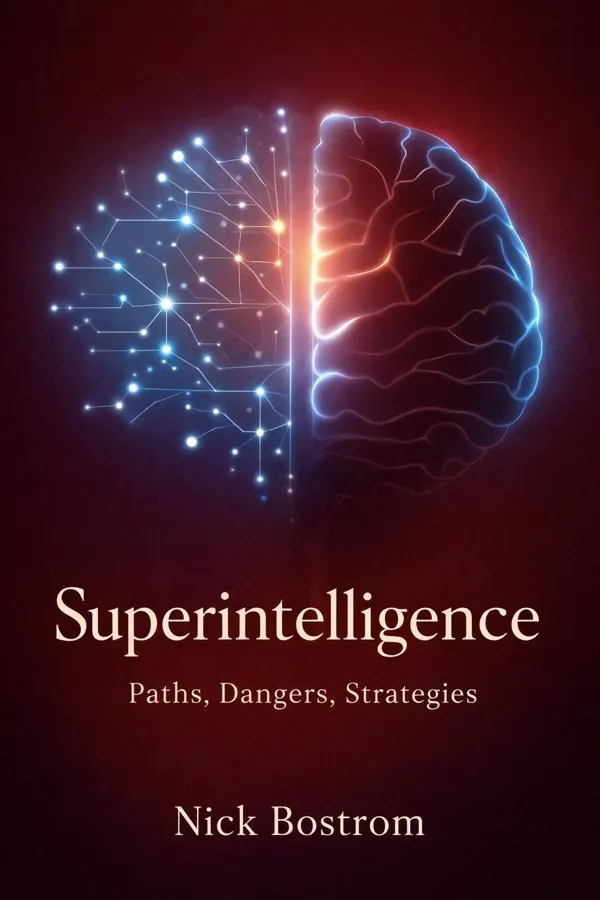
Superintelligence
by Nick Bostrom
What happens if humanity creates minds that outperform the best human brains in nearly every domain? In Superintelligence, philosopher Nick Bostrom tackles that question with unusual seriousness, arguing that the rise of machine intelligence could become the most important turning point in human history. This is not a book of science-fiction speculation or simple techno-optimism. It is a rigorous exploration of how advanced AI might emerge, why it could become extraordinarily powerful, and why even a system with seemingly harmless goals could pose catastrophic risks if its capabilities vastly exceed our own. Bostrom examines multiple paths to superintelligence, from machine learning and brain emulation to biological enhancement and collective systems, while also confronting the central challenge of AI control: how do we ensure that a more intelligent-than-human system remains aligned with human values? The book matters because its core argument has only grown more relevant as AI capabilities accelerate. Bostrom writes with the authority of a leading philosopher of existential risk and long-term futures, offering one of the foundational frameworks for thinking clearly about advanced AI before it arrives.
Key Takeaways
- 1Intelligence Is Power Toward Goals — A crucial misunderstanding sits at the center of most public debates about AI: people often imagine intelligence as wisd…
- 2Many Roads Lead To Superintelligence — The future may not arrive through the path we expect. One of Bostrom’s most important contributions is showing that supe…
- 3Small Advantages Can Compound Rapidly — The most unsettling possibility in the book is not simply that machine intelligence might exceed ours, but that once it …
 10 min read
Thinking Fast and Slow
by Daniel Kahneman
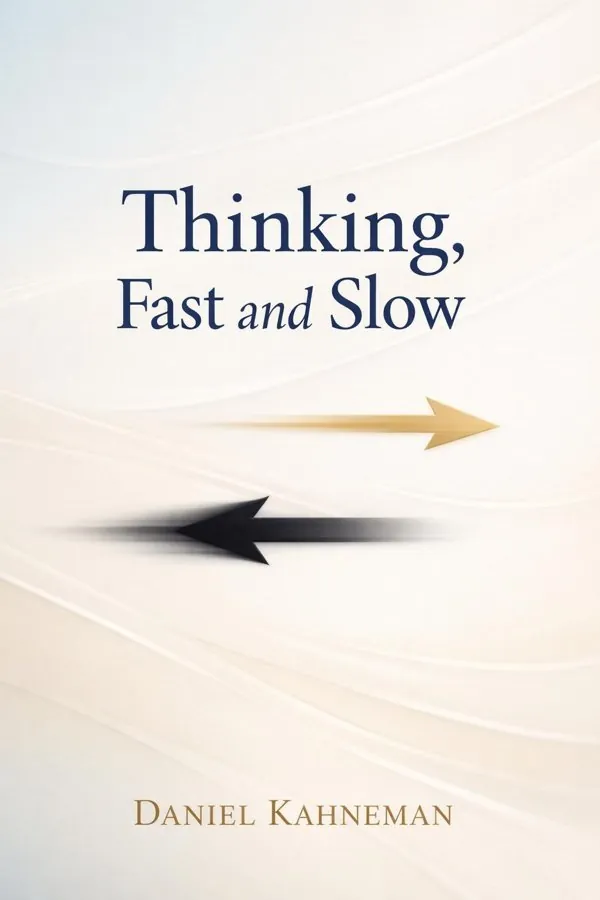
Thinking Fast and Slow is one of the most influential books ever written about how the human mind works. In it, Daniel Kahneman distills decades of groundbreaking research in psychology and behavioral economics into a practical framework for understanding why people make smart decisions in some situations and surprisingly poor ones in others. His central insight is that our thinking is shaped by two systems: one that is fast, intuitive, and automatic, and another that is slow, effortful, and analytical. Most of the time, these systems cooperate efficiently. But just as often, the quick judgments of the mind lead us into predictable errors. What makes this book so powerful is that it changes how you see everyday life. From investing and hiring to relationships, planning, medicine, and public policy, Kahneman shows how biases quietly shape choices we assume are rational. He writes with the authority of a Nobel Prize-winning researcher whose work, much of it developed with Amos Tversky, transformed our understanding of judgment under uncertainty. This is not only a book about mistakes; it is a guide to better thinking, wiser decisions, and greater humility about the limits of human reason.
Key Takeaways
- 1The Two Systems That Shape Thought — Most of what you think feels deliberate, but much of it happens automatically. Kahneman’s most famous contribution is th…
- 2Heuristics Make Judgment Efficient and Flawed — The mind is built to simplify, not to calculate perfectly. To navigate uncertainty, we rely on heuristics, mental shortc…
- 3Confidence Often Exceeds What We Know — We are far better at creating explanations than at recognizing our ignorance. Kahneman shows that overconfidence is one …
 10 min read
Lean Analytics
by Alistair Croll, Benjamin Yoskovitz
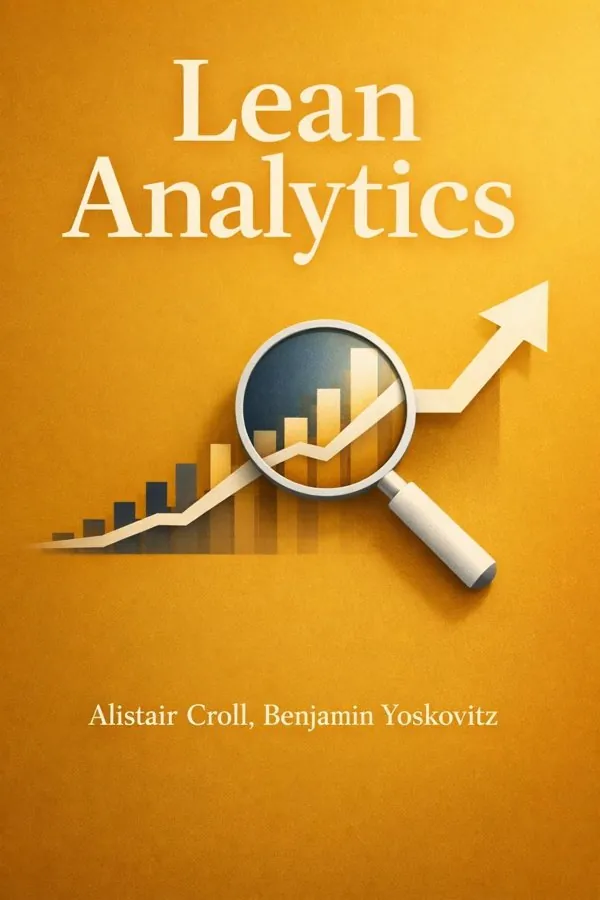
Most startups do not fail because founders lack passion. They fail because they mistake motion for progress and opinions for evidence. Lean Analytics shows entrepreneurs how to replace guesswork with disciplined measurement, using data not as a reporting tool but as a way to discover what really drives growth. Building on the ideas of Lean Startup, Alistair Croll and Benjamin Yoskovitz argue that every business must identify the one metric that matters most at a given moment, then use it to guide product decisions, experiments, and strategy. The book matters because modern companies can track almost everything, yet that abundance often creates confusion rather than clarity. Instead of collecting endless dashboards, the authors offer a practical framework for deciding what to measure, when to measure it, and how to act on it. Their authority comes from direct experience advising startups, building products, and working with founders under real market pressure. The result is a highly usable playbook for entrepreneurs, product teams, and growth leaders who want to build companies based on evidence, learning, and traction rather than intuition alone.
Key Takeaways
- 1Find Your One Metric That Matters — What kills many startups is not a lack of data but too much of the wrong data. Founders can easily become obsessed with …
- 2Measure According to Startup Growth Stages — A startup is not one problem repeated over time; it is a sequence of very different problems. That is why metrics that m…
- 3Start With Empathy, Not Features — Before you can measure growth, you must first understand whose problem you are solving and why it matters deeply enough …
 10 min read
Life 3.0
by Max Tegmark
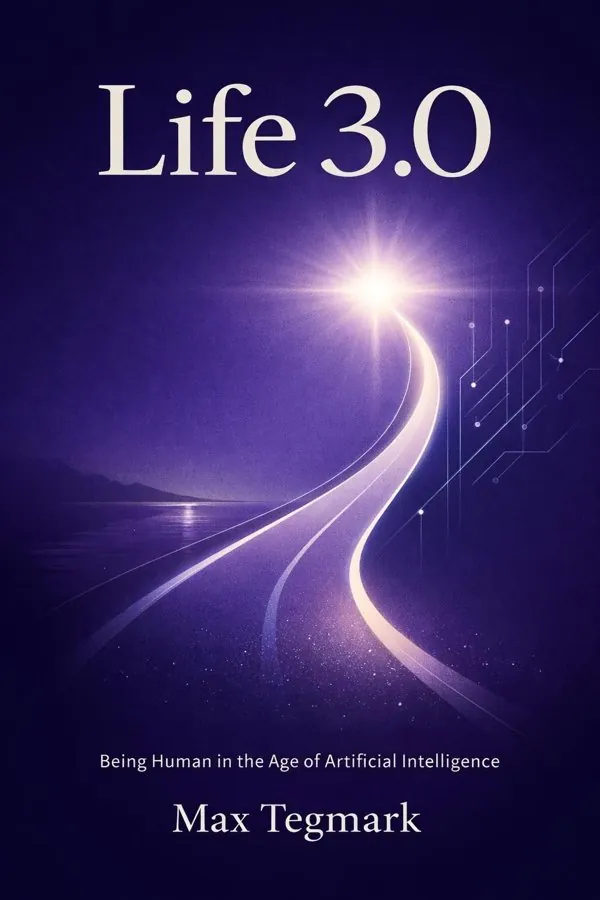
What happens when intelligence is no longer tied to biology? In Life 3.0, Max Tegmark asks readers to think beyond today’s chatbots and algorithms and confront a much larger question: what kind of future do we want to build if machines become smarter than humans? The book explores artificial intelligence not as a narrow technical topic, but as a civilization-shaping force that could transform work, politics, warfare, ethics, identity, and even humanity’s role in the universe. Tegmark begins with vivid scenarios that make abstract risks and opportunities feel immediate, then expands into a wide-ranging inquiry into intelligence, consciousness, and long-term destiny. What makes the book especially valuable is Tegmark’s perspective. As an MIT physicist, cosmologist, and co-founder of the Future of Life Institute, he combines scientific rigor with a talent for big-picture thinking. He neither glorifies AI nor reduces it to doom. Instead, he argues that the future of advanced intelligence is still open—and that deliberate choices made now will matter enormously. Life 3.0 is both a warning and an invitation: if we take AI seriously, we may still steer it toward outcomes that benefit humanity.
Key Takeaways
- 1The Omega Team Makes AI Concrete — The future becomes easier to understand when it is turned into a story. Tegmark opens with the fictional Omega Team, a s…
- 2Intelligence Does Not Guarantee Wisdom — A system can be brilliant and still dangerously misguided. Tegmark defines intelligence broadly as the ability to accomp…
- 3AI Will Reshape Work Before Everything — The first major AI shock may not be a robot uprising, but a reorganization of everyday economic life. Tegmark argues tha…
Want the full summary?
Get instant access to this book summary and 100K+ more with Fizz Moment.
Get Free SummaryAvailable on App Store • Free to download
About This List
Sam Altman, CEO of OpenAI, draws inspiration from books on technology, philosophy, and entrepreneurship. His reading list reveals the intellectual foundations behind the AI revolution.
This list features 8 carefully selected books. With FizzRead, you can read AI-powered summaries of each book in just 15 minutes. Get the key takeaways and start applying the insights immediately.
Ready to start reading?
Get instant access to all 8 book summaries and 100K+ more with FizzRead.