
Matthew McConaughey's Life Philosophy Books
The books that shaped Matthew McConaughey's unconventional life philosophy and led to his bestselling memoir Greenlights.
 10 min read
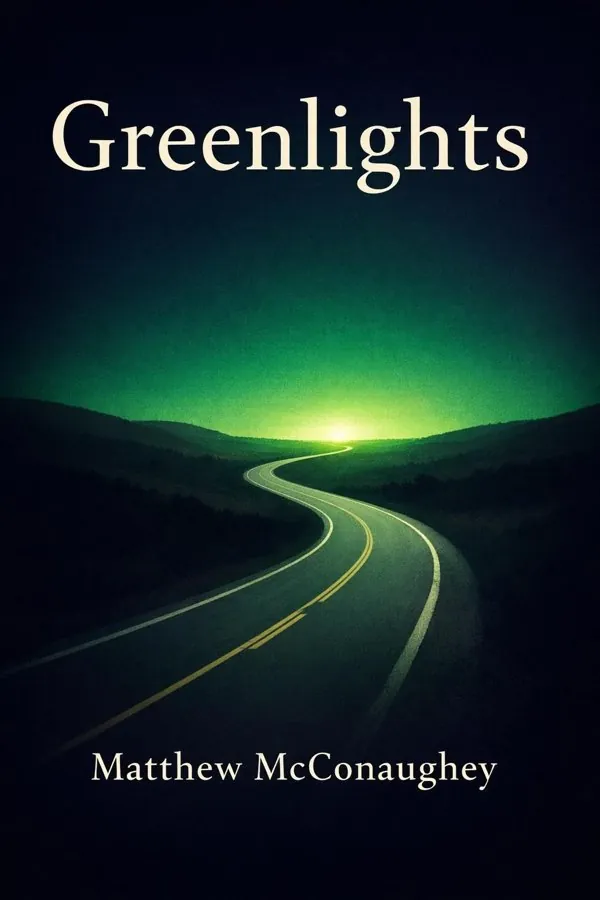
Greenlights
by Matthew McConaughey
Greenlights is Matthew McConaughey’s unconventional memoir, a mix of personal history, travel journal, spiritual reflection, comic storytelling, and hard-earned life philosophy. Drawn from decades of diaries he kept through fame, failure, love, wild adventures, and private reckoning, the book asks a simple but powerful question: how do we recognize the moments when life is telling us to move forward? McConaughey calls those moments “greenlights.” More importantly, he argues that even red lights and yellow lights can eventually become green if we meet them with courage, patience, humor, and honesty. That idea gives the memoir its emotional core. This is not a celebrity tell-all built on gossip or image management. It is a deeply personal account of family chaos, artistic ambition, romantic detours, grief, faith, reinvention, and the search for self-trust. McConaughey writes with the swagger and rhythm that made him famous, but beneath the charm is a serious philosophy about resilience and authenticity. The result is a memoir that entertains while also offering a practical mindset for navigating uncertainty, setbacks, success, and the long road toward a life that feels truly your own.
Key Takeaways
- 1Roots in Texas Built His Compass — Character is often shaped long before ambition has a name. In Greenlights, McConaughey begins in Uvalde, Texas, where fa…
- 2College Opened the Door to Acting — Many life-changing decisions begin as detours, not master plans. McConaughey went to the University of Texas intending t…
- 3Fame Tests the Self You Built — Success can be just as disorienting as failure. Once McConaughey became a rising star, he entered a world that rewarded …
 10 min read
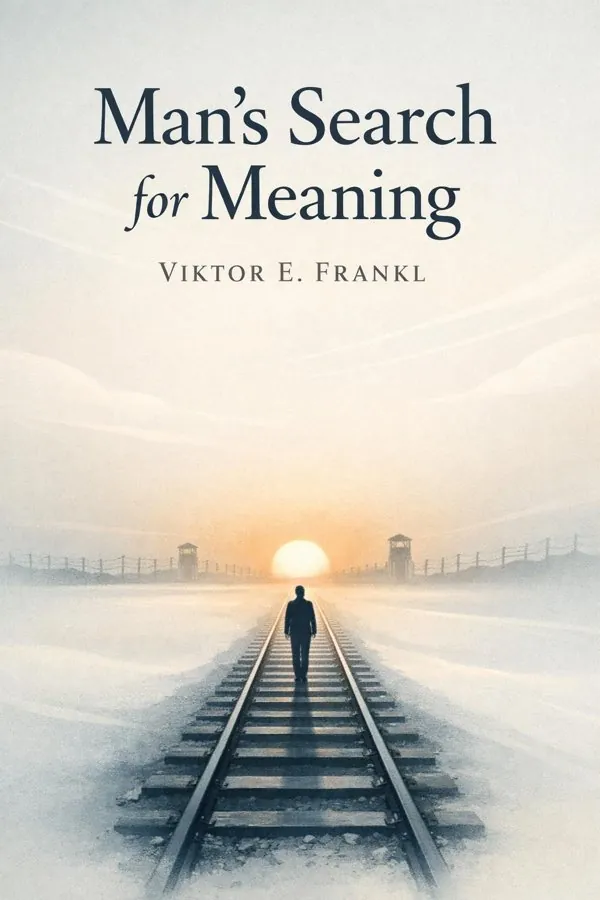
Man's Search for Meaning
by Viktor Frankl
What keeps a person going when everything familiar has been taken away—comfort, identity, loved ones, freedom, and even the expectation of tomorrow? That is the unbearable and essential question at the heart of *Man's Search for Meaning*. Viktor E. Frankl’s landmark book is far more than a Holocaust memoir. It is a profound study of human endurance, an examination of suffering, and a practical philosophy for anyone trying to live with purpose in hard times. Drawing on his experiences in Nazi concentration camps, Frankl explores how people respond when life is reduced to its barest terms and why some still manage to preserve dignity, hope, and inner freedom. What makes this book endure is that Frankl does not offer empty inspiration. He writes as an Austrian neurologist, psychiatrist, and Holocaust survivor who later developed logotherapy, a school of psychotherapy centered on meaning as the primary human motivation. His insight is simple but life-changing: even when we cannot change our circumstances, we can still choose our response. That idea has made this book one of the most influential works in psychology and self-help, especially for readers facing grief, burnout, uncertainty, or the quiet fear that life has lost direction.
Key Takeaways
- 1The Shock of Arrival and the Dehumanization of Camp Life — When Frankl first arrived at Auschwitz, the destruction of the self began immediately. The process was systematic: priso…
- 2Emotional Detachment and the Apathy that Defines Survival — After the first shock came a second psychological stage: apathy. Frankl shows that this numbness was not indifference in…
- 3Moral Choice and Inner Freedom in the Midst of Suffering — One of the book’s most powerful claims is that even under extreme oppression, a human being retains a final freedom: the…
 10 min read
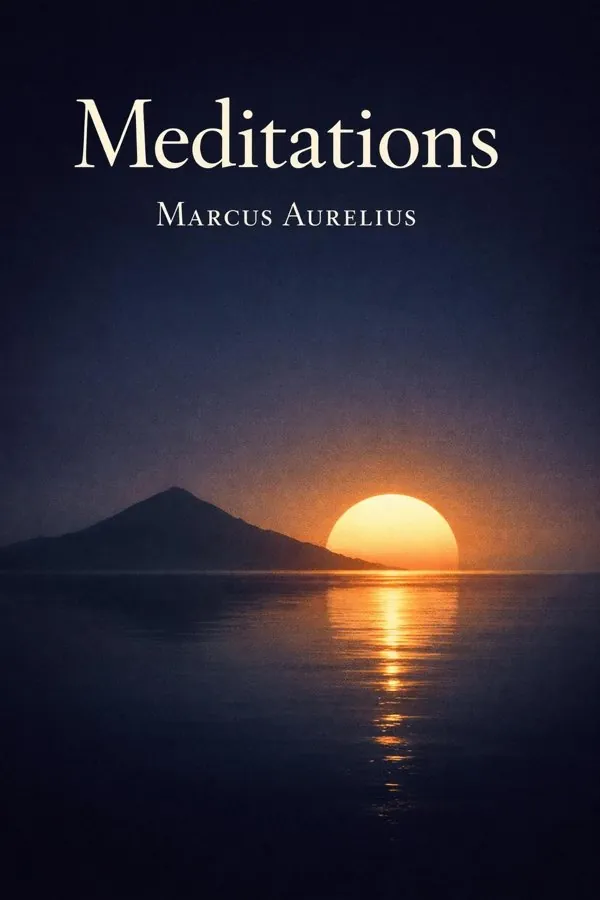
Meditations
by Marcus Aurelius
What does it mean to stay calm, just, and fully human in a world full of pressure, conflict, ego, and loss? That is the enduring question at the heart of Meditations, the private journal of Roman emperor Marcus Aurelius. Written in Greek and never intended for publication, these reflections are not polished philosophy lectures. They are personal reminders from one of the most powerful men in the world trying to govern not only an empire, but also his own mind. That tension is exactly why this book still matters. Meditations remains one of the clearest guides to Stoic philosophy because it speaks directly to everyday struggles: dealing with difficult people, accepting change, resisting vanity, and acting with integrity when no one is watching. Marcus Aurelius is remembered as both a Roman emperor and a Stoic philosopher, a rare figure often described as a philosopher-king. His reflections on virtue, discipline, mortality, and inner peace have influenced readers for centuries. If you want practical wisdom rather than abstract theory, Meditations offers a deeply human blueprint for living with clarity, resilience, and moral purpose.
Key Takeaways
- 1Book I: Lessons from Those Who Shaped Me — The opening book of Meditations is an extraordinary act of gratitude. Instead of launching into abstract arguments, Marc…
- 2Book II: Accepting Fate and Living Rationally — Book II opens with one of the most quoted passages in Stoic philosophy: a morning reminder that we will meet interfering…
- 3Book III: Integrity Beyond Fame — In Book III, Marcus Aurelius turns his attention to time, mortality, and the danger of living for approval. He reminds h…
 10 min read
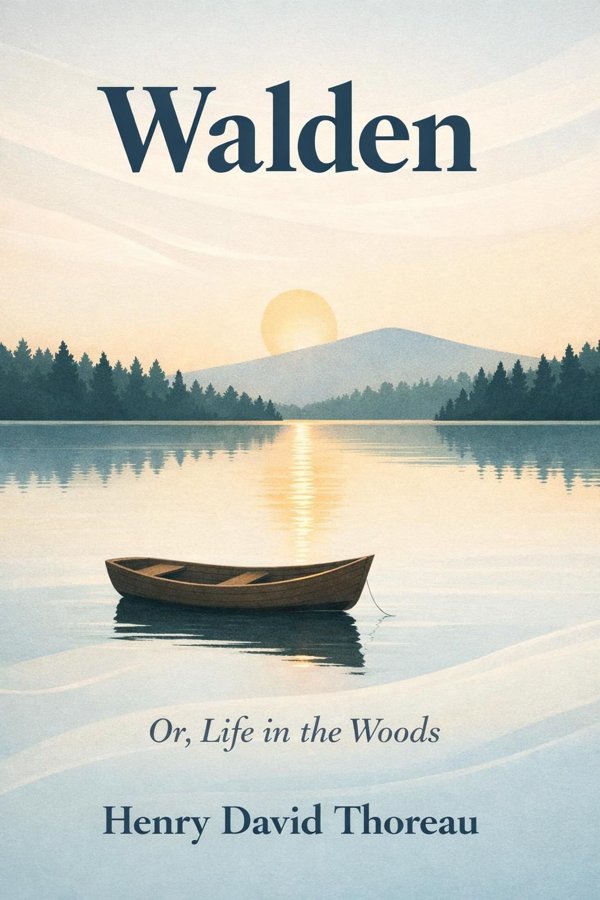
Walden
by Henry David Thoreau
Walden is Henry David Thoreau’s enduring meditation on how to live with clarity, freedom, and purpose in a noisy world. Drawn from the two years, two months, and two days he spent in a small cabin near Walden Pond in Concord, Massachusetts, the book is far more than a nature journal or memoir of rustic living. It is a philosophical challenge to the habits of modern society: endless work, needless consumption, social conformity, and the mistaken belief that a busy life is a meaningful one. Thoreau asks what remains when we strip life down to its essentials—and whether simplicity might reveal a richer kind of wealth. What makes Walden still powerful is that Thoreau does not merely preach; he experiments. He grows beans, tracks his expenses, observes animals and seasons, and turns daily life into a test of values. As a writer, naturalist, and moral thinker, he speaks with unusual authority because he lived the questions he posed. For readers feeling overwhelmed by speed, distraction, and material pressure, Walden offers a radical but practical invitation: live deliberately, notice deeply, and measure success by consciousness rather than accumulation.
Key Takeaways
- 1Living Deliberately Gives Life Its Shape — Most people do not choose their lives so much as inherit them. They absorb routines, ambitions, and anxieties from the c…
- 2Economy Reveals the True Cost of Living — A price tag never tells the whole price. One of Walden’s most important insights appears in its opening chapter, “Econom…
- 3Solitude Deepens Rather Than Diminishes Life — Loneliness is not the same as solitude. Thoreau’s time at Walden challenges the fear that being alone means being depriv…
 10 min read
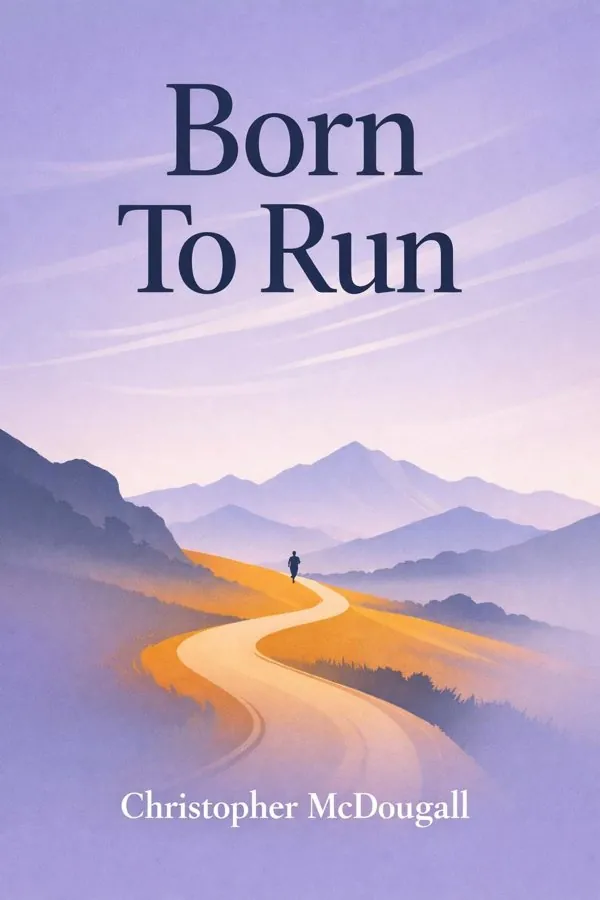
Born to Run
by Christopher McDougall
Born to Run is a thrilling work of narrative nonfiction that blends adventure, sports science, anthropology, and memoir into one unforgettable question: why do so many modern runners get injured doing something the human body may have evolved to do brilliantly? Christopher McDougall begins with his own frustration as a capable runner plagued by chronic pain, then follows that mystery into Mexico’s Copper Canyons, where the Tarahumara—also known as the Rarámuri—have built a culture around running extraordinary distances with apparent ease and joy. Along the way, he introduces eccentric ultrarunners, reclusive mentors, skeptical scientists, and bold theories about barefoot movement, endurance, and human evolution. What makes the book matter is not just its celebration of extreme athletes, but its challenge to modern assumptions about fitness, footwear, and performance. McDougall writes with the curiosity of a reporter and the momentum of a novelist, drawing on his background as a journalist to investigate evidence while telling a deeply human story. The result is a book that invites readers to rethink running not as punishment, but as freedom, connection, and one of humanity’s oldest gifts.
Key Takeaways
- 1Pain Sparked a Deeper Running Question — Sometimes a personal problem becomes the doorway to a much larger truth. Born to Run begins with Christopher McDougall’s…
- 2The Copper Canyons Protect Endurance Wisdom — Isolation can preserve ways of living that the modern world has forgotten. In Mexico’s Copper Canyons, a vast, rugged ne…
- 3Running Can Be Joy, Not Punishment — One of the book’s most radical ideas is also one of its simplest: running does not have to feel like self-punishment. Mc…
 10 min read
Siddhartha
by Hermann Hesse
Siddhartha is Hermann Hesse’s luminous 1922 novel about a young man’s search for enlightenment in ancient India, during the era of the Buddha. What begins as the story of a gifted Brahmin’s son quickly becomes a universal exploration of dissatisfaction, desire, suffering, love, loss, and inner awakening. Siddhartha is not content to inherit wisdom secondhand. He wants truth that is lived, not merely taught, and that longing drives him through extreme asceticism, sensual pleasure, wealth, despair, and finally a quiet, profound reconciliation with life itself. The novel matters because it speaks to a question that remains urgent today: how do we find meaning in a world full of advice, ideologies, and distractions? Hesse’s answer is subtle and enduring. Real understanding cannot be borrowed from doctrines alone; it must be discovered through experience, reflection, and attention. Drawing on Indian spiritual traditions while writing for a modern Western audience, Hesse created a work that bridges cultures without losing psychological depth. A Nobel Prize-winning author celebrated for his insight into self-realization, Hesse makes Siddhartha both a spiritual parable and a deeply human coming-of-age story.
Key Takeaways
- 1The Dissatisfied Brahmin — A privileged life can still feel empty when the soul remains unanswered. At the beginning of Siddhartha, we meet a brill…
- 2Learning Through Self-Denial’s Limits — Escaping the world is not the same as understanding it. After leaving home, Siddhartha joins the Samanas, wandering asce…
- 3The Buddha Cannot Be Imitated — Even perfect teaching cannot spare us from having to live our own path. One of the most memorable moments in Siddhartha …
Want the full summary?
Get instant access to this book summary and 100K+ more with Fizz Moment.
Get Free SummaryAvailable on App Store • Free to download
About This List
The books that shaped Matthew McConaughey's unconventional life philosophy and led to his bestselling memoir Greenlights.
This list features 6 carefully selected books. With FizzRead, you can read AI-powered summaries of each book in just 15 minutes. Get the key takeaways and start applying the insights immediately.
Ready to start reading?
Get instant access to all 6 book summaries and 100K+ more with FizzRead.