
Books for Leaders — Elevate Your Leadership
Leadership is not about title or position — it is about influence and impact. These books teach you how to inspire, decide, and lead in any situation.

 10 min read
Mastery
by Robert Greene
In Mastery, Robert Greene argues that extraordinary achievement is not the result of luck, genius, or rare talent alone, but of a repeatable process available to far more people than we imagine. Drawing on the lives of masters such as Leonardo da Vinci, Charles Darwin, Benjamin Franklin, and contemporary innovators, Greene shows how deep skill develops through apprenticeship, rigorous observation, creative experimentation, and years of disciplined practice. The book is both a study of excellence and a strategic guide for anyone who wants to do meaningful work at a very high level. What makes Mastery especially compelling is Greene’s ability to combine history, psychology, and practical strategy. He does not romanticize success. Instead, he reveals the hidden labor behind mastery: the awkward beginnings, the long period of learning, the emotional setbacks, and the gradual transformation from student to creator. This matters because many people abandon their ambitions too early, mistaking difficulty for incapacity. Greene’s central insight is that mastery is a developmental path, not an inborn gift. For readers seeking long-term growth, creative independence, and professional excellence, Mastery offers a powerful roadmap.
Key Takeaways
- 1Discover Your Life’s Task — The deepest form of motivation does not come from external rewards; it comes from the feeling that you are doing the wor…
- 2Submit to the Apprenticeship Phase — In a culture obsessed with speed, the apprenticeship feels inconvenient, but Greene treats it as the irreplaceable found…
- 3Absorb the Master’s Power — Before you can become original, you usually need proximity to excellence. Greene highlights the importance of mentors, m…
 10 min read
7 Powers: The Foundations of Business Strategy
by Hamilton Helmer
7 Powers: The Foundations of Business Strategy es un libro que presenta un marco claro y práctico para comprender las fuentes duraderas de ventaja competitiva. Hamilton Helmer identifica siete 'poderes' —como escala, red, marca y proceso— que permiten a las empresas sostener su éxito a largo plazo. A través de ejemplos de compañías reales, el autor explica cómo cada poder puede ser desarrollado y defendido estratégicamente para crear valor sostenible.
Key Takeaways
- 1The Nature of Strategy — At its core, strategy is about causality. It’s not a set of slogans or a vision statement, but a theory of how actions t…
- 2Scale Economies — Scale Economies are perhaps the most intuitive—and yet often misunderstood—form of power. Simply put, they arise when th…
- 3Network Economies
 10 min read
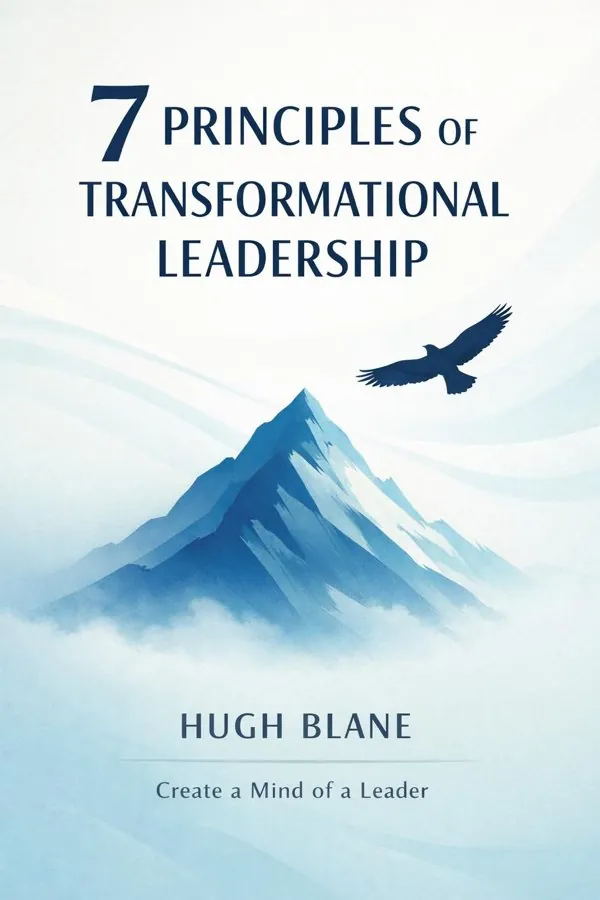
7 Principles of Transformational Leadership: Create a Mind of a Leader
by Hugh Blane
In this book, Hugh Blane presents seven key principles that help leaders transform their mindset, culture, and results. Drawing from decades of experience in leadership consulting, Blane outlines how to build trust, inspire commitment, and create a high-performance environment that drives sustainable success. The book emphasizes personal accountability, emotional intelligence, and the power of purpose-driven leadership.
Key Takeaways
- 1Principle 1 – Clarity of Purpose — When I ask leaders what their purpose is, I often hear a job description or a list of goals. But clarity of purpose goes…
- 2Principle 2 – Personal Accountability — Accountability is the cornerstone of credibility. It’s easy to demand responsibility from others; it’s much harder to em…
- 3Principle 3 – Building Trust
 10 min read
7 Rules of Power: Surprising—but True—Advice on How to Get Things Done and Advance Your Career
by Jeffrey Pfeffer
In this book, leadership scholar Jeffrey Pfeffer distills decades of research on power dynamics into seven practical rules for achieving influence and success. Drawing on real-world examples from business and politics, Pfeffer explains how power operates, why people often misunderstand it, and how to use it ethically and effectively to accomplish goals and advance careers.
Key Takeaways
- 1Rule 1 – Get Out of Your Own Way — The first obstacle to power isn’t other people—it’s ourselves. As I’ve watched careers unfold, the pattern that emerges …
- 2Rule 2 – Break the Rules — The essence of real power is unconventionality. Every organization has a script—a set of established norms about how one…
- 3Rule 3 – Show Up in Powerful Ways
 10 min read
A Better World, Inc.: How Companies Profit by Solving Global Problems...Where Governments Cannot
by Alice Korngold
A Better World, Inc. explores how corporations can drive social and environmental progress while achieving profitability. Alice Korngold presents case studies of global companies that address issues such as poverty, sustainability, and education, demonstrating that business success and social good can coexist. The book argues that corporate social responsibility and cross-sector partnerships are essential for solving global challenges.
Key Takeaways
- 1The Limits of Government and Nonprofits — In many ways, the story of modern development begins with noble intentions. Governments seek to deliver welfare, stabili…
- 2The Role of Business in Global Problem-Solving — Once we accept that corporations possess unique resources and motivation structures, the question becomes: what should t…
- 3Corporate Social Responsibility (CSR) Evolution
 10 min read
A Bigger Prize: How We Can Do Better Than the Competition
by Margaret Heffernan
In 'A Bigger Prize', Margaret Heffernan explores how the obsession with competition undermines creativity, collaboration, and long-term success. Drawing on research from psychology, economics, and organizational behavior, she argues that cooperation and trust yield better outcomes for individuals, companies, and societies. The book challenges the myth that competition is the only path to excellence and offers examples of how collective intelligence and shared purpose can lead to more sustainable progress.
Key Takeaways
- 1Historical Context: The Rise of Competitive Ideologies — To understand why competition became so deeply ingrained in our psyche, we must trace its roots. The modern obsession wi…
- 2The Psychology of Competition — Competition doesn’t just shape our systems—it shapes our minds. Psychological research shows that rivalry triggers stres…
- 3Case Studies of Competitive Failure
 10 min read
A CEO for All Seasons: How to Lead Well in Every Phase of Your Company’s Growth
by Carolyn Dewar, Scott Keller, Vikram Malhotra, Kurt Strovink
This book, written by senior partners at McKinsey & Company, explores how CEOs can adapt their leadership style to the changing needs of their organizations across different stages of growth. Drawing on extensive research and interviews with global business leaders, it provides practical frameworks for navigating transitions, sustaining performance, and leading with purpose through every season of corporate life.
Key Takeaways
- 1The CEO Journey — Every company moves through a natural lifecycle—from creation to growth, from maturity to reinvention—and each phase pla…
- 2Season of Founding — The founding season is where vision is born. In this phase, the CEO is often a dreamer and a doer—simultaneously holding…
- 3Season of Growth
 10 min read
A Cure for the Common Company: A Well-Being Prescription for a Happier, Healthier, and More Resilient Organization
by Richard Safeer
A Cure for the Common Company explores how organizations can foster employee well-being and resilience through culture, leadership, and everyday practices. Drawing on behavioral science and organizational psychology, Dr. Richard Safeer provides actionable strategies for leaders to create workplaces that support physical, mental, and social health, ultimately improving performance and engagement.
Key Takeaways
- 1Defining Well-Being at Work — Well-being at work is multi-dimensional—it encompasses physical health, mental clarity, emotional stability, social conn…
- 2The Science Behind Well-Being — Behind every thriving company lies an understanding of behavioral and organizational psychology. In this section, I draw…
- 3Leadership’s Role in Well-Being
 10 min read
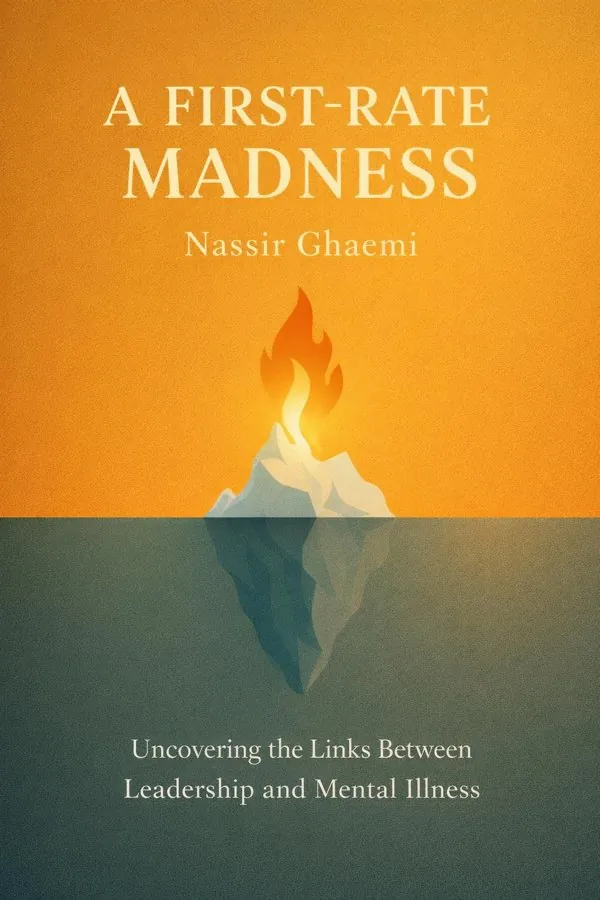
A First-Rate Madness: Uncovering the Links Between Leadership and Mental Illness
by Nassir Ghaemi
In this groundbreaking work, psychiatrist Nassir Ghaemi explores the surprising connection between mental illness and effective leadership. Drawing on historical and psychological analysis, he argues that leaders who have experienced depression, mania, or other mood disorders often possess unique resilience and empathy that enable them to guide others through crisis. Through case studies of figures such as Lincoln, Churchill, and Kennedy, Ghaemi challenges conventional notions of sanity and success in leadership.
Key Takeaways
- 1The Inverse Law of Sanity — I call it the inverse law of sanity: mentally healthy leaders perform well when times are calm, yet when crisis strikes—…
- 2Historical Context — For centuries, psychiatry and leadership studies have stood on opposite sides of a wall built by stigma. Leaders were me…
- 3Abraham Lincoln
 10 min read
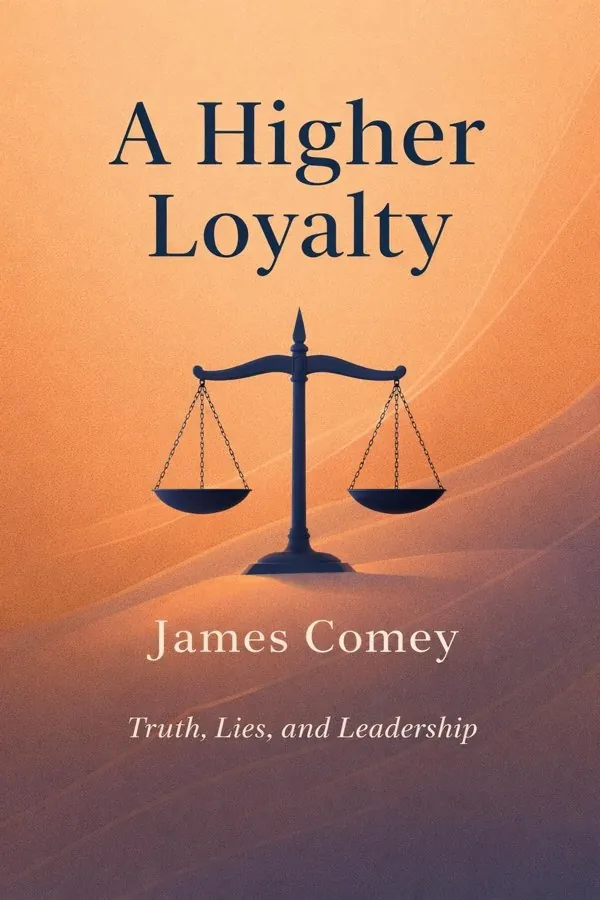
A Higher Loyalty: Truth, Lies, and Leadership
by James Comey
In this memoir, former FBI Director James Comey reflects on his career in law enforcement and public service, exploring ethical leadership and the challenges of truth in politics. He recounts key moments from his tenure at the FBI, including his interactions with U.S. presidents and his decision-making during pivotal investigations, offering insights into integrity and moral courage in government.
Key Takeaways
- 1Early Life and Moral Foundations — My story begins long before the Bureau, long before the high-stakes meetings in Washington conference rooms. It starts w…
- 2Entering Law Enforcement and Early Career — When I entered the U.S. Attorney’s Office in Manhattan, I quickly discovered that ethical judgment isn’t forged in class…
- 3Deputy Attorney General and the Hospital Confrontation
 10 min read
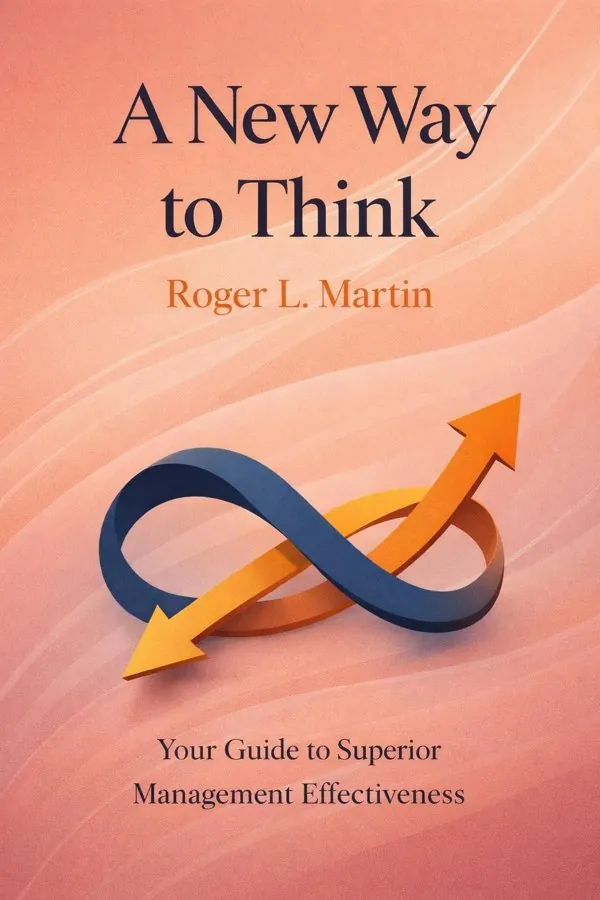
A New Way to Think: Your Guide to Superior Management Effectiveness
by Roger L. Martin
In this book, Roger L. Martin challenges conventional management wisdom and offers fresh perspectives on how leaders can rethink their assumptions to achieve better results. Drawing from decades of consulting and academic experience, Martin presents 14 short essays that each tackle a common business misconception, encouraging readers to adopt more effective mental models for strategy, innovation, and organizational success.
Key Takeaways
- 1The Role of Competition — We’ve been taught to see competition as the driving force behind progress. The logic is simple: if you outperform rivals…
- 2Strategy as Choice — Strategy isn’t a plan. It’s a choice—a deliberate, disciplined act of deciding where to play and how to win. Throughout …
- 3Customer-Centric Thinking
 10 min read
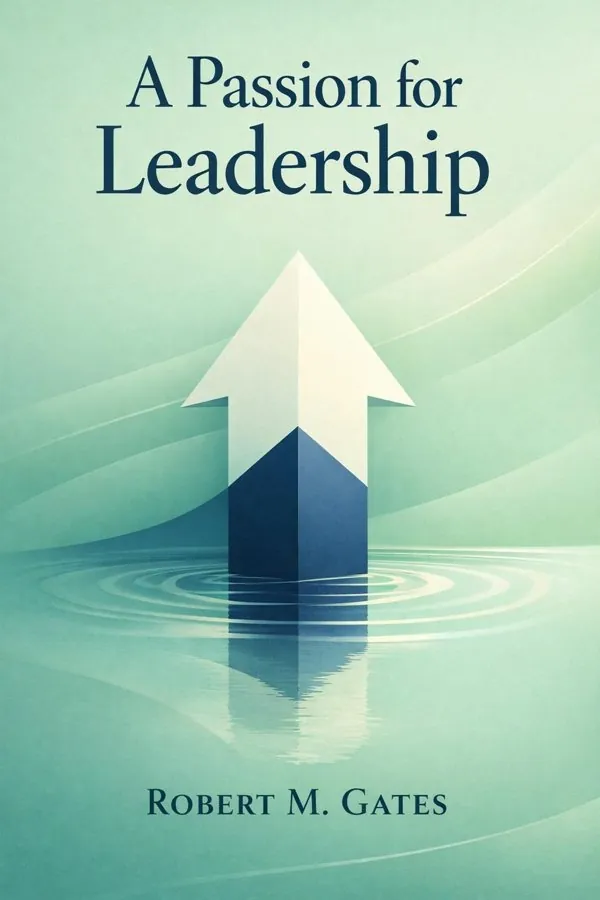
A Passion for Leadership: Lessons on Change and Reform from Fifty Years of Public Service
by Robert M. Gates
In this book, former U.S. Secretary of Defense Robert M. Gates draws on his extensive experience in government and academia to offer practical insights into effective leadership and institutional reform. He shares lessons learned from decades of public service, emphasizing the importance of integrity, accountability, and adaptability in driving meaningful change within large organizations.
Key Takeaways
- 1Defining Leadership — Leadership, as I have come to understand it, is earned one decision, one act, one standard at a time. It cannot be impos…
- 2The Challenge of Bureaucracy — Anyone who has spent more than a week in a large institution knows that bureaucracy resists change the way a body reject…
- 3Driving Organizational Reform
 10 min read
A Team of Leaders: Empowering Every Member to Take Ownership, Demonstrate Initiative, and Deliver Results
by Paul Gustavson, Stewart Liff
A Team of Leaders shows how to transform a traditional hierarchical organization into a self-managed, high-performing team culture. Drawing on real-world examples and decades of management experience, the authors present a framework for developing leadership at every level, enabling employees to take initiative, make decisions, and drive results collaboratively.
Key Takeaways
- 1The Five Levels of Team Leadership — When we talk about creating a team of leaders, it helps to imagine a developmental ladder—five levels through which a te…
- 2Creating the Environment for Shared Responsibility — No one can simply decree leadership into existence. The environment has to make leadership the natural response to work.…
- 3Organizational Design for High Performance
 10 min read
A World Gone Social: How Companies Must Adapt to Survive
by Ted Coine and Mark Babbitt
A World Gone Social argues that social media did not simply add a new marketing channel to business; it rewired the rules of leadership, communication, and organizational success. Ted Coine and Mark Babbitt show how power has shifted from executives, institutions, and polished corporate messaging toward connected customers, vocal employees, and online communities that can influence reputation in real time. In this new environment, command-and-control leadership is too slow, too opaque, and too detached from the human relationships that now drive trust. What makes this book matter is its insistence that “social” is not about tweeting more often or opening a LinkedIn page. It is about becoming a more transparent, responsive, collaborative, and human organization from the inside out. The authors combine leadership insight, workplace culture thinking, and practical examples to explain why old structures are breaking down and what must replace them. Coine, a leadership speaker and social business advocate, and Babbitt, a consultant and founder of the career mentoring platform YouTern, write with authority grounded in modern work, talent, and communication trends. Their message is clear: organizations that refuse to adapt to the social age may still operate, but they will struggle to earn trust, attract talent, and remain relevant.
Key Takeaways
- 1Hierarchy Is Giving Way to Networks — The most disruptive change in modern business is not technological; it is structural. For generations, organizations wer…
- 2Trust Now Depends on Radical Authenticity — In a world where nearly everyone can publish, record, review, and respond, authenticity is no longer a branding preferen…
- 3Open Leadership Builds Social Organizations — Many leaders believe social business begins with tools, but Coine and Babbitt show that it begins with mindset. Open lea…
 10 min read
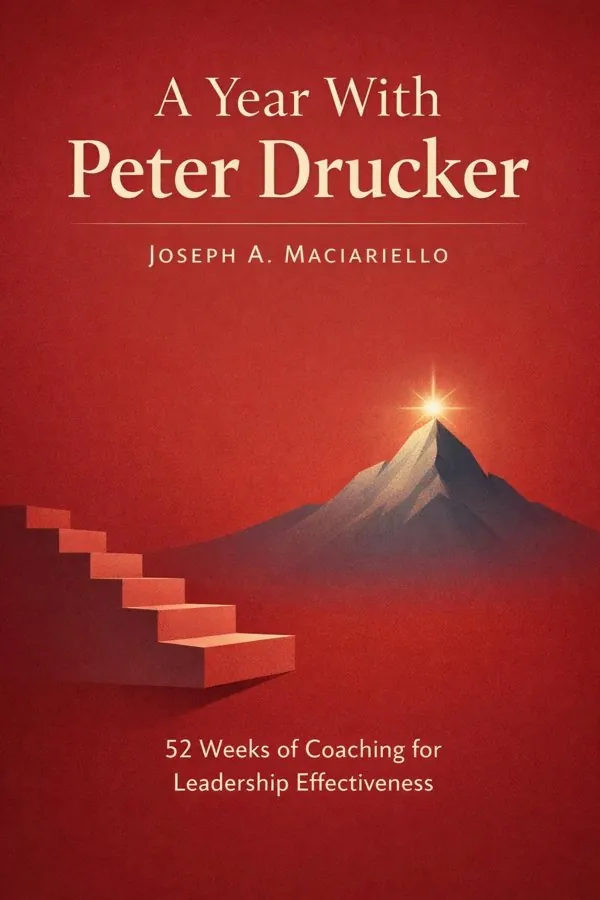
A Year With Peter Drucker: 52 Weeks of Coaching for Leadership Effectiveness
by Joseph A. Maciariello
A Year With Peter Drucker offers a week-by-week guide to applying the management wisdom of Peter F. Drucker, the father of modern management. Written by his longtime collaborator Joseph A. Maciariello, the book distills Drucker’s key principles into 52 lessons designed to help leaders and managers improve their effectiveness, decision-making, and organizational impact throughout the year.
Key Takeaways
- 1Establishing Personal Effectiveness (Weeks 1–4) — Peter Drucker often began his teaching on leadership with a seemingly paradoxical statement: effective leaders are not b…
- 2Mission and Purpose (Weeks 5–8) — Once you have begun to master yourself, Drucker insists that the next task is to clarify your mission. Organizations exi…
- 3Relationships and Communication (Weeks 9–12)
Want the full summary?
Get instant access to this book summary and 100K+ more with Fizz Moment.
Get Free SummaryAvailable on App Store • Free to download
About This List
Leadership is not about title or position — it is about influence and impact. These books teach you how to inspire, decide, and lead in any situation.
This list features 15 carefully selected books. With FizzRead, you can read AI-powered summaries of each book in just 15 minutes. Get the key takeaways and start applying the insights immediately.
Ready to start reading?
Get instant access to all 15 book summaries and 100K+ more with FizzRead.