
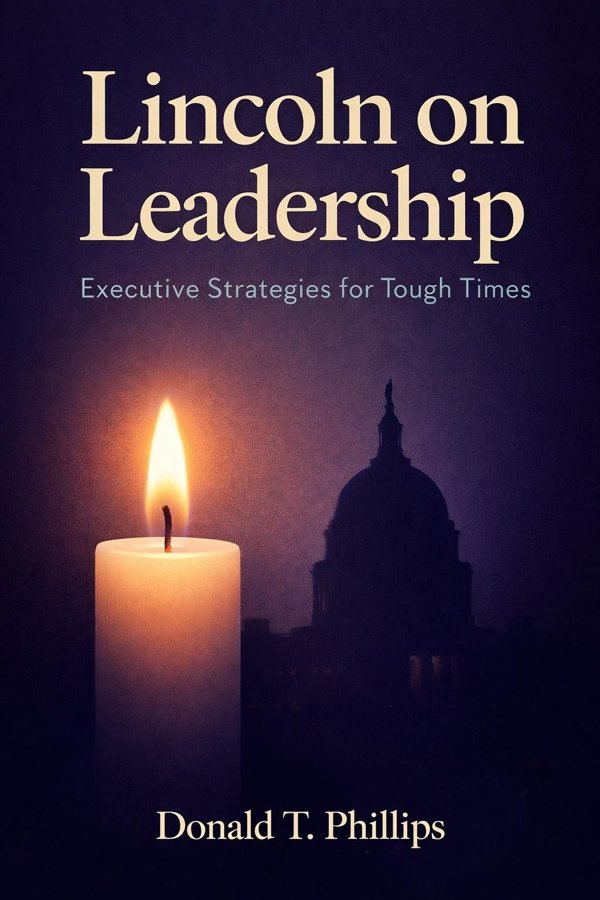
Lincoln on Leadership: Executive Strategies for Tough Times: Summary & Key Insights
 10 min10 chaptersAudio available
What Is Lincoln on Leadership: Executive Strategies for Tough Times About?
Lincoln on Leadership: Executive Strategies for Tough Times by Donald T. Phillips is a leadership book spanning 10 pages. Lincoln on Leadership es un libro de gestión y liderazgo que examina cómo Abraham Lincoln aplicó principios de liderazgo efectivos durante la Guerra Civil de los Estados Unidos. Donald T. Phillips analiza las estrategias de Lincoln en comunicación, toma de decisiones, empatía y gestión de crisis, extrayendo lecciones prácticas para líderes contemporáneos en negocios, política y organizaciones.
This FizzRead summary covers all 10 key chapters of Lincoln on Leadership: Executive Strategies for Tough Times in approximately 10 minutes, distilling the most important ideas, arguments, and takeaways from Donald T. Phillips's work. Also available as an audio summary and Key Quotes Podcast.
Lincoln on Leadership: Executive Strategies for Tough Times
Lincoln on Leadership es un libro de gestión y liderazgo que examina cómo Abraham Lincoln aplicó principios de liderazgo efectivos durante la Guerra Civil de los Estados Unidos. Donald T. Phillips analiza las estrategias de Lincoln en comunicación, toma de decisiones, empatía y gestión de crisis, extrayendo lecciones prácticas para líderes contemporáneos en negocios, política y organizaciones.
Who Should Read Lincoln on Leadership: Executive Strategies for Tough Times?
This book is perfect for anyone interested in leadership and looking to gain actionable insights in a short read. Whether you're a student, professional, or lifelong learner, the key ideas from Lincoln on Leadership: Executive Strategies for Tough Times by Donald T. Phillips will help you think differently.
- ✓Readers who enjoy leadership and want practical takeaways
- ✓Professionals looking to apply new ideas to their work and life
- ✓Anyone who wants the core insights of Lincoln on Leadership: Executive Strategies for Tough Times in just 10 minutes
Want the full summary?
Get instant access to this book summary and 100K+ more with Fizz Moment.
Get Free SummaryAvailable on App Store • Free to download
Key Chapters
Lincoln led through accessibility. He made it a personal mission to know the people he served—politicians, generals, and ordinary citizens alike. He was renowned for his ‘open-door’ policy, an unheard-of approach for a wartime president. Anyone could visit him. He wanted firsthand understanding of both the nation’s frustrations and its hopes. Rather than isolate himself behind administrative layers, he engaged directly, often walking into army camps, listening to soldiers’ worries, and observing conditions for himself.
His management style relied on what today we would call ‘management by walking around.’ Lincoln believed that presence was power. When leaders show up, people feel seen. When they listen rather than dictate, morale strengthens. He wrote frequent letters, communicated in plain language, and met problems head-on. His method proved that polite distance is not leadership—it’s avoidance. By staying personally connected, Lincoln built credibility and trust even amid chaos.
This approach laid the groundwork for modern concepts of transparent communication. In business terms, Lincoln was a “flat-structure” leader—minimizing hierarchy to maximize connection. He didn’t wait for reports; he gathered facts personally. He wasn’t content with rumors or filtered statistics; he verified reality himself. That principle alone can transform any organization. Leaders who immerse themselves in their operations understand the heartbeat of their teams. Lincoln’s conviction was simple: to serve effectively, know those you serve.
Lincoln recognized that leadership depends on relationships rooted in empathy and respect. His ability to listen without judgment became one of his defining strengths. Whether conversing with Union generals or calming an angry citizen at the White House door, Lincoln practiced emotional intelligence decades before the term existed.
He understood that people commit to leaders who care. His empathy wasn’t weakness—it was strategy. Through sincere understanding, he reduced hostility and built loyalty, especially among those who initially opposed him. Lincoln faced members of his cabinet who doubted him, generals who ignored orders, and politicians intent on undermining him. Yet through steady patience and open dialogue, he often won them over.
His relationships weren’t transactional. They were human. He wrote letters of compassion to grieving mothers and showed mercy in cases others deemed unforgivable. These choices were not sentimental but deliberate acts of moral leadership. Lincoln knew that to unify people, you must first touch their hearts. Leaders today face similar tasks—bridging divisions, managing dissent, and earning trust in turbulent times. Lincoln proved that empathy is not optional in leadership; it’s essential fuel for enduring influence.
+ 8 more chapters — available in the FizzRead app
All Chapters in Lincoln on Leadership: Executive Strategies for Tough Times
About the Author
Donald T. Phillips es un autor estadounidense conocido por sus obras sobre liderazgo y gestión, en las que combina historia y análisis contemporáneo. Ha escrito varios libros que exploran las cualidades de liderazgo de figuras históricas como Lincoln, Martin Luther King Jr. y John F. Kennedy.
Get This Summary in Your Preferred Format
Read or listen to the Lincoln on Leadership: Executive Strategies for Tough Times summary by Donald T. Phillips anytime, anywhere. FizzRead offers multiple formats so you can learn on your terms — all free.
Available formats: App · Audio · PDF · EPUB — All included free with FizzRead
Download Lincoln on Leadership: Executive Strategies for Tough Times PDF and EPUB Summary
Key Quotes from Lincoln on Leadership: Executive Strategies for Tough Times
“He made it a personal mission to know the people he served—politicians, generals, and ordinary citizens alike.”
“Lincoln recognized that leadership depends on relationships rooted in empathy and respect.”
Frequently Asked Questions about Lincoln on Leadership: Executive Strategies for Tough Times
Lincoln on Leadership: Executive Strategies for Tough Times by Donald T. Phillips is a leadership book that explores key ideas across 10 chapters. Lincoln on Leadership es un libro de gestión y liderazgo que examina cómo Abraham Lincoln aplicó principios de liderazgo efectivos durante la Guerra Civil de los Estados Unidos. Donald T. Phillips analiza las estrategias de Lincoln en comunicación, toma de decisiones, empatía y gestión de crisis, extrayendo lecciones prácticas para líderes contemporáneos en negocios, política y organizaciones.
You Might Also Like

Extreme Ownership
Jocko Willink
10 min
Dare to Lead
Brene Brown
10 min
Leaders Eat Last
Simon Sinek
10 min
The 21 Irrefutable Laws of Leadership
John Maxwell
10 min
Start With Why
Simon Sinek
10 min
How to Lead When You're Not in Charge
Clay Scroggins
10 minBrowse by Category
Ready to read Lincoln on Leadership: Executive Strategies for Tough Times?
Get the full summary and 100K+ more books with Fizz Moment.