
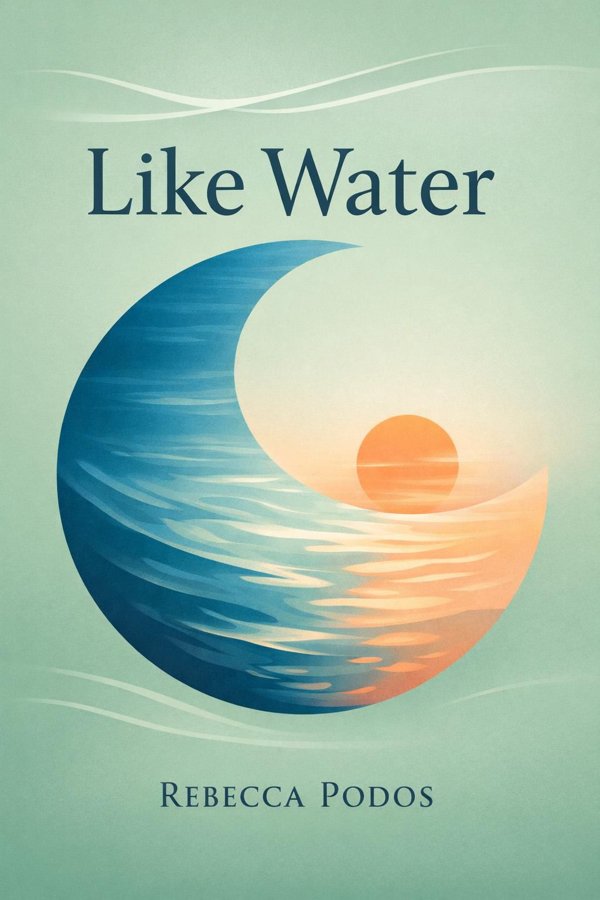
Like Water: Summary & Key Insights
 10 min9 chaptersAudio available
Key Takeaways from Like Water
Sometimes the first barrier to self-discovery is not hostility but love that comes with strings attached.
A single person can change the emotional climate of your life simply by existing more freely than you do.
Romance becomes meaningful when it reveals who you are, not just who you desire.
Community can feel like shelter until it starts behaving like surveillance.
The people who love us most can also be the people who struggle hardest to let us change.
What Is Like Water About?
Like Water by Rebecca Podos is a bestsellers book spanning 4 pages. Rebecca Podos’s Like Water is a lyrical, emotionally intelligent young adult novel about what happens when the life you’ve inherited no longer matches the person you are becoming. Set in a small town in New Mexico, the story follows Savannah Espinoza, a Mexican American teenager whose days are shaped by family obligations, local expectations, and a future that seems to be closing in before it has truly begun. Her father’s failing health, the family restaurant, and her own complicated relationship to ambition all make leaving feel less like a choice and more like a betrayal. Then Savannah meets Leigh, a magnetic genderqueer teen whose presence unsettles her assumptions about love, identity, and possibility. What unfolds is both romance and reckoning: a coming-of-age story that treats identity not as a fixed answer but as something fluid, lived, and discovered in motion. Like Water matters because it offers rare tenderness and nuance around queer identity, family loyalty, cultural belonging, and young adulthood. Podos is especially skilled at writing characters who feel deeply real—conflicted, vulnerable, brave in uneven ways—and that authenticity gives the novel its lasting power.
This FizzRead summary covers all 9 key chapters of Like Water in approximately 10 minutes, distilling the most important ideas, arguments, and takeaways from Rebecca Podos's work. Also available as an audio summary and Key Quotes Podcast.
Like Water
Rebecca Podos’s Like Water is a lyrical, emotionally intelligent young adult novel about what happens when the life you’ve inherited no longer matches the person you are becoming. Set in a small town in New Mexico, the story follows Savannah Espinoza, a Mexican American teenager whose days are shaped by family obligations, local expectations, and a future that seems to be closing in before it has truly begun. Her father’s failing health, the family restaurant, and her own complicated relationship to ambition all make leaving feel less like a choice and more like a betrayal. Then Savannah meets Leigh, a magnetic genderqueer teen whose presence unsettles her assumptions about love, identity, and possibility. What unfolds is both romance and reckoning: a coming-of-age story that treats identity not as a fixed answer but as something fluid, lived, and discovered in motion. Like Water matters because it offers rare tenderness and nuance around queer identity, family loyalty, cultural belonging, and young adulthood. Podos is especially skilled at writing characters who feel deeply real—conflicted, vulnerable, brave in uneven ways—and that authenticity gives the novel its lasting power.
Who Should Read Like Water?
This book is perfect for anyone interested in bestsellers and looking to gain actionable insights in a short read. Whether you're a student, professional, or lifelong learner, the key ideas from Like Water by Rebecca Podos will help you think differently.
- ✓Readers who enjoy bestsellers and want practical takeaways
- ✓Professionals looking to apply new ideas to their work and life
- ✓Anyone who wants the core insights of Like Water in just 10 minutes
Want the full summary?
Get instant access to this book summary and 100K+ more with Fizz Moment.
Get Free SummaryAvailable on App Store • Free to download
Key Chapters
Sometimes the first barrier to self-discovery is not hostility but love that comes with strings attached. Savannah’s life is defined by closeness: a tight-knit New Mexico town, a family-run Mexican restaurant, and a home culture built on obligation, affection, and quiet sacrifice. These forces give her stability, but they also narrow her sense of what is possible. She is talented and imaginative, yet her future feels postponed by responsibilities she never fully chose. Her father’s illness and the family’s dependence on routine make personal ambition seem selfish, even dangerous.
Podos captures a familiar tension for many young people, especially those from working-class or immigrant-rooted families: the fear that pursuing your own path means abandoning the people who raised you. Savannah’s dilemma is not simply whether to leave town. It is whether she is allowed to imagine a life beyond what others need from her. The novel refuses easy judgments. Family duty is shown as meaningful and loving, not merely oppressive. But love becomes constricting when it leaves no room for growth.
In practical terms, Savannah’s experience mirrors real-life moments when people stay in jobs, relationships, or places because they confuse loyalty with self-erasure. The book invites readers to ask: what obligations are truly mine, and which ones have I inherited without question? A healthy life may require honoring where you come from without letting it determine everything you become.
Actionable takeaway: Identify one expectation you carry out of duty rather than choice, and consider one small step toward redefining it on your own terms.
A single person can change the emotional climate of your life simply by existing more freely than you do. Leigh enters Savannah’s world with confidence, humor, vulnerability, and a genderqueer identity that unsettles the rigid categories of a small town. Their presence is transformative not because they offer Savannah a lesson from above, but because they embody a way of living that resists neat definition. In a setting where people rely on familiar labels to make sense of each other, Leigh becomes a challenge to the local social order.
Podos treats Leigh with tenderness and complexity. They are not reduced to a symbol of queerness or difference. Instead, they are funny, affectionate, uncertain, and fully human. That matters. Representation is most powerful when it shows not just identity as concept, but identity as daily life—flirtation, discomfort, style, risk, affection, and the ongoing work of being seen accurately.
For Savannah, meeting Leigh opens a new emotional vocabulary. She begins to recognize how many of her own assumptions have been inherited rather than examined. Attraction becomes the starting point for deeper questions: What do I want? What language fits me? How much of my life has been shaped by trying to be understandable to others?
Readers can apply this insight beyond romance. Encounters with people who live differently often reveal where our own lives have become overly scripted. Growth starts when curiosity replaces defensiveness.
Actionable takeaway: When you meet someone whose identity or life experience differs from yours, lead with respect and curiosity, and notice what their freedom reveals about your own unasked questions.
Romance becomes meaningful when it reveals who you are, not just who you desire. In Like Water, Savannah’s growing relationship with Leigh is not framed as a simple love story that solves her problems. Instead, it acts as a mirror. Through closeness, longing, and emotional risk, Savannah is forced to confront parts of herself she has avoided: her uncertainty, her hunger for tenderness, and her fear of becoming visible in ways her community may not understand.
Podos understands that first love often feels revolutionary because it disrupts identity as much as routine. To be wanted by someone can be affirming, but to want someone in return can be even more destabilizing. Savannah’s attraction to Leigh leads her into new territory emotionally and socially. She must navigate the vulnerability of intimacy while also facing the public consequences of being attached to someone who does not fit expected norms.
This dynamic reflects a broader truth: relationships often expose the stories we tell ourselves about worthiness, safety, and belonging. Some people discover they have hidden parts of themselves to remain acceptable. Others realize they have confused affection with permission. Savannah learns that love can be clarifying, but only if she allows it to challenge her inherited fears.
In real life, healthy relationships create room for greater honesty rather than smaller versions of ourselves. The best connections do not demand certainty from the start; they invite courage, conversation, and growth.
Actionable takeaway: Ask yourself whether your closest relationships help you become more honest and expansive, or whether they pressure you to stay convenient and quiet.
Community can feel like shelter until it starts behaving like surveillance. One of the novel’s greatest strengths is its portrait of small-town life as both nourishing and claustrophobic. Savannah’s town is not depicted as a caricature of backwardness. It is full of history, familiarity, local rituals, and meaningful ties. People know one another’s families, businesses, troubles, and milestones. That intimacy creates belonging. But it also creates pressure. In places where everyone has a narrative about everyone else, changing can feel almost impossible.
Podos shows how identity is shaped not only by who we are privately, but by what a community permits us to be publicly. Savannah has to negotiate the difference between inner truth and outer legibility. The town’s social fabric rewards predictability, and that makes experimentation—whether about love, gender, or future plans—feel risky. Even silence has consequences, because withholding information can itself become noticeable.
This tension exists far beyond rural settings. Any close community—family systems, religious circles, schools, neighborhoods, online subcultures—can provide support while punishing deviation. The novel invites readers to think carefully about environments that claim to know us. Are they making room for growth, or preserving a version of us that is easier for them to recognize?
Belonging is valuable, but not if its price is permanent self-editing. Savannah’s journey suggests that maturity involves learning how to remain in relationship with a place without letting that place define the limits of your becoming.
Actionable takeaway: Consider one community that shapes your identity, and ask whether it supports your growth or mainly rewards your conformity.
The people who love us most can also be the people who struggle hardest to let us change. In Like Water, family is not a simple obstacle to overcome. It is a source of nourishment, memory, labor, identity, and pain. Savannah’s family, especially through the restaurant and her father’s illness, is woven into the structure of her everyday life. Their needs are real. Their expectations are not arbitrary. That is what gives the novel emotional weight: Savannah is not choosing between freedom and cruelty, but between competing forms of care.
Podos is especially attuned to the pressures placed on children who become informal caretakers. They often absorb adult anxieties, suppress their own desires, and learn to measure worth through usefulness. Savannah’s hesitation about leaving, speaking openly, or imagining a bigger future comes partly from this dynamic. When family systems are under strain, the most responsible child can become trapped by competence.
The novel also speaks to cultural inheritance. Food, work, and family history are not background details; they are expressions of belonging. For Savannah, claiming a self outside family expectations does not mean rejecting those roots. It means trying to carry them differently.
This idea resonates in everyday life. Many readers know what it feels like to love their families deeply while still needing boundaries. Growth often requires separating gratitude from obedience. You can honor sacrifice without allowing it to dictate your entire identity.
Actionable takeaway: Reflect on one family role you have long performed, and ask whether it still reflects who you are—or only who others are used to you being.
Change often begins not with a dramatic escape but with the frightening act of saying, this is who I am. As Savannah grows closer to Leigh and more aware of her own emotional truth, she begins to resist the currents that have carried her passively through life. This resistance is uneven and difficult. She does not transform overnight into a fearless rebel. Instead, she learns the more realistic skill of self-assertion: speaking honestly, setting limits, and allowing her choices to matter even when they disappoint others.
This is one of the novel’s most valuable contributions. It understands that becoming yourself is rarely glamorous. It involves awkward conversations, guilt, misunderstanding, and the possibility of rejection. Savannah’s challenge is not only internal clarity but external expression. Knowing what you feel is one step; acting on it in a world invested in your old self is another.
Podos frames self-assertion as relational rather than purely individualistic. Savannah is not trying to become independent in a vacuum. She is trying to remain connected while refusing to disappear. That nuance matters. Many readers assume that setting boundaries means abandoning love, but the novel suggests the opposite: honest boundaries can make love more real by removing the performance from it.
In practical life, self-assertion can look like naming a need, declining an expectation, or correcting a misunderstanding before it calcifies into identity. The first attempt may feel clumsy. That does not make it wrong.
Actionable takeaway: Practice one sentence of honest self-definition this week—something simple, direct, and true that you usually avoid saying aloud.
People often mistake fluidity for indecision, but Like Water argues that fluidity can be a mature way of meeting reality. The title itself gestures toward adaptation, movement, and forms that shift without losing essence. This applies to gender, desire, family roles, and the uncertain passage into adulthood. Savannah and Leigh both inhabit identities that do not fit cleanly into fixed social categories, and the novel treats that not as a failure to decide, but as an honest response to the complexity of being human.
Podos resists the pressure to make identity tidy for the reader’s comfort. Instead, she honors ambiguity where ambiguity is true. That is especially important in a cultural landscape that often demands immediate clarity from young people about who they are, whom they love, and what their future should look like. The novel suggests that becoming is not a straight line. Growth can involve revision, experimentation, and names that evolve over time.
This idea has applications beyond sexuality or gender. Careers change. Beliefs deepen. Friendships shift. Our understanding of home can expand. Fluidity becomes a form of resilience when we stop treating every change as evidence of inconsistency. Water survives by moving, not by hardening.
For readers, the deeper lesson is to create room for identities—our own and others’—that remain in motion. Demanding final answers too early can interrupt genuine self-knowledge. Sometimes uncertainty is not a problem to solve but a stage of truth.
Actionable takeaway: Replace one pressure for immediate certainty in your life with a more generous question: what is evolving here, and what can I learn by letting it unfold?
Nothing sharpens a young person’s emotional world like the realization that the adults around them are vulnerable. Savannah’s father’s illness adds urgency and heaviness to the novel, grounding its coming-of-age themes in bodily reality. Dreams are not delayed in the abstract; they are delayed because someone needs care, because a business must keep running, because time feels scarce. Illness transforms family life into a field of contingency, where plans become provisional and every choice carries moral weight.
Podos handles this dimension with sensitivity. Illness is not simply a plot device used to generate sympathy. It shapes mood, labor, and responsibility. Savannah’s fear about pursuing her own future is linked to a genuine awareness of fragility. When the body weakens, family systems reorganize around need, and young people often absorb more than they are developmentally prepared to carry.
The novel’s insight here is broad: many life decisions are made under imperfect conditions. We do not wait until the people we love are fully secure, our finances are stable, and our emotions are settled before making choices. If we did, we might never choose at all. Savannah must learn that care and selfhood do not have to be opposites, though balancing them is painful.
In practical terms, readers may recognize how crisis can freeze growth by making every personal desire feel indulgent. The antidote is not denial but proportionality. You can show up for others while still protecting a future self who also deserves attention.
Actionable takeaway: If responsibility has consumed your sense of possibility, name one future-oriented action you can take now without abandoning the people who rely on you.
One of adolescence’s hardest tasks is learning that gratitude for your origins does not require surrendering your future. Throughout Like Water, Savannah is haunted by the sense that her life may already be spoken for: by family work, by illness, by local expectations, by a story everyone else assumes she will continue. Her emotional journey is therefore not just about identity in the present, but about imagination. Can she picture a life that is truly hers?
This is a profound question because many people do not lack ability; they lack permission. They have internalized the idea that wanting more is betrayal, that departure means rejection, or that reinvention belongs only to people from easier circumstances. Podos pushes back against that fatalism. The novel does not promise clean liberation or effortless escape. Instead, it insists on the importance of possibility itself. Before life changes externally, it often changes internally through an expanded sense of what could be.
Savannah’s awakening includes this imaginative shift. Meeting Leigh, confronting family strain, and examining her own desires all contribute to a larger realization: the future is not something that merely happens to her. It is something she must begin claiming, however tentatively.
Readers can apply this lesson by paying attention to inherited scripts. Many adults still live inside teenage assumptions about what is allowed. Rewriting those scripts begins with naming alternatives, even before acting on them.
Actionable takeaway: Write down one future you have dismissed as unrealistic, and then identify the first practical move that would make it slightly less abstract.
All Chapters in Like Water
About the Author
Rebecca Podos is an American author and literary agent best known for young adult novels that explore identity, desire, family, and belonging. Her fiction often centers LGBTQ+ characters and examines the emotional complexity of adolescence with warmth, nuance, and psychological insight. Podos has earned recognition for writing stories that feel both intimate and socially aware, avoiding easy labels while giving readers authentic portrayals of queer and gender-expansive lives. In addition to her work as a novelist, she has been active in publishing as a literary agent, bringing a strong understanding of storytelling and voice to her fiction. Like Water reflects many of her signature strengths: lyrical prose, emotionally layered relationships, and a deep interest in the ways young people navigate love, expectation, and self-discovery.
Get This Summary in Your Preferred Format
Read or listen to the Like Water summary by Rebecca Podos anytime, anywhere. FizzRead offers multiple formats so you can learn on your terms — all free.
Available formats: App · Audio · PDF · EPUB — All included free with FizzRead
Download Like Water PDF and EPUB Summary
Key Quotes from Like Water
“Sometimes the first barrier to self-discovery is not hostility but love that comes with strings attached.”
“A single person can change the emotional climate of your life simply by existing more freely than you do.”
“Romance becomes meaningful when it reveals who you are, not just who you desire.”
“Community can feel like shelter until it starts behaving like surveillance.”
“The people who love us most can also be the people who struggle hardest to let us change.”
Frequently Asked Questions about Like Water
Like Water by Rebecca Podos is a bestsellers book that explores key ideas across 9 chapters. Rebecca Podos’s Like Water is a lyrical, emotionally intelligent young adult novel about what happens when the life you’ve inherited no longer matches the person you are becoming. Set in a small town in New Mexico, the story follows Savannah Espinoza, a Mexican American teenager whose days are shaped by family obligations, local expectations, and a future that seems to be closing in before it has truly begun. Her father’s failing health, the family restaurant, and her own complicated relationship to ambition all make leaving feel less like a choice and more like a betrayal. Then Savannah meets Leigh, a magnetic genderqueer teen whose presence unsettles her assumptions about love, identity, and possibility. What unfolds is both romance and reckoning: a coming-of-age story that treats identity not as a fixed answer but as something fluid, lived, and discovered in motion. Like Water matters because it offers rare tenderness and nuance around queer identity, family loyalty, cultural belonging, and young adulthood. Podos is especially skilled at writing characters who feel deeply real—conflicted, vulnerable, brave in uneven ways—and that authenticity gives the novel its lasting power.
You Might Also Like

The Godfather
Mario Puzo
10 min
The Handmaid's Tale
Margaret Atwood
10 min
The Hunger Games
Suzanne Collins
10 min
The Nightingale
Kristin Hannah
10 min
The Seven Husbands of Evelyn Hugo
Taylor Jenkins Reid
10 min
Backwater Justice
Fern Michaels
10 minBrowse by Category
Ready to read Like Water?
Get the full summary and 100K+ more books with Fizz Moment.