
Life Ceremony: Summary & Key Insights
 10 min10 chaptersAudio available
Key Takeaways from Life Ceremony
The customs a society treats as sacred often reveal what it is willing to consume.
Food is never just food; it is desire given ritual form.
Modern life often treats the self as something both deeply personal and strangely exchangeable.
What people call romance is often a script they inherit rather than a feeling they freely discover.
Normality feels natural only because people are constantly constructing it.
What Is Life Ceremony About?
Life Ceremony by Sayaka Murata is a bestsellers book spanning 10 pages. Life Ceremony is a daring collection of short stories by Sayaka Murata, the celebrated author of Convenience Store Woman, and it reads like a series of thought experiments pushed just far enough to become disturbing, funny, and revealing. Across these stories, Murata imagines worlds in which familiar customs around love, family, food, sex, death, and reproduction are slightly altered—or completely inverted. The result is not simple shock. It is a sharp examination of the rules modern societies treat as natural, even when those rules are arbitrary, oppressive, or quietly absurd. Murata’s gift lies in presenting the grotesque with calm logic, forcing readers to see how much of “normal life” depends on repetition, performance, and collective agreement. Her characters often adapt to strange systems with unsettling ease, which makes the stories feel less like fantasy and more like mirrors held at unusual angles. Life Ceremony matters because it asks an urgent question: if customs shape our humanity, what happens when those customs change? For readers interested in gender, social conformity, alienation, and the strange rituals of everyday life, Murata offers one of contemporary fiction’s most original and provocative voices.
This FizzRead summary covers all 10 key chapters of Life Ceremony in approximately 10 minutes, distilling the most important ideas, arguments, and takeaways from Sayaka Murata's work. Also available as an audio summary and Key Quotes Podcast.
Life Ceremony
Life Ceremony is a daring collection of short stories by Sayaka Murata, the celebrated author of Convenience Store Woman, and it reads like a series of thought experiments pushed just far enough to become disturbing, funny, and revealing. Across these stories, Murata imagines worlds in which familiar customs around love, family, food, sex, death, and reproduction are slightly altered—or completely inverted. The result is not simple shock. It is a sharp examination of the rules modern societies treat as natural, even when those rules are arbitrary, oppressive, or quietly absurd. Murata’s gift lies in presenting the grotesque with calm logic, forcing readers to see how much of “normal life” depends on repetition, performance, and collective agreement. Her characters often adapt to strange systems with unsettling ease, which makes the stories feel less like fantasy and more like mirrors held at unusual angles. Life Ceremony matters because it asks an urgent question: if customs shape our humanity, what happens when those customs change? For readers interested in gender, social conformity, alienation, and the strange rituals of everyday life, Murata offers one of contemporary fiction’s most original and provocative voices.
Who Should Read Life Ceremony?
This book is perfect for anyone interested in bestsellers and looking to gain actionable insights in a short read. Whether you're a student, professional, or lifelong learner, the key ideas from Life Ceremony by Sayaka Murata will help you think differently.
- ✓Readers who enjoy bestsellers and want practical takeaways
- ✓Professionals looking to apply new ideas to their work and life
- ✓Anyone who wants the core insights of Life Ceremony in just 10 minutes
Want the full summary?
Get instant access to this book summary and 100K+ more with Fizz Moment.
Get Free SummaryAvailable on App Store • Free to download
Key Chapters
The customs a society treats as sacred often reveal what it is willing to consume. In “A First-Rate Material,” Murata imagines a world where human remains are repurposed into useful objects such as clothing and building materials. What should feel horrifying is treated as practical, respectful, and even efficient. That reversal is the story’s central power: it exposes how morality is often less absolute than people assume and more dependent on habit, language, and group consent.
The story is not merely trying to shock. It asks why some uses of the body are considered loving while others are taboo. Burial, cremation, organ donation, taxidermy, memorial jewelry, and relic culture already show that the dead are never entirely outside systems of value. Murata pushes this truth to an extreme. Once society normalizes a custom, emotional resistance begins to look irrational, even selfish. The reader is forced to ask whether disgust is a moral compass or simply learned behavior.
In everyday life, this idea applies far beyond death rituals. We inherit beliefs about what is respectful in mourning, what counts as dignified labor, and what kinds of consumption are acceptable. Yet many of those beliefs are historically recent and culturally specific. Murata invites us to notice where practicality, sentiment, and ideology overlap.
A useful way to apply this insight is to examine one “obvious” social norm and ask three questions: Who benefits from this rule? What emotion protects it? And what would it look like if another culture reversed it? That habit of questioning can make invisible assumptions visible. Actionable takeaway: when you feel immediate moral certainty about a custom, pause and ask whether you are responding to a principle—or to familiarity.
Food is never just food; it is desire given ritual form. In “A Magnificent Spread,” Murata follows a woman whose devotion to preparation, taste, and elaborate meals becomes more than culinary passion. The care she gives to food starts to resemble a spiritual practice, a substitute for intimacy, and a means of imposing order on feelings she cannot otherwise name. Murata shows how appetite can become a socially acceptable language for loneliness, longing, and control.
The story works because it treats gourmet culture neither as superficial nor as innocent. Meals can be love, power, performance, memory, class display, self-soothing, and self-erasure all at once. A beautifully arranged table might signal generosity, but it can also conceal isolation. In Murata’s fiction, ordinary activities become uncanny when taken completely seriously. Here, the pursuit of sensory perfection reveals a deeper hunger that no meal can satisfy.
This dynamic is easy to recognize in daily life. People often channel unmet emotional needs into routines that are admired rather than questioned: cooking, fitness, productivity, shopping, hosting, or aesthetic curation. None of these are inherently unhealthy, but they can become containers for needs that remain unspoken. Someone who is always planning the perfect dinner may actually be craving recognition, belonging, or control in an unstable world.
Murata’s point is not that pleasure is fake. It is that rituals of consumption often carry emotional meanings we overlook. Paying attention to those meanings can make us more honest with ourselves.
Actionable takeaway: choose one comforting ritual in your life—cooking, snacking, coffee, dining out—and ask what need it serves beyond pleasure. If the answer involves connection or reassurance, consider meeting that need directly as well.
What people call romance is often a script they inherit rather than a feeling they freely discover. In “Lover on the Breeze,” Murata explores attraction, attachment, and emotional connection as phenomena deeply influenced by social expectation. Her characters navigate desire in a world where the meaning of partnership feels unstable, performative, or detached from the ideal of authentic love that popular culture celebrates. The unsettling effect comes from how calmly the story treats these distortions.
Murata is interested in the gap between what people are told to want and what they actually experience. Many individuals learn that a proper life includes coupledom, sexual recognition, and a certain kind of emotional exclusivity. But what if those ideals are culturally produced rather than universal? What if love, like etiquette, is partly a system people learn to perform convincingly? The story does not dismiss affection; instead, it questions the institutions that organize it.
This has practical relevance in modern relationships. People often evaluate their lives according to milestones—dating, marriage, cohabitation, children—without asking whether these structures fit their deepest values. Others stay in unsatisfying arrangements because the performance of a relationship offers social protection. Murata exposes how desire can be ventilated through borrowed narratives, leaving people uncertain whether they are living truthfully or merely legibly.
A helpful application is to separate emotional needs from cultural packaging. You may want companionship without marriage, devotion without conventional romance, or independence without loneliness. Those distinctions matter.
Actionable takeaway: write down what you believe a “successful relationship” should look like, then cross out every item that comes more from social pressure than from your lived experience. What remains is a more honest foundation for intimacy.
Normality feels natural only because people are constantly constructing it. In “Puzzle,” Murata examines how social life is built from fragments—roles, habits, phrases, expectations, gestures—that individuals fit together until a stable picture appears. The story suggests that what society calls coherence may actually be a negotiated illusion, maintained by repetition rather than truth. Once one piece shifts, the entire image starts to look strange.
Murata’s fiction often focuses on characters who do not seamlessly inhabit expected roles. That outsider perspective reveals how much effort goes into appearing ordinary. Family members, partners, co-workers, and institutions all participate in assembling the puzzle of a “proper” self. Gender, sexuality, work ethic, emotional expression, and domestic behavior are not simply personal traits; they are pieces arranged to produce recognizability.
In everyday life, this explains why people can feel alienated even when they are functioning well. They may be successfully performing normality without identifying with it. It also explains why minor deviations can provoke disproportionate discomfort. If the social picture is fragile, difference threatens the shared fiction that everything naturally fits.
The practical lesson is that confusion is not always a personal failing. Sometimes it is evidence that the available pieces do not match your actual life. Instead of forcing a fit, you may need to question the image itself. Murata encourages readers to see identity as something assembled under pressure, not something discovered in a vacuum.
Actionable takeaway: notice one role you perform automatically—ideal employee, ideal daughter, ideal partner, ideal friend—and ask which behaviors are genuinely yours and which are puzzle pieces added to make others comfortable.
A city is not just a place to live; it is a machine that organizes appetite. In “Eating the City,” Murata links urban life with patterns of desire, extraction, and adaptation. The title captures the story’s brilliance: people consume the city through food, fashion, mobility, labor, novelty, and fantasy, but the city also consumes them. It metabolizes attention, energy, youth, and identity, turning human beings into inputs for a larger system.
Murata has a keen eye for how environments shape behavior. Urban spaces promise stimulation and reinvention, yet they also reward speed, disposability, and constant responsiveness. In such spaces, even intimacy can become transactional. The self is trained to browse, compare, optimize, and move on. By framing the city through the language of eating, Murata shows how survival and consumption become intertwined. To belong, one learns what to ingest and what parts of oneself can be digested by the surrounding culture.
This idea applies to daily habits more than readers might expect. Think about algorithmic recommendations, convenience culture, fast fashion, food delivery, nightlife, networking, or image maintenance. Urban and digital environments often encourage a restless form of living in which fulfillment is always available but never complete. Murata turns that feeling into narrative form.
The lesson is not anti-city. It is about awareness. If environments train desire, then freedom requires recognizing which appetites are truly yours and which have been engineered by context.
Actionable takeaway: for one week, pay attention to what your environment prompts you to want—food, purchases, validation, speed, novelty—and choose one desire each day not to obey. That small pause can restore agency.
Societies treat reproduction as natural, but they surround it with rules so intense that it becomes ideological. In “Hatchling,” Murata explores birth, growth, and human continuation in a way that strips away sentimental assumptions. The story suggests that what people defend as biological destiny is often social choreography: who should reproduce, how, with whom, under what emotional conditions, and toward what vision of the future.
Murata is especially skilled at making readers notice how heavily regulated “natural” life actually is. Reproduction is tied to gender expectations, family legitimacy, morality, inheritance, citizenship, and labor. Once those structures are exposed, the idea of a simple, instinctive life cycle begins to dissolve. In “Hatchling,” emergence into life is uncanny because it is never merely physical. It is entry into a system of interpretation.
This is relevant far beyond debates about parenting. People are routinely judged for wanting children, not wanting them, having them outside approved timelines, or forming families in nontraditional ways. Even private desires become public territory. Murata’s story reveals how collective anxieties about continuity are projected onto individual bodies.
The practical application is to become more precise in conversations about family and future. Instead of asking what is “normal,” ask what forms of care are ethical, chosen, and sustainable. That shift moves discussion away from rigid scripts and toward human flourishing.
Actionable takeaway: if you hold strong views about family, parenthood, or adulthood, trace which of those beliefs come from biology, which come from culture, and which come from fear. Clarity here can make your judgments more compassionate and your own choices more deliberate.
People do not merely endure death; they choreograph it to protect the living from chaos. In the title story, “Life Ceremony,” Murata imagines funerary and commemorative practices that radically challenge conventional ideas of grief, dignity, and remembrance. As in many of her stories, the shocking premise matters less than the emotional logic underneath it. Rituals tell communities how to feel, what to honor, and how to transform loss into continuity.
Murata’s genius is showing that even the most intimate responses to death are culturally mediated. A body can be treated as sacred, dangerous, useful, polluting, symbolic, beloved, or all of these at once depending on the rules of the community. The title itself points to the paradox: ceremonies for death are also ceremonies for life because they reaffirm collective values, redistribute emotion, and declare what kind of world the survivors wish to inhabit.
In everyday terms, this insight helps explain why mourning practices vary so widely and why people can feel wounded when others do not grieve “correctly.” Funerals, memorials, inherited objects, burial choices, and anniversary rituals are never neutral. They express philosophies of personhood and belonging. Murata asks readers to notice how grief is managed through form.
A practical application is to think intentionally about remembrance rather than defaulting to convention. What actually honors a life: solemnity, usefulness, storytelling, beauty, utility, or communal gathering? There is no single answer, but conscious choice matters.
Actionable takeaway: reflect on one ritual of remembrance in your life or culture and ask what values it expresses. If it no longer feels meaningful, consider how you might reimagine it in a way that better matches love, memory, and truth.
The family is often described as natural, yet every society keeps rewriting who counts as kin. In “Two’s Family” and the closing stories, Murata turns her attention to domestic belonging and asks whether blood, romance, cohabitation, reproduction, or mutual choice should define a household. Her answer is not a neat alternative model. Instead, she exposes the instability of all supposedly stable definitions.
What makes these stories compelling is their refusal to sentimentalize either traditional or experimental arrangements. A family of two can be complete, insufficient, intimate, strategic, liberating, or lonely depending on the needs it is meant to meet. Murata is less interested in declaring one structure superior than in showing how people cling to labels in order to make their attachments legible. The urge to classify a bond often comes from anxiety: if we cannot name a relationship, can society protect it, understand it, or permit it?
This question is increasingly relevant. Many people now live in chosen families, long-term friendships, co-parenting arrangements, queer households, single-person homes, and hybrid forms that older language does not fully capture. Murata’s fiction gives those realities intellectual seriousness by showing that the “traditional family” has always been a managed story rather than a timeless truth.
The practical value here is liberating but demanding. If family is built, then it must be built intentionally through care, responsibility, communication, and mutual recognition. Biology alone does not guarantee belonging, and unconventional structures do not automatically produce freedom.
Actionable takeaway: list the people who function as your real support system, regardless of title. Then ask whether your daily choices, legal planning, and emotional investments actually reflect that reality.
All Chapters in Life Ceremony
About the Author
Sayaka Murata is a Japanese author acclaimed for her imaginative, unsettling, and incisive portrayals of modern social life. Born in 1979, she studied at Tamagawa University and made her literary debut in 2003 with Breastfeeding, which won the Gunzo New Writers’ Award. She gained international recognition with Convenience Store Woman, the 2016 Akutagawa Prize-winning novel that became a global bestseller and introduced many readers to her sharp interest in conformity, work, gender roles, and the performance of normality. Murata’s fiction often features characters who exist at odds with society’s expectations, and she is known for using surreal, darkly comic premises to expose the hidden absurdities of everyday life. With works like Earthlings and Life Ceremony, she has established herself as one of contemporary literature’s most distinctive and provocative voices.
Get This Summary in Your Preferred Format
Read or listen to the Life Ceremony summary by Sayaka Murata anytime, anywhere. FizzRead offers multiple formats so you can learn on your terms — all free.
Available formats: App · Audio · PDF · EPUB — All included free with FizzRead
Download Life Ceremony PDF and EPUB Summary
Key Quotes from Life Ceremony
“The customs a society treats as sacred often reveal what it is willing to consume.”
“Food is never just food; it is desire given ritual form.”
“Modern life often treats the self as something both deeply personal and strangely exchangeable.”
“What people call romance is often a script they inherit rather than a feeling they freely discover.”
“Normality feels natural only because people are constantly constructing it.”
Frequently Asked Questions about Life Ceremony
Life Ceremony by Sayaka Murata is a bestsellers book that explores key ideas across 10 chapters. Life Ceremony is a daring collection of short stories by Sayaka Murata, the celebrated author of Convenience Store Woman, and it reads like a series of thought experiments pushed just far enough to become disturbing, funny, and revealing. Across these stories, Murata imagines worlds in which familiar customs around love, family, food, sex, death, and reproduction are slightly altered—or completely inverted. The result is not simple shock. It is a sharp examination of the rules modern societies treat as natural, even when those rules are arbitrary, oppressive, or quietly absurd. Murata’s gift lies in presenting the grotesque with calm logic, forcing readers to see how much of “normal life” depends on repetition, performance, and collective agreement. Her characters often adapt to strange systems with unsettling ease, which makes the stories feel less like fantasy and more like mirrors held at unusual angles. Life Ceremony matters because it asks an urgent question: if customs shape our humanity, what happens when those customs change? For readers interested in gender, social conformity, alienation, and the strange rituals of everyday life, Murata offers one of contemporary fiction’s most original and provocative voices.
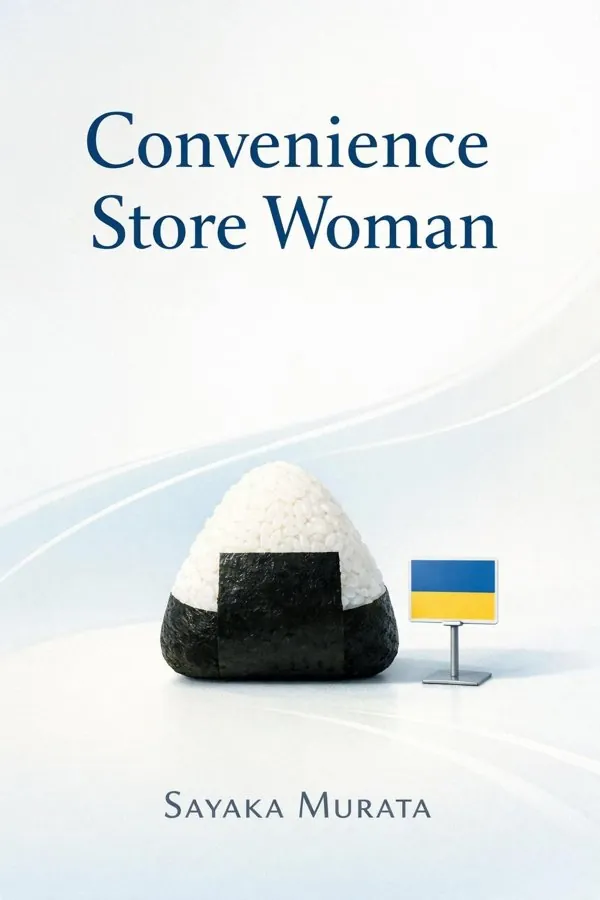
More by Sayaka Murata

You Might Also Like
The Godfather
Mario Puzo
10 min
The Handmaid's Tale
Margaret Atwood
10 min
The Hunger Games
Suzanne Collins
10 min
The Nightingale
Kristin Hannah
10 min
The Seven Husbands of Evelyn Hugo
Taylor Jenkins Reid
10 min
Backwater Justice
Fern Michaels
10 minBrowse by Category
Ready to read Life Ceremony?
Get the full summary and 100K+ more books with Fizz Moment.