
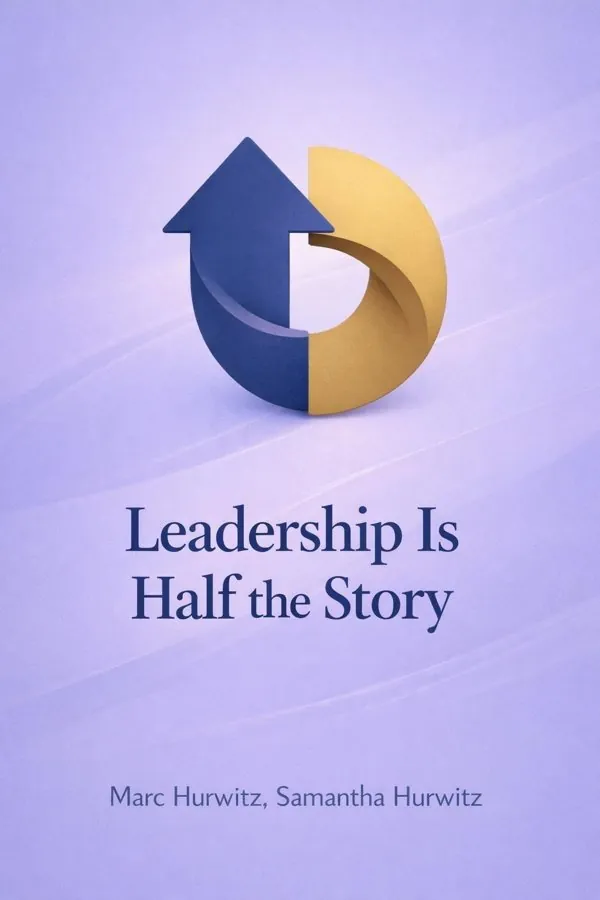
Leadership Is Half the Story: A Fresh Look at Followership, Leadership, and Collaboration: Summary & Key Insights
by Marc Hurwitz, Samantha Hurwitz
 10 min11 chaptersAudio available
What Is Leadership Is Half the Story: A Fresh Look at Followership, Leadership, and Collaboration About?
Leadership Is Half the Story: A Fresh Look at Followership, Leadership, and Collaboration by Marc Hurwitz, Samantha Hurwitz is a leadership book spanning 11 pages. This book explores the dynamic relationship between leadership and followership, arguing that effective organizations depend on both roles being performed skillfully. It introduces the concept of 'partnering intelligence' (PQ) as a framework for improving collaboration, communication, and shared accountability in teams and organizations.
This FizzRead summary covers all 11 key chapters of Leadership Is Half the Story: A Fresh Look at Followership, Leadership, and Collaboration in approximately 10 minutes, distilling the most important ideas, arguments, and takeaways from Marc Hurwitz, Samantha Hurwitz's work. Also available as an audio summary and Key Quotes Podcast.
Leadership Is Half the Story: A Fresh Look at Followership, Leadership, and Collaboration
This book explores the dynamic relationship between leadership and followership, arguing that effective organizations depend on both roles being performed skillfully. It introduces the concept of 'partnering intelligence' (PQ) as a framework for improving collaboration, communication, and shared accountability in teams and organizations.
Who Should Read Leadership Is Half the Story: A Fresh Look at Followership, Leadership, and Collaboration?
This book is perfect for anyone interested in leadership and looking to gain actionable insights in a short read. Whether you're a student, professional, or lifelong learner, the key ideas from Leadership Is Half the Story: A Fresh Look at Followership, Leadership, and Collaboration by Marc Hurwitz, Samantha Hurwitz will help you think differently.
- ✓Readers who enjoy leadership and want practical takeaways
- ✓Professionals looking to apply new ideas to their work and life
- ✓Anyone who wants the core insights of Leadership Is Half the Story: A Fresh Look at Followership, Leadership, and Collaboration in just 10 minutes
Want the full summary?
Get instant access to this book summary and 100K+ more with Fizz Moment.
Get Free SummaryAvailable on App Store • Free to download
Key Chapters
Before we can balance leadership and followership, we must redefine what followership truly is. Too often, people think of it as obedience or execution of orders handed down from above. But nothing could be further from the truth. Intelligent followership is about engagement—it’s about showing initiative, responsibility, and courage within a shared mission. Good followers ask questions, offer insights, and even challenge decisions when necessary. They serve as the stabilizing and energizing force that keeps organizations advancing when leadership alone isn’t enough.
In the book, we emphasize that followership is not about personality but about choice. Skilled followers take ownership for their part in the system. They’re as intentional about their contribution as great leaders are about theirs. They anticipate needs, bring new perspectives, and ensure that the leader’s blind spots are addressed—not through confrontation, but through partnership. This is what turns mere compliance into active collaboration.
Many of the organizations we’ve worked with improved not because bosses became more charismatic, but because their teams learned to follow intelligently. A coordinator who steps up, a junior analyst who proposes a better process, a project member who knows when to support and when to question—these are acts of leadership from the followership side. The challenge is cultural: we need to celebrate and cultivate those moments rather than suppress them.
Imagine leadership and followership not as static roles, but as positions on a continuum. In one moment, you might be taking the lead—setting direction or making decisions. In the next, you may be following—supporting someone else’s lead, contributing expertise, or executing plans. This fluid motion back and forth is where the power of collaboration lies. The person with the right knowledge, experience, or vision leads in that specific context; others follow to support that objective. Then roles shift again.
We describe this in the book through the metaphor of a dance: leadership and followership move in rhythm, not in opposition. The continuum allows teams to adjust quickly to changing circumstances, because no single role monopolizes authority. The effectiveness of the team depends not just on how strong the leader is, but on how seamlessly everyone flips between roles.
By seeing these roles as complementary rather than competitive, people free themselves from unhelpful ego battles. This shift transforms culture. Teams move from dependency or rivalry toward co‑creation and mutual responsibility. The leader is no longer the sole source of vision; the follower is no longer just the recipient of tasks. Together, they become partners navigating dynamic conditions.
+ 9 more chapters — available in the FizzRead app
All Chapters in Leadership Is Half the Story: A Fresh Look at Followership, Leadership, and Collaboration
About the Authors
Marc Hurwitz is a leadership consultant, educator, and co-founder of FliPskills, specializing in leadership and followership development. Samantha Hurwitz is a leadership coach and co-founder of FliPskills, with extensive experience in corporate leadership and organizational development.
Get This Summary in Your Preferred Format
Read or listen to the Leadership Is Half the Story: A Fresh Look at Followership, Leadership, and Collaboration summary by Marc Hurwitz, Samantha Hurwitz anytime, anywhere. FizzRead offers multiple formats so you can learn on your terms — all free.
Available formats: App · Audio · PDF · EPUB — All included free with FizzRead
Download Leadership Is Half the Story: A Fresh Look at Followership, Leadership, and Collaboration PDF and EPUB Summary
Key Quotes from Leadership Is Half the Story: A Fresh Look at Followership, Leadership, and Collaboration
“Before we can balance leadership and followership, we must redefine what followership truly is.”
“Imagine leadership and followership not as static roles, but as positions on a continuum.”
Frequently Asked Questions about Leadership Is Half the Story: A Fresh Look at Followership, Leadership, and Collaboration
Leadership Is Half the Story: A Fresh Look at Followership, Leadership, and Collaboration by Marc Hurwitz, Samantha Hurwitz is a leadership book that explores key ideas across 11 chapters. This book explores the dynamic relationship between leadership and followership, arguing that effective organizations depend on both roles being performed skillfully. It introduces the concept of 'partnering intelligence' (PQ) as a framework for improving collaboration, communication, and shared accountability in teams and organizations.
You Might Also Like

Extreme Ownership
Jocko Willink
10 min
Dare to Lead
Brene Brown
10 min
Leaders Eat Last
Simon Sinek
10 min
The 21 Irrefutable Laws of Leadership
John Maxwell
10 min
Start With Why
Simon Sinek
10 min
How to Lead When You're Not in Charge
Clay Scroggins
10 minBrowse by Category
Ready to read Leadership Is Half the Story: A Fresh Look at Followership, Leadership, and Collaboration?
Get the full summary and 100K+ more books with Fizz Moment.