
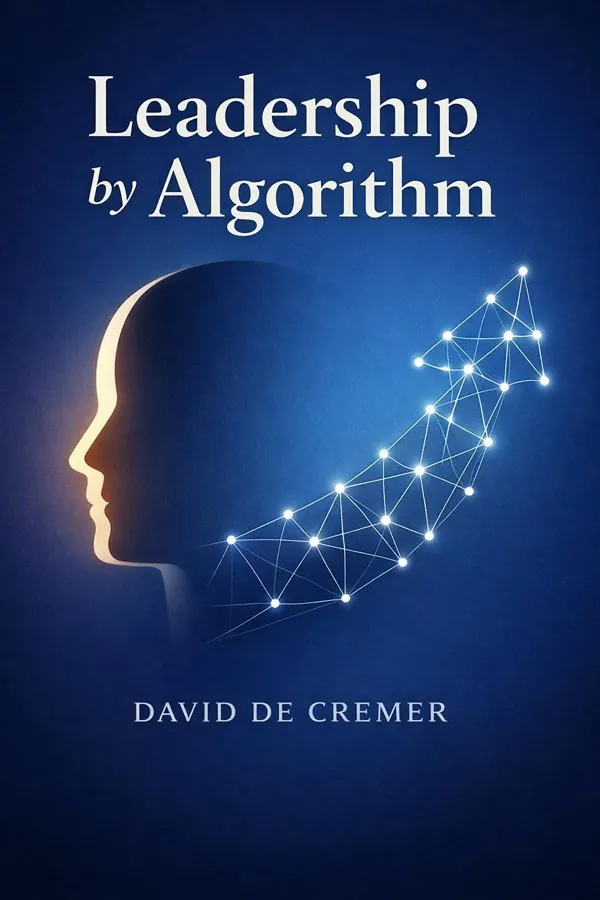
Leadership by Algorithm: Who Leads and Who Follows in the AI Era: Summary & Key Insights
 10 min10 chaptersAudio available
What Is Leadership by Algorithm: Who Leads and Who Follows in the AI Era About?
Leadership by Algorithm: Who Leads and Who Follows in the AI Era by David De Cremer is a leadership book spanning 10 pages. Leadership by Algorithm explores how artificial intelligence is reshaping leadership and management. David De Cremer examines the intersection of human decision-making and machine intelligence, arguing that while algorithms can enhance efficiency and objectivity, they cannot replace the empathy, creativity, and moral judgment that define effective human leadership. The book provides insights into how leaders can adapt to the AI-driven workplace and maintain human-centered values in an increasingly automated world.
This FizzRead summary covers all 10 key chapters of Leadership by Algorithm: Who Leads and Who Follows in the AI Era in approximately 10 minutes, distilling the most important ideas, arguments, and takeaways from David De Cremer's work. Also available as an audio summary and Key Quotes Podcast.
Leadership by Algorithm: Who Leads and Who Follows in the AI Era
Leadership by Algorithm explores how artificial intelligence is reshaping leadership and management. David De Cremer examines the intersection of human decision-making and machine intelligence, arguing that while algorithms can enhance efficiency and objectivity, they cannot replace the empathy, creativity, and moral judgment that define effective human leadership. The book provides insights into how leaders can adapt to the AI-driven workplace and maintain human-centered values in an increasingly automated world.
Who Should Read Leadership by Algorithm: Who Leads and Who Follows in the AI Era?
This book is perfect for anyone interested in leadership and looking to gain actionable insights in a short read. Whether you're a student, professional, or lifelong learner, the key ideas from Leadership by Algorithm: Who Leads and Who Follows in the AI Era by David De Cremer will help you think differently.
- ✓Readers who enjoy leadership and want practical takeaways
- ✓Professionals looking to apply new ideas to their work and life
- ✓Anyone who wants the core insights of Leadership by Algorithm: Who Leads and Who Follows in the AI Era in just 10 minutes
Want the full summary?
Get instant access to this book summary and 100K+ more with Fizz Moment.
Get Free SummaryAvailable on App Store • Free to download
Key Chapters
Leadership, at its core, has always been about guiding people through complexity and uncertainty. In the AI era, however, complexity is being transformed into computable data. Algorithms can forecast markets, predict consumer preference, and optimize processes faster than any human mind. Yet speed and accuracy are not the whole story. The transition from intuition-driven leadership to data-driven management brings both empowerment and erosion.
In this chapter, I discuss how traditional notions of leadership—charisma, vision, and intuition—are being challenged by algorithmic authority. A leader’s experience is now augmented or contradicted by machine analytics. For decades we valued leaders who could make the ‘tough calls,’ interpret ambiguous data, and trust their instincts. But when algorithmic systems offer perfectly rational recommendations, that intuitive judgment starts to look reckless. Organizations begin to shift their trust from people to machines.
However, leadership is not merely about choosing optimally—it is about choosing meaningfully. Algorithms do not understand social harmony, organizational culture, or moral responsibility. They process correlations, not convictions. This distinction sets the stage for a crucial insight that defines leadership in the AI age: data can inform decisions, but values determine direction. Successful leaders today must learn to bridge these worlds—embracing evidence while defending ethics, leveraging algorithms without surrendering empathy.
The rise of algorithms has been swift, seductive, and seemingly inevitable. In boardrooms and factories alike, leaders are turning to machine-learning models for answers. The promise is enticing—eliminate bias, reduce error, achieve efficiency. Yet the moment we delegate judgment, we also transform authority. Algorithms are becoming silent decision-makers, influencing hiring, performance evaluation, and even strategic investment.
In my research, I found that the psychological impact of algorithmic authority is profound. Employees often perceive algorithmic decisions as fairer because they appear objective, but fairness without context can still produce harm. Leaders who overtrust technology risk alienating their teams, who crave understanding and personalized consideration, not just statistical parity.
Thus, this chapter explores how organizations must balance algorithmic efficiency with human communication. A machine can predict optimal moves, but a leader must still explain why those moves matter to human beings. The rise of algorithms doesn’t diminish human leadership—it redefines it into something more complex. Leadership now requires translation between cold computation and warm conviction.
+ 8 more chapters — available in the FizzRead app
All Chapters in Leadership by Algorithm: Who Leads and Who Follows in the AI Era
About the Author
David De Cremer is a Belgian behavioral scientist and professor of management at the National University of Singapore Business School. His research focuses on leadership, ethics, and organizational behavior, and he is recognized internationally for his work on trust and cooperation in business contexts.
Get This Summary in Your Preferred Format
Read or listen to the Leadership by Algorithm: Who Leads and Who Follows in the AI Era summary by David De Cremer anytime, anywhere. FizzRead offers multiple formats so you can learn on your terms — all free.
Available formats: App · Audio · PDF · EPUB — All included free with FizzRead
Download Leadership by Algorithm: Who Leads and Who Follows in the AI Era PDF and EPUB Summary
Key Quotes from Leadership by Algorithm: Who Leads and Who Follows in the AI Era
“Leadership, at its core, has always been about guiding people through complexity and uncertainty.”
“The rise of algorithms has been swift, seductive, and seemingly inevitable.”
Frequently Asked Questions about Leadership by Algorithm: Who Leads and Who Follows in the AI Era
Leadership by Algorithm: Who Leads and Who Follows in the AI Era by David De Cremer is a leadership book that explores key ideas across 10 chapters. Leadership by Algorithm explores how artificial intelligence is reshaping leadership and management. David De Cremer examines the intersection of human decision-making and machine intelligence, arguing that while algorithms can enhance efficiency and objectivity, they cannot replace the empathy, creativity, and moral judgment that define effective human leadership. The book provides insights into how leaders can adapt to the AI-driven workplace and maintain human-centered values in an increasingly automated world.
You Might Also Like

Extreme Ownership
Jocko Willink
10 min
Dare to Lead
Brene Brown
10 min
Leaders Eat Last
Simon Sinek
10 min
The 21 Irrefutable Laws of Leadership
John Maxwell
10 min
Start With Why
Simon Sinek
10 min
How to Lead When You're Not in Charge
Clay Scroggins
10 minBrowse by Category
Ready to read Leadership by Algorithm: Who Leads and Who Follows in the AI Era?
Get the full summary and 100K+ more books with Fizz Moment.