
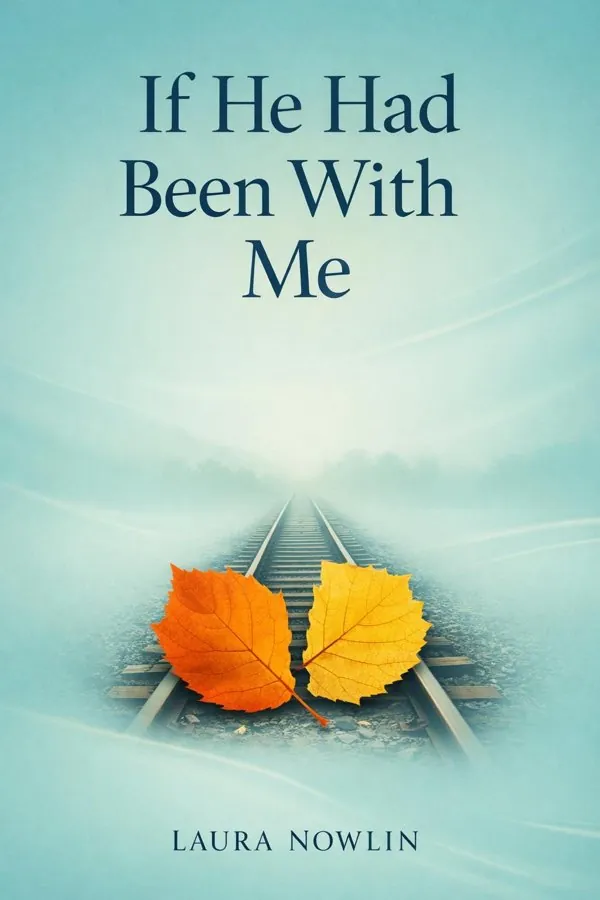
If He Had Been With Me: Summary & Key Insights
by Laura Nowlin
 10 min9 chaptersAudio available
Key Takeaways from If He Had Been With Me
Some of the deepest heartbreak in life does not come from losing strangers, but from outgrowing someone who once felt like home.
One of the hardest truths about love is that people often recognize it only after spending a long time pretending it is something else.
A relationship does not need open conflict to become tragic; sometimes all it needs is too much left unsaid.
Few ideas are more heartbreaking than the possibility that love was real, but its timing was wrong.
Grief has a cruel ability to make the past sharper.
What Is If He Had Been With Me About?
If He Had Been With Me by Laura Nowlin is a romantic_relationships book spanning 5 pages. Some love stories are memorable because they end happily. Others stay with us because they tell the truth about how love actually feels: confusing, mistimed, unfinished, and unforgettable. Laura Nowlin’s If He Had Been With Me is a deeply emotional young adult novel about childhood friendship, emotional distance, first love, and the devastating power of missed chances. At its center are Autumn and Finn, two people whose lives begin intertwined and then slowly drift apart, even as an unspoken bond continues to shape everything they become. The novel asks a haunting question: what if the person meant to understand you most is the one you never fully reach in time? What makes this book matter is not just its heartbreaking plot, but its emotional precision. Nowlin captures adolescence with unusual honesty: the loneliness inside friendships, the safety of denial, the complexity of family, and the way ordinary moments can later feel life-defining. Known for writing emotionally resonant stories about love and loss, Nowlin brings both tenderness and intensity to this novel. The result is a coming-of-age story that feels intimate, painful, and deeply human long after the final page.
This FizzRead summary covers all 9 key chapters of If He Had Been With Me in approximately 10 minutes, distilling the most important ideas, arguments, and takeaways from Laura Nowlin's work. Also available as an audio summary and Key Quotes Podcast.
If He Had Been With Me
Some love stories are memorable because they end happily. Others stay with us because they tell the truth about how love actually feels: confusing, mistimed, unfinished, and unforgettable. Laura Nowlin’s If He Had Been With Me is a deeply emotional young adult novel about childhood friendship, emotional distance, first love, and the devastating power of missed chances. At its center are Autumn and Finn, two people whose lives begin intertwined and then slowly drift apart, even as an unspoken bond continues to shape everything they become. The novel asks a haunting question: what if the person meant to understand you most is the one you never fully reach in time?
What makes this book matter is not just its heartbreaking plot, but its emotional precision. Nowlin captures adolescence with unusual honesty: the loneliness inside friendships, the safety of denial, the complexity of family, and the way ordinary moments can later feel life-defining. Known for writing emotionally resonant stories about love and loss, Nowlin brings both tenderness and intensity to this novel. The result is a coming-of-age story that feels intimate, painful, and deeply human long after the final page.
Who Should Read If He Had Been With Me?
This book is perfect for anyone interested in romantic_relationships and looking to gain actionable insights in a short read. Whether you're a student, professional, or lifelong learner, the key ideas from If He Had Been With Me by Laura Nowlin will help you think differently.
- ✓Readers who enjoy romantic_relationships and want practical takeaways
- ✓Professionals looking to apply new ideas to their work and life
- ✓Anyone who wants the core insights of If He Had Been With Me in just 10 minutes
Want the full summary?
Get instant access to this book summary and 100K+ more with Fizz Moment.
Get Free SummaryAvailable on App Store • Free to download
Key Chapters
Some of the deepest heartbreak in life does not come from losing strangers, but from outgrowing someone who once felt like home. One of the novel’s central ideas is the slow, almost invisible drift that can happen between two people who were once inseparable. Autumn and Finn grow up with intertwined families, shared routines, and a natural closeness that seems permanent. As children, connection feels effortless. But adolescence introduces identity, social circles, insecurity, and expectations, and what once felt certain becomes fragile.
Laura Nowlin shows that growing up is not only about becoming more yourself; it is also about realizing that closeness requires maintenance. Autumn and Finn do not experience one dramatic falling-out that explains everything. Instead, they slip apart through small choices, new friendships, misunderstandings, and silence. That is what makes their story so believable. Many important relationships do not end with a clear reason. They fade because life changes faster than emotional honesty can keep up.
This idea has practical relevance far beyond the novel. Many people have experienced a childhood friend, sibling, or first love becoming emotionally distant without either side fully knowing how it happened. The book invites readers to reflect on the people they assume will always be there. It reminds us that history creates a bond, but it does not guarantee a future.
A useful application is to examine relationships that matter to you and ask whether you are relying on old closeness instead of actively nurturing present connection. Reach out, ask real questions, and do not assume shared history can carry everything forever.
Actionable takeaway: If someone important feels farther away than they used to, address the distance while there is still time instead of trusting the bond to survive on memory alone.
One of the hardest truths about love is that people often recognize it only after spending a long time pretending it is something else. In If He Had Been With Me, Autumn’s emotional world is shaped by avoidance as much as by desire. Her connection with Finn remains powerful, but instead of confronting what he means to her, she builds emotional structures that make distance seem manageable. She dates Jamie, maintains routines, and keeps her feelings in categories that feel safer than honesty.
Nowlin captures a familiar psychological pattern: denial does not always look dramatic. Sometimes it looks like being practical, staying busy, or choosing the relationship that feels easier to define. Jamie represents comfort and steadiness, and that matters. But the novel suggests that emotional safety is not the same thing as emotional truth. Autumn is not lying in a simple sense; she is protecting herself from what full recognition would demand. If she admits what Finn means to her, she must also face vulnerability, uncertainty, and the possibility of pain.
This theme matters because many readers recognize themselves in it. People often settle into relationships, routines, or identities that appear stable while quietly ignoring a deeper emotional reality. That does not mean all difficult feelings should be acted upon impulsively. Rather, the novel urges honesty about what is present internally. Unnamed feelings do not disappear; they continue shaping choices from the background.
In practical terms, this idea can be applied by paying attention to emotional patterns: who occupies your thoughts, where you feel most alive, and which truths you repeatedly postpone. Journaling, honest conversations, or therapy can help uncover what avoidance is protecting.
Actionable takeaway: When a feeling keeps returning despite your efforts to ignore it, stop asking how to suppress it and start asking what truth it may be trying to reveal.
A relationship does not need open conflict to become tragic; sometimes all it needs is too much left unsaid. One of the most powerful elements in the novel is the weight of unspoken words between Autumn and Finn. Their story is built as much from pauses, missed openings, and emotional restraint as from actual events. Every reconnection carries possibility, but possibility alone is not enough. Without expression, even the deepest bond can remain unrealized.
Nowlin treats silence not as emptiness, but as an active force. It creates assumptions, preserves confusion, and allows each character to imagine the other’s thoughts without ever testing those assumptions against reality. This is especially painful because readers can sense that mutual understanding is possible. The tragedy is not that Autumn and Finn feel nothing; it is that they feel so much and still fail to fully speak. The novel thereby reveals a crucial truth about relationships: intention does not count for much if it never becomes communication.
This idea has broad emotional relevance. People often believe there will be a better moment to explain themselves, apologize, confess love, or ask a difficult question. But real life rarely arranges itself around emotional readiness. Waiting can become a habit, and habit can become loss. The book reminds us that the fear of awkwardness is often far less costly than the consequences of permanent silence.
In practical life, this means choosing directness over assumption. If a friendship feels strained, ask why. If gratitude has gone unspoken, say it. If affection matters, express it with maturity and care. Communication will not solve everything, but lack of it almost guarantees regret.
Actionable takeaway: Say the meaningful thing while the relationship still exists in a form that can hear it, because silence rarely protects us as much as we think.
Few ideas are more heartbreaking than the possibility that love was real, but its timing was wrong. The novel’s emotional force comes from this tension between inevitability and delay. Autumn and Finn seem deeply suited to one another in ways that are difficult to ignore, yet their connection unfolds through years of near-misses, emotional immaturity, and circumstances that prevent clarity from arriving when it matters most. The question haunting the story is not simply whether they loved each other, but why that truth came into focus so late.
Nowlin suggests that timing is not a minor detail in relationships; it can define their entire outcome. Two people may care deeply, but if one is not ready, if both are distracted, or if fear keeps truth buried, love may remain incomplete. This does not make the love less real. It makes it more painful. The title itself carries this emotional structure: it points to a parallel possibility, a world created by one different choice, one altered moment, one presence where there was absence.
This theme resonates because many adult readers know that life is not organized around perfect emotional readiness. We often understand things after they would have mattered most. Yet the novel does more than mourn bad timing. It asks readers to consider whether some forms of timing are actually choices disguised as circumstances. Hesitation, avoidance, and emotional passivity can look like fate from a distance.
Practically, this means paying attention when life offers moments of emotional importance. We cannot control everything, but we can reduce avoidable regret by acting with more clarity. Waiting for certainty is often another way of surrendering agency.
Actionable takeaway: When a relationship or conversation truly matters, do not assume there will be a more convenient future version of courage; act while the moment is still alive.
Grief has a cruel ability to make the past sharper. One of the novel’s most moving insights is that after loss, ordinary moments no longer seem ordinary. Casual conversations, small gestures, shared spaces, and unfinished sentences gain enormous emotional weight once they can never happen again. If He Had Been With Me is not only a story about romance; it is also a story about how memory changes under the pressure of absence.
Nowlin portrays loss as something that rearranges the emotional meaning of everything that came before it. Readers feel this through Autumn’s perspective, where hindsight turns everyday experiences into evidence, warning, comfort, and pain all at once. This is why the novel affects so many people so deeply. It reflects a universal reality: after someone is gone, we revisit the past looking for hidden messages, missed opportunities, and signs we failed to understand in time.
The book also shows that grief is not neat. It is tangled with love, guilt, longing, and imagination. People do not only grieve what happened; they grieve what almost happened. That secondary grief can be especially difficult because it has no clear shape. It belongs to possibility rather than memory, and therefore can feel endless.
In everyday life, this idea encourages a more attentive way of living. We rarely know which conversations, drives, celebrations, or quiet afternoons will later become sacred in memory. That does not mean living in constant fear. It means practicing presence. Put away distractions occasionally. Say goodbye properly. Notice people while they are still here.
Actionable takeaway: Treat small moments with care, because what seems routine today may become emotionally priceless in hindsight.
Teenage emotions are often dismissed as exaggerated, but this novel argues the opposite: adolescence feels overwhelming because it is a period when identity, belonging, and love are all being formed at once. Autumn’s inner life is intense not because she is immature in a trivial way, but because every relationship around her is helping define who she is becoming. Friendship, romance, family tension, appearance, and social acceptance all press against each other during the same fragile years.
Nowlin excels at showing how teenage experience can be psychologically complex. Autumn is observant, vulnerable, self-conscious, and often uncertain. She is trying to understand herself while also managing how others see her. In that environment, even small interactions carry enormous meaning. A text, a glance, a social shift, or an exclusion can feel world-changing because, in a developmental sense, it often is.
This idea matters because it asks readers to respect young emotional lives rather than patronize them. Adults sometimes look back on adolescence and reduce it to melodrama. But the novel reminds us that first attachments are not minor simply because they happen early. First love, first betrayal, and first grief often become the templates through which later experiences are interpreted.
A practical application is relevant for both teens and adults. Teen readers may feel seen in the intensity of Autumn’s world. Parents, educators, and older readers can use the novel as a reminder to take adolescent feelings seriously. Listening without minimizing can have a profound effect. Emotional validation does not mean encouraging every impulse; it means recognizing that the feeling itself is real.
Actionable takeaway: Whether for yourself or someone younger, treat emotional intensity with respect, because the experiences that shape identity are rarely small to the person living them.
We do not enter love as blank slates; we bring with us the emotional patterns we learned at home. Throughout the novel, family dynamics quietly influence how Autumn understands connection, safety, and self-worth. The closeness between the families once creates a sense that Finn is part of her emotional landscape, not just a separate person. At the same time, Autumn’s relationship with her parents and stepfamily affects how she processes belonging, difference, and emotional expression.
Nowlin uses domestic life to show that romance is never isolated from context. A teenager’s love life is shaped by household atmosphere, parental stability, models of affection, and the emotional language available in the home. If a family avoids conflict, a child may learn to bury difficult truths. If a family offers warmth inconsistently, a child may cling harder to the people who feel familiar. Autumn’s emotional choices are not random; they emerge from the systems around her.
This theme has practical value because it encourages readers to look beneath the surface of attraction. Why do certain people feel safe? Why do some relationships feel impossible to release, even when they are unclear? Often the answer lies partly in our earliest attachments. Understanding that connection can bring compassion to our own patterns.
This insight can be applied through reflection on family scripts. Consider how conflict was handled in your home, what love looked like, and whether your current relationship habits mirror those early lessons. Awareness does not erase patterns immediately, but it gives you more choice.
Actionable takeaway: To understand your romantic decisions more clearly, examine the family dynamics that taught you what closeness, rejection, and love were supposed to feel like.
It is possible to love a person and still partly love the idea of them. The novel’s emotional power comes in part from how Finn exists in Autumn’s life as both a real person and a symbol: of childhood innocence, emotional understanding, lost possibility, and a self she might have been with him. This dual role makes her attachment especially intense, but it also complicates it. When someone becomes tied to our memory, longing, and identity, we may struggle to separate who they are from what they represent.
Nowlin’s story invites readers to ask whether longing is always about the person in front of us, or whether it sometimes reflects the parts of ourselves we associate with them. Finn matters deeply as an individual, but he also embodies a path not taken. That makes the relationship feel larger than life. Idealization can preserve tenderness, yet it can also make communication harder because reality rarely matches emotional mythology.
This theme matters because many relationships become trapped in symbolic meaning. An ex may represent youth. A friend may represent who we were before pain. A first love may represent purity or destiny. When that happens, we stop relating to the whole human being and start relating to a story.
In practical terms, readers can apply this insight by asking hard but useful questions: Do I miss this person, or the version of myself I was with them? Am I grieving reality, or possibility? Honest answers can clarify whether a relationship should be rebuilt, released, or remembered differently.
Actionable takeaway: When longing feels overwhelming, separate the real person from the emotional symbol they carry, so your choices are guided by truth rather than idealized memory.
Regret is one of the novel’s defining emotional currents, but it is not presented only as punishment. It is also a teacher. The devastating force of If He Had Been With Me lies in its exploration of hindsight: how people look back and realize that what mattered most was visible all along. The title itself speaks the language of regret, framing the entire story around the unbearable sentence people construct after loss: if only.
Nowlin does not offer easy comfort. Regret in this novel is painful because it cannot be solved retroactively. No insight, confession, or realization can undo what has already happened. Yet the book still offers something meaningful through that pain. It asks readers to take regret seriously as information. If we are haunted by what we failed to say, choose, or notice, those hauntings reveal what we value.
This is one of the story’s most practical contributions. Regret can either trap us in self-punishment or sharpen our future attention. If we learn that silence hurts, we can become more direct. If delay costs us connection, we can act sooner next time. If we discover that we confused comfort with love, we can make more conscious choices moving forward.
In daily life, this means reflecting on regret without romanticizing it. Instead of repeatedly reliving one painful outcome, extract its lesson. What would you now do differently with a friend, partner, child, or parent? What truth do you no longer want to postpone?
Actionable takeaway: Let regret become a guide for how you love in the present, so the past remains meaningful without continuing to control you.
All Chapters in If He Had Been With Me
About the Author
Laura Nowlin is an American novelist best known for her emotionally intense young adult fiction. Her writing focuses on love, grief, identity, and the quiet emotional complexities that shape adolescence and early adulthood. She has earned a devoted readership for stories that feel intimate, reflective, and deeply affecting, often exploring the painful space between what is felt and what is spoken. If He Had Been With Me became especially beloved for its bittersweet portrayal of friendship, first love, and loss, helping establish Nowlin as a distinctive voice in contemporary YA literature. Her work resonates with both teen and adult readers because of its honesty, vulnerability, and psychological insight. Nowlin’s fiction is often praised for capturing the haunting power of memory, missed chances, and the relationships that continue to shape us long after they change.
Get This Summary in Your Preferred Format
Read or listen to the If He Had Been With Me summary by Laura Nowlin anytime, anywhere. FizzRead offers multiple formats so you can learn on your terms — all free.
Available formats: App · Audio · PDF · EPUB — All included free with FizzRead
Download If He Had Been With Me PDF and EPUB Summary
Key Quotes from If He Had Been With Me
“Some of the deepest heartbreak in life does not come from losing strangers, but from outgrowing someone who once felt like home.”
“One of the hardest truths about love is that people often recognize it only after spending a long time pretending it is something else.”
“A relationship does not need open conflict to become tragic; sometimes all it needs is too much left unsaid.”
“Few ideas are more heartbreaking than the possibility that love was real, but its timing was wrong.”
“Grief has a cruel ability to make the past sharper.”
Frequently Asked Questions about If He Had Been With Me
If He Had Been With Me by Laura Nowlin is a romantic_relationships book that explores key ideas across 9 chapters. Some love stories are memorable because they end happily. Others stay with us because they tell the truth about how love actually feels: confusing, mistimed, unfinished, and unforgettable. Laura Nowlin’s If He Had Been With Me is a deeply emotional young adult novel about childhood friendship, emotional distance, first love, and the devastating power of missed chances. At its center are Autumn and Finn, two people whose lives begin intertwined and then slowly drift apart, even as an unspoken bond continues to shape everything they become. The novel asks a haunting question: what if the person meant to understand you most is the one you never fully reach in time? What makes this book matter is not just its heartbreaking plot, but its emotional precision. Nowlin captures adolescence with unusual honesty: the loneliness inside friendships, the safety of denial, the complexity of family, and the way ordinary moments can later feel life-defining. Known for writing emotionally resonant stories about love and loss, Nowlin brings both tenderness and intensity to this novel. The result is a coming-of-age story that feels intimate, painful, and deeply human long after the final page.
More by Laura Nowlin
You Might Also Like

Rebel
Beverly Jenkins
10 min
The Last Letter
Rebecca Yarros
10 min
A Thousand Boy Kisses
Tillie Cole
10 min
Aflame
Penelope Douglas
10 min
After The Bite
Lynsay Sands
10 min
Alchemised
SenLinYu
10 minBrowse by Category
Ready to read If He Had Been With Me?
Get the full summary and 100K+ more books with Fizz Moment.