
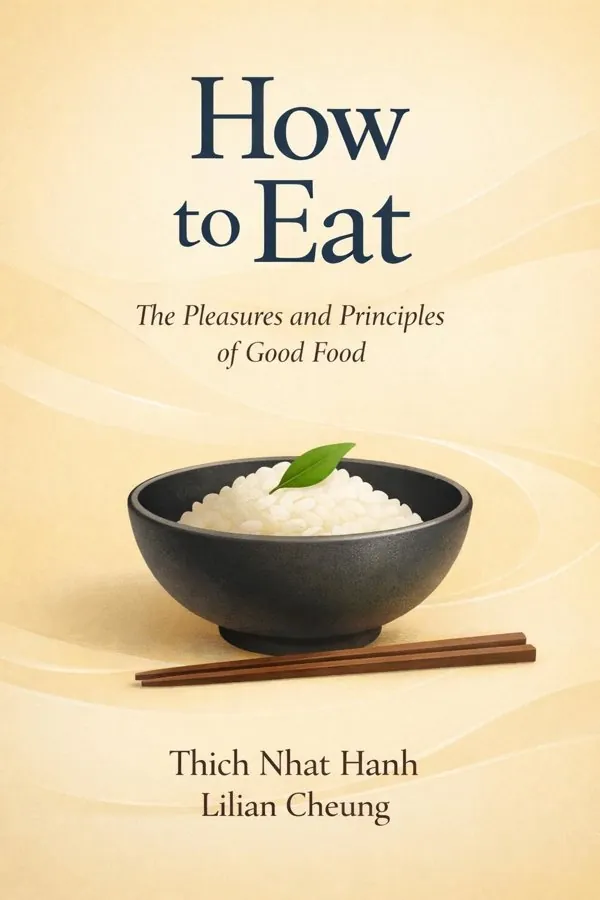
How to Eat: The Pleasures and Principles of Good Food: Summary & Key Insights
by Thich Nhat Hanh, Lilian Cheung
 10 min8 chaptersAudio available
What Is How to Eat: The Pleasures and Principles of Good Food About?
How to Eat: The Pleasures and Principles of Good Food by Thich Nhat Hanh, Lilian Cheung is a wellness book spanning 8 pages. This book offers a mindful approach to eating, encouraging readers to savor each bite and cultivate awareness of the food they consume. Through simple practices and reflections, Thich Nhat Hanh and Lilian Cheung guide readers toward a deeper appreciation of nourishment, balance, and gratitude in daily life.
This FizzRead summary covers all 8 key chapters of How to Eat: The Pleasures and Principles of Good Food in approximately 10 minutes, distilling the most important ideas, arguments, and takeaways from Thich Nhat Hanh, Lilian Cheung's work. Also available as an audio summary and Key Quotes Podcast.
How to Eat: The Pleasures and Principles of Good Food
This book offers a mindful approach to eating, encouraging readers to savor each bite and cultivate awareness of the food they consume. Through simple practices and reflections, Thich Nhat Hanh and Lilian Cheung guide readers toward a deeper appreciation of nourishment, balance, and gratitude in daily life.
Who Should Read How to Eat: The Pleasures and Principles of Good Food?
This book is perfect for anyone interested in wellness and looking to gain actionable insights in a short read. Whether you're a student, professional, or lifelong learner, the key ideas from How to Eat: The Pleasures and Principles of Good Food by Thich Nhat Hanh, Lilian Cheung will help you think differently.
- ✓Readers who enjoy wellness and want practical takeaways
- ✓Professionals looking to apply new ideas to their work and life
- ✓Anyone who wants the core insights of How to Eat: The Pleasures and Principles of Good Food in just 10 minutes
Want the full summary?
Get instant access to this book summary and 100K+ more with Fizz Moment.
Get Free SummaryAvailable on App Store • Free to download
Key Chapters
Every meal is a meeting point between the body, the mind, and the world. To eat mindfully is to recognize this delicate web of interconnection. Our bodies depend on the nourishment of the earth; our consciousness determines how that nourishment feels. When we eat unconsciously, the body may be full, yet the spirit remains hungry.
I share that the food we consume is not merely matter—it is energy, sunlight, rain, soil, and the labor of countless hands. Recognizing this connection transforms eating into an act of compassion. There is a Vietnamese saying that to eat is to honor life itself. When we chew a grain of rice or enjoy a piece of fruit, we are participating in the great circle of life—the tree, the farmer, the sun, and the soil are all alive in that moment of eating.
On a psychological level, food mirrors the state of our mind. When we eat hurriedly, we cultivate restlessness and craving; when we eat slowly and kindly, we nourish peace. The act of eating becomes a mirror of consciousness—whether we rush through lunch while reading emails or we sit quietly and savor the subtle sweetness of mango, we create two entirely different experiences of life. This realization becomes the foundation for transforming how we treat our bodies: not as machines to be fueled but as living expressions of awareness and gratitude.
In our world, everything pushes us toward speed. Meals turn into moments we multitask through, yet in doing so, we lose contact with the miracle of nourishment. To eat slowly is to reclaim the present moment. It is to honor your body’s rhythm and the life that your food represents.
I have often said that when you eat in mindfulness, you allow your body to catch up with your mind. Most of us live with a constant forward motion—the mind plans for tomorrow while the body sits at the table today. By eating slowly, we offer the gift of reunion. You don’t need to calculate portions or study labels at this stage; what matters is that you truly taste. Notice the color of your food. Feel the texture against your tongue. Breathe in between bites. Offer each moment your full attention.
This practice doesn’t require perfection. It only asks for presence. You might begin with eating an apple. Before you take a bite, pause and look at it. See the sunlight encapsulated within its skin, the effort it took to reach your hand. Then, as you chew, breathe deeply and appreciate. Slowness becomes pleasure, and pleasure becomes awareness. Over time, this simple ritual heals not only digestion but the restless heart. Eating becomes a meditation—a quiet retreat from the speed of life.
+ 6 more chapters — available in the FizzRead app
All Chapters in How to Eat: The Pleasures and Principles of Good Food
About the Authors
Thich Nhat Hanh was a Vietnamese Zen master, poet, and peace activist known for his teachings on mindfulness and engaged Buddhism. Lilian Cheung is a nutritionist and lecturer at Harvard T.H. Chan School of Public Health, specializing in mindful eating and health promotion.
Get This Summary in Your Preferred Format
Read or listen to the How to Eat: The Pleasures and Principles of Good Food summary by Thich Nhat Hanh, Lilian Cheung anytime, anywhere. FizzRead offers multiple formats so you can learn on your terms — all free.
Available formats: App · Audio · PDF · EPUB — All included free with FizzRead
Download How to Eat: The Pleasures and Principles of Good Food PDF and EPUB Summary
Key Quotes from How to Eat: The Pleasures and Principles of Good Food
“Every meal is a meeting point between the body, the mind, and the world.”
“In our world, everything pushes us toward speed.”
Frequently Asked Questions about How to Eat: The Pleasures and Principles of Good Food
How to Eat: The Pleasures and Principles of Good Food by Thich Nhat Hanh, Lilian Cheung is a wellness book that explores key ideas across 8 chapters. This book offers a mindful approach to eating, encouraging readers to savor each bite and cultivate awareness of the food they consume. Through simple practices and reflections, Thich Nhat Hanh and Lilian Cheung guide readers toward a deeper appreciation of nourishment, balance, and gratitude in daily life.
More by Thich Nhat Hanh, Lilian Cheung
You Might Also Like
How We Heal: Uncover Your Power and Set Yourself Free
Alexandra Elle
10 min
A Year of Self-Care: Daily Practices and Inspiration for Caring for Yourself
Zoe Shaw
10 min
Biohacker’s Handbook: Upgrade Your Life
Olli Sovijärvi, Teemu Arina, Jaakko Halmetoja
10 min
Bliss More: How to Succeed in Meditation Without Really Trying
Light Watkins
10 min
Body Kindness: Transform Your Health from the Inside Out—and Never Say Diet Again
Rebecca Scritchfield
10 min
Cook, Eat, Run: Cook Fast, Boost Performance with 75 Ultimate Recipes for Runners
Charlie Watson
10 minBrowse by Category
Ready to read How to Eat: The Pleasures and Principles of Good Food?
Get the full summary and 100K+ more books with Fizz Moment.