
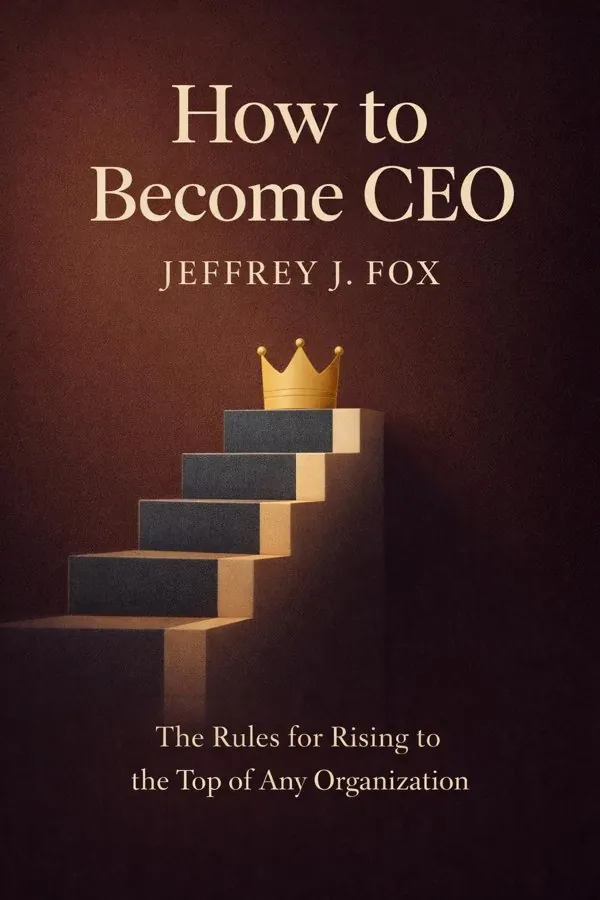
How to Become CEO: The Rules for Rising to the Top of Any Organization: Summary & Key Insights
 10 min9 chaptersAudio available
Key Takeaways from How to Become CEO: The Rules for Rising to the Top of Any Organization
Most careers stall not from a lack of talent, but from ignoring the obvious behaviors organizations quietly reward every day.
Before anyone trusts you with a business, they first decide whether they can trust you with yourself.
People often say appearances should not matter, but organizations constantly interpret appearance as a signal of judgment.
The quickest way to stand out is to stop behaving like someone who needs to be managed.
Careers rise through people, but not through flattery.
What Is How to Become CEO: The Rules for Rising to the Top of Any Organization About?
How to Become CEO: The Rules for Rising to the Top of Any Organization by Jeffrey J. Fox is a leadership book spanning 11 pages. What separates the people who reach the corner office from those who remain permanently “promising”? In How to Become CEO, Jeffrey J. Fox answers that question with unusual bluntness. Rather than offering abstract leadership theory, he presents a compact set of practical rules drawn from years of observing executives, advising companies, and studying what organizations actually reward. The book argues that rising to the top is less about charisma, prestige, or office politics than about judgment, discipline, initiative, and the ability to deliver results consistently. Its enduring value lies in how clearly it translates unwritten corporate expectations into simple, memorable behaviors. Fox shows that future CEOs act differently long before they receive executive titles: they solve problems, communicate crisply, respect time, take responsibility, and think beyond their job descriptions. They build trust through reliability and stand out by making the business better, not by drawing attention to themselves. For ambitious professionals, managers, and emerging leaders, this book matters because it demystifies advancement. Fox’s authority comes from real-world corporate experience, not academic theory, making his advice direct, concrete, and immediately usable in almost any organization.
This FizzRead summary covers all 9 key chapters of How to Become CEO: The Rules for Rising to the Top of Any Organization in approximately 10 minutes, distilling the most important ideas, arguments, and takeaways from Jeffrey J. Fox's work. Also available as an audio summary and Key Quotes Podcast.
How to Become CEO: The Rules for Rising to the Top of Any Organization
What separates the people who reach the corner office from those who remain permanently “promising”? In How to Become CEO, Jeffrey J. Fox answers that question with unusual bluntness. Rather than offering abstract leadership theory, he presents a compact set of practical rules drawn from years of observing executives, advising companies, and studying what organizations actually reward. The book argues that rising to the top is less about charisma, prestige, or office politics than about judgment, discipline, initiative, and the ability to deliver results consistently.
Its enduring value lies in how clearly it translates unwritten corporate expectations into simple, memorable behaviors. Fox shows that future CEOs act differently long before they receive executive titles: they solve problems, communicate crisply, respect time, take responsibility, and think beyond their job descriptions. They build trust through reliability and stand out by making the business better, not by drawing attention to themselves.
For ambitious professionals, managers, and emerging leaders, this book matters because it demystifies advancement. Fox’s authority comes from real-world corporate experience, not academic theory, making his advice direct, concrete, and immediately usable in almost any organization.
Who Should Read How to Become CEO: The Rules for Rising to the Top of Any Organization?
This book is perfect for anyone interested in leadership and looking to gain actionable insights in a short read. Whether you're a student, professional, or lifelong learner, the key ideas from How to Become CEO: The Rules for Rising to the Top of Any Organization by Jeffrey J. Fox will help you think differently.
- ✓Readers who enjoy leadership and want practical takeaways
- ✓Professionals looking to apply new ideas to their work and life
- ✓Anyone who wants the core insights of How to Become CEO: The Rules for Rising to the Top of Any Organization in just 10 minutes
Want the full summary?
Get instant access to this book summary and 100K+ more with Fizz Moment.
Get Free SummaryAvailable on App Store • Free to download
Key Chapters
Most careers stall not from a lack of talent, but from ignoring the obvious behaviors organizations quietly reward every day. One of Jeffrey J. Fox’s core insights is that executive success is rarely mysterious. It emerges from a set of repeatable rules: be prepared, deliver results, think clearly, act decisively, and make life easier for customers, bosses, and teams. The structure of the book reflects this philosophy. Instead of building a grand theory of leadership, Fox offers compact rules because senior leadership is often won through disciplined consistency rather than dramatic moments.
This rule-based framework matters because corporate advancement is usually cumulative. A future CEO is not identified in a single board meeting; that reputation is built over years through small signals. Does this person arrive informed? Do they speak in terms of solutions rather than excuses? Do they understand the business beyond their narrow function? Rules help readers notice the behaviors that create those signals.
For example, a manager who always enters meetings with numbers, recommendations, and next steps is already acting more like an executive than a peer who simply reports problems. An employee who treats every assignment as a chance to learn how the company makes money is building the strategic awareness needed at the top. These habits may seem modest, but they compound into trust and visibility.
Fox’s point is not that leadership can be reduced to slogans. It is that the path upward becomes clearer when you identify the basic actions that successful executives practice relentlessly. Instead of waiting for a promotion to begin thinking like a CEO, use simple rules as daily operating principles. Actionable takeaway: write down five career rules you will follow without exception—such as being early, being prepared, solving problems, speaking plainly, and taking ownership—and practice them until they define your professional reputation.
Before anyone trusts you with a business, they first decide whether they can trust you with yourself. Fox emphasizes that personal discipline is the base layer of executive potential. Ambition without reliability is just performance; organizations elevate people who can be counted on. That means showing up on time, meeting deadlines, finishing what you start, staying organized, and maintaining emotional control under pressure.
This sounds basic, but it is exactly why it matters. At senior levels, the consequences of carelessness multiply. A missed email can become a lost client. A delayed decision can stall a product launch. A sloppy presentation can weaken confidence in your judgment. Leaders are expected to create order, not add friction. Personal discipline signals that you respect the company’s time, resources, and standards.
In practical terms, disciplined professionals manage details so that others can focus on results. They do not need repeated reminders. They avoid blaming circumstances when something goes wrong. They prepare for meetings, track commitments, and respond with clarity. Consider two department heads: one constantly apologizes for delays and confusion, while the other sends concise updates, anticipates obstacles, and consistently delivers. The second person is far more likely to be seen as “executive material,” even if both are intelligent.
Discipline also includes self-management. CEOs cannot be ruled by mood, ego, or panic. If you become defensive at criticism, gossip when frustrated, or disappear when problems arise, you undermine confidence in your leadership ceiling. Fox’s message is blunt: professionalism is not cosmetic; it is evidence of capacity.
The long-term lesson is that your habits are already auditioning you for larger responsibility. Every deadline met, every promise kept, and every detail handled cleanly adds to your reputation. Actionable takeaway: audit your reliability for the next 30 days—track punctuality, follow-through, responsiveness, and preparation, then fix the weakest area immediately.
People often say appearances should not matter, but organizations constantly interpret appearance as a signal of judgment. Fox argues that professional image is not about vanity or expensive clothes; it is about showing respect for the role, the people around you, and the seriousness of the work. Future CEOs understand that others form impressions quickly, and those impressions influence trust, opportunity, and authority.
Professional image includes how you dress, speak, write, listen, and carry yourself. Do you look prepared for an important client conversation? Do your emails reflect care and clarity? Do you speak in a calm, direct way, or ramble and complain? A strong image does not mean imitating someone else’s personality. It means aligning your presentation with competence and responsibility.
This matters because senior leaders are judged not only on what they know, but on whether they can represent the organization. A brilliant employee who appears disorganized, careless, or immature may be passed over for advancement because executives need people who inspire confidence in customers, colleagues, investors, and boards. Image becomes even more powerful when paired with substance. A prepared, polished, thoughtful manager naturally gets more room to lead than someone equally capable but visibly less disciplined.
A practical example is meeting behavior. The person who arrives prepared, speaks briefly, asks smart questions, and avoids ego-driven posturing creates a stronger executive impression than the one who dominates conversation without adding clarity. The same applies to writing: concise memos and clean presentations signal command.
Fox’s broader point is that image should reinforce your value, not distract from it. Your goal is to reduce doubt. You want people to think, “This person can handle bigger things.” Actionable takeaway: review your visible professional signals—dress, email style, meeting behavior, tone, and workspace—and upgrade anything that makes you seem less credible than your actual ability.
The quickest way to stand out is to stop behaving like someone who needs to be managed. Fox repeatedly points toward initiative as a defining trait of future CEOs. Executives are not promoted because they wait well; they are promoted because they notice what matters, decide what to do, and move the business forward. They do not merely identify problems. They bring options, judgment, and momentum.
This is the essence of executive decision-making. People at the top cannot outsource thinking. They must evaluate incomplete information, choose a path, and accept responsibility for the outcome. Fox encourages readers to begin practicing that mindset early. If a customer issue appears, do not just escalate it—suggest a fix. If a process is broken, do not complain—redesign it. If a meeting lacks direction, clarify the decision needed and propose next steps.
In day-to-day work, initiative can be surprisingly simple. An analyst who notices that sales are slipping in one region and prepares a short explanation with recommendations is showing executive behavior. A team lead who anticipates a staffing gap and proposes a hiring or training plan before being asked is doing the same. These actions show business awareness, ownership, and courage.
Fox also warns against confusing activity with initiative. Real initiative is useful, aligned, and informed by the company’s goals. It is not random busyness or attention-seeking. The point is not to take over everything, but to reduce uncertainty and help the organization make progress.
The career implication is major: when people see that you can think independently and act responsibly, they begin to trust you with larger decisions. That trust is the currency of promotion. Actionable takeaway: for every problem you raise this week, attach at least one recommended solution, its likely impact, and the first step to implement it.
Careers rise through people, but not through flattery. Fox’s treatment of relationship management is grounded in usefulness rather than manipulation. The most effective professionals build strong relationships because they are trustworthy, prepared, respectful, and helpful. They understand what others need, communicate clearly, and become known as people who improve situations instead of complicating them.
This is crucial because no CEO succeeds alone. Senior leadership depends on the ability to work across functions, influence different personalities, and maintain confidence with customers, peers, boards, and employees. People support leaders who are credible and fair. They avoid leaders who are political, self-serving, or careless with trust.
Fox’s approach to relationships begins with listening. Ambitious professionals often focus too heavily on being noticed, but influence usually starts with understanding. What does your boss care about most? What are customers frustrated by? Where are colleagues under pressure? If you can identify real needs and help meet them, your network becomes stronger naturally. Relationships deepen when people see that you remember details, keep commitments, share credit, and address conflict directly.
A practical example: imagine a manager who regularly coordinates with finance, sales, and operations. Instead of treating those departments as obstacles, she learns their priorities, sends concise updates, and resolves issues before they escalate. Over time, she becomes a trusted connector. That kind of reputation often matters more than formal authority.
Fox also implies a warning: burning bridges, gossiping, or undermining others may create short-term advantage, but it damages long-term leadership credibility. CEOs need broad trust, not narrow alliances.
The takeaway is simple but powerful: relationships are not a side project in your career; they are part of your operating system. Build them by being competent, considerate, and consistent. Actionable takeaway: identify five key people across your organization and strengthen each relationship by understanding their priorities and finding one concrete way to help them succeed.
Being invisible can limit a career, but being visible for the wrong reasons can damage it. Fox makes an important distinction between self-promotion and strategic visibility. Future CEOs are seen, but they are seen because they contribute where it counts. They work on important problems, understand the economics of the business, and communicate value in ways senior leaders can recognize.
Strategic visibility means putting yourself in the path of meaningful work. Volunteer for assignments tied to growth, customers, efficiency, or risk reduction. Learn to present ideas clearly to decision-makers. Share results without exaggeration. The goal is not to chase attention, but to ensure that your impact is connected to the organization’s priorities.
This matters because promotions are often based on perception as much as performance. If your good work is isolated, hidden, or poorly communicated, decision-makers may not understand your capacity. On the other hand, if you repeatedly show up on critical initiatives and demonstrate judgment under pressure, your reputation expands beyond your title.
Consider a mid-level manager who improves a reporting process in her department. That is useful. But if she then shows how the change saves time across multiple teams, reduces error rates, and can be adopted company-wide, she is making her contribution more visible and more strategic. She is no longer just doing her job well; she is affecting the business at a larger scale.
Fox’s deeper lesson is that aspiring CEOs must think beyond narrow functional excellence. They need exposure to the moving parts of the organization and a habit of linking their work to enterprise outcomes. Visibility becomes earned when your contribution matters.
Actionable takeaway: choose one current project and explicitly connect it to a top business priority—revenue, customer retention, cost reduction, or speed—and communicate that connection to the right stakeholders in a concise, results-focused way.
A title may define your current job, but it should never limit your curiosity. Fox stresses continuous learning as a career accelerant because CEOs are expected to understand the whole business, not just one specialty. The people most likely to rise are those who keep expanding their commercial awareness, industry knowledge, and operational perspective long before they need it.
This kind of learning is practical, not ornamental. It means understanding how the company makes money, what customers value, where margins are squeezed, how competitors win, and which internal processes actually drive results. A future CEO looks beyond their own department and asks broader questions: How does sales affect operations? How does pricing affect customer behavior? How does service quality influence retention and brand reputation?
In application, this might look like a finance manager spending time with the sales team to hear customer objections firsthand, or an operations leader learning enough about marketing to understand demand fluctuations. It could mean reading earnings reports, studying competitors, asking senior leaders thoughtful questions, or volunteering for cross-functional projects. The point is to become fluent in the language of the enterprise.
Fox’s advice is especially valuable for specialists. Expertise creates credibility, but if it hardens into tunnel vision, it can cap advancement. Senior leaders need range. They must integrate information from different functions, weigh trade-offs, and make balanced decisions for the entire organization.
Continuous learning also signals humility. The strongest leaders are not those who pretend to know everything, but those who keep improving their understanding and adapting to change. In fast-moving markets, intellectual stagnation is a strategic liability.
If you want the top job, start learning as if you already own the whole business. Actionable takeaway: create a personal CEO curriculum—each month study one function outside your own, one competitor, and one major trend affecting your industry, then summarize what it means for your company.
Anyone can look capable when results are smooth; the true test comes when plans fail, pressure rises, or criticism lands. Fox’s lessons on setbacks are especially sharp because organizations watch carefully during difficult moments. How you respond to mistakes, missed targets, conflict, or disappointment often shapes your leadership reputation more than success itself.
Setbacks reveal temperament. Do you hide, blame, and rationalize, or do you step forward, face facts, and move to repair the situation? Fox favors the second response because executive roles demand resilience and accountability. CEOs cannot collapse under bad news. They must absorb reality quickly, protect morale, and focus attention on what can still be done.
A practical example is a failed initiative. A weak manager may spend weeks defending the original decision, shifting responsibility to market conditions or other departments. A stronger leader acknowledges what happened, explains the lesson, adjusts the plan, and re-engages the team. This does not mean accepting failure casually. It means treating setbacks as information rather than identity.
Handling setbacks well also includes preserving professionalism. Public frustration, emotional volatility, or revenge behavior erodes trust. People want leaders who remain steady when others are discouraged. That steadiness becomes a source of confidence for teams and superiors alike.
Fox implies that careers are rarely linear. Ambitious people may miss promotions, lose accounts, face reorganizations, or back the wrong idea. What matters is whether those experiences make them sharper or more bitter. The executive path belongs to those who can recover without losing discipline.
In short, setbacks are not interruptions to leadership development; they are part of it. Actionable takeaway: the next time something goes wrong, respond in four steps—state the facts, accept ownership for your part, define the lesson, and propose the next move within 24 hours.
The strongest message running through Fox’s book is that the road to CEO begins when you stop seeing yourself as an employee with tasks and start seeing yourself as a steward of the business. That shift creates both a leadership mindset and an ethical standard. Future CEOs think about the company’s long-term health, its customers, its people, and its reputation. They make decisions as if the consequences belong to them—because eventually they will.
An ownership mindset changes behavior. You become more cost-conscious, more customer-focused, and more willing to confront problems early. You care about waste, confusion, quality, and follow-through because these are not “someone else’s issue.” You think across silos and ask what serves the enterprise rather than your ego or department. This broader view is one reason such people are promoted.
But Fox pairs this mindset with integrity. Advancement built on politics, image management, or short-term manipulation is fragile. Leaders who cut corners, shade the truth, take credit unfairly, or sacrifice trust for convenience may rise briefly, but they damage the foundation needed to lead at scale. CEOs require credibility. Without it, teams disengage and organizations weaken.
Integrity in practice means telling the truth about numbers, honoring commitments, treating people fairly, and making decisions that stand up to scrutiny. It also means having the courage to deliver bad news honestly and to reject actions that may help this quarter while harming the company later. Ethical leadership is not idealism; it is durable business judgment.
Fox’s contribution is to make leadership advancement feel less glamorous and more moral. The top job is not merely a prize. It is a responsibility that demands trustworthiness long before the title arrives. Actionable takeaway: before making an important decision, ask two questions—“What would an owner do?” and “Would I be comfortable explaining this choice publicly to my team, customers, and board?”
All Chapters in How to Become CEO: The Rules for Rising to the Top of Any Organization
About the Author
Jeffrey J. Fox is an American business writer, marketing consultant, and the founder of Fox & Co., a consulting firm known for advising companies on marketing, strategy, and growth. He built his reputation by translating corporate experience into short, practical business books filled with direct and memorable advice. Fox is best known for his no-nonsense style: he focuses less on theory and more on the habits, decisions, and behaviors that produce results in real organizations. His books often explore leadership, selling, career advancement, and management, making them popular with professionals who want immediately useful guidance. Through his writing and consulting, Fox has become known as an observer of how successful executives think, act, and earn trust inside competitive business environments.
Get This Summary in Your Preferred Format
Read or listen to the How to Become CEO: The Rules for Rising to the Top of Any Organization summary by Jeffrey J. Fox anytime, anywhere. FizzRead offers multiple formats so you can learn on your terms — all free.
Available formats: App · Audio · PDF · EPUB — All included free with FizzRead
Download How to Become CEO: The Rules for Rising to the Top of Any Organization PDF and EPUB Summary
Key Quotes from How to Become CEO: The Rules for Rising to the Top of Any Organization
“Most careers stall not from a lack of talent, but from ignoring the obvious behaviors organizations quietly reward every day.”
“Before anyone trusts you with a business, they first decide whether they can trust you with yourself.”
“People often say appearances should not matter, but organizations constantly interpret appearance as a signal of judgment.”
“The quickest way to stand out is to stop behaving like someone who needs to be managed.”
“Careers rise through people, but not through flattery.”
Frequently Asked Questions about How to Become CEO: The Rules for Rising to the Top of Any Organization
How to Become CEO: The Rules for Rising to the Top of Any Organization by Jeffrey J. Fox is a leadership book that explores key ideas across 9 chapters. What separates the people who reach the corner office from those who remain permanently “promising”? In How to Become CEO, Jeffrey J. Fox answers that question with unusual bluntness. Rather than offering abstract leadership theory, he presents a compact set of practical rules drawn from years of observing executives, advising companies, and studying what organizations actually reward. The book argues that rising to the top is less about charisma, prestige, or office politics than about judgment, discipline, initiative, and the ability to deliver results consistently. Its enduring value lies in how clearly it translates unwritten corporate expectations into simple, memorable behaviors. Fox shows that future CEOs act differently long before they receive executive titles: they solve problems, communicate crisply, respect time, take responsibility, and think beyond their job descriptions. They build trust through reliability and stand out by making the business better, not by drawing attention to themselves. For ambitious professionals, managers, and emerging leaders, this book matters because it demystifies advancement. Fox’s authority comes from real-world corporate experience, not academic theory, making his advice direct, concrete, and immediately usable in almost any organization.
You Might Also Like

Extreme Ownership
Jocko Willink
10 min
Dare to Lead
Brene Brown
10 min
Leaders Eat Last
Simon Sinek
10 min
The 21 Irrefutable Laws of Leadership
John Maxwell
10 min
Start With Why
Simon Sinek
10 min
How to Lead When You're Not in Charge
Clay Scroggins
10 minBrowse by Category
Ready to read How to Become CEO: The Rules for Rising to the Top of Any Organization?
Get the full summary and 100K+ more books with Fizz Moment.