
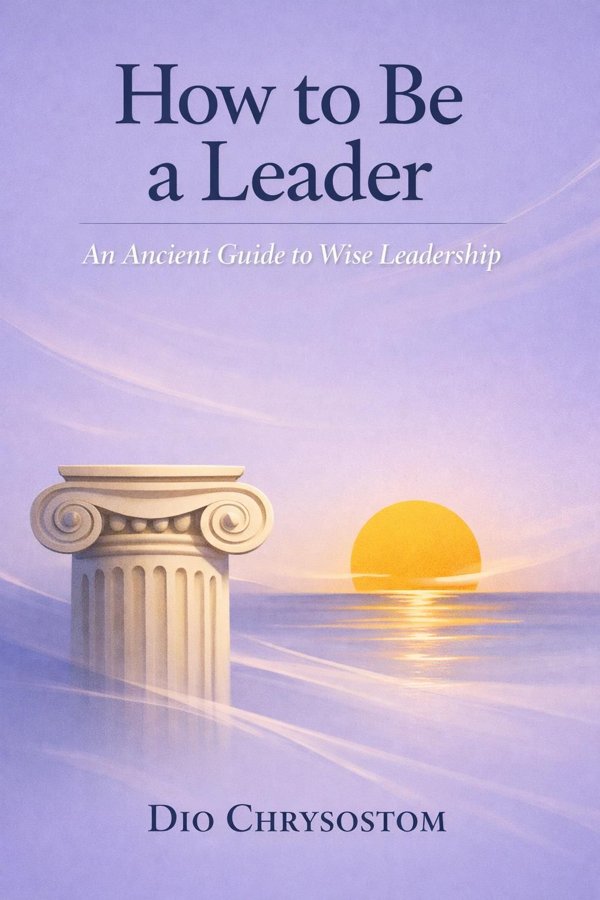
How to Be a Leader: An Ancient Guide to Wise Leadership: Summary & Key Insights
 10 min9 chaptersAudio available
What Is How to Be a Leader: An Ancient Guide to Wise Leadership About?
How to Be a Leader: An Ancient Guide to Wise Leadership by Dio Chrysostom is a leadership book spanning 9 pages. In this concise collection of essays, the Greek philosopher Dio Chrysostom offers timeless advice on leadership, virtue, and moral integrity. Drawing from Stoic and Platonic traditions, he explores what it means to lead with wisdom, justice, and self-control, providing guidance that remains relevant for modern readers seeking ethical leadership.
This FizzRead summary covers all 9 key chapters of How to Be a Leader: An Ancient Guide to Wise Leadership in approximately 10 minutes, distilling the most important ideas, arguments, and takeaways from Dio Chrysostom's work. Also available as an audio summary and Key Quotes Podcast.
How to Be a Leader: An Ancient Guide to Wise Leadership
In this concise collection of essays, the Greek philosopher Dio Chrysostom offers timeless advice on leadership, virtue, and moral integrity. Drawing from Stoic and Platonic traditions, he explores what it means to lead with wisdom, justice, and self-control, providing guidance that remains relevant for modern readers seeking ethical leadership.
Who Should Read How to Be a Leader: An Ancient Guide to Wise Leadership?
This book is perfect for anyone interested in leadership and looking to gain actionable insights in a short read. Whether you're a student, professional, or lifelong learner, the key ideas from How to Be a Leader: An Ancient Guide to Wise Leadership by Dio Chrysostom will help you think differently.
- ✓Readers who enjoy leadership and want practical takeaways
- ✓Professionals looking to apply new ideas to their work and life
- ✓Anyone who wants the core insights of How to Be a Leader: An Ancient Guide to Wise Leadership in just 10 minutes
Want the full summary?
Get instant access to this book summary and 100K+ more with Fizz Moment.
Get Free SummaryAvailable on App Store • Free to download
Key Chapters
True leadership, as I have observed in monarchs and magistrates alike, does not consist in commanding legions or issuing decrees; it consists in the ability to command oneself. Many men have wielded power—and yet few have been leaders in the noble sense. The distinction lies not in title but in soul. The tyrant rules from passion, seeking advantage for himself; the leader governs from reason, seeking justice for all. This contrast defined my dialogue on kingship, in which I taught that authority built upon fear is brittle, while authority rooted in virtue endures.
To many, the temptation of power feels irresistible. Possession of wealth and armies tempts even good men to arrogance. But the wise ruler recognizes that power is a sacred trust, a stewardship granted by the gods or by the people for the care of the common good. When rulers forget this purpose, when they see the throne as their private reward rather than their public duty, they become slaves to their own appetites. Their dominion may last for a season, but it breeds resentment and moral rot.
In the best rulers I have known, I found another pattern altogether. They considered themselves custodians, not conquerors. They sought counsel from philosophers, not courtiers. Their governance resembled a father tending his household—not out of favoritism, but in firm kindness and rational care. For me, this ideal of leadership is not poetic invention but moral law: one who governs without justice destroys the very thing he wishes to preserve.
Thus, I invited rulers of my time to look inward and ask: Is my authority the reflection of reason, or merely the echo of might? For true leadership stands firm only when reason commands and passion obeys. The dignity of a leader is measured not by his crown, but by his conscience.
There can be no just ruler who is not also a philosopher. I do not mean that he must master all the dialectics of the Academy or dispute the subtleties of logic. Rather, he must have the philosopher’s ruling habit of mind—the love of truth, the learner’s humility, the courage to examine his own ignorance. Philosophy, as I have always taught, is nothing other than the pursuit of wisdom in word and deed. Without it, even the most learned or powerful becomes blind in the exercise of authority.
My contemporaries often mocked the idea that a ruler should study philosophy. They said that governance requires strength, not speculation. But strength unguided by moral understanding breeds calamity. Recall that even Alexander, whom poets call great, faltered when passion overcame prudence. Philosophy trains the soul to perceive what mere opinion cannot: that law derives from justice, and justice from reason aligned with the divine order. Without that alignment, a ruler builds on sand.
Therefore, I urged emperors to invite philosophers not to flatter them but to instruct them. It is better to be rebuked by a wise friend than praised by a fool. A ruler conversant with philosophy learns moderation, for he perceives that human desires are unbounded and self-defeating when unchecked. He learns compassion, for he understands the shared frailty of mankind. Above all, he learns that to govern is to imitate the harmony of the cosmos, where each element performs its function not in pride but in service of the whole. This insight—philosophy’s gift to kings—transforms rule into a moral vocation.
+ 7 more chapters — available in the FizzRead app
All Chapters in How to Be a Leader: An Ancient Guide to Wise Leadership
About the Author
Dio Chrysostom (ca. 40–115 CE) was a Greek orator, philosopher, and writer of the Roman Empire. Known for his moral and political discourses, he combined Stoic and Platonic ideas to address civic virtue and the responsibilities of rulers and citizens alike.
Get This Summary in Your Preferred Format
Read or listen to the How to Be a Leader: An Ancient Guide to Wise Leadership summary by Dio Chrysostom anytime, anywhere. FizzRead offers multiple formats so you can learn on your terms — all free.
Available formats: App · Audio · PDF · EPUB — All included free with FizzRead
Download How to Be a Leader: An Ancient Guide to Wise Leadership PDF and EPUB Summary
Key Quotes from How to Be a Leader: An Ancient Guide to Wise Leadership
“True leadership, as I have observed in monarchs and magistrates alike, does not consist in commanding legions or issuing decrees; it consists in the ability to command oneself.”
“There can be no just ruler who is not also a philosopher.”
Frequently Asked Questions about How to Be a Leader: An Ancient Guide to Wise Leadership
How to Be a Leader: An Ancient Guide to Wise Leadership by Dio Chrysostom is a leadership book that explores key ideas across 9 chapters. In this concise collection of essays, the Greek philosopher Dio Chrysostom offers timeless advice on leadership, virtue, and moral integrity. Drawing from Stoic and Platonic traditions, he explores what it means to lead with wisdom, justice, and self-control, providing guidance that remains relevant for modern readers seeking ethical leadership.
You Might Also Like

Extreme Ownership
Jocko Willink
10 min
Dare to Lead
Brene Brown
10 min
Leaders Eat Last
Simon Sinek
10 min
The 21 Irrefutable Laws of Leadership
John Maxwell
10 min
Start With Why
Simon Sinek
10 min
How to Lead When You're Not in Charge
Clay Scroggins
10 minBrowse by Category
Ready to read How to Be a Leader: An Ancient Guide to Wise Leadership?
Get the full summary and 100K+ more books with Fizz Moment.