
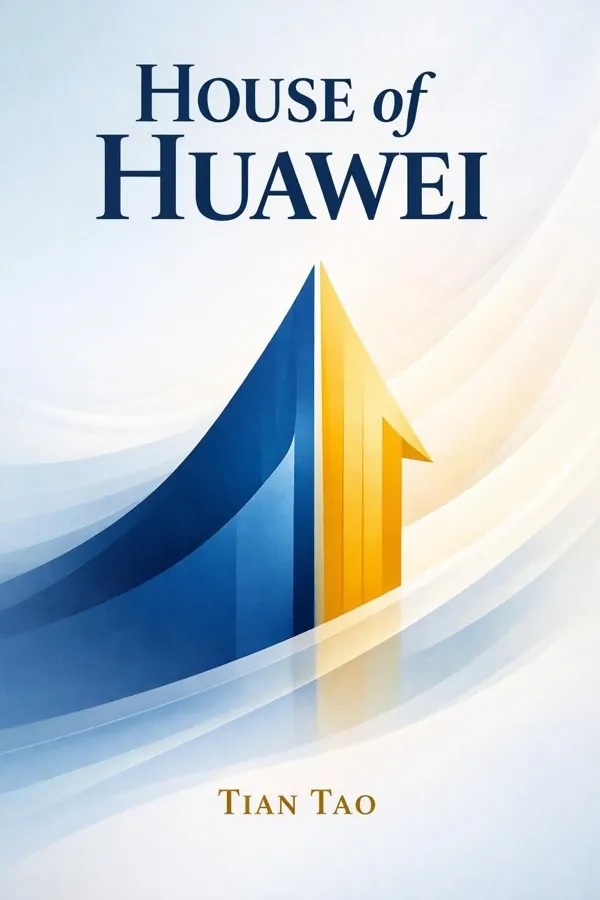
House of Huawei: Summary & Key Insights
by Tian Tao
 10 min7 chaptersAudio available
What Is House of Huawei About?
House of Huawei by Tian Tao is a leadership book spanning 7 pages. House of Huawei is an English-language business and management book written by Tian Tao. It explores Huawei’s corporate philosophy, leadership principles, and organizational culture through interviews with founder Ren Zhengfei and senior executives. The book provides insights into Huawei’s strategic thinking, talent management, and innovation practices that have driven its global success.
This FizzRead summary covers all 7 key chapters of House of Huawei in approximately 10 minutes, distilling the most important ideas, arguments, and takeaways from Tian Tao's work. Also available as an audio summary and Key Quotes Podcast.
House of Huawei
House of Huawei is an English-language business and management book written by Tian Tao. It explores Huawei’s corporate philosophy, leadership principles, and organizational culture through interviews with founder Ren Zhengfei and senior executives. The book provides insights into Huawei’s strategic thinking, talent management, and innovation practices that have driven its global success.
Who Should Read House of Huawei?
This book is perfect for anyone interested in leadership and looking to gain actionable insights in a short read. Whether you're a student, professional, or lifelong learner, the key ideas from House of Huawei by Tian Tao will help you think differently.
- ✓Readers who enjoy leadership and want practical takeaways
- ✓Professionals looking to apply new ideas to their work and life
- ✓Anyone who wants the core insights of House of Huawei in just 10 minutes
Want the full summary?
Get instant access to this book summary and 100K+ more with Fizz Moment.
Get Free SummaryAvailable on App Store • Free to download
Key Chapters
Ren Zhengfei’s vision has always been grounded in a deep realism. As a soldier-turned-businessman, his military experience shaped his understanding of discipline, collective purpose, and perseverance. To him, Huawei’s ultimate goal was never merely to compete, but to survive—and through survival, to grow stronger.
In our conversations, Ren often repeated a refrain: ‘Huawei’s destiny is to keep walking on the edge of a cliff.’ This image—of perpetual crisis and vigilance—captures the psychic backbone of Huawei’s culture. For Ren, crisis is not an event to be avoided, but a mindset to be embraced. It keeps an organization humble, forces continuous self-renewal, and keeps leadership from falling into complacency.
Long-termism lies at the heart of this vision. Ren frequently warns his executives against vanity metrics—market share, rankings, or short-term profit spikes. True success, he argues, comes from consistency over decades, from the ability to endure pain, and from aligning personal ambition with the collective mission.
His philosophy of shared success is another pillar. Huawei’s ownership structure—where employees collectively hold the majority of shares—embodies this principle. By linking reward to contribution, Ren ensures both a sense of belonging and accountability. To work for Huawei is not simply to draw a salary; it is to participate in a long-term investment in collective progress.
Huawei’s culture is built on three interlinked virtues: customer-centricity, dedication, and continuous improvement. These are not abstract words, but living commandments embedded in every employee’s daily behavior.
Customer-centricity is, for Huawei, almost sacred. Ren Zhengfei insists that every innovation, every technological breakthrough, must start from customer pain points—not from internal pride. He often recounts stories of engineers traveling with clients into remote deserts to test base stations under extreme conditions. These are not publicity tales; they are demonstrations of a mindset that honors the user as the final arbiter of value.
Dedication, the second virtue, fuels this relentless service ethic. Huawei’s ‘strivers’—as Ren calls devoted employees—are expected to work not for comfort, but for contribution. Through hardship, Huawei cultivates cohesion. In return, strivers are rewarded through shared ownership, career opportunities, and the pride of impact.
Continuous improvement, the third virtue, ensures that Huawei never stops learning. The company is obsessed with internal self-criticism; it conducts what Ren calls ‘deficiency meetings’ to dissect failures openly, make corrections quickly, and institutionalize learning. As Ren puts it, ‘The day we stop learning is the day we start dying.’
+ 5 more chapters — available in the FizzRead app
All Chapters in House of Huawei
About the Author
Get This Summary in Your Preferred Format
Read or listen to the House of Huawei summary by Tian Tao anytime, anywhere. FizzRead offers multiple formats so you can learn on your terms — all free.
Available formats: App · Audio · PDF · EPUB — All included free with FizzRead
Download House of Huawei PDF and EPUB Summary
Key Quotes from House of Huawei
“Ren Zhengfei’s vision has always been grounded in a deep realism.”
“Huawei’s culture is built on three interlinked virtues: customer-centricity, dedication, and continuous improvement.”
Frequently Asked Questions about House of Huawei
House of Huawei by Tian Tao is a leadership book that explores key ideas across 7 chapters. House of Huawei is an English-language business and management book written by Tian Tao. It explores Huawei’s corporate philosophy, leadership principles, and organizational culture through interviews with founder Ren Zhengfei and senior executives. The book provides insights into Huawei’s strategic thinking, talent management, and innovation practices that have driven its global success.
You Might Also Like

Extreme Ownership
Jocko Willink
10 min
Dare to Lead
Brene Brown
10 min
Leaders Eat Last
Simon Sinek
10 min
The 21 Irrefutable Laws of Leadership
John Maxwell
10 min
Start With Why
Simon Sinek
10 min
How to Lead When You're Not in Charge
Clay Scroggins
10 minBrowse by Category
Ready to read House of Huawei?
Get the full summary and 100K+ more books with Fizz Moment.