
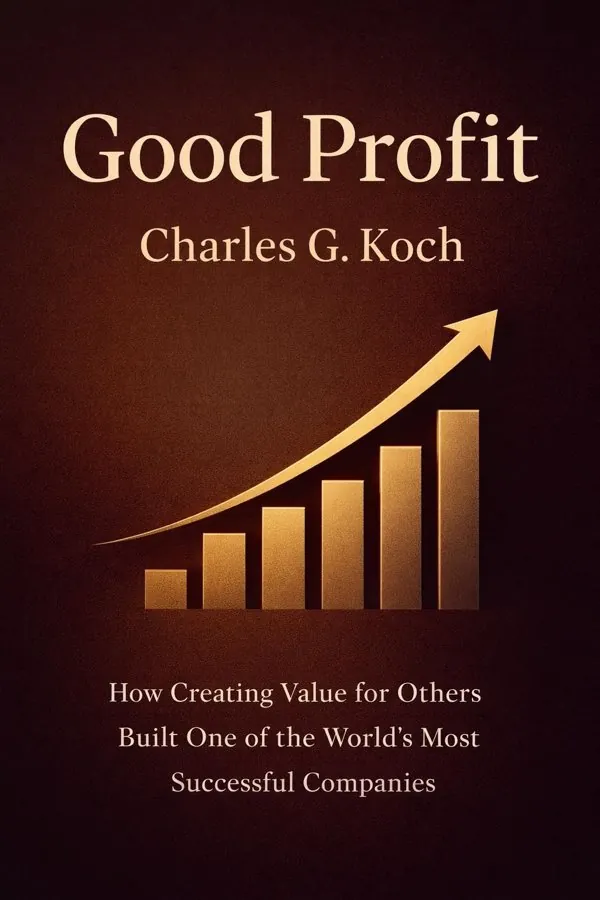
Good Profit: How Creating Value for Others Built One of the World's Most Successful Companies: Summary & Key Insights
 10 min6 chaptersAudio available
What Is Good Profit: How Creating Value for Others Built One of the World's Most Successful Companies About?
Good Profit: How Creating Value for Others Built One of the World's Most Successful Companies by Charles G. Koch is a leadership book spanning 6 pages. In Good Profit, Charles G. Koch explains the management principles and business philosophy that have guided Koch Industries to become one of the largest privately held companies in the world. He outlines the concept of Market-Based Management (MBM), emphasizing value creation, integrity, and long-term thinking over short-term gains. The book provides insights into how these principles can be applied to achieve sustainable success in business and life.
This FizzRead summary covers all 6 key chapters of Good Profit: How Creating Value for Others Built One of the World's Most Successful Companies in approximately 10 minutes, distilling the most important ideas, arguments, and takeaways from Charles G. Koch's work. Also available as an audio summary and Key Quotes Podcast.
Good Profit: How Creating Value for Others Built One of the World's Most Successful Companies
In Good Profit, Charles G. Koch explains the management principles and business philosophy that have guided Koch Industries to become one of the largest privately held companies in the world. He outlines the concept of Market-Based Management (MBM), emphasizing value creation, integrity, and long-term thinking over short-term gains. The book provides insights into how these principles can be applied to achieve sustainable success in business and life.
Who Should Read Good Profit: How Creating Value for Others Built One of the World's Most Successful Companies?
This book is perfect for anyone interested in leadership and looking to gain actionable insights in a short read. Whether you're a student, professional, or lifelong learner, the key ideas from Good Profit: How Creating Value for Others Built One of the World's Most Successful Companies by Charles G. Koch will help you think differently.
- ✓Readers who enjoy leadership and want practical takeaways
- ✓Professionals looking to apply new ideas to their work and life
- ✓Anyone who wants the core insights of Good Profit: How Creating Value for Others Built One of the World's Most Successful Companies in just 10 minutes
Want the full summary?
Get instant access to this book summary and 100K+ more with Fizz Moment.
Get Free SummaryAvailable on App Store • Free to download
Key Chapters
Vision is the ability to see opportunities before others do—and to see them in a way that creates lasting value instead of chasing fads or superficial returns. In MBM, vision begins with recognizing comparative advantage: those areas where we can contribute more than anyone else. At Koch Industries, this principle guided us from the start. Rather than expanding indiscriminately, we focused on what we could do best—transforming raw materials into indispensable goods such as energy, chemicals, and fibers, and continuously improving the processes that made these transformations more efficient.
The essence of vision is not prediction; it is disciplined discovery. To cultivate it, we constantly asked what unmet needs markets reveal, where inefficiencies exist, and how technological or organizational innovations could close those gaps. Every new venture we pursued—from refining systems to environmental technologies—was grounded in this question: does this opportunity enable us to create greater value for others at lower cost? If yes, we committed for the long term, even when profits were uncertain in the short run.
Having a vision also means being willing to challenge conventional wisdom. True entrepreneurship demands the courage to act on insights that others overlook or fear. When we entered areas that seemed risky, what guided us was not the comfort of consensus but the conviction that value creation would stand the test of time. I encourage every leader and thinker to adopt this mindset: never mistake popularity for proof. Seek enduring principles, not temporary applause.
The lesson of this dimension is clear—lasting success stems from seeing beyond quarterly results to the deeper mission of contribution. Vision aligns a company’s purpose with its unique strengths, ensuring that growth serves both the business and society. When you orient your efforts toward genuine improvement in people’s lives, you cultivate the conditions for good profit—profit that reinforces trust, drives innovation, and sustains progress.
Markets are made of people, and organizations thrive or fail based on the character and capability of those people. In MBM, virtue and talents are inseparable. Virtue refers to integrity, humility, and respect for others—the moral compass guiding every decision. Talents are the skills, curiosity, and drive to learn that enable individuals to create value. The right combination of these qualities forms the most powerful asset any enterprise can possess.
When we recruit at Koch Industries, we do not look for credentials alone; we look for alignment with our guiding principles. We ask: does this person seek challenge and growth? Are they willing to admit mistakes, learn from them, and place contribution above ego? A workforce lacking virtue might produce short-term gains but will erode trust and cooperation that sustain innovation. Likewise, virtue without capability reduces good intentions to inefficiency. The balance of both is essential.
Employee development, therefore, is not a bureaucratic process but a moral practice. It means investing in people’s ability to think entrepreneurially, to take ownership of results, and to act in accordance with shared values. Humility becomes a strength, enabling each member to welcome feedback and recognize that markets are the ultimate judges of effectiveness.
In my experience, the organizations that endure are those that cultivate a culture of personal responsibility grounded in respect. True collaboration arises when individuals know they are valued for their contributions rather than mere compliance. This is how character becomes competitive advantage.
The role of leadership here is crucial—not as command but as coaching. To lead effectively, one must first live the values one expects from others. Integrity is contagious; so is hypocrisy. By modeling virtue, leaders create trust that allows talent to evolve freely and creatively. And that combination of moral clarity and self-development produces not only good profit but also good people—individuals whose work contributes meaningfully to the prosperity of all.
+ 4 more chapters — available in the FizzRead app
All Chapters in Good Profit: How Creating Value for Others Built One of the World's Most Successful Companies
About the Author
Charles G. Koch is an American businessman and philanthropist, best known as the chairman and CEO of Koch Industries. He has led the company since 1967, expanding it into a global enterprise. Koch is also known for his writings on free-market economics and his support for educational and policy initiatives promoting individual liberty and economic freedom.
Get This Summary in Your Preferred Format
Read or listen to the Good Profit: How Creating Value for Others Built One of the World's Most Successful Companies summary by Charles G. Koch anytime, anywhere. FizzRead offers multiple formats so you can learn on your terms — all free.
Available formats: App · Audio · PDF · EPUB — All included free with FizzRead
Download Good Profit: How Creating Value for Others Built One of the World's Most Successful Companies PDF and EPUB Summary
Key Quotes from Good Profit: How Creating Value for Others Built One of the World's Most Successful Companies
“Vision is the ability to see opportunities before others do—and to see them in a way that creates lasting value instead of chasing fads or superficial returns.”
“Markets are made of people, and organizations thrive or fail based on the character and capability of those people.”
Frequently Asked Questions about Good Profit: How Creating Value for Others Built One of the World's Most Successful Companies
Good Profit: How Creating Value for Others Built One of the World's Most Successful Companies by Charles G. Koch is a leadership book that explores key ideas across 6 chapters. In Good Profit, Charles G. Koch explains the management principles and business philosophy that have guided Koch Industries to become one of the largest privately held companies in the world. He outlines the concept of Market-Based Management (MBM), emphasizing value creation, integrity, and long-term thinking over short-term gains. The book provides insights into how these principles can be applied to achieve sustainable success in business and life.
More by Charles G. Koch

You Might Also Like

Extreme Ownership
Jocko Willink
10 min
Dare to Lead
Brene Brown
10 min
Leaders Eat Last
Simon Sinek
10 min
The 21 Irrefutable Laws of Leadership
John Maxwell
10 min
Start With Why
Simon Sinek
10 min
How to Lead When You're Not in Charge
Clay Scroggins
10 minBrowse by Category
Ready to read Good Profit: How Creating Value for Others Built One of the World's Most Successful Companies?
Get the full summary and 100K+ more books with Fizz Moment.