
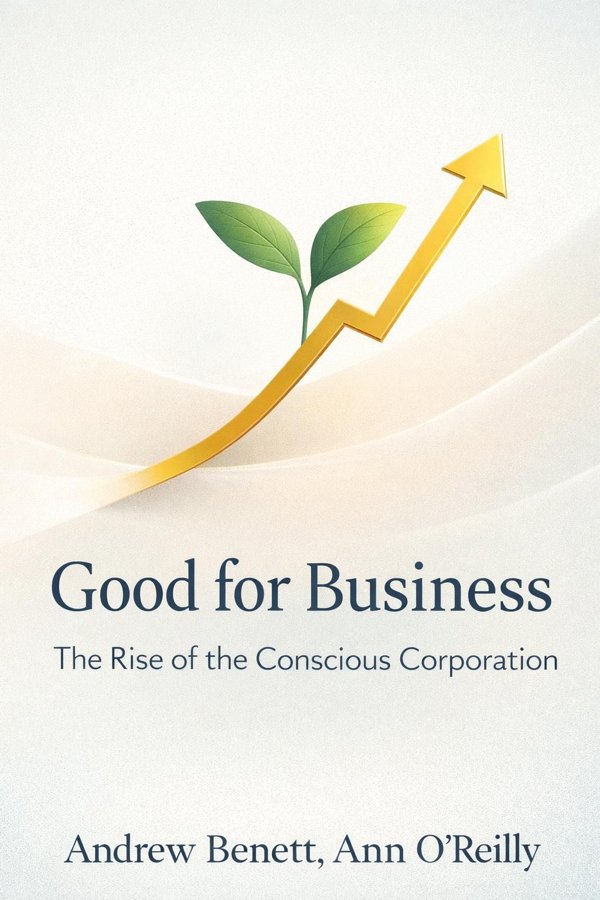
Good for Business: The Rise of the Conscious Corporation: Summary & Key Insights
by Andrew Benett, Ann O'Reilly
 10 min6 chaptersAudio available
What Is Good for Business: The Rise of the Conscious Corporation About?
Good for Business: The Rise of the Conscious Corporation by Andrew Benett, Ann O'Reilly is a leadership book spanning 6 pages. Good for Business explores how companies that embrace social responsibility, sustainability, and ethical practices can achieve long-term success. The authors argue that conscious capitalism is not only morally right but also strategically advantageous, offering case studies of organizations that have thrived by aligning profit with purpose.
This FizzRead summary covers all 6 key chapters of Good for Business: The Rise of the Conscious Corporation in approximately 10 minutes, distilling the most important ideas, arguments, and takeaways from Andrew Benett, Ann O'Reilly's work. Also available as an audio summary and Key Quotes Podcast.
Good for Business: The Rise of the Conscious Corporation
Good for Business explores how companies that embrace social responsibility, sustainability, and ethical practices can achieve long-term success. The authors argue that conscious capitalism is not only morally right but also strategically advantageous, offering case studies of organizations that have thrived by aligning profit with purpose.
Who Should Read Good for Business: The Rise of the Conscious Corporation?
This book is perfect for anyone interested in leadership and looking to gain actionable insights in a short read. Whether you're a student, professional, or lifelong learner, the key ideas from Good for Business: The Rise of the Conscious Corporation by Andrew Benett, Ann O'Reilly will help you think differently.
- ✓Readers who enjoy leadership and want practical takeaways
- ✓Professionals looking to apply new ideas to their work and life
- ✓Anyone who wants the core insights of Good for Business: The Rise of the Conscious Corporation in just 10 minutes
Want the full summary?
Get instant access to this book summary and 100K+ more with Fizz Moment.
Get Free SummaryAvailable on App Store • Free to download
Key Chapters
The idea of corporate responsibility isn’t new. In fact, it can be traced back to the early industrialists of the nineteenth century who occasionally built schools and hospitals for their workers. Yet these gestures were often paternalistic, disconnected from the core purpose of the enterprise. For much of modern history, profitability was seen as the single measure of success, with social and environmental impact relegated to peripheral concern. However, by the late twentieth century, cracks in that ideology began to appear. Globalization exposed companies to public scrutiny, and technology empowered consumers to see behind the marketing curtain. The revelation was uncomfortable but necessary: corporations could no longer hide poor labor practices or environmental damage behind glossy brand campaigns.
What followed was a rapid evolution in expectations. Corporate Social Responsibility (CSR) entered the conversation—not as a footnote but as a core consideration. Yet early CSR programs still treated ethics as an accessory, something separate from strategy. The conscious corporation, by contrast, integrates ethics into every decision. It understands that social value and shareholder value are not conflicting goals. The historical trajectory from philanthropy to strategic ethics marks the maturation of capitalism itself—from adolescence obsessed with short-term growth to adulthood aware of its stewardship responsibilities.
The transformation reflects a deeper cultural awakening. As societies prospered, basic needs gave way to higher aspirations—authenticity, transparency, purpose. Consumers began rewarding companies that shared these values, pressing organizations to go beyond compliance and toward genuine conscience. That’s the essence of the rise chronicled here.
In the world of conscious capitalism, transparency is not optional—it’s existential. When social networks and digital media made information universally accessible, the relationship between brand and consumer changed forever. No longer could a company control its narrative through advertising alone; truth, as verified by millions of voices, became the ultimate brand currency. Authenticity now determines trust, and trust drives profit.
Through my work with global organizations, I’ve seen this truth play out repeatedly. Brands that open their operations, share supply‑chain data, and hold themselves accountable prosper because they respect the intelligence of their customers. When communication is sincere, loyalty follows. Conversely, when companies adopt empty sustainability rhetoric without real commitment, they are swiftly called out and often lose market share.
Authenticity is the soul of the conscious corporation. It’s born when values consistently match actions. Patagonia, for example, integrates environmental activism into its products and decision‑making with uncompromising clarity. Consumers see integrity not as a campaign but as a lived principle. Achieving such alignment requires courage—a willingness to expose imperfections and learn publicly. The paradox is powerful: vulnerability creates credibility. In this transparent ecosystem, success favors those who lead with truth, not polish. This is the new business reality, and it defines every strategic conversation in the twenty‑first century.
+ 4 more chapters — available in the FizzRead app
All Chapters in Good for Business: The Rise of the Conscious Corporation
About the Authors
Andrew Benett is a global business strategist and former CEO of Havas Worldwide, known for his work on brand purpose and leadership. Ann O'Reilly is a researcher and writer specializing in consumer insights and cultural trends.
Get This Summary in Your Preferred Format
Read or listen to the Good for Business: The Rise of the Conscious Corporation summary by Andrew Benett, Ann O'Reilly anytime, anywhere. FizzRead offers multiple formats so you can learn on your terms — all free.
Available formats: App · Audio · PDF · EPUB — All included free with FizzRead
Download Good for Business: The Rise of the Conscious Corporation PDF and EPUB Summary
Key Quotes from Good for Business: The Rise of the Conscious Corporation
“The idea of corporate responsibility isn’t new.”
“In the world of conscious capitalism, transparency is not optional—it’s existential.”
Frequently Asked Questions about Good for Business: The Rise of the Conscious Corporation
Good for Business: The Rise of the Conscious Corporation by Andrew Benett, Ann O'Reilly is a leadership book that explores key ideas across 6 chapters. Good for Business explores how companies that embrace social responsibility, sustainability, and ethical practices can achieve long-term success. The authors argue that conscious capitalism is not only morally right but also strategically advantageous, offering case studies of organizations that have thrived by aligning profit with purpose.
You Might Also Like

Extreme Ownership
Jocko Willink
10 min
Dare to Lead
Brene Brown
10 min
Leaders Eat Last
Simon Sinek
10 min
The 21 Irrefutable Laws of Leadership
John Maxwell
10 min
Start With Why
Simon Sinek
10 min
How to Lead When You're Not in Charge
Clay Scroggins
10 minBrowse by Category
Ready to read Good for Business: The Rise of the Conscious Corporation?
Get the full summary and 100K+ more books with Fizz Moment.