
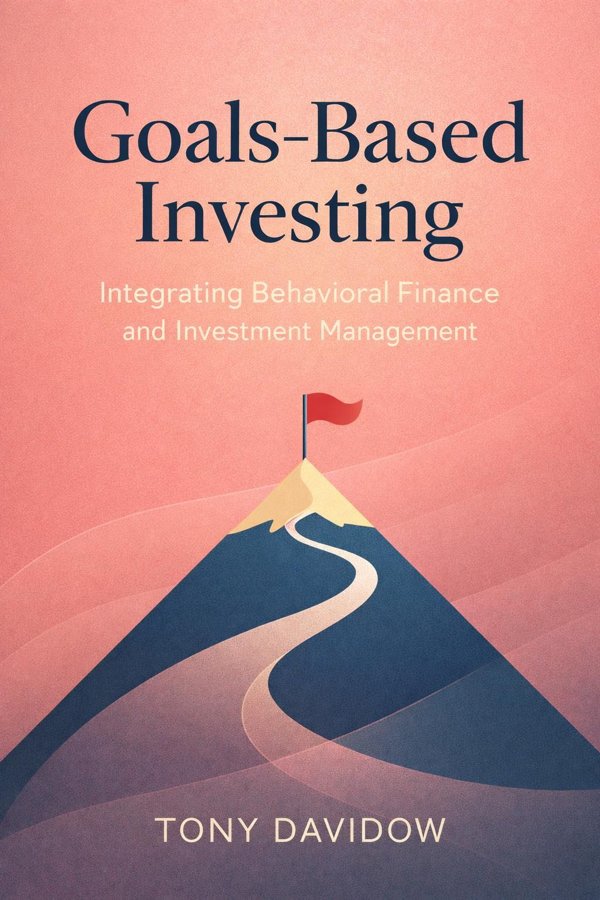
Goals-Based Investing: Integrating Behavioral Finance and Investment Management: Summary & Key Insights
by Tony Davidow
 10 min5 chaptersAudio available
What Is Goals-Based Investing: Integrating Behavioral Finance and Investment Management About?
Goals-Based Investing: Integrating Behavioral Finance and Investment Management by Tony Davidow is a finance book spanning 5 pages. Goals-Based Investing explores how investors and advisors can align investment strategies with personal goals rather than market benchmarks. The book integrates behavioral finance principles with practical portfolio management techniques, emphasizing risk management, client communication, and long-term planning. It provides frameworks for constructing portfolios that reflect individual aspirations and life stages, offering insights into how to measure success beyond traditional performance metrics.
This FizzRead summary covers all 5 key chapters of Goals-Based Investing: Integrating Behavioral Finance and Investment Management in approximately 10 minutes, distilling the most important ideas, arguments, and takeaways from Tony Davidow's work. Also available as an audio summary and Key Quotes Podcast.
Goals-Based Investing: Integrating Behavioral Finance and Investment Management
Goals-Based Investing explores how investors and advisors can align investment strategies with personal goals rather than market benchmarks. The book integrates behavioral finance principles with practical portfolio management techniques, emphasizing risk management, client communication, and long-term planning. It provides frameworks for constructing portfolios that reflect individual aspirations and life stages, offering insights into how to measure success beyond traditional performance metrics.
Who Should Read Goals-Based Investing: Integrating Behavioral Finance and Investment Management?
This book is perfect for anyone interested in finance and looking to gain actionable insights in a short read. Whether you're a student, professional, or lifelong learner, the key ideas from Goals-Based Investing: Integrating Behavioral Finance and Investment Management by Tony Davidow will help you think differently.
- ✓Readers who enjoy finance and want practical takeaways
- ✓Professionals looking to apply new ideas to their work and life
- ✓Anyone who wants the core insights of Goals-Based Investing: Integrating Behavioral Finance and Investment Management in just 10 minutes
Want the full summary?
Get instant access to this book summary and 100K+ more with Fizz Moment.
Get Free SummaryAvailable on App Store • Free to download
Key Chapters
For decades, the investment industry has measured success in relative terms. Advisors compared performance to major market indices, and investors judged their worth against those same numerical yardsticks. This performance-driven culture grew out of the institutional model of managing money for endowments and pension funds—entities that often measured success by outperforming peers or passive alternatives. But individuals live in a very different world. Your child’s education doesn’t depend on whether your portfolio beats the S&P 500 by 1%. What matters is whether you can write the tuition check when the time comes.
Over time, the industry’s obsession with relative performance began to erode investor confidence. Investors found themselves chasing returns, rebalancing irrationally, and growing increasingly risk-averse after periods of market stress. In the book, I trace how these issues gave rise to a more human model—where success isn’t about competition, but fulfillment. Historically, we moved from product-centric sales to advice-based planning and now toward an era defined by behavioral insight and individual goals. I argue that this transition is essential because performance metrics alone cannot capture the human context of investing.
By reframing investing as a process of funding life’s priorities—short-term, intermediate, and long-term—you are freed from the tyranny of comparison. Each investor’s benchmark becomes uniquely personal: the degree of progress toward their stated objectives. Once that shift happens, the conversation between advisor and client transforms. We stop asking, “How did the market do?” and start asking, “How are you doing toward what matters most to you?”
The second principle running through my framework is behavioral finance—the study of how emotion, cognitive bias, and psychological framing affect investment behavior. Traditional finance presumes that investors are rational actors. In reality, we are emotional beings prone to anchor on recent experiences, overestimate our control, and minimize the possibility of surprise. Loss aversion, overconfidence, and herd behavior are just a few of the behavioral tendencies that distort judgment.
Within goals-based investing, the purpose of understanding these biases isn’t to eliminate them—because we can’t—but to design systems that mitigate their damage. By identifying potential emotional triggers ahead of time, we can structure portfolios that buffer against panic and provide emotional comfort. For example, creating separate goal “buckets” for essentials, lifestyle aspirations, and legacy planning allows investors to mentally compartmentalize risk. When markets fall, the assets meant for long-term growth stay in context, protected psychologically by the stable assets that fund near-term needs.
Advisors must act not only as portfolio managers but also as behavioral coaches. The real value of advice often lies not in predicting markets but in helping clients stay the course through turbulence. Behavioral coaching tools—such as reframing volatility as normal, frequent communication during downturns, and realigning expectations around goals—help sustain investor discipline. In this sense, successful investing becomes less about superior forecasting and more about superior emotional management. The advisor’s role is to create a partnership of rational design and emotional resilience.
+ 3 more chapters — available in the FizzRead app
All Chapters in Goals-Based Investing: Integrating Behavioral Finance and Investment Management
About the Author
Tony Davidow is an investment strategist and educator with extensive experience in asset allocation, alternative investments, and behavioral finance. He has held senior roles at Morgan Stanley, Charles Schwab, and Guggenheim Investments, and is known for his thought leadership in goals-based wealth management.
Get This Summary in Your Preferred Format
Read or listen to the Goals-Based Investing: Integrating Behavioral Finance and Investment Management summary by Tony Davidow anytime, anywhere. FizzRead offers multiple formats so you can learn on your terms — all free.
Available formats: App · Audio · PDF · EPUB — All included free with FizzRead
Download Goals-Based Investing: Integrating Behavioral Finance and Investment Management PDF and EPUB Summary
Key Quotes from Goals-Based Investing: Integrating Behavioral Finance and Investment Management
“For decades, the investment industry has measured success in relative terms.”
“The second principle running through my framework is behavioral finance—the study of how emotion, cognitive bias, and psychological framing affect investment behavior.”
Frequently Asked Questions about Goals-Based Investing: Integrating Behavioral Finance and Investment Management
Goals-Based Investing: Integrating Behavioral Finance and Investment Management by Tony Davidow is a finance book that explores key ideas across 5 chapters. Goals-Based Investing explores how investors and advisors can align investment strategies with personal goals rather than market benchmarks. The book integrates behavioral finance principles with practical portfolio management techniques, emphasizing risk management, client communication, and long-term planning. It provides frameworks for constructing portfolios that reflect individual aspirations and life stages, offering insights into how to measure success beyond traditional performance metrics.
You Might Also Like





Browse by Category
Ready to read Goals-Based Investing: Integrating Behavioral Finance and Investment Management?
Get the full summary and 100K+ more books with Fizz Moment.