
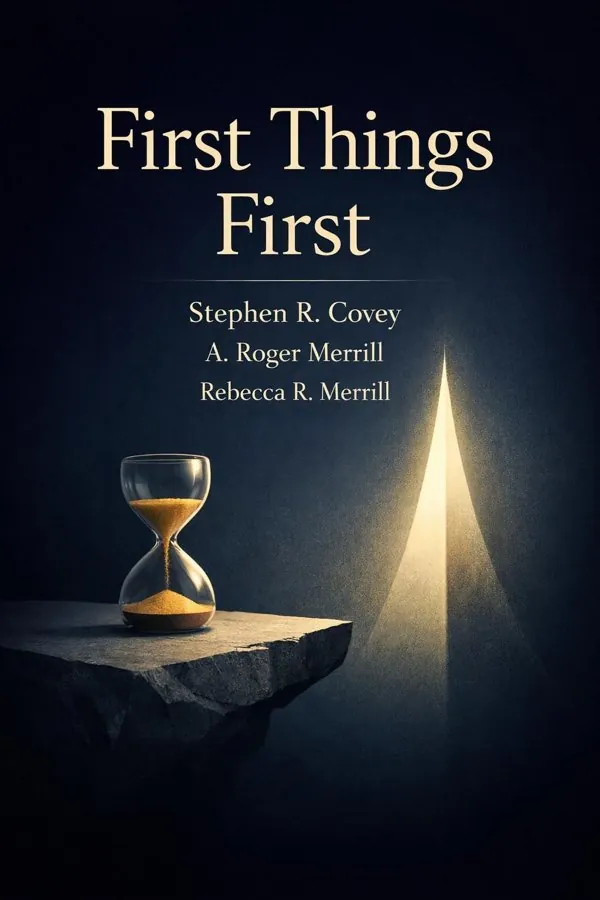
First Things First: Summary & Key Insights
by Stephen R. Covey, A. Roger Merrill, Rebecca R. Merrill
 10 min10 chaptersAudio available
What Is First Things First About?
First Things First by Stephen R. Covey, A. Roger Merrill, Rebecca R. Merrill is a leadership book spanning 10 pages. First Things First es un libro de gestión del tiempo y liderazgo personal que propone un enfoque basado en principios para priorizar lo que realmente importa. En lugar de centrarse en la eficiencia, Covey y los Merrill enseñan a alinear las acciones diarias con los valores y metas más profundos, utilizando la matriz de administración del tiempo para distinguir entre lo urgente y lo importante.
This FizzRead summary covers all 10 key chapters of First Things First in approximately 10 minutes, distilling the most important ideas, arguments, and takeaways from Stephen R. Covey, A. Roger Merrill, Rebecca R. Merrill's work. Also available as an audio summary and Key Quotes Podcast.
First Things First
First Things First es un libro de gestión del tiempo y liderazgo personal que propone un enfoque basado en principios para priorizar lo que realmente importa. En lugar de centrarse en la eficiencia, Covey y los Merrill enseñan a alinear las acciones diarias con los valores y metas más profundos, utilizando la matriz de administración del tiempo para distinguir entre lo urgente y lo importante.
Who Should Read First Things First?
This book is perfect for anyone interested in leadership and looking to gain actionable insights in a short read. Whether you're a student, professional, or lifelong learner, the key ideas from First Things First by Stephen R. Covey, A. Roger Merrill, Rebecca R. Merrill will help you think differently.
- ✓Readers who enjoy leadership and want practical takeaways
- ✓Professionals looking to apply new ideas to their work and life
- ✓Anyone who wants the core insights of First Things First in just 10 minutes
Want the full summary?
Get instant access to this book summary and 100K+ more with Fizz Moment.
Get Free SummaryAvailable on App Store • Free to download
Key Chapters
Our culture reveres the clock. We celebrate those who fill every minute, who answer every call, who can juggle more obligations than anyone else. Yet what we rarely ask is where that constant motion leads. The clock is about speed and efficiency. The compass is about direction and purpose. One measures pace; the other determines destination.
When I began to teach principle-centered leadership, this metaphor emerged because I saw so many talented people trapped by the clock. They knew how to plan their day, but they weren’t sure what they were planning it for. Too often, an efficient life is an empty one. We can travel fast, but to what end?
Living by the compass means living by principles—those timeless natural laws such as integrity, respect, contribution, and renewal. They do not change with circumstance or technology. They point, always, toward our “true north”—the values we consciously choose to govern our lives. When we act from principle, our time choices serve meaning rather than pressure.
The practical implications are profound. Instead of scheduling tasks around urgencies, you begin with your compass questions: What is most important? What relationships matter most? What are my long-term aims? With this clarity, the clock becomes our servant, not our master. Time begins to flow in harmony with purpose, creating that rare blend of peace, productivity, and direction.
Most people live in the tension between what’s urgent and what’s important. We feel the pull of the urgent every day—the email demanding immediate attention, the meeting request, the minor crisis that overshadows real progress. This pressure creates a chemical reaction, a surge of adrenaline that feels productive. Soon, that feeling becomes addictive.
The urgency addiction stems from a powerful illusion. We mistake responsiveness for effectiveness. We feel alive when we’re reacting, even though we’re often reacting to things that don’t matter. The urgent seems unavoidable because we’ve never built a system guided by importance.
When I ask people what truly matters to them—family, health, contribution—they often realize those things get squeezed out by urgent distractions. We end each day tired yet underfulfilled. Escaping the urgency trap demands awareness and courage. We must learn to pause, to say no, and to redefine success.
Breaking the cycle doesn’t mean ignoring responsibilities. It means recognizing that urgency without importance is counterfeit productivity. As we begin living according to values rather than demands, we find ourselves calmer, more intentional. The noise fades, and what was once frantic becomes focused. We begin to trade reaction for creation—the essence of personal effectiveness.
+ 8 more chapters — available in the FizzRead app
All Chapters in First Things First
About the Authors
Stephen R. Covey fue un educador, autor y conferencista estadounidense, conocido por su obra 'The 7 Habits of Highly Effective People'. A. Roger Merrill y Rebecca R. Merrill son consultores en liderazgo y efectividad personal que colaboraron con Covey en varios proyectos de desarrollo organizacional.
Get This Summary in Your Preferred Format
Read or listen to the First Things First summary by Stephen R. Covey, A. Roger Merrill, Rebecca R. Merrill anytime, anywhere. FizzRead offers multiple formats so you can learn on your terms — all free.
Available formats: App · Audio · PDF · EPUB — All included free with FizzRead
Download First Things First PDF and EPUB Summary
Key Quotes from First Things First
“We celebrate those who fill every minute, who answer every call, who can juggle more obligations than anyone else.”
“Most people live in the tension between what’s urgent and what’s important.”
Frequently Asked Questions about First Things First
First Things First by Stephen R. Covey, A. Roger Merrill, Rebecca R. Merrill is a leadership book that explores key ideas across 10 chapters. First Things First es un libro de gestión del tiempo y liderazgo personal que propone un enfoque basado en principios para priorizar lo que realmente importa. En lugar de centrarse en la eficiencia, Covey y los Merrill enseñan a alinear las acciones diarias con los valores y metas más profundos, utilizando la matriz de administración del tiempo para distinguir entre lo urgente y lo importante.
You Might Also Like

Extreme Ownership
Jocko Willink
10 min
Dare to Lead
Brene Brown
10 min
Leaders Eat Last
Simon Sinek
10 min
The 21 Irrefutable Laws of Leadership
John Maxwell
10 min
Start With Why
Simon Sinek
10 min
How to Lead When You're Not in Charge
Clay Scroggins
10 minBrowse by Category
Ready to read First Things First?
Get the full summary and 100K+ more books with Fizz Moment.