
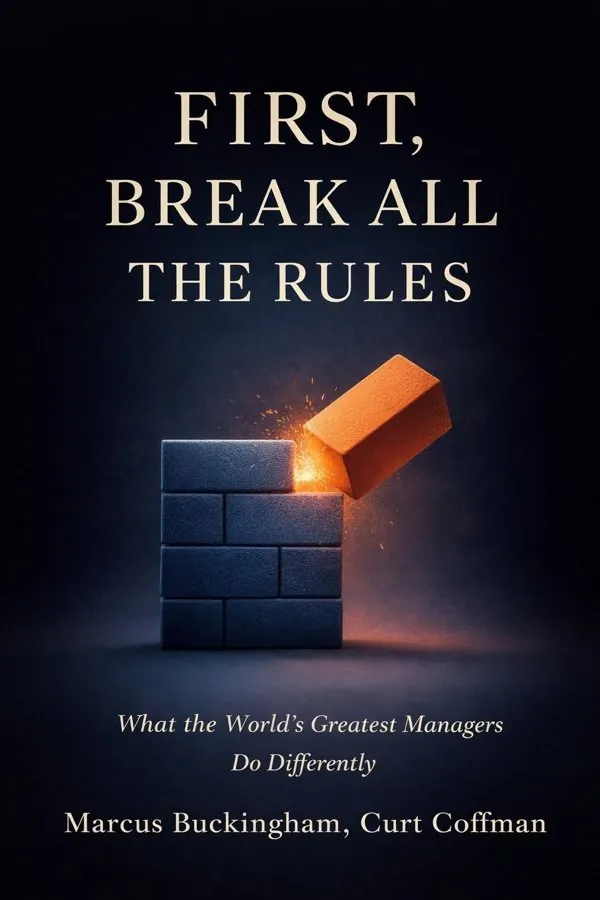
First, Break All the Rules: What the World's Greatest Managers Do Differently: Summary & Key Insights
by Marcus Buckingham, Curt Coffman
 10 min12 chaptersAudio available
What Is First, Break All the Rules: What the World's Greatest Managers Do Differently About?
First, Break All the Rules: What the World's Greatest Managers Do Differently by Marcus Buckingham, Curt Coffman is a leadership book spanning 12 pages. Based on extensive research by the Gallup Organization, this management classic reveals what the best managers do differently to turn each employee’s talent into performance. It challenges conventional wisdom about leadership and provides practical insights into how to build strong teams and foster engagement.
This FizzRead summary covers all 12 key chapters of First, Break All the Rules: What the World's Greatest Managers Do Differently in approximately 10 minutes, distilling the most important ideas, arguments, and takeaways from Marcus Buckingham, Curt Coffman's work. Also available as an audio summary and Key Quotes Podcast.
First, Break All the Rules: What the World's Greatest Managers Do Differently
Based on extensive research by the Gallup Organization, this management classic reveals what the best managers do differently to turn each employee’s talent into performance. It challenges conventional wisdom about leadership and provides practical insights into how to build strong teams and foster engagement.
Who Should Read First, Break All the Rules: What the World's Greatest Managers Do Differently?
This book is perfect for anyone interested in leadership and looking to gain actionable insights in a short read. Whether you're a student, professional, or lifelong learner, the key ideas from First, Break All the Rules: What the World's Greatest Managers Do Differently by Marcus Buckingham, Curt Coffman will help you think differently.
- ✓Readers who enjoy leadership and want practical takeaways
- ✓Professionals looking to apply new ideas to their work and life
- ✓Anyone who wants the core insights of First, Break All the Rules: What the World's Greatest Managers Do Differently in just 10 minutes
Want the full summary?
Get instant access to this book summary and 100K+ more with Fizz Moment.
Get Free SummaryAvailable on App Store • Free to download
Key Chapters
At the heart of this book lies one defining idea: the role of a manager is different from that of a leader. While leaders focus on vision, managers focus on people. A leader sets direction for an organization; a manager turns that direction into reality by working closely with individuals to transform their natural talents into productive performance. This distinction might seem subtle, but it changes everything.
Too often, management is mistaken for control — for making sure people follow rules and meet quotas. But as our findings show, great managers see themselves as catalysts, not controllers. They do not merely tell people what to do; they help them discover how they can best do it. Their focus is deeply personal and rooted in understanding the unique drivers of each person they work with. They are scientists of human motivation.
Through thousands of interviews, we noted a surprising pattern: top-performing managers were not necessarily great communicators in the public sense, nor did they fit a particular personality mold. What they shared was an ability to identify talent beneath the surface — to spot what was enduring and instinctive in people — and then position those individuals in roles where their natural filters of thought and behavior could serve the team’s goals. They are translators: turning the organization’s objectives into individual energies.
So, what is management if not leadership? It is not about inspiring masses with grand speeches, but ensuring that one employee at a time feels seen, understood, and empowered to contribute their best. Great managers see every team member as an individual puzzle piece within the larger design. My role as a manager, I realized, is not to reshape those pieces but to assemble them properly so they interlock perfectly. This shift in perspective marks the foundation for everything else that follows.
One of the first rules great managers break concerns their hiring process. Traditionally, organizations seek candidates with the longest resumes, the most impressive degrees, or the highest scores on procedural tests. But our data revealed that none of those metrics consistently predicted success. What did? Innate talent.
Talent, as we define it, is not a skill that can be taught, but a recurring pattern of thought, feeling, or behavior that can be productively applied. Skills can be trained; knowledge can be acquired. Talent, however, is the foundation — it determines how a person will think and act when confronted with real work challenges. Great managers, therefore, hire for talent first. They search beyond qualifications to find someone whose natural instincts fit the demands of the role.
At one retail chain we studied, a manager had a unique method for selecting salespeople. She asked candidates to describe the best day they ever had at work. She looked for energy, vivid detail, and emotional patterns that signaled a natural enthusiasm for customer interaction. That one question predicted performance better than formal testing. The company’s sales improved dramatically. This example isn’t an anomaly — it reflects a shift from hiring by résumé to hiring by resonance.
By selecting for talent, great managers acknowledge a profound truth: not everyone can excel in every role, but everyone excels somewhere. The manager’s art is discovering where that ‘somewhere’ is and creating the conditions for the person to thrive. In doing so, they defy the standard corporate mindset of “fixing weaknesses.” Instead, they build excellence from the raw material of who the individual already is.
+ 10 more chapters — available in the FizzRead app
All Chapters in First, Break All the Rules: What the World's Greatest Managers Do Differently
About the Authors
Marcus Buckingham is a British author, motivational speaker, and business consultant known for his work on strengths-based management. Curt Coffman is a researcher and consultant who has worked extensively with Gallup on employee engagement and organizational performance.
Get This Summary in Your Preferred Format
Read or listen to the First, Break All the Rules: What the World's Greatest Managers Do Differently summary by Marcus Buckingham, Curt Coffman anytime, anywhere. FizzRead offers multiple formats so you can learn on your terms — all free.
Available formats: App · Audio · PDF · EPUB — All included free with FizzRead
Download First, Break All the Rules: What the World's Greatest Managers Do Differently PDF and EPUB Summary
Key Quotes from First, Break All the Rules: What the World's Greatest Managers Do Differently
“At the heart of this book lies one defining idea: the role of a manager is different from that of a leader.”
“One of the first rules great managers break concerns their hiring process.”
Frequently Asked Questions about First, Break All the Rules: What the World's Greatest Managers Do Differently
First, Break All the Rules: What the World's Greatest Managers Do Differently by Marcus Buckingham, Curt Coffman is a leadership book that explores key ideas across 12 chapters. Based on extensive research by the Gallup Organization, this management classic reveals what the best managers do differently to turn each employee’s talent into performance. It challenges conventional wisdom about leadership and provides practical insights into how to build strong teams and foster engagement.
You Might Also Like

Extreme Ownership
Jocko Willink
10 min
Dare to Lead
Brene Brown
10 min
Leaders Eat Last
Simon Sinek
10 min
The 21 Irrefutable Laws of Leadership
John Maxwell
10 min
Start With Why
Simon Sinek
10 min
How to Lead When You're Not in Charge
Clay Scroggins
10 minBrowse by Category
Ready to read First, Break All the Rules: What the World's Greatest Managers Do Differently?
Get the full summary and 100K+ more books with Fizz Moment.