
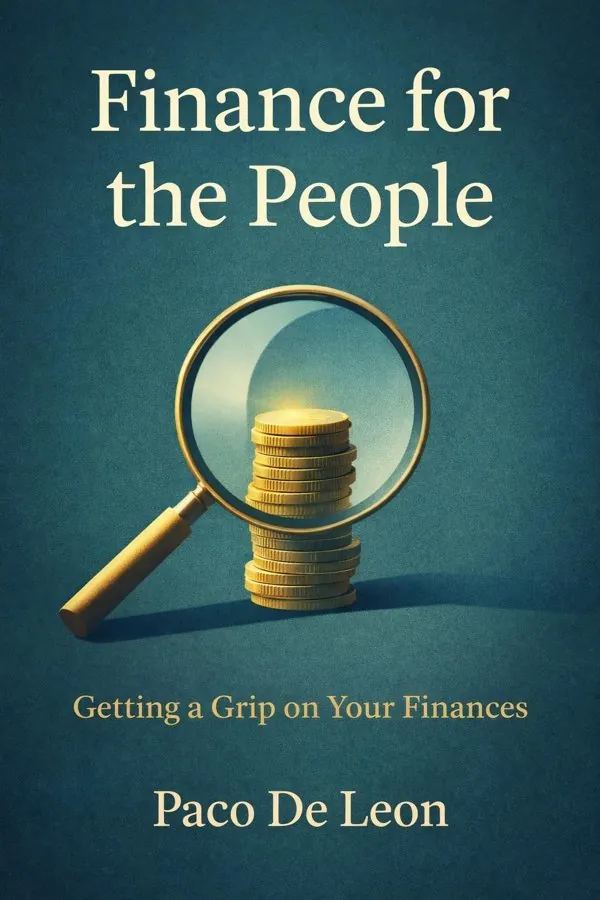
Finance for the People: Getting a Grip on Your Finances: Summary & Key Insights
by Paco De Leon
 10 min9 chaptersAudio available
Key Takeaways from Finance for the People: Getting a Grip on Your Finances
Most financial habits are formed long before we ever open a spreadsheet.
You cannot manage what you refuse to see.
A budget fails when it is built on fantasy.
Debt is often treated as a moral failure, but De Leon insists it should be approached as a financial condition that can be understood and managed.
Saving is not just about future wealth; it is about present stability.
What Is Finance for the People: Getting a Grip on Your Finances About?
Finance for the People: Getting a Grip on Your Finances by Paco De Leon is a finance book spanning 12 pages. Finance for the People: Getting a Grip on Your Finances is a practical, compassionate guide to building a healthier relationship with money. Rather than treating personal finance as a cold set of rules about budgets, debt, and investing, Paco De Leon shows that money is deeply emotional, shaped by family history, culture, shame, fear, and identity. The book argues that lasting financial change does not begin with self-judgment. It begins with awareness, honesty, and systems that match real life. De Leon makes financial literacy feel approachable for people who have often been ignored or intimidated by traditional money advice, including creatives, freelancers, and anyone who feels behind. She covers the essentials—spending, saving, debt repayment, banking, automation, and investing—while also exploring how money affects relationships, self-worth, and long-term resilience. Her tone is inclusive, witty, and grounding, making difficult topics easier to face. What makes this book especially valuable is De Leon’s authority and perspective. As a financial advisor and founder of The Hell Yeah Group, she has worked closely with artists, entrepreneurs, and everyday people navigating financial uncertainty. Her advice is not just technically sound; it is humane, realistic, and designed to help readers create sustainable financial confidence.
This FizzRead summary covers all 9 key chapters of Finance for the People: Getting a Grip on Your Finances in approximately 10 minutes, distilling the most important ideas, arguments, and takeaways from Paco De Leon's work. Also available as an audio summary and Key Quotes Podcast.
Finance for the People: Getting a Grip on Your Finances
Finance for the People: Getting a Grip on Your Finances is a practical, compassionate guide to building a healthier relationship with money. Rather than treating personal finance as a cold set of rules about budgets, debt, and investing, Paco De Leon shows that money is deeply emotional, shaped by family history, culture, shame, fear, and identity. The book argues that lasting financial change does not begin with self-judgment. It begins with awareness, honesty, and systems that match real life.
De Leon makes financial literacy feel approachable for people who have often been ignored or intimidated by traditional money advice, including creatives, freelancers, and anyone who feels behind. She covers the essentials—spending, saving, debt repayment, banking, automation, and investing—while also exploring how money affects relationships, self-worth, and long-term resilience. Her tone is inclusive, witty, and grounding, making difficult topics easier to face.
What makes this book especially valuable is De Leon’s authority and perspective. As a financial advisor and founder of The Hell Yeah Group, she has worked closely with artists, entrepreneurs, and everyday people navigating financial uncertainty. Her advice is not just technically sound; it is humane, realistic, and designed to help readers create sustainable financial confidence.
Who Should Read Finance for the People: Getting a Grip on Your Finances?
This book is perfect for anyone interested in finance and looking to gain actionable insights in a short read. Whether you're a student, professional, or lifelong learner, the key ideas from Finance for the People: Getting a Grip on Your Finances by Paco De Leon will help you think differently.
- ✓Readers who enjoy finance and want practical takeaways
- ✓Professionals looking to apply new ideas to their work and life
- ✓Anyone who wants the core insights of Finance for the People: Getting a Grip on Your Finances in just 10 minutes
Want the full summary?
Get instant access to this book summary and 100K+ more with Fizz Moment.
Get Free SummaryAvailable on App Store • Free to download
Key Chapters
Most financial habits are formed long before we ever open a spreadsheet. Paco De Leon argues that our relationship with money is rooted in a personal “money story,” a collection of beliefs shaped by childhood, family dynamics, class background, culture, and past experiences. If you grew up hearing that money is always scarce, you may hoard cash or panic about spending. If you watched adults use shopping as comfort, you may link spending with relief or reward. These patterns can continue unnoticed for years.
De Leon’s point is not to blame parents or circumstances, but to understand that financial behavior is rarely irrational when viewed in context. A person who avoids checking bank balances may not be lazy; they may be protecting themselves from feelings of failure. Someone who overspends may be trying to create a sense of freedom or belonging. Once readers recognize the story behind the habit, change becomes possible.
This insight matters because many people try to fix money problems only at the surface level. They download a budgeting app, promise to save more, or swear off credit cards. But if the emotional script underneath remains unchanged, the behavior often returns. Awareness is what turns personal finance from punishment into self-understanding.
A practical exercise is to write down early memories of money: what was said about rich people, debt, security, generosity, or success in your household? Then identify which beliefs still guide you today. Ask whether each belief is useful, true, or outdated.
Actionable takeaway: Before changing your financial habits, identify the money beliefs driving them. The clearer your story, the easier it becomes to write a better one.
You cannot manage what you refuse to see. One of the book’s strongest ideas is that financial progress begins with awareness, not perfection. De Leon encourages readers to stop treating money as a source of shame and start observing it with curiosity. This shift is powerful because many people avoid their finances precisely when they need clarity most. They ignore statements, postpone tax questions, and make vague promises to “get better later.”
De Leon reframes money as something dynamic: it moves in and out, responds to choices, and can be shaped through attention. Seeing money this way helps reduce the paralysis that comes from fear. Instead of asking, “Why am I so bad with money?” readers can ask, “What is happening here, and what can I learn from it?” That small difference opens the door to change.
Practical awareness includes knowing your income sources, tracking recurring expenses, understanding spending patterns, and identifying emotional triggers. For example, if you consistently overspend after stressful workdays, the issue may not be lack of discipline but lack of a healthier coping mechanism. If your account dips every month before payday, the problem may be timing rather than total income.
Awareness is not about obsessively monitoring every dollar. It is about building a truthful picture of your financial life. That picture creates the foundation for better systems, calmer decisions, and fewer surprises. Without it, even excellent advice can feel impossible to apply.
A useful starting point is a weekly money check-in. Spend 20 minutes reviewing balances, recent spending, upcoming bills, and any choices you want to make in the next week. Keep the tone observational, not critical.
Actionable takeaway: Replace financial avoidance with a regular, judgment-free review of your money. Consistent awareness is the first real form of financial control.
A budget fails when it is built on fantasy. De Leon treats budgeting not as a restrictive morality test but as a practical system for directing money toward what matters. Traditional budgeting advice often sounds rigid: cut all extras, track every cent, deny yourself until some distant future. De Leon offers a more realistic view. A useful budget reflects actual life, including uneven income, emotional spending, unexpected costs, and the need for pleasure.
At its core, a budget is simply a plan for cash flow. It helps you see what is coming in, what must go out, and what choices are available. It is not meant to shame you for buying coffee or prove your virtue through deprivation. A well-designed budget makes trade-offs visible so you can spend intentionally instead of reactively.
De Leon emphasizes flexibility. If your income changes month to month, your budget should accommodate that reality. If eating out is one of your genuine joys, cutting it entirely may backfire. Better to include a realistic amount than pretend you will never spend in that category. Similarly, sinking funds for irregular expenses—car repairs, gifts, annual subscriptions—prevent “surprises” that are actually predictable.
A practical approach is to begin with essentials: housing, food, transportation, insurance, minimum debt payments, and taxes. Then account for savings goals, irregular expenses, and discretionary spending. The purpose is to align money with priorities, not create impossible rules.
Budgeting also becomes easier when it is reviewed often. A plan made once and ignored for months is not a system. It is a wish. Regular adjustment keeps the budget alive and useful.
Actionable takeaway: Build a budget based on your real habits and real obligations, then revise it regularly. A sustainable budget is one you can actually live with.
Debt is often treated as a moral failure, but De Leon insists it should be approached as a financial condition that can be understood and managed. Shame keeps people stuck. It leads them to hide balances, make inconsistent payments, or avoid seeking help. Strategy, by contrast, creates movement.
The first step is to know exactly what you owe: balances, interest rates, minimum payments, due dates, and the type of debt involved. This simple inventory can feel intimidating, but it transforms a vague cloud of dread into concrete information. Once the numbers are visible, you can choose a repayment method. Some people benefit from the avalanche method, prioritizing highest-interest debt first to minimize cost. Others prefer the snowball method, paying off the smallest balance first for psychological momentum. De Leon’s broader point is that the best method is the one you can maintain.
She also recognizes that debt exists within larger systems. Medical bills, student loans, low wages, and predatory lending are not merely personal mistakes. This perspective helps readers replace self-blame with clearer decision-making. At the same time, compassion does not mean passivity. Debt still requires action: negotiation, refinancing where appropriate, automated payments, and a plan to avoid creating new high-interest debt.
For example, someone carrying credit card balances might freeze further discretionary card use, automate minimum payments, direct any extra cash to one target balance, and call issuers to request lower rates. Even modest improvements can reduce interest and shorten the payoff timeline.
Debt repayment is rarely dramatic. It is often repetitive and slow. But progress compounds, especially when paired with better spending and savings habits.
Actionable takeaway: List every debt in one place and choose a repayment strategy you can sustain. Clear information and consistency are more powerful than guilt.
Saving is not just about future wealth; it is about present stability. De Leon presents savings as a form of self-protection and self-respect, not simply a sign of discipline. Many people think they need to earn much more before saving is possible, but the book shows that even small, consistent amounts can begin to change how life feels. Savings reduce the fragility that turns every unexpected expense into a crisis.
A key distinction is between types of savings. Emergency savings provide a buffer for urgent, unplanned events such as medical bills, job loss, or repairs. Short-term savings cover known upcoming expenses like travel, taxes, moving costs, or holiday gifts. Long-term savings support larger goals and future freedom. Treating all savings as one vague category makes it harder to build momentum. Separating funds by purpose gives money a job and makes progress easier to track.
De Leon also addresses the psychology of saving. People often resist it because saving can feel like deprivation in the present for uncertain benefits later. The solution is not to rely on willpower alone, but to make saving automatic and visible. Automatic transfers after payday, separate high-yield accounts, and named goal buckets can reduce friction. For example, transferring a fixed amount each week into an emergency fund creates progress without requiring a new decision every time.
Importantly, savings do not need to start big to matter. A first goal might be one month of essential expenses or simply enough to avoid using a credit card for minor emergencies. That cushion can interrupt the cycle of setback and debt.
Actionable takeaway: Create separate savings goals for emergencies, irregular expenses, and future plans, then automate contributions. Savings are what turn financial stress into financial breathing room.
Many people assume investing is only for the wealthy, but De Leon works to demystify it as a tool for ordinary people to build long-term security. The essential idea is simple: saving preserves money, while investing helps it grow. Because inflation erodes purchasing power over time, money left entirely in cash may become less useful in the future. Investing allows your money to participate in economic growth through vehicles such as retirement accounts, index funds, and diversified portfolios.
What makes investing feel intimidating is often the language around it. Markets, risk tolerance, asset allocation, tax advantages, and compounding can sound technical or exclusive. De Leon cuts through that by focusing on fundamentals rather than hype. You do not need to outsmart the market, constantly trade, or become a financial expert. In many cases, broad diversification, low fees, and consistency matter more than picking winners.
A practical example is retirement investing through an employer-sponsored account or an individual retirement account. Contributing regularly, especially if employer matching is available, can make a meaningful difference over decades. Starting early helps, but starting late is still better than never starting. The power of compounding depends less on perfection and more on time and regular contributions.
De Leon also places investing within the larger financial picture. Before investing aggressively, readers may need to stabilize cash flow, pay down high-interest debt, and build an emergency fund. Investing is not a substitute for financial foundations; it rests on them.
The broader lesson is confidence through understanding. When readers stop seeing investing as a secret world for insiders, they can begin making calm, informed choices that serve their future selves.
Actionable takeaway: Learn the basics of low-cost, diversified investing and start with regular contributions, even if they are modest. Time and consistency do more than waiting for the perfect moment.
Good intentions are fragile; systems are dependable. One of De Leon’s most practical lessons is that financial stability comes less from constant self-control and more from designing systems that make good choices easier. Motivation rises and falls with stress, energy, mood, and life events. Automation reduces the need to make repeated decisions under pressure.
A strong financial system might include direct deposit into multiple accounts, automatic bill pay, scheduled transfers to savings, reminders for irregular expenses, and a calendar for taxes or subscription renewals. These structures create predictability. Instead of remembering everything manually, you build a framework that carries part of the load.
Automation is especially helpful for people with busy schedules, executive function challenges, or inconsistent income. For example, a freelancer might route every client payment through a system that automatically sets aside percentages for taxes, operating expenses, and personal income. An employee might schedule payday transfers so that emergency savings and retirement contributions happen before discretionary spending starts.
De Leon does not suggest handing over total control to technology. Systems still require review. Accounts need monitoring, transfers may need adjusting, and cash flow changes over time. But automation creates a baseline of healthy behavior that continues even during chaotic periods.
This idea also applies to reducing friction. If saving requires six complicated steps, it probably will not happen consistently. If debt payments depend on memory alone, missed due dates become more likely. Better systems reduce mistakes, stress, and decision fatigue.
Financial peace often comes not from earning dramatically more, but from having a reliable way to direct what you already have.
Actionable takeaway: Identify three money tasks you repeat every month and automate them where possible. The goal is to build a financial life that functions even when your motivation does not.
Money is rarely just personal; it is relational. De Leon explores how finances affect romantic partnerships, families, friendships, and professional dynamics. People bring different money stories, habits, anxieties, and values into shared situations, which is why money can become one of the most emotionally charged topics in any relationship.
Conflict often arises not because one person is “bad with money,” but because expectations remain unspoken. One partner may see saving as security, while another sees spending as enjoying life. One may believe debt is normal, while the other finds it deeply stressful. Without conversation, these differences harden into resentment.
De Leon encourages transparent, practical communication. That can include discussing income honestly, clarifying who pays for what, setting shared goals, disclosing debt, and deciding how joint and separate accounts should work. In friendships, it might mean being honest about affordability instead of overspending to keep up socially. In family relationships, it may involve boundaries around lending, financial support, or inherited patterns of obligation.
For couples, regular money meetings can be transformative. Reviewing bills, goals, upcoming expenses, and emotional concerns together makes finances a shared project rather than a source of silent tension. The goal is not to erase differences, but to create systems both people understand and accept.
This relational lens also reminds readers that money touches identity, power, care, and autonomy. Talking about it clearly is an act of trust. Avoiding it usually increases confusion and stress.
Actionable takeaway: Start one honest money conversation this week—with a partner, family member, or even yourself—focused on expectations, values, and practical next steps. Financial harmony begins with transparent communication.
A healthy financial life is not just efficient; it is meaningful. De Leon argues that money should support the kind of life you actually want, not just the one society rewards or displays online. This is where values-based finance becomes essential. Without a clear sense of what matters to you, it is easy to drift into spending, working, and chasing goals that leave you exhausted or disconnected.
Values-based finance means asking deeper questions: What do I want money to make possible? Freedom? Stability? Creativity? Community? Caregiving? Rest? Once those priorities are identified, financial choices can be evaluated against them. A high income with constant burnout may not align with your values. A lower-cost lifestyle that protects your time and mental health might. Likewise, spending generously on travel, education, or family support can be wise if those choices reflect genuine priorities rather than impulse or pressure.
This idea connects directly to resilience. Financial resilience is not only having an emergency fund. It is building a life with enough margin, flexibility, and self-knowledge to adapt when conditions change. That may involve multiple income streams, stronger savings, lower fixed expenses, better insurance, clearer boundaries, or a support network. For creatives and freelancers especially, resilience can also mean planning for irregular income, tax obligations, and periods of low demand.
De Leon’s contribution is to show that financial planning is not separate from identity and purpose. It is one way of expressing them. A financial system works best when it supports both survival and meaning.
Actionable takeaway: Choose three core values and review your recent spending, work commitments, and financial goals against them. The strongest money plan is the one that protects your future while honoring what matters now.
All Chapters in Finance for the People: Getting a Grip on Your Finances
About the Author
Paco De Leon is a financial advisor, educator, illustrator, and the founder of The Hell Yeah Group, a company that helps creatives, freelancers, and entrepreneurs build healthier financial systems. She is widely recognized for making personal finance more accessible to people who often feel excluded by traditional money advice. Her work blends practical financial guidance with emotional intelligence, helping readers understand not only how money works, but why they behave the way they do around it. With a background in advising clients across a range of nontraditional careers, De Leon brings a grounded, inclusive perspective to topics like budgeting, debt, saving, and investing. Through her writing and teaching, she encourages people to approach money with curiosity, clarity, and compassion rather than shame.
Get This Summary in Your Preferred Format
Read or listen to the Finance for the People: Getting a Grip on Your Finances summary by Paco De Leon anytime, anywhere. FizzRead offers multiple formats so you can learn on your terms — all free.
Available formats: App · Audio · PDF · EPUB — All included free with FizzRead
Download Finance for the People: Getting a Grip on Your Finances PDF and EPUB Summary
Key Quotes from Finance for the People: Getting a Grip on Your Finances
“Most financial habits are formed long before we ever open a spreadsheet.”
“You cannot manage what you refuse to see.”
“A budget fails when it is built on fantasy.”
“Debt is often treated as a moral failure, but De Leon insists it should be approached as a financial condition that can be understood and managed.”
“Saving is not just about future wealth; it is about present stability.”
Frequently Asked Questions about Finance for the People: Getting a Grip on Your Finances
Finance for the People: Getting a Grip on Your Finances by Paco De Leon is a finance book that explores key ideas across 9 chapters. Finance for the People: Getting a Grip on Your Finances is a practical, compassionate guide to building a healthier relationship with money. Rather than treating personal finance as a cold set of rules about budgets, debt, and investing, Paco De Leon shows that money is deeply emotional, shaped by family history, culture, shame, fear, and identity. The book argues that lasting financial change does not begin with self-judgment. It begins with awareness, honesty, and systems that match real life. De Leon makes financial literacy feel approachable for people who have often been ignored or intimidated by traditional money advice, including creatives, freelancers, and anyone who feels behind. She covers the essentials—spending, saving, debt repayment, banking, automation, and investing—while also exploring how money affects relationships, self-worth, and long-term resilience. Her tone is inclusive, witty, and grounding, making difficult topics easier to face. What makes this book especially valuable is De Leon’s authority and perspective. As a financial advisor and founder of The Hell Yeah Group, she has worked closely with artists, entrepreneurs, and everyday people navigating financial uncertainty. Her advice is not just technically sound; it is humane, realistic, and designed to help readers create sustainable financial confidence.
You Might Also Like





Browse by Category
Ready to read Finance for the People: Getting a Grip on Your Finances?
Get the full summary and 100K+ more books with Fizz Moment.