
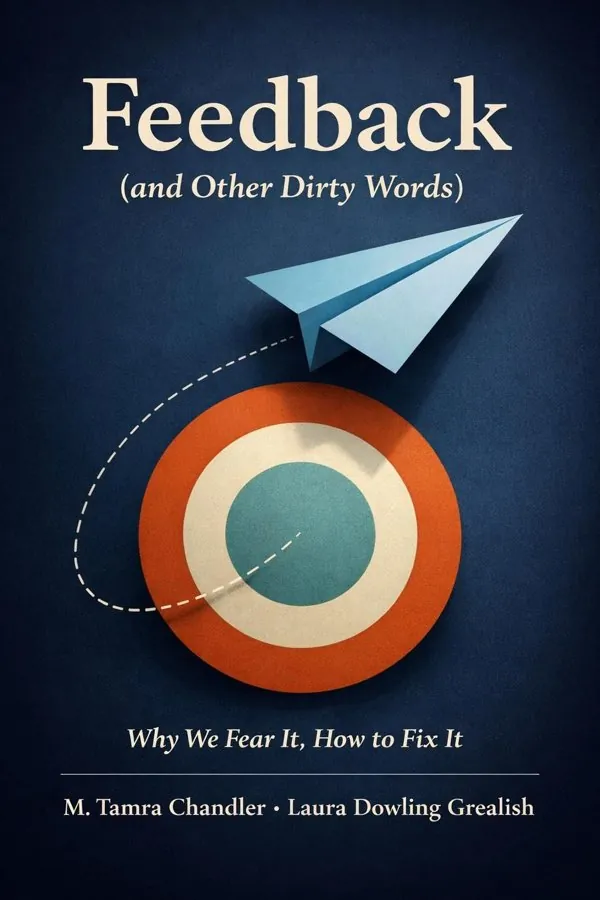
Feedback (and Other Dirty Words): Why We Fear It, How to Fix It: Summary & Key Insights
by M. Tamra Chandler, Laura Dowling Grealish
 10 min9 chaptersAudio available
What Is Feedback (and Other Dirty Words): Why We Fear It, How to Fix It About?
Feedback (and Other Dirty Words): Why We Fear It, How to Fix It by M. Tamra Chandler, Laura Dowling Grealish is a leadership book spanning 9 pages. This book explores why feedback is often feared and misunderstood in workplaces and offers practical strategies to transform it into a positive, growth-oriented practice. The authors draw on organizational psychology and leadership experience to help readers build a culture where feedback is welcomed and effective.
This FizzRead summary covers all 9 key chapters of Feedback (and Other Dirty Words): Why We Fear It, How to Fix It in approximately 10 minutes, distilling the most important ideas, arguments, and takeaways from M. Tamra Chandler, Laura Dowling Grealish's work. Also available as an audio summary and Key Quotes Podcast.
Feedback (and Other Dirty Words): Why We Fear It, How to Fix It
This book explores why feedback is often feared and misunderstood in workplaces and offers practical strategies to transform it into a positive, growth-oriented practice. The authors draw on organizational psychology and leadership experience to help readers build a culture where feedback is welcomed and effective.
Who Should Read Feedback (and Other Dirty Words): Why We Fear It, How to Fix It?
This book is perfect for anyone interested in leadership and looking to gain actionable insights in a short read. Whether you're a student, professional, or lifelong learner, the key ideas from Feedback (and Other Dirty Words): Why We Fear It, How to Fix It by M. Tamra Chandler, Laura Dowling Grealish will help you think differently.
- ✓Readers who enjoy leadership and want practical takeaways
- ✓Professionals looking to apply new ideas to their work and life
- ✓Anyone who wants the core insights of Feedback (and Other Dirty Words): Why We Fear It, How to Fix It in just 10 minutes
Want the full summary?
Get instant access to this book summary and 100K+ more with Fizz Moment.
Get Free SummaryAvailable on App Store • Free to download
Key Chapters
Every organization we’ve worked with, regardless of size or industry, carries some degree of tension around feedback. People talk about it as if it were a high-stakes performance event—something you have to endure, an obligation tied to annual reviews or corrective conversations. We call this the 'feedback problem': the cultural, emotional, and structural reasons feedback feels unsafe.
At its core, the problem is human. Feedback touches our sense of identity, competence, and belonging. We fear that criticism equates to rejection. In most workplaces, feedback has historically been tied to evaluation rather than learning—it’s positioned as a way to measure or rank rather than support growth. That association creates an emotional minefield. From the day you started your career, you probably learned that feedback means 'something’s wrong.' No wonder people’s pulse quickens when their manager says, 'Can I give you some feedback?'
Organizations also reinforce these fears. Traditional performance management systems reward output and compliance instead of curiosity or adaptability. Hierarchies amplify the power imbalance between giver and receiver, turning feedback into a one-way transmission from authority to subordinates. Worse yet, many managers themselves were never taught how to give useful feedback, so the process devolves into vague generalities or personal judgment.
By acknowledging these systemic and psychological hurdles, we can begin to dismantle them. When leaders recognize that avoidance isn’t laziness but self-protection, they unlock empathy. That insight redefines the feedback moment—it becomes an exchange between equals working toward shared clarity, rather than an evaluation of worth. Understanding the feedback problem isn’t about blame; it’s about freeing ourselves from patterns that don’t serve us.
Before we can fix feedback, we need to understand how our minds process it. Neuroscience tells us that our brains interpret feedback as social threat. The moment someone signals evaluation, the amygdala—the region tied to fear and fight-or-flight response—lights up. The result is defensiveness, self-justification, or withdrawal. You might find yourself explaining away your actions before the other person has finished speaking. This isn’t weakness; it’s biology.
The feedback mindset reflects how we choose to navigate these reactions. Most people fall into one of two common traps: they listen only to defend, or they listen only to obey. Neither mindset leads to learning. The healthy alternative is curiosity—the willingness to hold discomfort long enough to extract insight. When I coach teams through tough conversations, I ask them to treat feedback like data. Data doesn’t define you; it informs you. If you can look at feedback as information rather than judgment, the conversation becomes liberating instead of threatening.
This reframing also demands emotional intelligence. Empathy—understanding that the other person’s perspective is shaped by their experiences—creates space for mutual respect. When people trust that feedback comes from care rather than authority, they lower their guard. In organizations that succeed with feedback, you see a cultural shift: receivers listen openly, givers share constructively, and even observers step in to help keep the dialogue healthy. The mindset isn’t just individual—it’s collective. When curiosity replaces fear, feedback begins to flourish.
+ 7 more chapters — available in the FizzRead app
All Chapters in Feedback (and Other Dirty Words): Why We Fear It, How to Fix It
About the Authors
M. Tamra Chandler is an organizational consultant and founder of PeopleFirm, specializing in performance management and leadership development. Laura Dowling Grealish is a consultant and coach focused on helping organizations improve communication and feedback practices.
Get This Summary in Your Preferred Format
Read or listen to the Feedback (and Other Dirty Words): Why We Fear It, How to Fix It summary by M. Tamra Chandler, Laura Dowling Grealish anytime, anywhere. FizzRead offers multiple formats so you can learn on your terms — all free.
Available formats: App · Audio · PDF · EPUB — All included free with FizzRead
Download Feedback (and Other Dirty Words): Why We Fear It, How to Fix It PDF and EPUB Summary
Key Quotes from Feedback (and Other Dirty Words): Why We Fear It, How to Fix It
“Every organization we’ve worked with, regardless of size or industry, carries some degree of tension around feedback.”
“Before we can fix feedback, we need to understand how our minds process it.”
Frequently Asked Questions about Feedback (and Other Dirty Words): Why We Fear It, How to Fix It
Feedback (and Other Dirty Words): Why We Fear It, How to Fix It by M. Tamra Chandler, Laura Dowling Grealish is a leadership book that explores key ideas across 9 chapters. This book explores why feedback is often feared and misunderstood in workplaces and offers practical strategies to transform it into a positive, growth-oriented practice. The authors draw on organizational psychology and leadership experience to help readers build a culture where feedback is welcomed and effective.
You Might Also Like

Extreme Ownership
Jocko Willink
10 min
Dare to Lead
Brene Brown
10 min
Leaders Eat Last
Simon Sinek
10 min
The 21 Irrefutable Laws of Leadership
John Maxwell
10 min
Start With Why
Simon Sinek
10 min
How to Lead When You're Not in Charge
Clay Scroggins
10 minBrowse by Category
Ready to read Feedback (and Other Dirty Words): Why We Fear It, How to Fix It?
Get the full summary and 100K+ more books with Fizz Moment.