
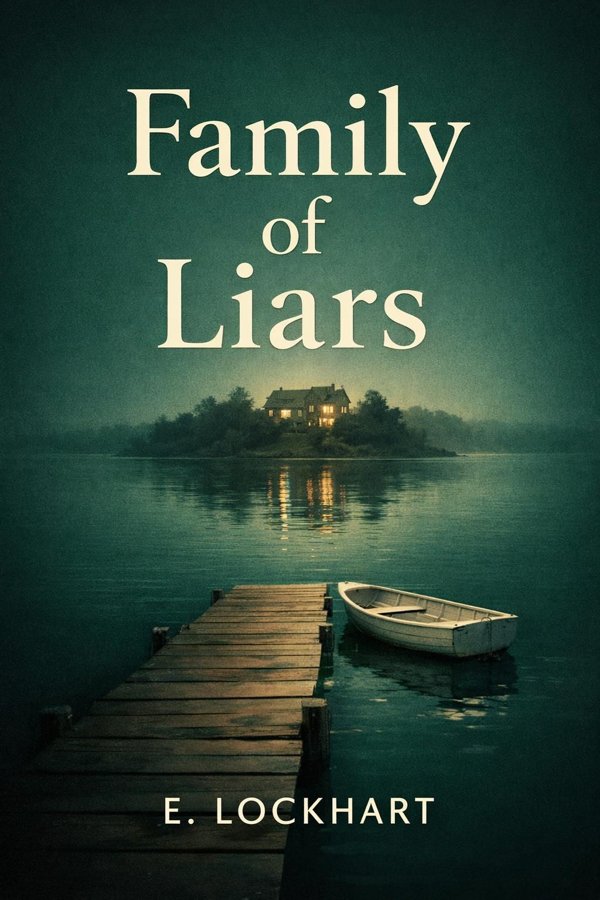
Family of Liars: Summary & Key Insights
by E. Lockhart
 10 min8 chaptersAudio available
Key Takeaways from Family of Liars
The most dangerous lies are often the ones wrapped in beauty.
People do not inherit only money, names, or houses; they inherit stories about who they are supposed to be.
What families refuse to say often influences them more than what they openly discuss.
Intense emotion does not automatically equal healthy love.
Loss rarely arrives cleanly; it alters how people think, remember, and act.
What Is Family of Liars About?
Family of Liars by E. Lockhart is a bestsellers book. Some families protect their image so fiercely that truth becomes the first casualty. Family of Liars by E. Lockhart is a dark, lyrical young adult thriller that returns readers to the world of the wealthy Sinclair family years before the events of We Were Liars. Set on a private island steeped in privilege, secrecy, and emotional damage, the novel follows Carrie Sinclair in her teenage years as she navigates love, loyalty, grief, and the crushing expectations of her family. What begins as a summer of glamour and possibility slowly turns into a haunting story of deception and consequence. The book matters because it explores how beautiful surfaces can conceal trauma, manipulation, and moral compromise. Lockhart blends suspense with emotional depth, showing how family myths are built and what they cost the people forced to maintain them. As the bestselling author of We Were Liars, Lockhart has established herself as a master of elegant psychological storytelling, twist-driven plotting, and sharp insight into class, identity, and silence. Family of Liars is not just a prequel; it is a chilling exploration of how dysfunction passes from one generation to the next.
This FizzRead summary covers all 8 key chapters of Family of Liars in approximately 10 minutes, distilling the most important ideas, arguments, and takeaways from E. Lockhart's work. Also available as an audio summary and Key Quotes Podcast.
Family of Liars
Some families protect their image so fiercely that truth becomes the first casualty. Family of Liars by E. Lockhart is a dark, lyrical young adult thriller that returns readers to the world of the wealthy Sinclair family years before the events of We Were Liars. Set on a private island steeped in privilege, secrecy, and emotional damage, the novel follows Carrie Sinclair in her teenage years as she navigates love, loyalty, grief, and the crushing expectations of her family. What begins as a summer of glamour and possibility slowly turns into a haunting story of deception and consequence.
The book matters because it explores how beautiful surfaces can conceal trauma, manipulation, and moral compromise. Lockhart blends suspense with emotional depth, showing how family myths are built and what they cost the people forced to maintain them. As the bestselling author of We Were Liars, Lockhart has established herself as a master of elegant psychological storytelling, twist-driven plotting, and sharp insight into class, identity, and silence. Family of Liars is not just a prequel; it is a chilling exploration of how dysfunction passes from one generation to the next.
Who Should Read Family of Liars?
This book is perfect for anyone interested in bestsellers and looking to gain actionable insights in a short read. Whether you're a student, professional, or lifelong learner, the key ideas from Family of Liars by E. Lockhart will help you think differently.
- ✓Readers who enjoy bestsellers and want practical takeaways
- ✓Professionals looking to apply new ideas to their work and life
- ✓Anyone who wants the core insights of Family of Liars in just 10 minutes
Want the full summary?
Get instant access to this book summary and 100K+ more with Fizz Moment.
Get Free SummaryAvailable on App Store • Free to download
Key Chapters
The most dangerous lies are often the ones wrapped in beauty. In Family of Liars, E. Lockhart uses the Sinclair family’s private island, wealth, and polished image to show how privilege can disguise deep moral and emotional decay. From the outside, the Sinclairs appear enviable: old money, tradition, elegance, and confidence. Yet the novel reveals that status does not eliminate suffering; it often teaches people how to conceal it more effectively.
This idea matters because the family’s power allows them to manage appearances instead of confronting truth. Pain is hidden, mistakes are buried, and image becomes more important than honesty. The island itself functions like a stage set where everyone knows their role. Children learn early that belonging depends on silence, good manners, and loyalty to the family narrative. What looks idyllic is actually a controlled environment where vulnerability is dangerous.
In real life, this pattern exists beyond extreme wealth. Many families, institutions, and communities protect reputation at the expense of emotional reality. A family may insist that everything is fine while its members struggle privately with grief, addiction, resentment, or abuse. A workplace may celebrate excellence while ignoring burnout and harm. Lockhart’s novel invites readers to ask what polished surfaces are preventing them from seeing.
The practical lesson is to question narratives that seem too perfect. If an environment demands flawless appearances, it may also discourage truth. Pay attention to what cannot be discussed openly, who is expected to stay quiet, and what costs are imposed on those who challenge the story. Genuine health requires more than elegance or success; it requires honesty.
Actionable takeaway: When you encounter an image of perfection, ask what truths might be missing and create space for conversations that value reality over appearances.
People do not inherit only money, names, or houses; they inherit stories about who they are supposed to be. One of the strongest ideas in Family of Liars is that identity inside a powerful family is constructed through expectation. Carrie Sinclair is not free to simply become herself. She is constantly being told, directly or indirectly, what a Sinclair girl should look like, want, fear, and hide.
Lockhart shows how family mythology can become a kind of internal script. The Sinclairs value elegance, control, desirability, and social superiority. Those values affect how the sisters relate to one another, how they interpret love, and how they respond to pain. Carrie’s desires often collide with the role she has been assigned. She is not just making teenage choices; she is trying to survive inside a story older than she is.
This dynamic is recognizable in everyday life. Many people grow up with inherited narratives such as “our family is strong,” “we don’t talk about feelings,” “success matters most,” or “loyalty means never exposing problems.” These beliefs can provide belonging, but they can also become prisons. A child may suppress interests, relationships, or truths in order to remain acceptable within the family identity.
The novel encourages readers to notice which parts of themselves are authentic and which are performances shaped by inherited expectations. Reflection can begin with simple questions: What beliefs about love, conflict, class, or self-worth did I absorb from my family? Which still serve me? Which keep me silent or ashamed? Understanding the story you inherited is often the first step toward revising it.
Actionable takeaway: Write down three beliefs your family taught you about identity and ask whether they reflect your values or merely your conditioning.
What families refuse to say often influences them more than what they openly discuss. In Family of Liars, silence is not just absence; it is a system of control. The Sinclairs do not always need explicit threats because everyone understands the rules. Certain feelings are too messy, certain truths too dangerous, and certain events too damaging to acknowledge. Silence becomes the family’s native tongue.
Lockhart presents this with unsettling precision. Characters sense that speaking honestly could disrupt relationships, expose hypocrisy, or destroy the carefully maintained image of unity. As a result, secrets accumulate. Misunderstandings deepen. Emotional pain mutates in private. The family appears composed, but that composure depends on continual suppression. Silence keeps the structure intact while quietly poisoning the people inside it.
This is useful far beyond fiction. In many homes, the unsaid becomes more powerful than direct communication. A parent’s depression may never be named. Financial instability may be hidden from children. Harmful behavior may be excused rather than addressed. Over time, family members become experts at reading moods and omissions instead of hearing the truth. This can create anxiety, confusion, and mistrust, especially for young people trying to understand reality.
The novel suggests that silence is rarely neutral. It protects some people and burdens others. Those with less power often carry the emotional consequences of what cannot be said. Breaking silence does not always solve everything immediately, but naming reality is often the beginning of healing and moral clarity.
In practice, readers can examine where silence operates in their own lives. Are there topics everyone avoids? Are you editing yourself to preserve comfort? Are you mistaking secrecy for loyalty? Healthy communication does not mean brutal honesty at all times, but it does require a willingness to face difficult truths.
Actionable takeaway: Identify one important conversation you have been avoiding and take a concrete first step toward addressing it with care and honesty.
Intense emotion does not automatically equal healthy love. Family of Liars explores the unstable territory where attraction, longing, fantasy, and obsession overlap. Carrie’s romantic experiences are charged with urgency, idealization, and emotional risk, making it difficult to separate genuine connection from the desire to escape, to be chosen, or to feel transformed.
Lockhart captures a truth common to adolescence and beyond: people often use love stories to make sense of themselves. Romance can feel like rescue. Being desired can feel like proof of worth. But when identity is fragile and family life is constricting, love may become less about mutual understanding and more about projection. Characters attach meaning to others that those people cannot possibly sustain. This makes disappointment and betrayal especially devastating.
The novel does not dismiss romantic feeling; rather, it shows how unexamined intensity can become dangerous. When someone is desperate to be seen, they may ignore warning signs, confuse chemistry with trust, or mistake secrecy for depth. In families where emotional openness is limited, romance can seem like the only place to put longing. That pressure distorts relationships.
This applies to readers in very practical ways. It is easy to romanticize unavailable people, dramatic situations, or relationships that feel cinematic rather than stable. Social media and popular culture often reinforce the idea that overwhelming emotion is the highest form of love. Yet healthy love usually includes clarity, consistency, boundaries, and reality testing.
A useful question is not simply “How strongly do I feel?” but “What is this relationship asking me to ignore?” If a relationship requires secrecy, self-abandonment, or denial, its intensity may be masking harm. Emotional honesty with yourself is essential.
Actionable takeaway: When a relationship feels all-consuming, pause and list the facts separately from the fantasy before making an important decision.
Loss rarely arrives cleanly; it alters how people think, remember, and act. A haunting idea in Family of Liars is that grief does not simply make characters sad. It changes perception. It can sharpen longing, intensify denial, and make impossible choices seem reasonable. Lockhart uses grief not as background emotion but as an active force shaping behavior and story.
For Carrie, grief intersects with family pressure, romantic confusion, and personal vulnerability. This combination creates a world where decisions are not made from a place of calm understanding. Instead, grief bends reality. People cling to symbols, invent explanations, and protect what feels emotionally necessary even when it is dangerous. This makes the novel especially compelling because its suspense is psychological as much as external.
Readers can recognize this pattern in real life. During grief, memory can become selective. We idealize what is gone, replay events obsessively, or attach ourselves to rituals and objects in ways that feel irrational from the outside. Judgment can narrow. We may retreat, lash out, or become susceptible to narratives that promise relief. Grief is not weakness, but it can make us vulnerable to choices we would otherwise question.
The book’s deeper contribution is its refusal to simplify mourning. It shows that grief can coexist with anger, shame, desire, and secrecy. It can make people tender, selfish, reckless, or numb. Understanding this complexity helps readers extend compassion without romanticizing harmful behavior.
Practically, the lesson is to treat major decisions made in grief with extra care. Seek perspective, slow down when possible, and recognize that emotional intensity can change what seems true or urgent. If someone you know is grieving, avoid forcing neat explanations. Presence often matters more than advice.
Actionable takeaway: If you are navigating loss, delay any irreversible decision when possible and talk it through with someone outside the emotional storm.
A gorgeous setting does not soften darkness; sometimes it makes it sharper. One of E. Lockhart’s signature strengths in Family of Liars is the contrast between the island’s beauty and the corruption unfolding within it. Sunlight, water, summer rituals, and elegant spaces create a dreamlike atmosphere, but that beauty never feels safe. Instead, it heightens the reader’s unease by placing cruelty, secrecy, and damage inside something visually perfect.
This contrast matters because it reflects how human beings often misread environments. We associate beauty with goodness, sophistication with character, and comfort with innocence. The Sinclairs benefit from those assumptions. Their world appears refined, which makes their moral failures easier to excuse or overlook. Lockhart reminds us that aesthetics are not ethics.
This idea has practical reach. In everyday life, people can be disarmed by charm, luxury, education, or cultural prestige. Harmful relationships may look aspirational from the outside. Institutions may use elegant language and branding to conceal exploitation or exclusion. Even personal habits can be disguised by style; a beautifully curated life may still be emotionally unsustainable.
The novel trains readers to separate appearance from value. Rather than asking whether something is attractive, exclusive, or socially admired, we should ask whether it is truthful, humane, and accountable. This is especially important in a culture driven by image. Beauty can enrich life, but it can also distract from what actually deserves scrutiny.
A good practical habit is to question your first impression of people and places that seem ideal. What behavior supports that impression? What evidence complicates it? What truths become easier to ignore because the surface is so appealing? Critical attention is not cynicism; it is protection against manipulation.
Actionable takeaway: The next time something seems irresistibly polished or beautiful, evaluate its substance before trusting the story its surface tells.
Families do not just pass down heirlooms; they pass down wounds. Family of Liars is powerful because it shows that dysfunction is rarely isolated to one dramatic event. Instead, it moves across generations through habits, values, silences, and emotional training. What one generation refuses to confront, the next often inherits in a more complicated form.
The Sinclair family is defined by continuity. Their traditions, status, and internal hierarchies create the illusion of stability, but beneath that continuity lies repetition. Emotional repression, competitiveness, image management, and conditional love shape how children mature into adults. Carrie and her sisters are not starting from a neutral place. They are growing inside a system already structured by unresolved damage.
This idea is deeply relevant outside the novel. In many families, patterns such as avoidance, perfectionism, favoritism, shame, or emotional coldness become normalized because “that’s just how things are.” Without reflection, children may reproduce what hurt them, even when they consciously reject it. Someone raised in secrecy may struggle with openness. Someone taught that love must be earned may choose relationships that mirror that instability.
Lockhart’s novel does not suggest that inheritance equals destiny. Instead, it shows the cost of failing to interrupt the cycle. Awareness matters. Naming patterns matters. New behavior matters. Healing often begins when someone is willing to see family loyalty and truth-telling as compatible rather than opposed.
Readers can apply this by tracing repeated themes in their own histories. What conflicts recur in your family? How are affection, anger, money, or mistakes handled? Which behaviors feel normal but leave people emotionally diminished? Change usually starts with discomfort, because breaking a pattern threatens the identity built around it.
Actionable takeaway: Identify one unhealthy family pattern you have normalized and choose one specific behavior that interrupts it in your own life.
Stories are rarely neutral, especially when told by someone carrying guilt, longing, or fear. In Family of Liars, the way events are narrated matters almost as much as the events themselves. Lockhart builds tension by reminding readers that memory is selective and storytelling can function as both revelation and concealment. A narrator may seem to be explaining the past while also controlling how much truth reaches the listener.
This creates one of the novel’s most compelling effects: readers are asked not just to absorb the story, but to interrogate it. Why is this detail emphasized? Why is another delayed? What emotional need might shape the way the past is being told? The result is a reading experience grounded in uncertainty, where voice becomes part of the mystery.
The broader insight is that all personal storytelling involves interpretation. In daily life, people present themselves strategically. We edit history when describing breakups, family conflict, career decisions, or painful mistakes. Sometimes that editing protects privacy; other times it protects identity. We want to be understandable, sympathetic, or innocent. That does not always mean we are lying, but it does mean our narratives deserve reflection.
This idea is especially useful for readers interested in communication and self-awareness. When you tell your own story, what role do you cast yourself in? Victim, hero, outsider, survivor, misunderstood child? Those roles may hold truth, but they can also limit deeper understanding. Likewise, when hearing another person’s account, empathy and critical thinking should coexist.
Lockhart’s novel turns narration into an ethical question: what do we owe the truth when the truth threatens us? That question lingers long after the plot ends.
Actionable takeaway: Revisit a story you often tell about your past and ask what facts or perspectives you consistently leave out.
All Chapters in Family of Liars
About the Author
E. Lockhart is the pen name of Emily Jenkins, an American author known for acclaimed young adult and middle grade fiction. She gained major international recognition with We Were Liars, a bestselling novel celebrated for its lyrical style, psychological tension, and unforgettable twist. Writing as E. Lockhart, she often explores themes such as family pressure, class, identity, secrecy, and adolescence with a literary sensibility that appeals to both teen and adult readers. Her books are known for elegant prose, emotional complexity, and morally layered characters. With Family of Liars, Lockhart returns to the world that made her famous, expanding the Sinclair family story with the same haunting atmosphere and sharp emotional insight that have made her one of the standout voices in contemporary YA fiction.
Get This Summary in Your Preferred Format
Read or listen to the Family of Liars summary by E. Lockhart anytime, anywhere. FizzRead offers multiple formats so you can learn on your terms — all free.
Available formats: App · Audio · PDF · EPUB — All included free with FizzRead
Download Family of Liars PDF and EPUB Summary
Key Quotes from Family of Liars
“The most dangerous lies are often the ones wrapped in beauty.”
“People do not inherit only money, names, or houses; they inherit stories about who they are supposed to be.”
“What families refuse to say often influences them more than what they openly discuss.”
“Intense emotion does not automatically equal healthy love.”
“Loss rarely arrives cleanly; it alters how people think, remember, and act.”
Frequently Asked Questions about Family of Liars
Family of Liars by E. Lockhart is a bestsellers book that explores key ideas across 8 chapters. Some families protect their image so fiercely that truth becomes the first casualty. Family of Liars by E. Lockhart is a dark, lyrical young adult thriller that returns readers to the world of the wealthy Sinclair family years before the events of We Were Liars. Set on a private island steeped in privilege, secrecy, and emotional damage, the novel follows Carrie Sinclair in her teenage years as she navigates love, loyalty, grief, and the crushing expectations of her family. What begins as a summer of glamour and possibility slowly turns into a haunting story of deception and consequence. The book matters because it explores how beautiful surfaces can conceal trauma, manipulation, and moral compromise. Lockhart blends suspense with emotional depth, showing how family myths are built and what they cost the people forced to maintain them. As the bestselling author of We Were Liars, Lockhart has established herself as a master of elegant psychological storytelling, twist-driven plotting, and sharp insight into class, identity, and silence. Family of Liars is not just a prequel; it is a chilling exploration of how dysfunction passes from one generation to the next.
More by E. Lockhart

You Might Also Like

The Godfather
Mario Puzo
10 min
The Handmaid's Tale
Margaret Atwood
10 min
The Hunger Games
Suzanne Collins
10 min
The Nightingale
Kristin Hannah
10 min
The Seven Husbands of Evelyn Hugo
Taylor Jenkins Reid
10 min
Backwater Justice
Fern Michaels
10 minBrowse by Category
Ready to read Family of Liars?
Get the full summary and 100K+ more books with Fizz Moment.