
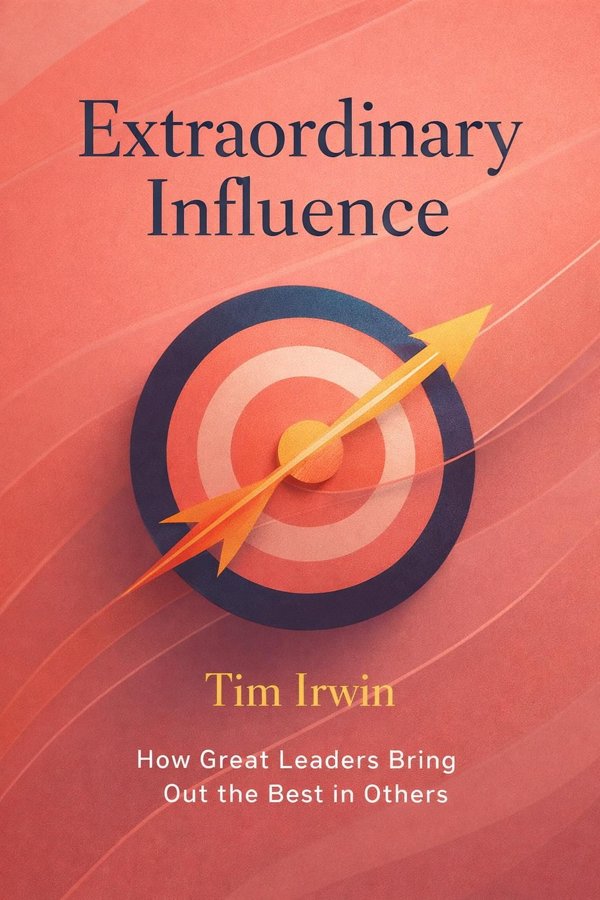
Extraordinary Influence: How Great Leaders Bring Out the Best in Others: Summary & Key Insights
by Tim Irwin
 10 min9 chaptersAudio available
What Is Extraordinary Influence: How Great Leaders Bring Out the Best in Others About?
Extraordinary Influence: How Great Leaders Bring Out the Best in Others by Tim Irwin is a leadership book spanning 9 pages. Extraordinary Influence explores how leaders can use affirmation and positive influence to inspire peak performance and engagement in their teams. Drawing on psychological research and leadership experience, Tim Irwin demonstrates how authentic communication and recognition can transform organizational culture and individual motivation.
This FizzRead summary covers all 9 key chapters of Extraordinary Influence: How Great Leaders Bring Out the Best in Others in approximately 10 minutes, distilling the most important ideas, arguments, and takeaways from Tim Irwin's work. Also available as an audio summary and Key Quotes Podcast.
Extraordinary Influence: How Great Leaders Bring Out the Best in Others
Extraordinary Influence explores how leaders can use affirmation and positive influence to inspire peak performance and engagement in their teams. Drawing on psychological research and leadership experience, Tim Irwin demonstrates how authentic communication and recognition can transform organizational culture and individual motivation.
Who Should Read Extraordinary Influence: How Great Leaders Bring Out the Best in Others?
This book is perfect for anyone interested in leadership and looking to gain actionable insights in a short read. Whether you're a student, professional, or lifelong learner, the key ideas from Extraordinary Influence: How Great Leaders Bring Out the Best in Others by Tim Irwin will help you think differently.
- ✓Readers who enjoy leadership and want practical takeaways
- ✓Professionals looking to apply new ideas to their work and life
- ✓Anyone who wants the core insights of Extraordinary Influence: How Great Leaders Bring Out the Best in Others in just 10 minutes
Want the full summary?
Get instant access to this book summary and 100K+ more with Fizz Moment.
Get Free SummaryAvailable on App Store • Free to download
Key Chapters
Decades of leadership theory have conditioned us to believe that critical feedback is the cornerstone of improvement. But in truth, most ‘constructive criticism’ does more harm than good. Neuroscience shows that when people receive negative feedback, their brains respond as if under physical threat—triggering defensive mechanisms that inhibit openness and creativity. I often liken it to shutting down the lights in a room where you need to see more clearly. Feedback that attacks identity, even subtly, causes people to retreat into self-protection rather than progress.
Organizations rely heavily on performance reviews and corrective sessions, yet employee engagement scores continue to drop. Why? Because information alone doesn’t transform behavior; emotion does. When a leader’s tone communicates disappointment or disapproval of the person rather than the action, the recipient internalizes shame. Over time, this erodes both trust and self-efficacy. I have seen entire departments paralyzed not by incompetence, but by fear—fear of being exposed, judged, or simply not good enough.
The remedy isn’t the elimination of feedback, but the reimagining of it. The most effective leaders learn to give input that separates the person from the problem. They identify what is valuable in someone’s effort, affirm their inherent worth, and then collaborate on improvement. This approach doesn’t just preserve dignity—it multiplies motivation. When people feel seen and valued, they engage willingly in the process of growth. That’s the turning point from good management to extraordinary influence.
Our brains are wired for connection. Studies in social neuroscience reveal that the regions responsible for physical pain overlap significantly with those activated during social rejection or criticism. Conversely, affirmation—the recognition of one’s significance—triggers powerful rewards in the brain’s limbic system. Dopamine and oxytocin levels rise, enhancing feelings of trust and optimism. In that state, the prefrontal cortex, associated with complex thought and creativity, functions at its optimum.
When leaders affirm authentically, they aren’t offering shallow encouragement; they are engaging the biology of performance. I often remind leaders that their words literally sculpt the neural pathways of those they lead. A single statement of belief—‘I believe you’re ready for this challenge’—can shift someone from self-doubt to courage because it reorients their mental map toward possibility. This is what makes affirmation a leadership discipline, not a personality trait. It’s intentional communication rooted in an understanding of the human brain’s deep need for social recognition.
In practice, leaders can learn to weave affirmation into everyday conversations without forced positivity. It begins with noticing—seeing the humanity and potential in another person, and articulating it without agenda. That kind of attention changes not just outcomes but relationships. Neuroscience confirms what human intuition has long known: people rise toward the expectations of those who genuinely believe in them.
+ 7 more chapters — available in the FizzRead app
All Chapters in Extraordinary Influence: How Great Leaders Bring Out the Best in Others
About the Author
Get This Summary in Your Preferred Format
Read or listen to the Extraordinary Influence: How Great Leaders Bring Out the Best in Others summary by Tim Irwin anytime, anywhere. FizzRead offers multiple formats so you can learn on your terms — all free.
Available formats: App · Audio · PDF · EPUB — All included free with FizzRead
Download Extraordinary Influence: How Great Leaders Bring Out the Best in Others PDF and EPUB Summary
Key Quotes from Extraordinary Influence: How Great Leaders Bring Out the Best in Others
“Decades of leadership theory have conditioned us to believe that critical feedback is the cornerstone of improvement.”
“Studies in social neuroscience reveal that the regions responsible for physical pain overlap significantly with those activated during social rejection or criticism.”
Frequently Asked Questions about Extraordinary Influence: How Great Leaders Bring Out the Best in Others
Extraordinary Influence: How Great Leaders Bring Out the Best in Others by Tim Irwin is a leadership book that explores key ideas across 9 chapters. Extraordinary Influence explores how leaders can use affirmation and positive influence to inspire peak performance and engagement in their teams. Drawing on psychological research and leadership experience, Tim Irwin demonstrates how authentic communication and recognition can transform organizational culture and individual motivation.
You Might Also Like

Extreme Ownership
Jocko Willink
10 min
Dare to Lead
Brene Brown
10 min
Leaders Eat Last
Simon Sinek
10 min
The 21 Irrefutable Laws of Leadership
John Maxwell
10 min
Start With Why
Simon Sinek
10 min
How to Lead When You're Not in Charge
Clay Scroggins
10 minBrowse by Category
Ready to read Extraordinary Influence: How Great Leaders Bring Out the Best in Others?
Get the full summary and 100K+ more books with Fizz Moment.