
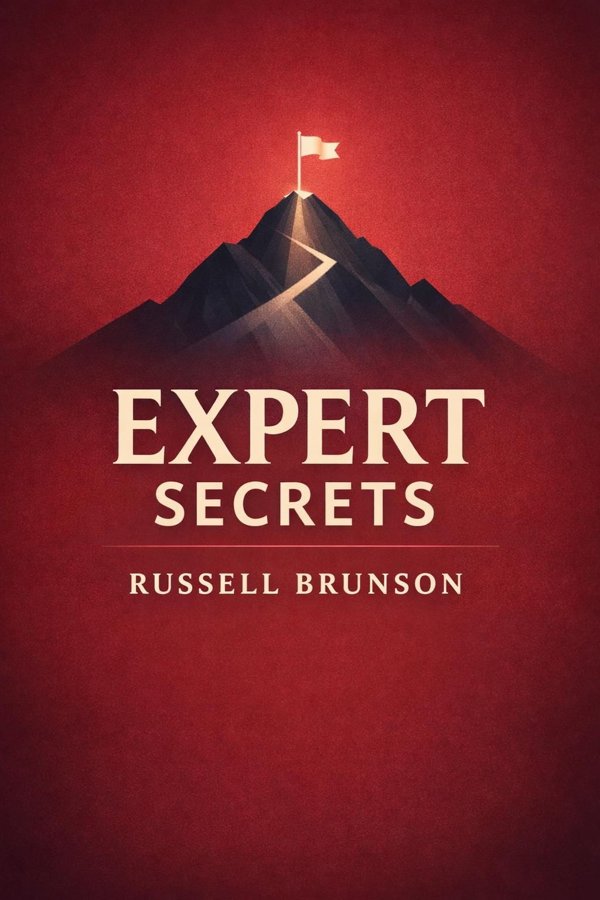
Expert Secrets: Summary & Key Insights
 10 min9 chaptersAudio available
Key Takeaways from Expert Secrets
Every successful movement begins when someone is willing to say what others are afraid to say.
People rarely commit deeply to a product, but they will commit to a cause that changes how they see themselves.
Most people do not buy courses, coaching, or consulting because they want more information.
People do not change because they are given facts; they change because they experience a shift in meaning.
Transformation is never only external.
What Is Expert Secrets About?
Expert Secrets by Russell Brunson is a business book published in 2017 spanning 11 pages. What if the knowledge you already have could become the foundation of a thriving business? In Expert Secrets, Russell Brunson argues that success in the digital economy no longer belongs only to large companies, celebrities, or technical geniuses. It belongs to people who can teach, persuade, and build trust around a clear message. The book is a practical playbook for turning expertise, experience, and personal conviction into products, audiences, and movements. Brunson’s core idea is simple but powerful: people are not just buying information; they are buying a new belief about what is possible for their lives. To reach them, an expert must do more than share facts. They must tell stories, create meaning, challenge old assumptions, and guide people toward a better future. That is where Expert Secrets stands out. It blends marketing strategy with psychology, persuasion, storytelling, and offer creation. Brunson writes from direct experience as a marketer, entrepreneur, and cofounder of ClickFunnels, a platform used by thousands of businesses to sell online. His authority comes not from theory alone, but from years of building funnels, launching offers, and helping entrepreneurs monetize what they know.
This FizzRead summary covers all 9 key chapters of Expert Secrets in approximately 10 minutes, distilling the most important ideas, arguments, and takeaways from Russell Brunson's work. Also available as an audio summary and Key Quotes Podcast.
Expert Secrets
What if the knowledge you already have could become the foundation of a thriving business? In Expert Secrets, Russell Brunson argues that success in the digital economy no longer belongs only to large companies, celebrities, or technical geniuses. It belongs to people who can teach, persuade, and build trust around a clear message. The book is a practical playbook for turning expertise, experience, and personal conviction into products, audiences, and movements.
Brunson’s core idea is simple but powerful: people are not just buying information; they are buying a new belief about what is possible for their lives. To reach them, an expert must do more than share facts. They must tell stories, create meaning, challenge old assumptions, and guide people toward a better future. That is where Expert Secrets stands out. It blends marketing strategy with psychology, persuasion, storytelling, and offer creation.
Brunson writes from direct experience as a marketer, entrepreneur, and cofounder of ClickFunnels, a platform used by thousands of businesses to sell online. His authority comes not from theory alone, but from years of building funnels, launching offers, and helping entrepreneurs monetize what they know.
Who Should Read Expert Secrets?
This book is perfect for anyone interested in business and looking to gain actionable insights in a short read. Whether you're a student, professional, or lifelong learner, the key ideas from Expert Secrets by Russell Brunson will help you think differently.
- ✓Readers who enjoy business and want practical takeaways
- ✓Professionals looking to apply new ideas to their work and life
- ✓Anyone who wants the core insights of Expert Secrets in just 10 minutes
Want the full summary?
Get instant access to this book summary and 100K+ more with Fizz Moment.
Get Free SummaryAvailable on App Store • Free to download
Key Chapters
Every successful movement begins when someone is willing to say what others are afraid to say. Brunson’s idea of the charismatic leader is not about being flashy, loud, or naturally magnetic. It is about conviction. People follow leaders who appear certain, who communicate a clear worldview, and who give language to frustrations their audience already feels. Charisma, in this sense, is less performance than clarity combined with courage.
In Expert Secrets, Brunson explains that audiences are drawn to experts who openly challenge conventional wisdom and present a different path. A fitness coach, for example, does not need to be the most scientifically decorated person in the room. They need to confidently explain why common dieting advice fails and why their method works better. A business consultant does not merely teach tactics; they identify a broken system and offer a more effective approach.
This matters because people are overwhelmed by information. They do not need another neutral voice listing options. They need someone who can reduce confusion and help them believe in a new direction. That means speaking with specificity, using stories to reinforce your message, and making your audience feel understood.
The practical application is to define the beliefs you stand for and the myths you oppose. What common advice in your field do you disagree with? What truth have you learned through experience? Build your message around those answers. Actionable takeaway: write a short manifesto that states what you believe, what you reject, and why your audience should care.
People rarely commit deeply to a product, but they will commit to a cause that changes how they see themselves. Brunson argues that lasting influence comes from creating a future-based cause, a vision your audience wants to join. This is what transforms a collection of buyers into a movement.
A cause gives emotional weight to your message. It tells people that your work is not only about solving a practical problem, but about becoming part of a meaningful transformation. For instance, a personal finance educator may not simply teach budgeting. They may lead a cause around family freedom, helping parents escape paycheck-to-paycheck living so they can gain peace, control, and more time with their children. A language coach may not just teach grammar; they may invite students into a vision of global confidence and opportunity.
This idea matters because customers are more loyal when they feel connected to a mission. They buy again, share your work, and identify with your brand because it reflects who they want to become. Brunson emphasizes that causes are built through consistent messaging, emotional storytelling, and a sense of community.
To apply this, ask what future your audience wants beyond the immediate result. Weight loss may really be about confidence. Sales growth may really be about independence. Productivity may really be about reclaiming life. Frame your offer around that future. Actionable takeaway: write one sentence that begins with “We believe…” and describes the transformation your audience is joining, not just the product they are buying.
Most people do not buy courses, coaching, or consulting because they want more information. They buy because they want hope. One of Brunson’s most important ideas is the concept of the new opportunity. Instead of selling your product as another better tool in a crowded market, you position it as a new path that helps people finally achieve what old methods could not.
This shift is crucial because markets are crowded with experts promising similar outcomes. If you say, “I offer social media coaching,” you sound interchangeable. But if you say, “I help local business owners turn a simple content system into predictable client bookings without spending hours online,” you are offering a new opportunity. You are not just teaching social media; you are reframing the path to growth.
Brunson explains that audiences are often stuck because they have already tried things that did not work. They may blame themselves, but a skilled expert helps them see that the old vehicle was flawed. This creates relief and renewed belief. A nutrition coach might explain that the problem was never a lack of willpower, but a diet model built on restriction and burnout. A career coach might show that job seekers fail not because they lack talent, but because they use outdated interview strategies.
The practical lesson is to identify the old opportunity your audience is tired of and contrast it with your new one. Show why the old way is broken and why your method offers a different route. Actionable takeaway: rewrite your offer in one sentence that emphasizes a fresh mechanism or path, not just your expertise.
People do not change because they are given facts; they change because they experience a shift in meaning. Brunson calls this the Epiphany Bridge, a storytelling framework that transports your audience from where they are now to the insight that changed everything for you. Rather than teaching abstractly, you guide people through the journey that led to your discovery.
The power of this method lies in emotional connection. A compelling story creates trust because it shows that you struggled, doubted, experimented, and learned. Audiences see themselves in your journey. For example, instead of saying, “My marketing strategy works,” an entrepreneur might describe the frustration of spending money on ads that failed, the moment they discovered funnel-based messaging, and the result that followed. The story does more than inform; it invites belief.
Brunson stresses that effective stories have structure. They include the backstory, the conflict, the discovery, and the transformation. They are not random autobiographical details. They are carefully chosen moments that make your audience think, “If this worked for them, maybe it can work for me too.” This is especially useful in webinars, sales pages, presentations, and live content.
To use the Epiphany Bridge, identify the moment when your perspective changed. What were you struggling with? What false belief did you hold? What discovery shifted everything? Tell that story often and with purpose. Actionable takeaway: draft a short origin story that highlights one key realization and links it directly to the method or offer you now teach.
Transformation is never only external. Brunson explains this through the hero’s two journeys: the visible journey of results and the internal journey of identity. People may say they want more revenue, weight loss, confidence, or better relationships, but underneath those goals is a deeper desire to become a different kind of person.
This distinction matters because many experts sell only the external outcome. They promise six figures, ten pounds lost, or more productivity. But what truly motivates people is often the internal shift: feeling respected, becoming disciplined, trusting themselves, or finally believing they are capable. The strongest marketing and teaching speak to both journeys at once.
A business coach, for example, may help a client grow sales, but the deeper journey is becoming the kind of leader who can make confident decisions. A parenting expert may offer practical routines, but the deeper transformation is helping parents stop feeling guilty and chaotic. When you understand both levels, your message becomes far more resonant.
Brunson’s point is that your role as an expert is not just to provide tactics. It is to guide identity change. That means showing your audience who they can become through your process. It also means recognizing the fears, doubts, and insecurities that arise along the way.
To apply this idea, list the external result your audience wants and then ask what internal transformation that result represents. Use both in your messaging and offer creation. Actionable takeaway: define your customer’s desired outcome in two parts: what they want to achieve and who they want to become.
Before people buy your solution, they must believe four things: the dream is possible, the path works, you can help them, and they themselves are capable. Brunson emphasizes that the greatest barrier to sales is not usually price or complexity; it is disbelief. Expert marketing, therefore, is fundamentally the art of building belief.
This is a powerful insight because many entrepreneurs overload prospects with features, credentials, and explanations. But facts alone rarely overcome doubt. Brunson recommends using stories, case studies, demonstrations, and carefully structured teaching to replace false beliefs with empowering ones. If your audience thinks their problem is permanent, they need examples of people like them succeeding. If they doubt your method, they need proof and logic. If they doubt themselves, they need encouragement and a simpler first step.
For instance, a public speaking coach may need to break the belief that confidence is an inborn trait. They can do this by sharing stories of shy clients who became effective presenters. A health coach may need to challenge the belief that lasting change requires extreme discipline by showing a sustainable system.
Building belief also means addressing objections directly rather than avoiding them. Speak to skepticism, fear of failure, previous disappointments, and the temptation to delay. When people feel seen, they become more open.
To apply this principle, identify the top beliefs preventing your audience from moving forward. Then create content that gently dismantles each one. Actionable takeaway: make a list of the three biggest doubts your audience has and craft one story or example to answer each doubt.
People hesitate when the value of an offer feels vague, but they move when the offer feels concrete, desirable, and complete. Brunson’s discussion of the stack and the offer shows how experts can present their solution in a way that increases perceived value and lowers resistance. The goal is not manipulation. It is clarity about what people are getting and why it matters.
The stack works by breaking an offer into meaningful components, each with its own purpose and value. Instead of saying, “You get a course,” you present the core system, bonus tools, templates, support, community, implementation help, and guarantees. Each element answers a different objection or increases confidence. A copywriting program, for instance, might include modules, headline swipe files, email templates, live reviews, and a private group. Together, these components make the transformation feel more achievable.
Brunson also stresses that a good offer is tied to the desired result, not just the material included. Bonuses should not be random extras. They should remove barriers. If your audience fears implementation, add checklists. If they fear technical complexity, include setup tutorials. If they fear isolation, include coaching or community.
A compelling offer frames the purchase as an easy decision because the benefits are clear and the path feels supported. This principle applies whether you sell a low-cost workshop or high-ticket coaching.
To improve your own offer, list every obstacle that could stop a customer from succeeding and design elements that help overcome them. Actionable takeaway: rewrite your offer so each component directly addresses a problem, objection, or desired milestone.
Expert businesses grow faster when they stop relying on scattered content and start guiding people through a deliberate journey. Brunson argues that funnels and webinars are powerful because they move prospects step by step from curiosity to conviction to purchase. Rather than hoping people figure out your value on their own, you architect the experience.
A funnel is simply a sequence designed to capture attention, build trust, and present an offer. This may begin with a lead magnet, move into email nurturing, and culminate in a sales page, webinar, consultation call, or checkout process. The point is not technological complexity. The point is strategic sequencing. Each step answers a question the customer is silently asking: Why should I listen? Why should I believe this? Why should I act now?
Brunson gives special attention to the webinar because it combines education, storytelling, belief building, and selling in one format. A strong webinar does not dump information. It creates a breakthrough. It teaches enough to make the audience feel enlightened, while also showing why the full implementation requires the offer. This is what makes it highly effective for selling courses, coaching, software, and services.
For example, a consultant might host a webinar explaining three hidden reasons online ads fail, then present a system that solves those issues. Attendees leave with value, but also with a clear reason to buy.
To apply this idea, map your customer journey from first contact to purchase. Identify what each stage needs to accomplish. Actionable takeaway: create one simple funnel with a lead magnet, follow-up emails, and a single conversion event such as a webinar or strategy call.
A business built around expertise becomes durable when it evolves beyond transactions into community. Brunson’s final message is that the true expert is not merely a seller of knowledge, but a leader of people. Building a movement means giving your audience repeated reasons to gather, believe, participate, and spread the message.
This requires consistency. Movements do not form from one good offer or one viral campaign. They form when a leader continually reinforces the mission, celebrates wins, shares stories, teaches principles, and creates a sense of belonging. Over time, the audience begins to use shared language, adopt shared beliefs, and identify with the cause. This is why some brands feel like tribes rather than companies.
Practical examples are everywhere: creators who host regular live sessions, coaches who spotlight client transformations, educators who coin memorable frameworks, and founders who make customers feel like insiders in a larger mission. The movement becomes self-reinforcing because members invite others in.
Brunson also highlights the personal responsibility of leadership. If people are trusting you, you must keep growing, keep clarifying your message, and keep serving the transformation honestly. Leadership is not a status you claim once. It is a role you earn repeatedly.
To build a movement, communicate often, define rituals and language, and make your audience feel seen as participants in a shared journey. Actionable takeaway: choose one recurring way to lead your community each week, such as a live teaching session, success spotlight, or mission-centered email.
All Chapters in Expert Secrets
About the Author
Russell Brunson is an American entrepreneur, author, speaker, and the cofounder of ClickFunnels, one of the most widely known platforms for building online sales funnels. He became a prominent figure in digital marketing by teaching entrepreneurs how to attract leads, convert prospects, and scale businesses through direct-response strategies. Brunson is the author of DotCom Secrets, Expert Secrets, and Traffic Secrets, a trilogy that has influenced thousands of coaches, consultants, creators, and online business owners. His work blends classic sales principles with modern internet marketing tactics, especially around webinars, offer creation, and audience building. Known for his energetic style and practical frameworks, Brunson has helped popularize the idea that almost anyone can monetize expertise if they learn how to communicate value, build trust, and guide customers through a clear buying journey.
Get This Summary in Your Preferred Format
Read or listen to the Expert Secrets summary by Russell Brunson anytime, anywhere. FizzRead offers multiple formats so you can learn on your terms — all free.
Available formats: App · Audio · PDF · EPUB — All included free with FizzRead
Download Expert Secrets PDF and EPUB Summary
Key Quotes from Expert Secrets
“Every successful movement begins when someone is willing to say what others are afraid to say.”
“People rarely commit deeply to a product, but they will commit to a cause that changes how they see themselves.”
“Most people do not buy courses, coaching, or consulting because they want more information.”
“People do not change because they are given facts; they change because they experience a shift in meaning.”
“Brunson explains this through the hero’s two journeys: the visible journey of results and the internal journey of identity.”
Frequently Asked Questions about Expert Secrets
Expert Secrets by Russell Brunson is a business book that explores key ideas across 9 chapters. What if the knowledge you already have could become the foundation of a thriving business? In Expert Secrets, Russell Brunson argues that success in the digital economy no longer belongs only to large companies, celebrities, or technical geniuses. It belongs to people who can teach, persuade, and build trust around a clear message. The book is a practical playbook for turning expertise, experience, and personal conviction into products, audiences, and movements. Brunson’s core idea is simple but powerful: people are not just buying information; they are buying a new belief about what is possible for their lives. To reach them, an expert must do more than share facts. They must tell stories, create meaning, challenge old assumptions, and guide people toward a better future. That is where Expert Secrets stands out. It blends marketing strategy with psychology, persuasion, storytelling, and offer creation. Brunson writes from direct experience as a marketer, entrepreneur, and cofounder of ClickFunnels, a platform used by thousands of businesses to sell online. His authority comes not from theory alone, but from years of building funnels, launching offers, and helping entrepreneurs monetize what they know.
More by Russell Brunson
You Might Also Like




Browse by Category
Ready to read Expert Secrets?
Get the full summary and 100K+ more books with Fizz Moment.