
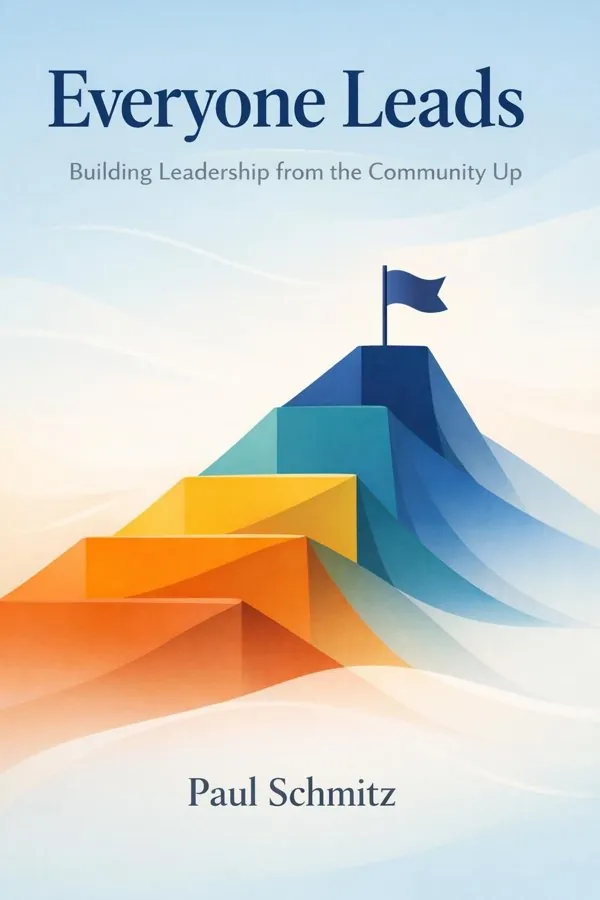
Everyone Leads: Building Leadership from the Community Up: Summary & Key Insights
by Paul Schmitz
 10 min10 chaptersAudio available
What Is Everyone Leads: Building Leadership from the Community Up About?
Everyone Leads: Building Leadership from the Community Up by Paul Schmitz is a leadership book spanning 10 pages. Everyone Leads: Building Leadership from the Community Up es un libro que redefine el liderazgo como una práctica colectiva y comunitaria. Paul Schmitz, líder en el ámbito del cambio social, argumenta que el liderazgo no se limita a las élites o a los cargos formales, sino que puede y debe surgir de todos los miembros de una comunidad. A través de ejemplos prácticos y experiencias de organizaciones sin fines de lucro, el autor muestra cómo empoderar a las personas para que asuman responsabilidades compartidas y generen un impacto social sostenible.
This FizzRead summary covers all 10 key chapters of Everyone Leads: Building Leadership from the Community Up in approximately 10 minutes, distilling the most important ideas, arguments, and takeaways from Paul Schmitz's work. Also available as an audio summary and Key Quotes Podcast.
Everyone Leads: Building Leadership from the Community Up
Everyone Leads: Building Leadership from the Community Up es un libro que redefine el liderazgo como una práctica colectiva y comunitaria. Paul Schmitz, líder en el ámbito del cambio social, argumenta que el liderazgo no se limita a las élites o a los cargos formales, sino que puede y debe surgir de todos los miembros de una comunidad. A través de ejemplos prácticos y experiencias de organizaciones sin fines de lucro, el autor muestra cómo empoderar a las personas para que asuman responsabilidades compartidas y generen un impacto social sostenible.
Who Should Read Everyone Leads: Building Leadership from the Community Up?
This book is perfect for anyone interested in leadership and looking to gain actionable insights in a short read. Whether you're a student, professional, or lifelong learner, the key ideas from Everyone Leads: Building Leadership from the Community Up by Paul Schmitz will help you think differently.
- ✓Readers who enjoy leadership and want practical takeaways
- ✓Professionals looking to apply new ideas to their work and life
- ✓Anyone who wants the core insights of Everyone Leads: Building Leadership from the Community Up in just 10 minutes
Want the full summary?
Get instant access to this book summary and 100K+ more with Fizz Moment.
Get Free SummaryAvailable on App Store • Free to download
Key Chapters
For much of history, our societies have celebrated the concept of the ‘heroic leader’ — that solitary figure who stands above the crowd, endowed with charisma and vision, single-handedly transforming organizations or movements. This archetype is deeply embedded in our culture, reinforced by corporate success stories and political narratives that elevate individuals over communities. However, this myth is not only misleading; it is limiting.
In my work with Public Allies, I have witnessed how clinging to the heroic model stifles collaboration. When people expect someone else to lead, they disengage from their own power to act. They wait for instruction instead of contributing ideas. The hero myth can create dependency, hierarchy, and even fear — fear of taking initiative because leadership feels reserved for 'experts.' In truth, leadership emerges most powerfully when it is shared.
To challenge this myth, I’ve encouraged communities to reframe leadership as a collective practice. The most effective social movements — from civil rights to environmental justice — succeeded not because of one figure alone, but because countless people chose to lead in small but courageous ways. Rosa Parks’s act of defiance mattered because a community organized around it. Martin Luther King Jr.’s speeches inspired action because local groups were already mobilized for change.
By shifting focus from charisma to character, from position to participation, we open leadership to everyone. The heroic leader is no longer the center; the collective leader becomes the heartbeat. In this model, success depends not on individual brilliance but on mutual accountability and shared vision.
The moment you abandon the myth of the hero and embrace the reality of interdependence, leadership becomes accessible. You stop seeking permission and start taking responsibility. You realize that leadership is less about leading people and more about empowering them to lead themselves. That, to me, is the beginning of real transformation.
The foundation of this book is the conviction that everyone has leadership potential. Too often, organizations are structured around hierarchies that confine leadership to managers or executives, overlooking the creativity and insight that reside throughout the ranks. When I say 'everyone leads,' I don’t mean everyone holds a title — I mean everyone has the capacity to influence, inspire, and make progress toward a common good.
In communities, this principle reshapes the entire dynamic of engagement. Imagine a neighborhood where residents no longer wait for officials to fix problems but come together to design solutions. Leadership appears in conversations, in volunteer projects, in the daily acts of people who care. This lived experience of leadership turns passive citizens into active shapers of their environment.
Within Public Allies, I’ve seen this principle transform organizations. Participants, often young and from underrepresented backgrounds, discover that leadership is not about where you come from — it’s about what you do with where you are. Once people see their own capacity, they begin to act differently. They engage more deeply, take ownership, and motivate others. Leadership becomes a shared journey rather than a solitary climb.
Believing that everyone leads requires humility. It asks those in traditional power to listen more and control less. It challenges teams to recognize that good ideas can come from any level. And it reminds us that the most sustainable social change arises when many people take collective responsibility instead of depending on a single visionary.
When you embrace this idea, you begin to see leadership everywhere — in the mother advocating for safer playgrounds, the young professional mentoring a peer, the volunteer coordinating food drives. Leadership is not an identity; it is a behavior. It lives wherever people take initiative guided by values. The more we cultivate environments that affirm this truth, the stronger and more resilient our communities become.
+ 8 more chapters — available in the FizzRead app
All Chapters in Everyone Leads: Building Leadership from the Community Up
About the Author
Paul Schmitz es un activista y consultor estadounidense especializado en liderazgo comunitario y participación cívica. Fue director ejecutivo de Public Allies, una organización dedicada a formar líderes diversos comprometidos con el cambio social. También ha sido asesor de la Casa Blanca en temas de participación ciudadana y voluntariado.
Get This Summary in Your Preferred Format
Read or listen to the Everyone Leads: Building Leadership from the Community Up summary by Paul Schmitz anytime, anywhere. FizzRead offers multiple formats so you can learn on your terms — all free.
Available formats: App · Audio · PDF · EPUB — All included free with FizzRead
Download Everyone Leads: Building Leadership from the Community Up PDF and EPUB Summary
Key Quotes from Everyone Leads: Building Leadership from the Community Up
“This archetype is deeply embedded in our culture, reinforced by corporate success stories and political narratives that elevate individuals over communities.”
“The foundation of this book is the conviction that everyone has leadership potential.”
Frequently Asked Questions about Everyone Leads: Building Leadership from the Community Up
Everyone Leads: Building Leadership from the Community Up by Paul Schmitz is a leadership book that explores key ideas across 10 chapters. Everyone Leads: Building Leadership from the Community Up es un libro que redefine el liderazgo como una práctica colectiva y comunitaria. Paul Schmitz, líder en el ámbito del cambio social, argumenta que el liderazgo no se limita a las élites o a los cargos formales, sino que puede y debe surgir de todos los miembros de una comunidad. A través de ejemplos prácticos y experiencias de organizaciones sin fines de lucro, el autor muestra cómo empoderar a las personas para que asuman responsabilidades compartidas y generen un impacto social sostenible.
You Might Also Like

Extreme Ownership
Jocko Willink
10 min
Dare to Lead
Brene Brown
10 min
Leaders Eat Last
Simon Sinek
10 min
The 21 Irrefutable Laws of Leadership
John Maxwell
10 min
Start With Why
Simon Sinek
10 min
How to Lead When You're Not in Charge
Clay Scroggins
10 minBrowse by Category
Ready to read Everyone Leads: Building Leadership from the Community Up?
Get the full summary and 100K+ more books with Fizz Moment.