
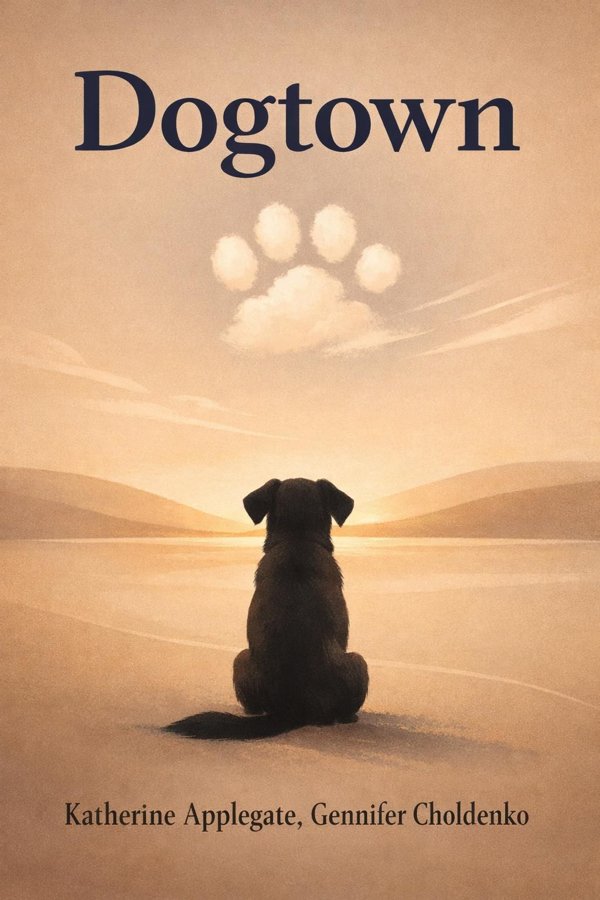
Dogtown: Summary & Key Insights
by Katherine Applegate, Gennifer Choldenko
 10 min8 chaptersAudio available
Key Takeaways from Dogtown
One of the most powerful truths in Dogtown is that the desire to belong is not a luxury; it is a need.
Hope in Dogtown is not bright, easy optimism.
Dogtown suggests that real compassion starts not with pity, but with attention.
Some of the most memorable emotional energy in Dogtown comes from an unlikely bond: a real dog and a robot dog learning to trust one another.
A second chance sounds generous, but Dogtown shows that it is rarely simple.
What Is Dogtown About?
Dogtown by Katherine Applegate, Gennifer Choldenko is a bestsellers book. What happens to a dog when people decide it is too broken, too difficult, or too old to love? Dogtown, by acclaimed authors Katherine Applegate and Gennifer Choldenko, answers that question with humor, tenderness, and emotional honesty. Set in a shelter-like place for unwanted dogs and even robot dogs, the novel follows Chance, a real dog who longs for a home, and Metal Head, a robot dog who longs for something just as meaningful: connection. Through their unusual friendship, the story explores abandonment, hope, trust, and what makes someone worthy of care. This is far more than an animal story. It is a compassionate look at resilience, second chances, and the deep need to belong. Applegate, best known for heartfelt animal-centered fiction like The One and Only Ivan, and Choldenko, celebrated for character-rich novels such as the Al Capone series, bring exceptional emotional insight and storytelling skill to this collaboration. Dogtown matters because it helps readers think about empathy, responsibility, and the lives of creatures who depend on human kindness. It is a moving middle-grade novel with lessons that resonate far beyond childhood.
This FizzRead summary covers all 8 key chapters of Dogtown in approximately 10 minutes, distilling the most important ideas, arguments, and takeaways from Katherine Applegate, Gennifer Choldenko's work. Also available as an audio summary and Key Quotes Podcast.
Dogtown
What happens to a dog when people decide it is too broken, too difficult, or too old to love? Dogtown, by acclaimed authors Katherine Applegate and Gennifer Choldenko, answers that question with humor, tenderness, and emotional honesty. Set in a shelter-like place for unwanted dogs and even robot dogs, the novel follows Chance, a real dog who longs for a home, and Metal Head, a robot dog who longs for something just as meaningful: connection. Through their unusual friendship, the story explores abandonment, hope, trust, and what makes someone worthy of care. This is far more than an animal story. It is a compassionate look at resilience, second chances, and the deep need to belong. Applegate, best known for heartfelt animal-centered fiction like The One and Only Ivan, and Choldenko, celebrated for character-rich novels such as the Al Capone series, bring exceptional emotional insight and storytelling skill to this collaboration. Dogtown matters because it helps readers think about empathy, responsibility, and the lives of creatures who depend on human kindness. It is a moving middle-grade novel with lessons that resonate far beyond childhood.
Who Should Read Dogtown?
This book is perfect for anyone interested in bestsellers and looking to gain actionable insights in a short read. Whether you're a student, professional, or lifelong learner, the key ideas from Dogtown by Katherine Applegate, Gennifer Choldenko will help you think differently.
- ✓Readers who enjoy bestsellers and want practical takeaways
- ✓Professionals looking to apply new ideas to their work and life
- ✓Anyone who wants the core insights of Dogtown in just 10 minutes
Want the full summary?
Get instant access to this book summary and 100K+ more with Fizz Moment.
Get Free SummaryAvailable on App Store • Free to download
Key Chapters
One of the most powerful truths in Dogtown is that the desire to belong is not a luxury; it is a need. The dogs in Dogtown are not simply waiting for food or shelter. They are waiting for recognition, affection, and the chance to matter to someone. Chance, the novel’s central dog, does not dream of greatness. He dreams of a home, of being chosen, of no longer feeling temporary. That longing gives the story its emotional force and helps readers understand how deeply abandonment shapes behavior.
The book makes this idea accessible by showing that loneliness affects everyone differently. Some dogs act out. Some withdraw. Some become suspicious. Others keep hoping even after disappointment. Dogtown suggests that behavior often reflects emotional experience, not character flaws. A dog who seems difficult may actually be scared. A person who seems cold may be protecting themselves from hurt. This insight extends naturally beyond animal welfare into classrooms, friendships, and families.
In practical terms, the story encourages readers to look beneath the surface. If a child is disruptive, perhaps they feel unseen. If a pet is anxious, perhaps they need consistency and patience. If someone appears distant, they may be carrying old hurt. Dogtown invites compassion before judgment.
The novel also reminds us that belonging is built through small acts: a gentle word, reliable care, a second chance, a willingness to notice. We do not always need grand gestures to change a life. Sometimes we just need to make it clear that someone has a place.
Actionable takeaway: When someone seems difficult or guarded, pause and ask what need for safety, trust, or belonging may be underneath their behavior.
Hope in Dogtown is not bright, easy optimism. It is something tougher and more courageous: the willingness to keep wanting a better future even after disappointment. Chance has every reason to lower his expectations. He lives among dogs who have been rejected, forgotten, or misunderstood. Yet he keeps imagining the possibility of a family. That hope becomes both his strength and his vulnerability.
The novel handles this beautifully because it does not pretend hope is simple. Hope can hurt. Every failed adoption, every missed opportunity, every human who passes by without choosing a dog can feel like fresh evidence that dreams are dangerous. Still, Dogtown argues that giving up entirely is its own kind of loss. To hope is to remain open to transformation.
This idea has practical value for readers of all ages. Many people face moments when repeated setbacks make it easier to expect the worst. A student may stop trying after poor grades. A child may stop reaching out after friendship problems. An adult may stop trusting after disappointment. Dogtown shows that resilience does not mean never feeling discouraged. It means continuing despite discouragement.
Importantly, the story balances hope with realism. Chance’s future does not depend on magic. It depends on persistence, relationships, and moments of kindness. Hope is sustained not by fantasy, but by evidence that change can happen.
Readers can apply this lesson by separating one setback from the whole story of their lives. A rejection is painful, but it does not define all future outcomes. A hard season is real, but it is not permanent. Dogtown teaches that hope can coexist with fear, sadness, and uncertainty.
Actionable takeaway: When facing disappointment, name one reason to keep trying and take one small step forward instead of letting one loss become your final conclusion.
Dogtown suggests that real compassion starts not with pity, but with attention. The dogs in the novel are often categorized quickly: too old, too energetic, too damaged, too strange. Those labels simplify them, but they do not reveal who they are. By giving readers access to the emotional lives of dogs like Chance and the robot dog Metal Head, the book challenges snap judgments and asks a deeper question: what if we truly saw others as individuals rather than problems?
This matters because so much harm begins with careless simplification. In shelters, schools, workplaces, and communities, beings are often sorted into easy categories. But Dogtown insists that every creature carries a story. A nervous dog may have experienced trauma. A stubborn one may be confused rather than disobedient. Metal Head, despite being artificial, reveals surprising depth in his desire to connect and understand, which expands the novel’s moral imagination even further.
In everyday life, clear seeing means slowing down before assuming motives. It means observing behavior in context. A teacher who notices a child’s fear instead of punishing only the symptom offers true care. A family that learns a rescue dog’s triggers instead of calling it a bad dog creates safety. Compassion is not just feeling sorry. It is making informed, patient choices.
The novel also highlights that attention itself can be healing. To be watched kindly, listened to carefully, and understood accurately is often the first step toward trust. Dogtown demonstrates that being known can change how someone behaves because safety changes what is possible.
This lesson helps readers become better friends, caregivers, and community members. The more fully we see others, the less likely we are to reduce them to their worst moment.
Actionable takeaway: Before judging behavior, gather more information and ask, “What might this person or animal be experiencing that I cannot immediately see?”
Some of the most memorable emotional energy in Dogtown comes from an unlikely bond: a real dog and a robot dog learning to trust one another. At first glance, Chance and Metal Head should not have much in common. One is flesh and feeling, instinct and longing. The other is engineered, mechanical, and in some ways outside the natural order of the shelter. Yet their relationship becomes one of the novel’s central strengths because it shows that connection does not require sameness.
This friendship works as both plot device and larger message. Readers see that companionship often emerges not because two individuals are identical, but because each offers what the other lacks. Chance brings emotional intuition and lived experience. Metal Head brings perspective, steadiness, and an unconventional kind of loyalty. Their differences do not prevent intimacy; they make it richer.
That lesson is especially valuable for young readers, who are often navigating social worlds shaped by cliques, categories, and assumptions. Dogtown gently argues that meaningful friendships can cross obvious boundaries: personality, background, ability, or social status. Sometimes the person who understands you best is the one least expected.
There is also a practical application in how relationships are built. Chance and Metal Head do not become close instantly. Trust develops through repeated interactions, shared challenges, and growing respect. This mirrors real life. Strong friendships are not usually created by perfect compatibility; they are created by care, reliability, and openness.
In schools or families, this can mean encouraging children to look beyond familiar groups. In communities, it can mean making room for different kinds of minds and experiences. Dogtown treats difference not as a barrier to overcome, but as an opportunity to learn and connect.
Actionable takeaway: Reach out to someone who seems unlike you and look for one shared concern or value that could become the start of a genuine connection.
A second chance sounds generous, but Dogtown shows that it is rarely simple. For abandoned dogs, being offered another opportunity is only the beginning. Trust does not return instantly. Fear does not disappear because circumstances improve. Healing takes time, repetition, and proof. Through Chance’s experiences, the novel reveals that recovery from neglect or disappointment is a process, not a single happy moment.
This is one of the book’s most realistic insights. People often assume that rescue alone solves everything. In reality, rescue begins the harder work of rebuilding confidence. A dog entering a safe home may still be anxious. A child given support may still resist it at first. Someone who has been hurt may struggle to believe that kindness will last. Dogtown handles this with emotional intelligence, showing that patience is an essential part of care.
The story also suggests that second chances are relational. They depend not only on the one receiving them, but on the one offering them. A good adopter, friend, teacher, or caregiver understands that trust is earned through consistency. Meals on time, gentle routines, calm responses, and dependable presence communicate safety more effectively than words alone.
In practical life, this idea applies anywhere healing is needed. If you are helping a nervous pet adjust, expect setbacks. If you are rebuilding a friendship, let trust regrow slowly. If you are trying to change your own life after failure, remember that self-trust also returns through repeated evidence.
Dogtown rejects the fantasy of instant transformation and replaces it with something more meaningful: the belief that time and care can soften fear. That makes its hope more convincing.
Actionable takeaway: When offering a second chance, focus less on quick results and more on consistent, trustworthy behavior that makes long-term healing possible.
At its heart, Dogtown asks readers to confront an uncomfortable truth: animals depend on human choices, and those choices carry moral weight. The dogs in the story do not control where they live, who leaves them behind, or whether they are treated with patience and dignity. Humans make those decisions. By centering abandoned and rescued dogs, the novel turns animal care into an ethical issue, not just an emotional one.
This message matters because it helps young readers understand responsibility in concrete terms. Adopting a pet is not a temporary entertainment or a sentimental gesture. It is a commitment involving time, money, patience, and empathy. Dogtown quietly pushes back against the idea that animals are disposable when they become inconvenient. Instead, it presents them as feeling beings whose lives are shaped by human reliability or neglect.
The inclusion of a robot dog adds an interesting layer. It prompts questions about what care means and whether companionship can be manufactured. Even in this imaginative element, the story keeps returning to a central point: attachment matters, and the treatment of dependent beings reflects our values.
Practically, readers can apply this lesson by learning about ethical pet ownership. Families should research breeds, routines, veterinary costs, and training needs before adopting. Children can help care for animals by respecting feeding schedules, exercise, and boundaries. Communities can support shelters, foster programs, and rescue organizations.
Dogtown does not lecture, but it does ask readers to think more seriously about kindness. Caring for animals is not only about affection when it is easy. It is about steadiness when life gets messy.
Actionable takeaway: Treat pet ownership as a long-term promise, and support animal welfare with informed choices, responsible care, or help for local rescue efforts.
Dogtown repeatedly challenges the idea that identity can be measured from the outside. In a shelter environment, dogs are often judged by age, appearance, breed assumptions, or brief behavior snapshots. Those labels influence who gets adopted and who gets overlooked. But the novel insists that identity is far richer than a file, a first impression, or a reputation. Chance is not just an abandoned dog. Metal Head is not just a machine. Each has inner complexity that others may miss.
This theme resonates strongly for young readers, who are often labeled in their own lives: shy, loud, gifted, difficult, athletic, weird. Such categories can become limiting when adults or peers start treating them as complete definitions. Dogtown offers a gentler, wiser view. It suggests that beings are always more than the narrow story told about them.
The novel also shows how labels influence opportunity. A dog considered undesirable may be passed over before anyone sees its loyalty or sensitivity. A person considered odd may be excluded before anyone notices their kindness or intelligence. This dynamic appears everywhere from classrooms to social groups to workplaces. Recognizing it helps readers become fairer and more curious.
In practical terms, this means giving others room to surprise you. It means resisting assumptions based on background, performance, or surface traits. For children, it may mean reconsidering a classmate. For adults, it may mean rethinking how they describe others or themselves. Identity expands when there is room for growth.
Dogtown reminds us that dignity begins when someone is seen as a full self rather than a category. That is a lesson with emotional and social power.
Actionable takeaway: Replace one fixed label you use for yourself or someone else with a more open, specific description that leaves room for change and complexity.
Many stories about rescue focus on dramatic turning points, but Dogtown highlights something quieter and more realistic: healing is often made of small moments. A safe place to sleep. A patient interaction. A bit of play. A creature returning, again and again, to the possibility of trust. These tiny experiences may not look dramatic, yet they accumulate into change.
This is an especially important insight because people often overlook gradual progress. They wait for big breakthroughs and miss the value of everyday stability. In Dogtown, emotional repair emerges through routine and repetition. Chance’s journey is shaped not only by major events, but by ordinary acts that signal safety and connection. The same is true for Metal Head, whose presence reveals that companionship can form through repeated attention rather than spectacular gestures.
Readers can apply this idea in many areas of life. If a child is recovering from a hard transition, consistency matters more than occasional grand rewards. If a rescue pet is adjusting, predictable routines can reduce fear. If a friendship is strained, regular kindness can rebuild trust more effectively than one apology alone. Even personal growth works this way: confidence is often created through small kept promises to oneself.
Dogtown’s emotional wisdom lies partly in its patience. It does not rush vulnerability. It honors the slow work of becoming less afraid. That message can be deeply reassuring to readers who are healing in their own ways.
The book ultimately shows that ordinary care is never truly ordinary. Small moments become the environment where hope can return.
Actionable takeaway: Choose one steady, repeatable act of care, such as a routine check-in, calm practice, or daily kindness, and trust its cumulative power over time.
All Chapters in Dogtown
About the Authors
Katherine Applegate and Gennifer Choldenko are bestselling American authors known for writing award-winning books for young readers. Applegate is celebrated for emotionally resonant fiction, especially The One and Only Ivan, which won the Newbery Medal, and for co-creating the popular Animorphs series. Her work often explores empathy, resilience, and the inner lives of animals and children. Choldenko is widely known for Al Capone Does My Shirts, a Newbery Honor book, and its companion novels, which blend strong characterization with warmth, humor, and historical depth. Together, they bring impressive literary credibility to Dogtown. Their collaboration combines Applegate’s gift for compassionate, animal-centered storytelling with Choldenko’s skill in crafting memorable voices and emotionally grounded narratives, resulting in a novel that is accessible, moving, and thoughtfully written.
Get This Summary in Your Preferred Format
Read or listen to the Dogtown summary by Katherine Applegate, Gennifer Choldenko anytime, anywhere. FizzRead offers multiple formats so you can learn on your terms — all free.
Available formats: App · Audio · PDF · EPUB — All included free with FizzRead
Download Dogtown PDF and EPUB Summary
Key Quotes from Dogtown
“One of the most powerful truths in Dogtown is that the desire to belong is not a luxury; it is a need.”
“Hope in Dogtown is not bright, easy optimism.”
“Dogtown suggests that real compassion starts not with pity, but with attention.”
“Some of the most memorable emotional energy in Dogtown comes from an unlikely bond: a real dog and a robot dog learning to trust one another.”
“A second chance sounds generous, but Dogtown shows that it is rarely simple.”
Frequently Asked Questions about Dogtown
Dogtown by Katherine Applegate, Gennifer Choldenko is a bestsellers book that explores key ideas across 8 chapters. What happens to a dog when people decide it is too broken, too difficult, or too old to love? Dogtown, by acclaimed authors Katherine Applegate and Gennifer Choldenko, answers that question with humor, tenderness, and emotional honesty. Set in a shelter-like place for unwanted dogs and even robot dogs, the novel follows Chance, a real dog who longs for a home, and Metal Head, a robot dog who longs for something just as meaningful: connection. Through their unusual friendship, the story explores abandonment, hope, trust, and what makes someone worthy of care. This is far more than an animal story. It is a compassionate look at resilience, second chances, and the deep need to belong. Applegate, best known for heartfelt animal-centered fiction like The One and Only Ivan, and Choldenko, celebrated for character-rich novels such as the Al Capone series, bring exceptional emotional insight and storytelling skill to this collaboration. Dogtown matters because it helps readers think about empathy, responsibility, and the lives of creatures who depend on human kindness. It is a moving middle-grade novel with lessons that resonate far beyond childhood.
You Might Also Like

The Godfather
Mario Puzo
10 min
The Handmaid's Tale
Margaret Atwood
10 min
The Hunger Games
Suzanne Collins
10 min
The Nightingale
Kristin Hannah
10 min
The Seven Husbands of Evelyn Hugo
Taylor Jenkins Reid
10 min
Backwater Justice
Fern Michaels
10 minBrowse by Category
Ready to read Dogtown?
Get the full summary and 100K+ more books with Fizz Moment.