
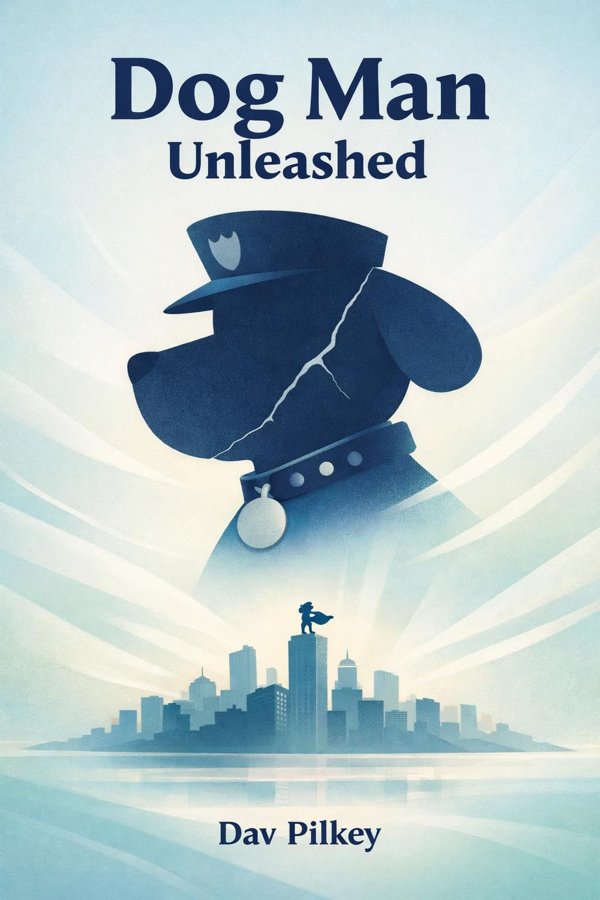
Dog Man Unleashed: Summary & Key Insights
by Dav Pilkey
 10 min9 chaptersAudio available
Key Takeaways from Dog Man Unleashed
A true hero is not defined by perfection, but by the determination to keep showing up.
Troublemakers are often more than villains; they are mirrors reflecting what happens when intelligence loses its moral center.
When power is joined with resentment, even a small grudge can become a major threat.
Courage is easiest to admire in calm stories, but its real value appears in confusion.
The best confrontations do more than separate heroes from villains; they reveal what each character values most.
What Is Dog Man Unleashed About?
Dog Man Unleashed by Dav Pilkey is a bestsellers book spanning 5 pages. Dog Man Unleashed is the second book in Dav Pilkey’s wildly popular graphic novel series, and it expands everything readers loved about the first adventure: absurd comedy, energetic illustrations, fast-moving action, and a surprisingly warm emotional core. The story follows Dog Man, the part-dog, part-police-officer hero, as he works to keep his city safe while facing the return of his crafty enemy Petey the Cat and the rise of a new threat born from science gone wrong. Beneath the jokes, chases, and comic-book chaos, the book explores larger ideas about empathy, self-control, responsibility, and the possibility of change. That is part of what makes it matter. Children are entertained by the visual humor and silliness, while adults can appreciate how Pilkey turns simple conflicts into lessons about kindness, redemption, and resilience. Pilkey is uniquely qualified to tell this kind of story. As the creator of Captain Underpants and Dog Man, he has become one of the most influential voices in children’s literature, known for combining reluctant-reader appeal with emotional intelligence. Dog Man Unleashed is not just funny—it is meaningful fun with heart.
This FizzRead summary covers all 9 key chapters of Dog Man Unleashed in approximately 10 minutes, distilling the most important ideas, arguments, and takeaways from Dav Pilkey's work. Also available as an audio summary and Key Quotes Podcast.
Dog Man Unleashed
Dog Man Unleashed is the second book in Dav Pilkey’s wildly popular graphic novel series, and it expands everything readers loved about the first adventure: absurd comedy, energetic illustrations, fast-moving action, and a surprisingly warm emotional core. The story follows Dog Man, the part-dog, part-police-officer hero, as he works to keep his city safe while facing the return of his crafty enemy Petey the Cat and the rise of a new threat born from science gone wrong. Beneath the jokes, chases, and comic-book chaos, the book explores larger ideas about empathy, self-control, responsibility, and the possibility of change. That is part of what makes it matter. Children are entertained by the visual humor and silliness, while adults can appreciate how Pilkey turns simple conflicts into lessons about kindness, redemption, and resilience. Pilkey is uniquely qualified to tell this kind of story. As the creator of Captain Underpants and Dog Man, he has become one of the most influential voices in children’s literature, known for combining reluctant-reader appeal with emotional intelligence. Dog Man Unleashed is not just funny—it is meaningful fun with heart.
Who Should Read Dog Man Unleashed?
This book is perfect for anyone interested in bestsellers and looking to gain actionable insights in a short read. Whether you're a student, professional, or lifelong learner, the key ideas from Dog Man Unleashed by Dav Pilkey will help you think differently.
- ✓Readers who enjoy bestsellers and want practical takeaways
- ✓Professionals looking to apply new ideas to their work and life
- ✓Anyone who wants the core insights of Dog Man Unleashed in just 10 minutes
Want the full summary?
Get instant access to this book summary and 100K+ more with Fizz Moment.
Get Free SummaryAvailable on App Store • Free to download
Key Chapters
A true hero is not defined by perfection, but by the determination to keep showing up. That idea sits at the center of Dog Man Unleashed. Dog Man is not polished, strategic, or especially sophisticated. He is impulsive, distractible, and often comically overwhelmed by the chaos around him. Yet he remains deeply committed to protecting the city. His strength comes from sincerity. He wants to help, and that desire gives him courage when circumstances become dangerous or ridiculous.
Dav Pilkey uses Dog Man’s character to show young readers that goodness does not require flawless behavior. Dog Man makes mistakes, gets confused, and often responds in ways that are more canine than professional. Still, he acts from loyalty and care. That combination of bravery and tenderness makes him memorable. He is not a distant superhero with impossible standards; he is approachable, funny, and emotionally recognizable.
In practical terms, this idea speaks to everyday life. A child trying to be a good friend may not always say the right thing, but effort matters. A student may struggle with schoolwork, but continuing to try is its own kind of heroism. Even adults can recognize the value of doing their best despite imperfections. Dog Man models service through persistence rather than polish.
The city needs him not because he is perfect, but because he refuses to give up on doing what is right. His loyalty creates trust, and his heart keeps him grounded when others choose selfishness or cruelty.
Actionable takeaway: Do not wait to be flawless before helping others. Start with good intentions, keep trying, and let consistency become your form of courage.
Troublemakers are often more than villains; they are mirrors reflecting what happens when intelligence loses its moral center. In Dog Man Unleashed, Petey the Cat returns as Dog Man’s sharpest and most entertaining adversary. He is clever, sarcastic, inventive, and constantly plotting an escape from consequences. Petey brings tension to the story, but he also adds depth, because his mischief is fueled by ego, resentment, and a desire for control.
Pilkey avoids making Petey one-dimensional. Instead of presenting him as evil for the sake of evil, the book shows a character who uses his talents destructively. That matters because it gives readers a more interesting lesson: being smart is not enough. Creativity without empathy can become manipulation. Wit without conscience can become harm. Petey’s schemes are funny on the surface, but they reveal how easily brilliance can turn into selfishness when it is guided by pride.
This idea has practical value beyond the story. Many people know what it feels like to use their abilities to impress, avoid responsibility, or outsmart rules rather than contribute positively. In classrooms, workplaces, and friendships, intelligence can be used to solve problems or create them. Petey embodies that choice. His actions remind readers that talents need direction, and that character matters as much as capability.
At the same time, Petey remains compelling because he is not beyond understanding. His flaws suggest pain, insecurity, and emotional distance, making him one of the series’ most important vehicles for exploring the possibility of growth.
Actionable takeaway: If you are talented, ask yourself where your abilities are pointing. Use intelligence to build trust and solve problems, not to manipulate people or dodge accountability.
When power is joined with resentment, even a small grudge can become a major threat. One of the most memorable developments in Dog Man Unleashed is the transformation of Flippy, a telekinetic fish whose change introduces a fresh form of danger. Flippy represents the classic idea of science and experimentation producing unintended consequences, but Pilkey presents it in a child-friendly, fast-paced, and comical way. The result is a villain who is bizarre, funny, and genuinely menacing.
Flippy’s transformation matters because it shows how strength alone does not create security. In fact, power without emotional balance often creates chaos. Once Flippy gains amplified abilities, revenge becomes more tempting and destruction becomes easier. The story suggests that capability magnifies character. If someone is angry, selfish, or vengeful, more power will not improve them; it will likely worsen the outcome.
This is a valuable lesson for readers of any age. A student who gains social influence can use it to include others or to bully them. A manager with authority can support a team or intimidate it. A person with technological skills can innovate or exploit. Power is not automatically good. It reveals and enlarges what is already inside.
Pilkey wraps this serious insight in energetic absurdity, making it accessible without becoming heavy-handed. Flippy’s role also raises a question that echoes throughout the book: what happens when hurt feelings and ambition are given too much force? The answer is disorder, fear, and damage that spreads beyond the original conflict.
Actionable takeaway: Before seeking more power, attention, or influence, develop self-control and empathy. The stronger you become, the more important your inner values are.
Courage is easiest to admire in calm stories, but its real value appears in confusion. Dog Man Unleashed thrives on disorder. Plans collapse, enemies escape, machines misfire, and danger escalates in absurd directions. In the middle of that uproar, Dog Man keeps responding. He may not always respond elegantly, but he acts. That is one of the book’s most practical lessons: bravery often looks messy when life becomes unpredictable.
Pilkey understands that children do not live in perfect order. They face social surprises, school pressures, emotional misunderstandings, and moments when they feel unprepared. Dog Man’s chaotic world mirrors that experience in exaggerated form. By watching him face absurd challenges, readers learn that fear and confusion do not cancel action. You can be startled and still move forward. You can feel uncertain and still help.
The story also highlights adaptability. Dog Man cannot rely on a rigid plan because circumstances keep changing. Instead, he reacts with instinct, loyalty, and determination. In everyday life, this means developing flexibility. A child may need to adjust when a group project changes. A parent may need to stay calm when plans fall apart. An adult may need to respond quickly to setbacks at work. Courage is not just boldness; it is the ability to stay engaged when things stop making sense.
This key idea gives the book momentum, but it also gives it emotional realism. Life rarely offers perfect timing or complete preparation. Often, we simply do the next helpful thing.
Actionable takeaway: When situations become chaotic, focus on the next useful action instead of waiting for total clarity. Progress often begins with one brave, imperfect step.
The best confrontations do more than separate heroes from villains; they reveal what each character values most. In Dog Man Unleashed, the climactic showdown delivers action and spectacle, but it also serves a deeper purpose. It forces characters to reveal their motivations, their weaknesses, and their capacity for change. Pilkey uses the conflict not just to entertain, but to test the moral framework of the story.
Dog Man enters conflict with a desire to protect. Petey often enters it with a desire to dominate or escape. Flippy’s danger grows from amplified resentment. These different motives matter because the book suggests that outcomes are shaped not only by strength, but by intention. During the final confrontation, readers see that selfish plans may create temporary fear, but they do not create lasting victory. Compassion and perseverance, though slower and less flashy, carry greater long-term power.
This idea applies widely. In arguments at school, at work, or at home, people often focus on winning rather than understanding what is actually at stake. Yet conflict can become clarifying. It can expose insecurity, reveal loyalty, or force someone to decide whether they will act from anger or principle. Pilkey’s story encourages readers to see conflict as a moral test rather than just a contest.
The notion of redemption also quietly enters here. Even amid rivalry, the story leaves room for the possibility that characters can grow. That hopeful note is crucial. It teaches readers that consequences matter, but so does the chance to choose differently.
Actionable takeaway: In moments of conflict, ask what your actions reveal about your values. Aim not just to win the moment, but to become the kind of person the moment is shaping.
Sometimes laughter opens the door that lectures keep closed. One reason Dog Man Unleashed resonates so strongly is that Dav Pilkey uses humor not as a distraction from meaning, but as a path into it. The book is full of visual gags, ridiculous timing, silly names, and exaggerated reactions. Children laugh because the world is delightfully absurd. Yet beneath the silliness are lessons about empathy, responsibility, and second chances.
This is one of Pilkey’s greatest strengths as a writer. He understands that young readers often absorb ideas more deeply when they are entertained. A moral delivered too directly can feel preachy, but a moral embedded in comedy becomes inviting. Dog Man’s antics lower defenses. Petey’s sarcasm keeps the energy sharp. The bizarre situations create memorable emotional associations. As a result, readers internalize the values of the story almost without noticing.
This principle works beyond books. Teachers who use humor often hold attention better. Parents who bring playfulness into difficult conversations may make children more receptive. Leaders who communicate warmth and wit can sometimes inspire more effectively than those who rely only on authority. Humor, when used kindly, can reduce fear and increase openness.
In Dog Man Unleashed, comedy also makes imperfection acceptable. Readers see characters fail, overreact, and blunder in public. Instead of shame, the story offers laughter and recovery. That can be deeply reassuring, especially for children who worry about making mistakes.
Actionable takeaway: Use humor to connect, teach, and recover from mistakes. A well-timed laugh can make difficult lessons easier to hear and easier to remember.
Stories become richer when they ask not only who caused harm, but why. Dog Man Unleashed stands out because it does not treat every antagonist as a flat symbol of badness. Even amid cartoon chaos, Dav Pilkey leaves room for emotional complexity, especially through Petey. Readers are invited to laugh at his schemes, but also to wonder what drives his cynicism, arrogance, and refusal to trust others. That shift from judgment to curiosity is the beginning of empathy.
Empathy does not excuse harmful behavior, and the book never suggests that it should. Instead, it offers a more mature lesson: understanding someone’s pain can help explain their actions, even while accountability remains necessary. This is a powerful concept for young readers. It teaches them that people who act badly may be motivated by loneliness, anger, fear, or old hurt. Recognizing that possibility can reduce cruelty and encourage wiser responses.
In daily life, empathy helps de-escalate conflict. A classmate who lashes out may be embarrassed. A coworker who seems hostile may feel overlooked. A child acting defiant may be overwhelmed rather than disrespectful. Seeing beneath behavior does not remove the need for boundaries, but it can change the tone of the response. Instead of only punishing, we can ask questions, listen, and address root causes.
Pilkey’s storytelling is especially effective here because he never abandons fun. He allows serious emotional insight to exist inside a comic adventure, proving that compassion can be introduced without slowing the pace.
Actionable takeaway: When someone behaves badly, pause before labeling them completely. Hold them accountable, but also ask what hurt, fear, or frustration might be fueling their actions.
A book can change a reader’s life simply by making reading feel possible. One of the most important contributions of Dog Man Unleashed is not only its story, but its form. Dav Pilkey’s graphic-novel structure, playful typography, expressive drawings, and rapid pacing make the book highly accessible, especially for reluctant readers. Children who might feel intimidated by dense pages of text often find confidence in Dog Man’s visual storytelling.
This accessibility matters enormously. When reading feels like a struggle, many children begin to associate books with frustration or failure. Pilkey counters that pattern by making reading dynamic and joyful. The images support comprehension, the humor sustains attention, and the short bursts of dialogue create momentum. Readers experience success quickly, and success builds motivation. Over time, that motivation can expand into broader reading habits.
The educational value is practical. Graphic novels can strengthen sequencing, inference, visual literacy, and comprehension. Readers learn to connect pictures and words, notice emotional cues, and follow narrative structure. Adults sometimes underestimate these skills, but they are foundational. A child laughing through Dog Man is also practicing interpretation and narrative thinking.
This insight extends to anyone helping children read. Parents, teachers, and librarians can use engaging formats as bridges rather than barriers. The goal is not to force a narrow idea of “real reading,” but to cultivate a genuine relationship with books.
Actionable takeaway: If a child resists reading, start with materials that feel inviting rather than intimidating. Joy is not the enemy of literacy; it is often the doorway into it.
Cynicism often looks smart, but kindness has greater staying power. Throughout Dog Man Unleashed, Dav Pilkey contrasts Dog Man’s openhearted persistence with the sarcasm, manipulation, and emotional guardedness of his opponents. Dog Man may seem naive compared with Petey’s sharp intelligence, yet the story consistently suggests that decency is not weakness. In fact, kindness becomes a form of strength because it allows Dog Man to endure setbacks without becoming bitter.
This is a subtle but important lesson. Many people, including children, learn early that being caring can make them feel vulnerable. It may seem safer to mock, withdraw, or act unimpressed. Petey often embodies that defensive attitude. Dog Man, by contrast, stays emotionally available. He continues trying, continues protecting, and continues believing that good actions matter. The book frames this not as foolishness, but as resilience.
In practical life, this distinction matters everywhere. A teammate who stays encouraging during a difficult project often improves the whole group more than the smartest critic. A friend who remains patient during conflict preserves trust. A parent who keeps showing warmth after repeated frustration builds emotional security. Kindness does not always produce immediate results, but over time it creates relationships and communities that cynicism cannot.
Pilkey’s message is especially powerful because it is delivered through comedy rather than sentimentality. The book does not deny that the world includes troublemakers and chaos. It simply insists that warmth, loyalty, and perseverance are still effective responses.
Actionable takeaway: When sarcasm or negativity feels easier, choose one concrete act of kindness instead. Consistent goodwill often solves more than clever criticism ever will.
All Chapters in Dog Man Unleashed
About the Author
Dav Pilkey is an American author and illustrator celebrated for transforming children’s literature through humor, creativity, and accessibility. He is best known for the bestselling Captain Underpants and Dog Man series, both of which have reached millions of young readers worldwide. Pilkey’s work stands out for its energetic illustrations, playful storytelling, and deeper messages about kindness, friendship, resilience, and self-acceptance. He has been especially influential among reluctant readers, proving that funny, visually engaging books can build confidence and a lifelong love of reading. Drawing from his own childhood experiences, including struggles with attention and behavior in school, Pilkey writes with unusual empathy for children who feel different or misunderstood. His books entertain first, but they also encourage emotional growth, imagination, and compassion.
Get This Summary in Your Preferred Format
Read or listen to the Dog Man Unleashed summary by Dav Pilkey anytime, anywhere. FizzRead offers multiple formats so you can learn on your terms — all free.
Available formats: App · Audio · PDF · EPUB — All included free with FizzRead
Download Dog Man Unleashed PDF and EPUB Summary
Key Quotes from Dog Man Unleashed
“A true hero is not defined by perfection, but by the determination to keep showing up.”
“Troublemakers are often more than villains; they are mirrors reflecting what happens when intelligence loses its moral center.”
“When power is joined with resentment, even a small grudge can become a major threat.”
“Courage is easiest to admire in calm stories, but its real value appears in confusion.”
“The best confrontations do more than separate heroes from villains; they reveal what each character values most.”
Frequently Asked Questions about Dog Man Unleashed
Dog Man Unleashed by Dav Pilkey is a bestsellers book that explores key ideas across 9 chapters. Dog Man Unleashed is the second book in Dav Pilkey’s wildly popular graphic novel series, and it expands everything readers loved about the first adventure: absurd comedy, energetic illustrations, fast-moving action, and a surprisingly warm emotional core. The story follows Dog Man, the part-dog, part-police-officer hero, as he works to keep his city safe while facing the return of his crafty enemy Petey the Cat and the rise of a new threat born from science gone wrong. Beneath the jokes, chases, and comic-book chaos, the book explores larger ideas about empathy, self-control, responsibility, and the possibility of change. That is part of what makes it matter. Children are entertained by the visual humor and silliness, while adults can appreciate how Pilkey turns simple conflicts into lessons about kindness, redemption, and resilience. Pilkey is uniquely qualified to tell this kind of story. As the creator of Captain Underpants and Dog Man, he has become one of the most influential voices in children’s literature, known for combining reluctant-reader appeal with emotional intelligence. Dog Man Unleashed is not just funny—it is meaningful fun with heart.
More by Dav Pilkey




You Might Also Like

The Godfather
Mario Puzo
10 min
The Handmaid's Tale
Margaret Atwood
10 min
The Hunger Games
Suzanne Collins
10 min
The Nightingale
Kristin Hannah
10 min
The Seven Husbands of Evelyn Hugo
Taylor Jenkins Reid
10 min
Backwater Justice
Fern Michaels
10 minBrowse by Category
Ready to read Dog Man Unleashed?
Get the full summary and 100K+ more books with Fizz Moment.