
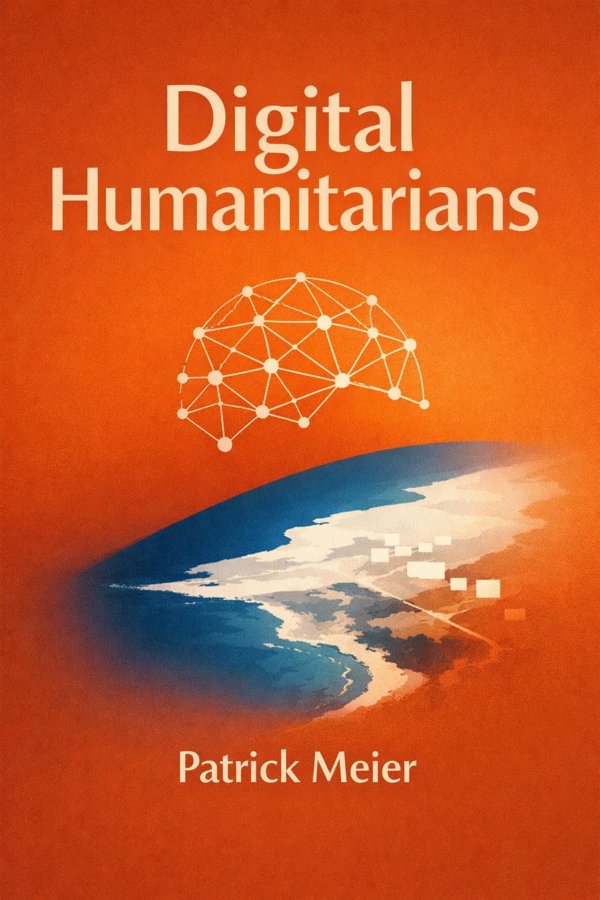
Digital Humanitarians: How Big Data Is Changing the Face of Humanitarian Response: Summary & Key Insights
 10 min5 chaptersAudio available
What Is Digital Humanitarians: How Big Data Is Changing the Face of Humanitarian Response About?
Digital Humanitarians: How Big Data Is Changing the Face of Humanitarian Response by Patrick Meier is a digital_culture book spanning 5 pages. Digital Humanitarians explores how volunteers and professionals use digital technologies and big data to respond to humanitarian crises. Patrick Meier documents the rise of digital volunteer networks that analyze social media, satellite imagery, and crowdsourced information to assist in disaster relief and crisis mapping. The book highlights real-world examples of how data-driven approaches are transforming humanitarian response and coordination.
This FizzRead summary covers all 5 key chapters of Digital Humanitarians: How Big Data Is Changing the Face of Humanitarian Response in approximately 10 minutes, distilling the most important ideas, arguments, and takeaways from Patrick Meier's work. Also available as an audio summary and Key Quotes Podcast.
Digital Humanitarians: How Big Data Is Changing the Face of Humanitarian Response
Digital Humanitarians explores how volunteers and professionals use digital technologies and big data to respond to humanitarian crises. Patrick Meier documents the rise of digital volunteer networks that analyze social media, satellite imagery, and crowdsourced information to assist in disaster relief and crisis mapping. The book highlights real-world examples of how data-driven approaches are transforming humanitarian response and coordination.
Who Should Read Digital Humanitarians: How Big Data Is Changing the Face of Humanitarian Response?
This book is perfect for anyone interested in digital_culture and looking to gain actionable insights in a short read. Whether you're a student, professional, or lifelong learner, the key ideas from Digital Humanitarians: How Big Data Is Changing the Face of Humanitarian Response by Patrick Meier will help you think differently.
- ✓Readers who enjoy digital_culture and want practical takeaways
- ✓Professionals looking to apply new ideas to their work and life
- ✓Anyone who wants the core insights of Digital Humanitarians: How Big Data Is Changing the Face of Humanitarian Response in just 10 minutes
Want the full summary?
Get instant access to this book summary and 100K+ more with Fizz Moment.
Get Free SummaryAvailable on App Store • Free to download
Key Chapters
For centuries, humanitarian response relied on physical presence, logistics, and government coordination. Relief workers gathered information on the ground, reported damages, and coordinated resources through face-to-face networks. While noble, this model was slow and often opaque, trapped within bureaucratic boundaries. The advent of digital communication changed everything. As mobile phones and the internet spread, the victims of disaster themselves became information sources. People started tweeting about flooded streets, posting pictures of collapsed buildings, and sending text messages calling for help. Suddenly, the flow of data inverted: instead of information trickling up from field reports, an ocean of real-time signals surged from affected communities.
During the early 2000s, experiments like Ushahidi—a crowdsourcing platform born during Kenya’s post-election violence—proved that citizens could map crises themselves. From there, organizations like the Standby Task Force and OpenStreetMap volunteers began turning raw public data into organized maps and situation reports. This new practice—digital humanitarianism—bridged technology and compassion. It represented a social shift: the beginning of distributed humanitarian intelligence.
I watched this transformation gain momentum as crises grew more complex and interconnected. Natural disasters overlapped with cyber disruptions, epidemics, and displacement. Traditional institutions could no longer keep up with the velocity of events. Digital humanitarians filled those gaps, armed with open-source tools and collaborative spirit. They collected, cleaned, and verified online data to give responders an accurate picture of unfolding crises. Step by step, humanitarianism became not just about sending help—it became about understanding the world through data, so help could arrive where it was needed most.
Crowdsourcing is the heartbeat of digital humanitarianism. It’s the idea that collective effort—when organized intelligently—can reveal patterns faster than any single agency. In moments of chaos, people naturally document what they see: a collapsed bridge, missing relatives, blocked roads. The role of a digital humanitarian is to transform those fragments into structured, geolocated data. Crisis mapping, therefore, is much more than placing pins on a digital map; it’s an act of collective storytelling, transforming noise into navigable insight.
Volunteer networks such as the Standby Task Force have shown how powerful coordination can be. When a disaster happens, hundreds of trained mappers split tasks: some verify tweets, others tag satellite images or translate local messages. The Haiti earthquake set the precedent. Volunteers around the world used platforms like Ushahidi and OpenStreetMap to identify damaged areas. Rescue teams on the ground relied on these maps to locate survivors. This was perhaps the first clear instance of global crowdsourcing directly influencing life-saving operations.
What matters, however, is not just technology but trust. Volunteers must balance speed with accuracy, emotion with discipline. Digital humanitarianism demands ethical awareness—respecting privacy, understanding the consequences of sharing information, and recognizing the limits of crowdsourced truth. Every dot on the map represents a human being. Every dataset reflects suffering that deserves dignity. Through each crisis, I’ve learned that technology alone does not save lives. It is people—passionate, connected, and empowered—who breathe meaning into the data.
+ 3 more chapters — available in the FizzRead app
All Chapters in Digital Humanitarians: How Big Data Is Changing the Face of Humanitarian Response
About the Author
Patrick Meier is a leading expert in humanitarian technology and crisis mapping. He has worked with organizations such as the United Nations and the World Bank, and co-founded several digital humanitarian initiatives. His research and practice focus on the intersection of technology, data, and humanitarian action.
Get This Summary in Your Preferred Format
Read or listen to the Digital Humanitarians: How Big Data Is Changing the Face of Humanitarian Response summary by Patrick Meier anytime, anywhere. FizzRead offers multiple formats so you can learn on your terms — all free.
Available formats: App · Audio · PDF · EPUB — All included free with FizzRead
Download Digital Humanitarians: How Big Data Is Changing the Face of Humanitarian Response PDF and EPUB Summary
Key Quotes from Digital Humanitarians: How Big Data Is Changing the Face of Humanitarian Response
“For centuries, humanitarian response relied on physical presence, logistics, and government coordination.”
“Crowdsourcing is the heartbeat of digital humanitarianism.”
Frequently Asked Questions about Digital Humanitarians: How Big Data Is Changing the Face of Humanitarian Response
Digital Humanitarians: How Big Data Is Changing the Face of Humanitarian Response by Patrick Meier is a digital_culture book that explores key ideas across 5 chapters. Digital Humanitarians explores how volunteers and professionals use digital technologies and big data to respond to humanitarian crises. Patrick Meier documents the rise of digital volunteer networks that analyze social media, satellite imagery, and crowdsourced information to assist in disaster relief and crisis mapping. The book highlights real-world examples of how data-driven approaches are transforming humanitarian response and coordination.
You Might Also Like

An Ugly Truth: Inside Facebook’s Battle for Domination
Sheera Frenkel, Cecilia Kang
10 min
Cyber Citizens
Ian Goodfellow
10 min
Digital Minimalism: Choosing a Focused Life in a Noisy World
Cal Newport
10 min
E‑Books & Beyond
Various Authors
10 min
The Future of Media
Various Authors
10 min
This Is Why We Can't Have Nice Things
Whitney Phillips
10 minBrowse by Category
Ready to read Digital Humanitarians: How Big Data Is Changing the Face of Humanitarian Response?
Get the full summary and 100K+ more books with Fizz Moment.