
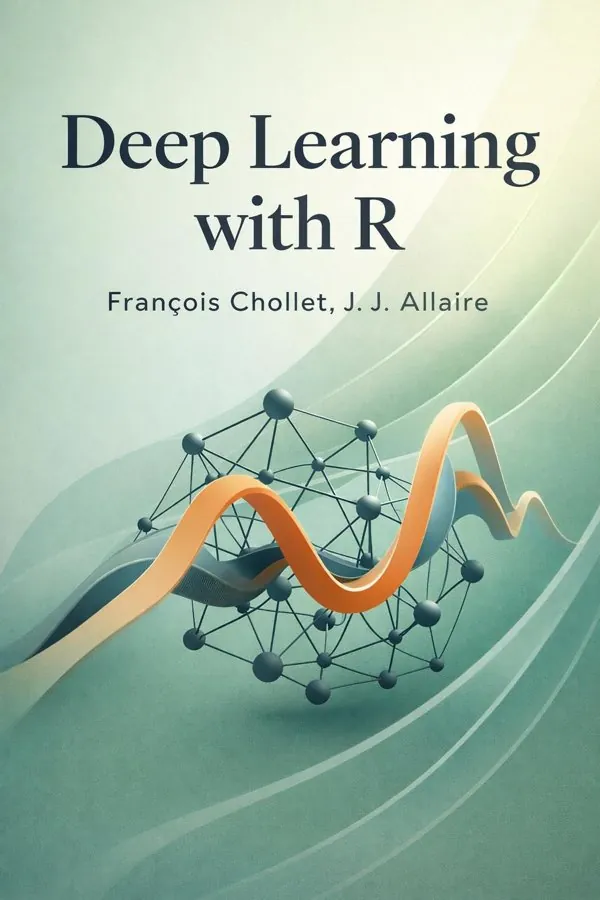
Deep Learning with R: Summary & Key Insights
by François Chollet, J.J. Allaire
 10 min6 chaptersAudio available
What Is Deep Learning with R About?
Deep Learning with R by François Chollet, J.J. Allaire is a ai_ml book spanning 6 pages. This book introduces deep learning concepts and practical applications using the R programming language and the Keras library. It provides a hands-on approach to building and training neural networks, covering topics such as computer vision, text processing, and generative models. Written by the creators of Keras and RStudio, it bridges theory and implementation for data scientists and researchers.
This FizzRead summary covers all 6 key chapters of Deep Learning with R in approximately 10 minutes, distilling the most important ideas, arguments, and takeaways from François Chollet, J.J. Allaire's work. Also available as an audio summary and Key Quotes Podcast.
Deep Learning with R
This book introduces deep learning concepts and practical applications using the R programming language and the Keras library. It provides a hands-on approach to building and training neural networks, covering topics such as computer vision, text processing, and generative models. Written by the creators of Keras and RStudio, it bridges theory and implementation for data scientists and researchers.
Who Should Read Deep Learning with R?
This book is perfect for anyone interested in ai_ml and looking to gain actionable insights in a short read. Whether you're a student, professional, or lifelong learner, the key ideas from Deep Learning with R by François Chollet, J.J. Allaire will help you think differently.
- ✓Readers who enjoy ai_ml and want practical takeaways
- ✓Professionals looking to apply new ideas to their work and life
- ✓Anyone who wants the core insights of Deep Learning with R in just 10 minutes
Want the full summary?
Get instant access to this book summary and 100K+ more with Fizz Moment.
Get Free SummaryAvailable on App Store • Free to download
Key Chapters
The essence of deep learning lies in its ability to learn hierarchical representations. A neural network isn’t a black box by design—it’s a structured system of layers where each progressively transforms the data into more abstract features. As I often say, the power of deep learning comes from depth: successive compositions of simple transformations yielding astonishingly complex understanding.
In this section, we start from the simplest building blocks—layers, activation functions, and loss functions. I invite you to imagine layers as filters of perception. The first layer recognizes simple patterns, while deeper ones grasp concepts like edges, shapes, and eventually, meaning itself. Whether you train a network to distinguish handwritten digits or to interpret sentiment in a tweet, these same principles apply.
When you implement this in R through Keras, the process becomes remarkably straightforward. Each layer is a function you add, each configuration—a statement of intent. Keras abstracts the underlying TensorFlow engine, allowing you to focus on how the model learns rather than managing the computational machinery. You’ll train your first feedforward network on structured tabular data, observe how loss decreases during learning, and tune hyperparameters like the number of neurons, activation functions, or optimizers. All of this forms your foundation: understanding that learning is nothing mystical—it is optimization guided by feedback from data.
Once you’ve seen your first model achieve predictive accuracy, you’ll experience a pivotal moment: realizing that you can teach your program to learn patterns you didn’t explicitly define. That realization changes how you think about data itself—it becomes not just something you analyze, but something from which you *learn to learn*.
As your models grow more ambitious, so will your need to guide them toward generalization. Overfitting is one of the most critical lessons in machine intelligence: the model that memorizes the past cannot predict the future. To prevent this, we use techniques like regularization, dropout, and proper validation.
I often think of dropout as a necessary act of humility. During training, we randomly deactivate neurons, forcing the network to rebuild understanding from incomplete views. This enforces redundancy, much like how our brains learn robust representations from noisy experience. R and Keras make this easy—you add a `layer_dropout()` statement, and suddenly your model generalizes better on unseen data.
Here, you’ll also encounter metrics that matter. Accuracy, precision, recall—these are not abstract numbers. They reflect your model’s capacity to make meaningful, reliable decisions in the world. Evaluating models involves splitting data into training, validation, and testing sets—mirroring real-world uncertainty. You’ll learn to interpret learning curves, recognize when to stop training, and understand that deep learning is as much art as science: an iterative process of tuning and interpretation.
+ 4 more chapters — available in the FizzRead app
All Chapters in Deep Learning with R
About the Authors
François Chollet is a software engineer at Google and the creator of the Keras deep learning library. J.J. Allaire is the founder of RStudio and a leading contributor to the R programming ecosystem.
Get This Summary in Your Preferred Format
Read or listen to the Deep Learning with R summary by François Chollet, J.J. Allaire anytime, anywhere. FizzRead offers multiple formats so you can learn on your terms — all free.
Available formats: App · Audio · PDF · EPUB — All included free with FizzRead
Download Deep Learning with R PDF and EPUB Summary
Key Quotes from Deep Learning with R
“The essence of deep learning lies in its ability to learn hierarchical representations.”
“As your models grow more ambitious, so will your need to guide them toward generalization.”
Frequently Asked Questions about Deep Learning with R
Deep Learning with R by François Chollet, J.J. Allaire is a ai_ml book that explores key ideas across 6 chapters. This book introduces deep learning concepts and practical applications using the R programming language and the Keras library. It provides a hands-on approach to building and training neural networks, covering topics such as computer vision, text processing, and generative models. Written by the creators of Keras and RStudio, it bridges theory and implementation for data scientists and researchers.
You Might Also Like
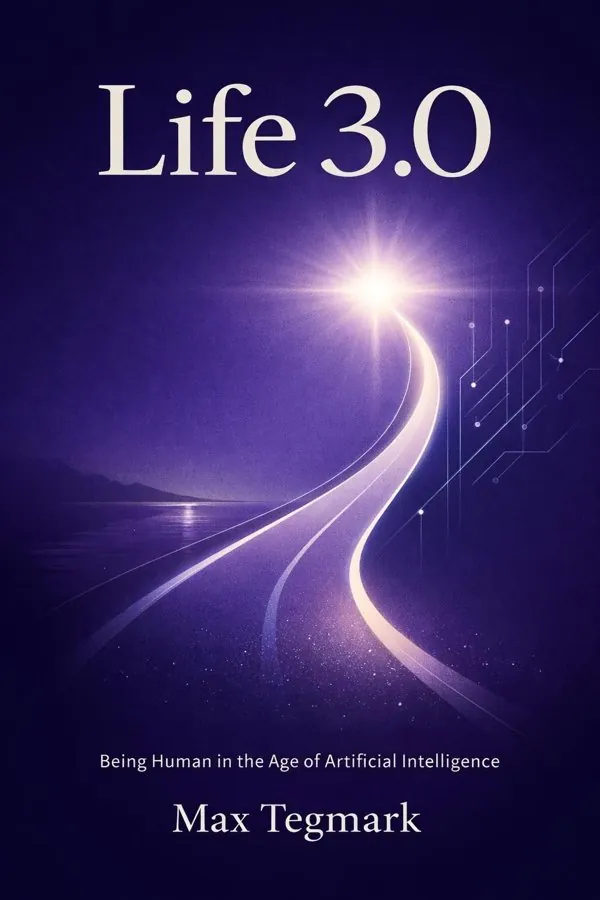
Life 3.0
Max Tegmark
10 min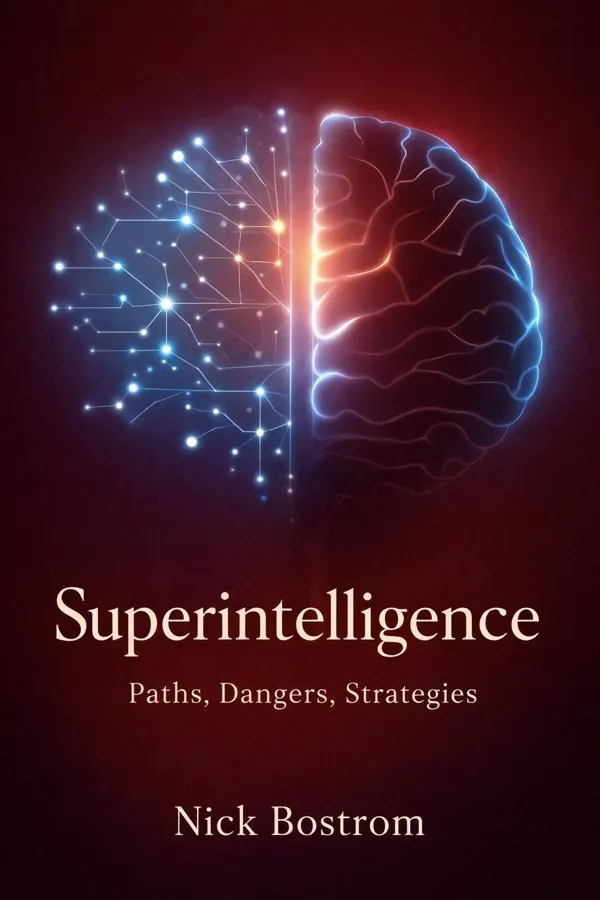
Superintelligence
Nick Bostrom
10 min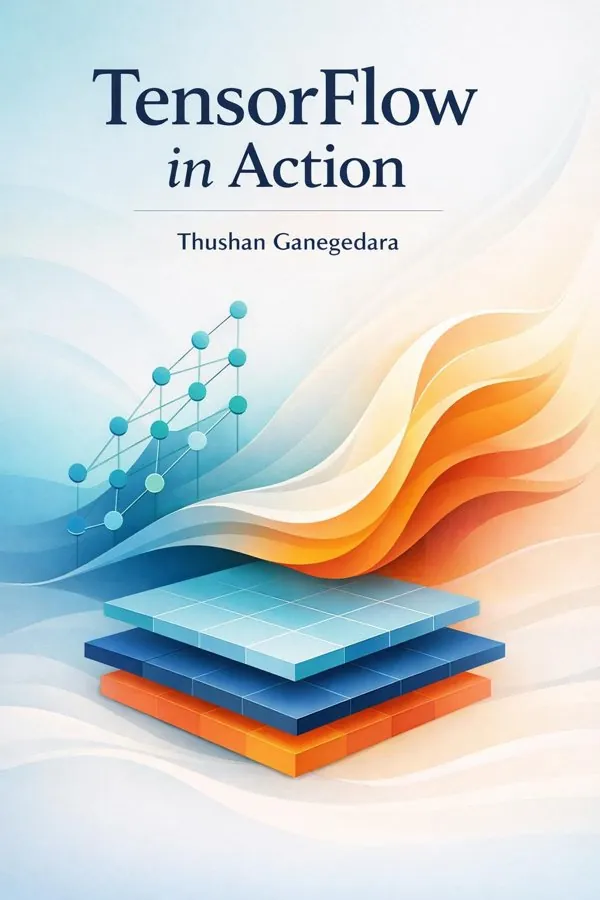
TensorFlow in Action
Thushan Ganegedara
10 min
AI Made Simple: A Beginner’s Guide to Generative AI, ChatGPT, and the Future of Work
Rajeev Kapur
10 min
AI Snake Oil
Arvind Narayanan, Sayash Kapoor
10 min
AI Superpowers: China, Silicon Valley, and the New World Order
Kai-Fu Lee
10 minBrowse by Category
Ready to read Deep Learning with R?
Get the full summary and 100K+ more books with Fizz Moment.