
The Four Agreements vs The Power of Now: Which Should You Read?
A detailed comparison of The Four Agreements by Don Miguel Ruiz and The Power of Now by Eckhart Tolle. Discover the key differences, strengths, and which book is right for you.
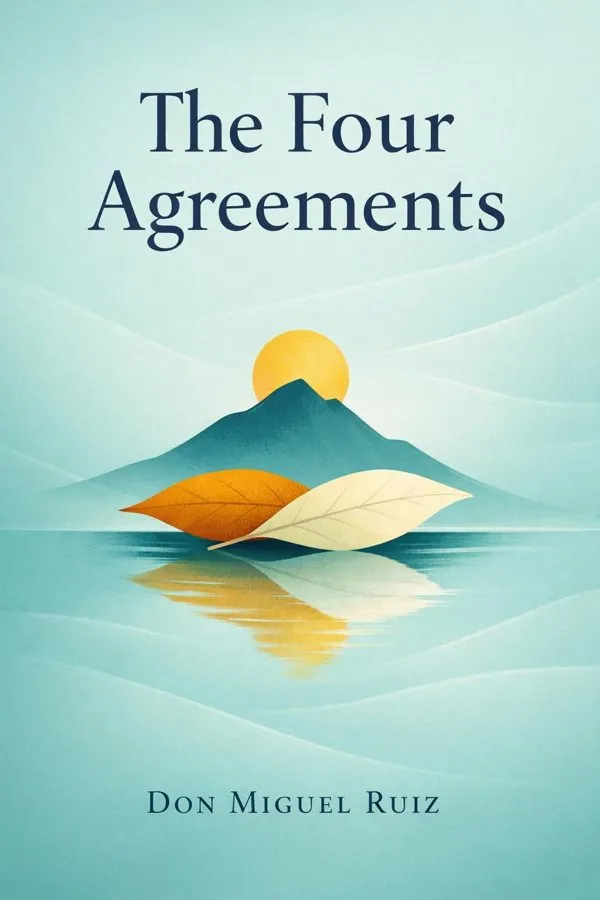
The Four Agreements
The Power of Now
In-Depth Analysis
Don Miguel Ruiz’s The Four Agreements and Eckhart Tolle’s The Power of Now are often shelved together because both promise freedom from unnecessary suffering, both draw on spiritual rather than clinical traditions, and both have become gateway texts for readers dissatisfied with purely productivity-based self-help. Yet they operate at different levels. Ruiz gives readers a compact code for living; Tolle tries to alter the very structure of consciousness from which life is experienced. That distinction explains why the books can feel complementary even when they are not doing the same work.
The Four Agreements begins with a social-psychological diagnosis. Ruiz argues that human beings are 'domesticated' by family, culture, religion, and institutions. Through reward and punishment, we internalize a 'Book of Law' that tells us what makes us acceptable. The result is chronic self-judgment, fear of rejection, and emotional suffering. This framing is one of the book’s enduring strengths because it gives readers a vivid explanation for why shame and anxiety can feel automatic. Ruiz’s model is not academic psychology, but it is psychologically legible: children absorb standards, turn them inward, and begin policing themselves.
Tolle’s starting point is less social and more ontological. In The Power of Now, the primary problem is not domestication but identification with thought. The mind generates commentary, memory, anticipation, and narrative, and we mistake that mental stream for our actual self. Suffering intensifies when attention leaves the present and becomes trapped in what Tolle calls psychological time: replaying the past or fearing the future. So where Ruiz says, in effect, 'You were taught damaging rules,' Tolle says, 'You are unconsciously fused with thinking itself.' One book targets learned beliefs; the other targets identification with the mind.
That difference shapes the practical advice. Ruiz’s four agreements are behavioral and interpretive. 'Be impeccable with your word' asks readers to stop using language as a weapon against self or others. This includes obvious acts like gossip and insult, but also subtler forms of self-curse such as repeatedly saying 'I always fail' or 'I’m not good enough.' 'Don’t take anything personally' reframes insult and praise alike as expressions of the other person’s reality rather than objective verdicts about the self. 'Don’t make assumptions' addresses a common interpersonal pattern: filling gaps with invented stories instead of asking direct questions. Finally, 'Always do your best' prevents the whole system from becoming perfectionistic, since one’s best varies with fatigue, health, and circumstance.
Tolle’s practices are harder to summarize because they are less about rules than awareness. He asks readers to notice the 'voice in the head,' sense the 'inner body,' and repeatedly return to present-moment perception. If anxiety rises, the move is not primarily to reinterpret its content but to observe the thought stream generating it and anchor attention in immediate experience. A stressed reader of Ruiz might say, 'I am assuming my boss’s tone means I’m failing.' A stressed reader of Tolle might say, 'Fear is arising because my mind is projecting into the future; can I feel this moment directly without becoming the thought?' Both methods can help, but they intervene at different points in the chain.
In terms of style, Ruiz’s strength is compression. The Four Agreements is built for memorability. Its ideas survive because they can be recalled in the middle of conflict. Before sending an angry text, 'be impeccable with your word' is actionable in seconds. Before spiraling over a cold email, 'don’t take anything personally' is an immediate corrective. The drawback is that this simplicity can flatten complexity. Not all hurt is mere personalization, and not all assumptions are irrational; sometimes people are, in fact, being manipulative or unclear. Ruiz’s framework works best as a discipline of self-governance, not as a total explanation of relational dynamics.
Tolle, by contrast, is less portable but often more transformative for readers who are ready for him. The Power of Now can feel frustrating if approached as a standard advice manual because it repeatedly interrupts the reader’s demand for conceptual answers. Tolle is trying to induce a shift, not merely communicate a system. For some, this is exactly why the book is life-changing: it opens a felt experience of mental spaciousness. For others, it can seem slippery, especially when its metaphysical language outruns everyday applicability. Ruiz gives you handles; Tolle asks you to loosen your grip altogether.
Their emotional tones also differ. The Four Agreements tends to produce empowerment through clarity. It tells readers that much of what they suffer under is inherited and revisable. The Power of Now tends to produce relief through de-centering. It suggests that beneath the noise of thought there is already peace available, not because circumstances improve but because awareness itself is larger than mental disturbance. Ruiz says change your agreements; Tolle says realize you are not the mind making them.
For beginners, Ruiz is usually easier to implement. For readers already interested in meditation, mindfulness, or nondual spirituality, Tolle may offer the deeper breakthrough. Ideally, the books can be paired. The Four Agreements helps clean up speech, interpretation, and relationships; The Power of Now helps the reader see the machinery of thought beneath those patterns. One is an ethical-psychological framework for daily life. The other is a contemplative invitation to inhabit life before it hardens into narrative. If Ruiz helps you behave with more freedom, Tolle tries to help you perceive from freedom itself.
Side-by-Side Comparison
| Aspect | The Four Agreements | The Power of Now |
|---|---|---|
| Core Philosophy | The Four Agreements argues that suffering is largely learned through social conditioning, or 'domestication,' which installs a fear-based 'Book of Law' in the mind. Ruiz proposes freedom through four behavioral and interpretive commitments: speak truthfully, refuse personalization, question assumptions, and do your best. | The Power of Now locates suffering primarily in identification with thought and psychological time. Tolle’s solution is not a code of conduct so much as a shift in consciousness: disidentify from the mind, enter presence, and experience reality directly in the now. |
| Writing Style | Ruiz writes in short, aphoristic chapters with a parable-like simplicity that makes the book feel like a spiritual handbook. The prose is direct, repetitive, and slogan-friendly, which helps retention but sometimes reduces nuance. | Tolle uses a more meditative, abstract, and discursive style, often structured as questions and answers. His language is contemplative and sometimes metaphysical, which many readers find profound, though others may find it vague or elliptical. |
| Practical Application | The Four Agreements translates easily into daily behavior: pause before gossiping, ask clarifying questions instead of assuming, and reinterpret criticism as a reflection of the speaker rather than the self. Its advice is interpersonal and immediately testable in work, family, and conflict situations. | The Power of Now is practical in a more internal way, asking readers to observe thought, feel the inner body, and return attention to the present moment during stress. Its exercises are less checklist-driven and more experiential, aimed at changing awareness rather than just behavior. |
| Target Audience | Ruiz is especially accessible to readers who want concise self-help with clear principles they can remember and apply quickly. It suits people struggling with people-pleasing, shame, miscommunication, and reactive relationships. | Tolle is best for readers drawn to spirituality, mindfulness, and existential transformation rather than straightforward habit advice. It often resonates with those exhausted by overthinking, anxiety, and constant mental noise. |
| Scientific Rigor | The Four Agreements is grounded in spiritual wisdom and intuitive psychology rather than empirical research. Concepts like domestication and emotional poison are compelling metaphors, but the book does not build a scientific argument with studies or evidence. | The Power of Now likewise relies more on phenomenology and spiritual insight than science. Some of its claims overlap with mindfulness research on attention and rumination, but Tolle himself largely presents experiential truths rather than evidence-based frameworks. |
| Emotional Impact | Ruiz often creates relief by reframing guilt, rejection, and conflict as products of conditioning rather than proof of personal failure. Readers frequently feel empowered because the book turns diffuse emotional suffering into four memorable practices. | Tolle’s emotional effect is often quieter but deeper for receptive readers: it offers a sense of spaciousness, detachment, and peace beneath turmoil. Instead of empowerment through rules, it offers liberation through stillness and non-identification. |
| Actionability | Its actionability is one of its greatest strengths because each agreement can be turned into a daily checkpoint. For example, before a difficult conversation, a reader can ask: Am I being impeccable, am I assuming, am I personalizing, and what is my best right now? | Tolle’s action steps are subtler and require practice: notice the voice in the head, shift attention to breath or bodily aliveness, and stop feeding future-based fear. These are potent but harder to measure, making implementation more dependent on patience and self-awareness. |
| Depth of Analysis | The Four Agreements offers a focused model of human suffering centered on language, belief, and social conditioning. Its strength is clarity, but it can feel reductive because many complex psychological patterns are filtered through only four principles. | The Power of Now ranges more broadly into ego, time, consciousness, pain, and spiritual awakening. It often feels philosophically deeper than Ruiz’s book, though sometimes at the cost of precision and concrete psychological explanation. |
| Readability | Ruiz is generally the easier read: short chapters, memorable phrasing, and repeated concepts make it beginner-friendly. Even readers who do not fully buy into Toltec framing can grasp the practical message quickly. | Tolle is readable in sentence-level terms but conceptually denser. Readers unfamiliar with contemplative language may need to slow down, reread passages, or accept ideas before fully understanding them experientially. |
| Long-term Value | The Four Agreements has high long-term value as a compact ethical and psychological reset tool. Many readers return to it in periods of conflict because its principles serve as a recurring behavioral compass. | The Power of Now has strong long-term value for rereading at different stages of life because its meaning often deepens with practice. It tends to grow with the reader, especially as they become more attentive to patterns of thought and presence. |
Key Differences
Rules for living vs shift in consciousness
The Four Agreements gives readers an explicit framework of four commitments, almost like a compact personal code. The Power of Now is less prescriptive; instead of telling you what rules to follow, it teaches you to notice awareness itself and stop merging with mental activity.
Interpersonal focus vs inward presence
Ruiz’s book is especially concerned with what happens between people: gossip, criticism, projection, misunderstanding, and unrealistic expectations. Tolle is more focused on the inner experience of thought, time, fear, and the ego, even when those issues later affect relationships.
Language as creative force vs thought as source of identification
In The Four Agreements, words are powerful because they cast spells of belief, shame, and identity; being impeccable with speech becomes central. In The Power of Now, the deeper issue is not language alone but the whole stream of thought to which the self becomes attached.
Quick application vs experiential practice
Ruiz offers advice that can be turned into a checklist during real-world moments, such as asking clarifying questions instead of making assumptions in a conflict. Tolle’s method usually requires repeated contemplative practice, like sensing the inner body or observing anxious thoughts without feeding them.
Simple clarity vs philosophical breadth
The Four Agreements is compact and intentionally simple, which makes it powerful but also somewhat reductive. The Power of Now covers a broader territory—ego, time, suffering, presence, stillness—and therefore often feels more layered, though sometimes less precise.
Motivational tone vs meditative tone
Ruiz speaks like a guide urging liberation through disciplined practice, often with energizing directness. Tolle writes more like a contemplative teacher, inviting silence, detachment, and awareness rather than motivational momentum.
Best for social suffering vs best for mental suffering
Readers who suffer mainly from rejection sensitivity, conflict, and self-judgment in relationships often get more immediate relief from Ruiz. Readers whose pain is dominated by rumination, future fear, and incessant inner commentary often respond more strongly to Tolle.
Who Should Read Which?
The relationship-focused reader who wants less conflict and better communication
→ The Four Agreements
Ruiz directly addresses the habits that sabotage relationships: using words carelessly, assuming motives, internalizing criticism, and striving under impossible standards. The advice is immediately useful in arguments, family tensions, and workplace misunderstandings.
The overthinker who feels trapped in anxiety and nonstop inner chatter
→ The Power of Now
Tolle’s central insight is aimed squarely at this problem: suffering grows when we identify with the mind and live psychologically in past and future. His practices of witnessing thought and returning to presence are especially relevant for rumination and anticipatory stress.
The self-development beginner who wants a clear first spiritual self-help book
→ The Four Agreements
It offers a gentler entry point than Tolle because the core message is simple, memorable, and behaviorally concrete. Readers can adopt one agreement at a time and see results without needing prior familiarity with meditation or nondual language.
Which Should You Read First?
For most readers, The Four Agreements should come first. It is shorter, clearer, and easier to operationalize because each chapter maps onto recognizable daily problems: careless speech, taking offense, mind-reading, and perfectionism. Reading Ruiz first builds a practical foundation. You start catching yourself in conversations, questioning assumptions, and loosening the grip of external approval. That immediate traction is valuable, especially if you are new to self-help or spiritual reading. Then read The Power of Now. Once you have some success changing behavior, Tolle helps you investigate the mental machinery underneath those behaviors. You begin to see why you personalize, why you assume, and why self-talk feels so compelling: because attention is fused with thought and pulled out of the present. In that sense, Tolle deepens Ruiz. The reverse order works best only for readers already comfortable with meditation, mindfulness, or spiritual philosophy. For everyone else, starting with Ruiz reduces frustration and creates a bridge into Tolle’s more abstract teaching.
Want the full summary?
Get instant access to this book summary and 100K+ more with Fizz Moment.
Get Free SummaryAvailable on App Store • Free to download
Frequently Asked Questions
Is The Four Agreements better than The Power of Now for beginners?
For most beginners, The Four Agreements is easier to grasp and apply immediately. Its four principles are concrete, memorable, and easy to test in ordinary situations like arguments, workplace tension, or self-criticism. The Power of Now can also be beginner-friendly in spirit, but its language is more abstract and its core practice—disidentifying from thought—often takes longer to understand experientially. If a new reader wants straightforward self-help with visible daily actions, Ruiz usually lands faster. If the beginner is already interested in mindfulness or meditation, Tolle may still be the more powerful starting point.
Which book is more practical for anxiety: The Four Agreements or The Power of Now?
It depends on the type of anxiety. The Four Agreements is especially practical when anxiety is tied to social interpretation: worrying what people think, replaying criticism, assuming hidden meanings, or using harsh internal language. In those cases, 'don’t take anything personally' and 'don’t make assumptions' can immediately reduce emotional escalation. The Power of Now is often stronger for generalized mental agitation, future-focused fear, and compulsive overthinking because Tolle targets the mind’s habit of leaving the present. If your anxiety feels interpersonal, start with Ruiz; if it feels like nonstop inner chatter and anticipatory fear, Tolle may be more effective.
Is The Power of Now better than The Four Agreements for overthinking?
Yes, in many cases The Power of Now is the stronger book specifically for overthinking because it addresses the mechanism directly: identification with thought. Tolle teaches readers to observe mental activity rather than automatically believe or follow it, which can create real distance from rumination. The Four Agreements helps indirectly by reducing some common triggers of overthinking, especially assumptions and personalization, but it does not focus as deeply on consciousness, attention, and the present moment. If your main struggle is relentless mental noise rather than interpersonal drama, Tolle usually has the sharper diagnostic lens.
Which book has more spiritual depth, The Four Agreements or The Power of Now?
The Power of Now generally feels more spiritually deep because it goes beyond behavioral advice into questions of ego, awareness, presence, and the nature of self. Tolle is not just telling readers how to act better; he is trying to transform how they experience reality. The Four Agreements is spiritual too, especially through its Toltec framing and emphasis on liberation from fear-based conditioning, but its center of gravity is more practical and ethical. Ruiz asks for disciplined agreements; Tolle asks for a shift in consciousness. Readers wanting contemplative or mystical depth usually prefer Tolle.
Should I read The Four Agreements or The Power of Now first if I want better relationships?
If your main goal is improving relationships, read The Four Agreements first. It directly addresses the habits that damage communication: careless speech, taking things personally, assuming motives, and holding yourself to punishing standards. Those principles can improve conversations with partners, friends, coworkers, and family almost immediately. The Power of Now can still help relationships, especially by reducing reactivity and increasing presence, but it is less explicitly focused on communication dynamics. Ruiz gives a clearer first-step framework for relational change, while Tolle helps at a deeper level by calming the egoic mind that fuels conflict.
Are The Four Agreements and The Power of Now evidence-based self-help books?
Neither book is strongly evidence-based in the modern scientific sense. Both are rooted more in spiritual wisdom, introspection, and lived insight than in psychological studies or controlled research. That does not mean they are useless; many readers find them profoundly effective. But their authority comes from resonance and practice, not data. Some ideas in The Power of Now overlap with mindfulness research, and some themes in The Four Agreements align loosely with cognitive reframing and communication principles. Still, anyone wanting rigorously research-driven self-help would need to supplement these books with more empirically grounded work.
The Verdict
If you want the shorter answer, choose The Four Agreements for immediate behavioral change and The Power of Now for deeper shifts in awareness. Ruiz is the stronger recommendation for readers who need a usable framework right away: people caught in people-pleasing, self-criticism, reactive conversations, or chronic misinterpretation of others. Its four principles are portable, memorable, and unusually effective in day-to-day relationships. You can finish a chapter and apply it the same afternoon. Tolle is the stronger recommendation for readers whose main struggle is not just what they think, but the fact that they cannot stop thinking. If your suffering feels rooted in overidentification with the mind, future-based anxiety, restlessness, or a pervasive inability to feel present, The Power of Now goes deeper. It is less of a toolkit and more of a consciousness-training text. That makes it both more demanding and, for the right reader, more transformative. Overall, The Four Agreements is the better universal starting point because its advice is clearer and easier to implement. But The Power of Now has the higher ceiling: readers who connect with it often find that it changes not just habits, but perception itself. Ideally, read both. Start with Ruiz to clean up language, assumptions, and emotional reactions; then move to Tolle to examine the mind-state that generates those reactions in the first place.
Related Comparisons

Want to read both books?
Get AI-powered summaries of both The Four Agreements and The Power of Now in just 20 minutes total.